
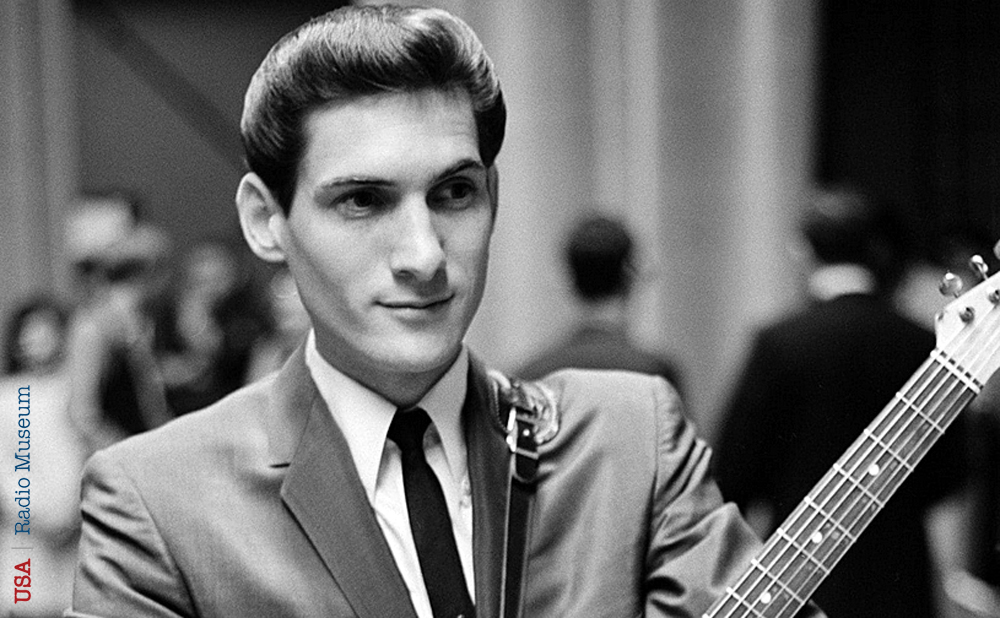
Introduction: Steve Cropper —The Soulful Architect of Stax Remembered In the story of American R&B music, there are figures whose names are etc
Introduction: Steve Cropper —The Soulful Architect of Stax Remembered
 In the story of American R&B music, there are figures whose names are etched not only in the grooves of records but in the very fabric of cultural memory. Steve Cropper was one of those figures. His guitar was never about flash or bravado; it was about service — to the song, to the singer, and to the listener. Cropper’s passing on December 3, 2025, at the age of 84, is a moment of reflection for all who cherish the legacy of soul music. For the USA Radio Museum, his life is not simply a biography of a musician, but a testament to the power of collaboration, humility, and artistry in shaping the sound of an era. — USA RADIO MUSEUM
_____________________
From Missouri Roots to Memphis Soul
Born in Dora, Missouri, in 1941, Cropper’s early years were marked by a move to Memphis at the age of nine. The city was already alive with sound — gospel choirs, blues shouters, and rhythm & blues innovators filled the air. Cropper’s first guitar, acquired at fourteen, became his passport into this world. Unlike many young musicians, he was not driven by the desire to stand in the spotlight. His gift was in listening, in shaping, in finding the spaces between notes that allowed others to shine.
By the late 1950s, Cropper was part of the Mar-Keys, whose hit “Last Night” placed him firmly within the orbit of Stax Records. The converted movie theater on McLemore Avenue became his workshop, a place where he would help define the sound of soul.
Booker T. & The M.G.’s: The House Band of Stax
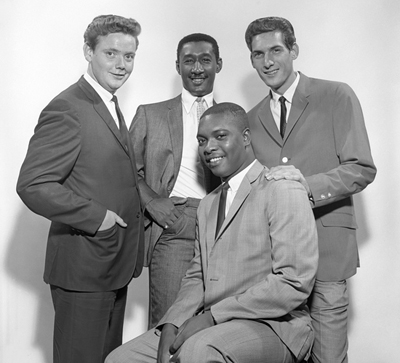
Booker T. & The M.G.’s
As a founding member of Booker T. & The M.G.’s, Cropper became part of one of the most influential ensembles in American music history. Alongside Booker T. Jones, Donald “Duck” Dunn, and Al Jackson Jr., Cropper’s guitar provided the lean, rhythmic backbone that defined the Stax sound. Their instrumental hit “Green Onions” in 1962 was more than a chart success; it was a cultural phenomenon, a groove that captured the essence of Memphis soul and announced the arrival of a new musical language.
Radio DJs across the country recognized its power immediately. In Nashville, John R. at WLAC recalled spinning “Green Onions” late at night and watching the phone lines light up with requests. In Cleveland, listeners flooded stations with calls, demanding to hear the track again. In Memphis, the song became a local anthem, played at dances, on jukeboxes, and through car radios cruising down Beale Street. Cropper’s guitar riff was simple, but it carried a swagger that listeners could feel in their bones.
The Songwriter’s Craft
Cropper’s genius lay not only in his playing but in his songwriting. He understood the emotional architecture of a song, the way a riff could anchor a chorus or a chord progression could lift a lyric. His partnership with Otis Redding was particularly profound. Together, they crafted “(Sittin’ On) The Dock of the Bay,” a song that became Redding’s posthumous masterpiece. Cropper’s guitar, gentle and contemplative, mirrored the song’s themes of longing and reflection.
Radio stations across America played the song endlessly in 1968, and listeners felt the poignancy of Redding’s absence alongside the beauty of the music. Cropper’s role was not to dominate but to support, to create a sonic space where Redding’s voice could resonate with maximum emotional impact.
The Producer’s Ear: Cropper Behind the Console
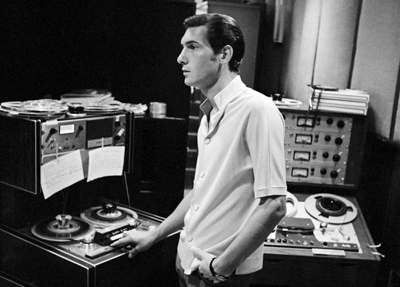
(Credit: Don Paulsen/Michael Ochs Archives/Getty Images)
Steve Cropper’s artistry extended far beyond the soundboard. At Stax Records, he was not only the guitarist of Booker T. & The M.G.’s but also a recording producer and arranger, shaping the sound of countless sessions. His producer’s touch was marked by clarity and restraint: he believed in leaving space for the groove, ensuring that singers and songs remained the focal point.
Cropper produced or co-produced sessions for Otis Redding, Sam & Dave, Carla Thomas, Rufus Thomas, Johnnie Taylor, and Albert King, among others. His ability to balance raw emotion with polished arrangements made him indispensable to the Stax sound. Sam Moore’s famous shout of “Play it, Steve!” on “Soul Man” was more than a stage flourish — it was a recognition of Cropper’s presence as both guitarist and guiding hand in the studio.
Isaac Hayes and the Late 1960s Stax Sound
By the late 1960s, Isaac Hayes was emerging from behind the scenes as a songwriter (with David Porter) into his own as a performer. Cropper was part of the creative ecosystem that nurtured Hayes’s rise. Hayes and Porter had already penned hits like “Soul Man” and “Hold On, I’m Comin’,” with Cropper’s guitar and production instincts helping to shape those recordings.
When Hayes began to step forward as a solo artist, Cropper’s influence was still felt. His guitar and producer’s sensibility were part of the Stax studio environment that gave Hayes the foundation for his groundbreaking albums like Hot Buttered Soul (1969). While Hayes would later expand into lush orchestrations and cinematic arrangements, it was Cropper’s steady hand — the lean, disciplined Stax approach — that provided the bedrock.
Radio DJs of the era often remarked on the synergy between Hayes’s deep baritone and the tight, disciplined backing crafted by Cropper and the M.G.’s. WLAC’s John R. once noted that Hayes’s records “had the polish of a producer who knew when to hold back and when to let the singer breathe.” That producer was often Steve Cropper.
Beyond Stax: Expanding Horizons
The collapse of Stax Records in the 1970s did not diminish Cropper’s artistry. Instead, it expanded his reach. He became a sought-after session player and producer, contributing to albums by Rod Stewart, Peter Frampton, Art Garfunkel, Ringo Starr, Wynonna Judd, Tower of Power, John Mellencamp, Jose Feliciano, Poco, and John Prine. His versatility was remarkable; whether in rock, country, or soul, Cropper’s guitar carried the same ethos of service to the song.
He also pursued solo projects, releasing a dozen albums over the years, including his most recent, Friendlytown in 2024. These works showcased his ability to step forward as a bandleader while maintaining the humility that defined his career. His music was never about ego; it was about connection, about creating spaces where listeners could feel something profound.
The Blues Brothers Era
Cropper’s role in the Blues Brothers band brought his Memphis soul sound to new audiences. Touring with John Belushi and Dan Aykroyd, and appearing in their 1980 film, Cropper became part of a cultural phenomenon that celebrated rhythm and blues with humor and reverence. His presence in the Blues Brothers was more than a cameo; it was a bridge between generations, introducing younger listeners to the roots of soul while affirming his place as a living legend.
Honors and Recognition
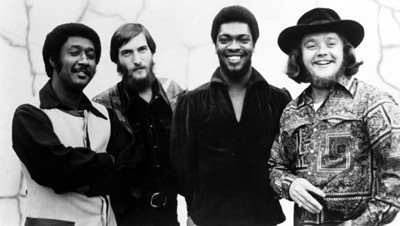
Booker T. & The M.G.’s circa 1968. (Credit: Booker T. Jones)
Cropper’s contributions did not go unnoticed. He was inducted into the Rock & Roll Hall of Fame in 1992, honored by the Songwriters Hall of Fame in 2005, and received a Grammy Lifetime Achievement Award in 2007. In 2018, he was named a BMI Icon, a recognition of his enduring influence on music. These accolades, while significant, only hint at the depth of his impact. For Cropper, the true reward was in the music itself, in the joy of collaboration, and in the knowledge that his work had touched lives across the world.
Radio Memories: DJs and Listeners
For the USA Radio Museum, Cropper’s legacy is inseparable from the role of radio in spreading soul music across America. DJs from Memphis to Detroit, Chicago, Los Angeles, New York City, and all around the country spun his records, and listeners felt the electricity of his riffs through the static and signal. One Cleveland DJ remembered introducing “In the Midnight Hour” to his audience and watching the dance floor erupt. In New York, “Knock on Wood” became a staple of late-night radio, its groove irresistible to listeners tuning in after hours.
Cropper’s guitar was not just an instrument; it was a transmitter of emotion, a conduit through which the spirit of Memphis reached the world. His work reminds us that radio was the lifeline of soul, carrying the Stax sound into homes, cars, and hearts.
A Life Remembered
Cropper spent more than thirty years living in Nashville, preceded by fifteen years in Los Angeles, but his legend was made in Memphis. He remained proud of his years at Stax, appearing in the 2024 HBO documentary on the label and preparing to publish a memoir of his life in music. His story is one of dedication, humility, and artistry — a reminder that greatness often lies not in the spotlight but in the shadows, where the work of shaping sound takes place.
Conclusion: An Emotional Farewell
 Steve Cropper’s passing is a profound loss, but his story is far from over. His guitar lines continue to resonate, his songs continue to inspire, and his legacy continues to shape the way we understand soul music. He was a steward of sound, a craftsman of emotion, and a servant of the song.
As we honor him, we recognize that his work was never about himself. It was about the singers he supported, the listeners he touched, and the memories he helped create. His artistry was an act of generosity — every riff, every chord, every arrangement offered as a gift to the voices around him and to the audiences who carried those songs in their hearts.
For the USA Radio Museum, Cropper’s story is inseparable from the power of radio itself. His music traveled through the static and signal, reaching homes, cars, and dance halls, reminding us that soul was not confined to Memphis but belonged to the world. DJs who spun his records knew they were sharing more than songs; they were transmitting a spirit of unity, groove, and emotion that defined an era.
In bidding farewell, we do not close the book on Steve Cropper. His legacy endures in the preserved airchecks, the restored recordings, and the living archive of radio history. His guitar remains a quiet force that elevated others, a lasting symbol of musical brilliance. As a white musician in a predominantly Black genre, Steve Cropper stood as proof that soul’s power transcended boundaries, shaping its sound with guitar and console. Above all, he secured his place as an architect of the Memphis Sound, ensuring that his contributions will continue to inspire and define the story of American soul — his name forever linked to the unforgettable R&B, Top 40, and pop recordings of the 1960s and 1970s in which he played such a vital part.
______________________________
Contact: jimf.usaradiomuseum@gmail.com
______________________________
A USARM Viewing Tip: On your PC? Mouse/click over each image for expanded views. On your mobile or tablet device? Finger-tap all the above images inside the post and stretch image across your device’s screen for LARGEST digitized view. Then click your brower’s back arrow to return to the featured post.
© 2025 USA Radio Museum. All rights reserved.
