
Introduction: A Nation on the Brink of New Sound for 1964 In late 1963, America was a country in mourning. The assassination of President John F. K
Introduction: A Nation on the Brink of New Sound for 1964
 In late 1963, America was a country in mourning. The assassination of President John F. Kennedy had cast a pall over the nation, leaving a generation searching for hope, distraction, and joy. At the same time, across the Atlantic, a musical revolution was already underway. The Beatles — four young men from Liverpool — had ignited Beatlemania in Britain, their songs sparking hysteria wherever they appeared. Yet in the United States, they remained virtually unknown. American record companies were skeptical, dismissing the group as a passing fad. Few could have predicted that within months, the Beatles would become the most influential band in modern history.
The turning point came not from a corporate boardroom, but from a radio booth in Washington, D.C. It was here that James Carroll, a disc jockey at WWDC, made a decision that would alter the trajectory of popular music forever. The date was December 17, 1963. — USA RADIO MUSEUM
_____________________
James Carroll and the Bold Broadcast
James Carroll was not a household name, but in December 1963 he became a catalyst for history. His girlfriend, a stewardess flying transatlantic routes, returned from the UK with a copy of the Beatles’ latest single. Carroll, recognizing its potential, slipped the record onto his turntable at WWDC. The moment the needle dropped, American radio audiences heard something fresh, electric, and irresistible.
The song’s infectious energy was undeniable. Carroll’s listeners responded instantly, calling the station in droves, demanding to hear it again. Soon, WWDC was spinning I Want to Hold Your Hand every hour, every day. What began as a DJ’s instinctive gamble became a phenomenon. Carroll had introduced America to the Beatles — and the audience was hooked.
Capitol Records’ Dilemma
Capitol Records had already passed on several Beatles singles earlier in 1963, convinced that “British beat groups” would never translate to American tastes. When I Want to Hold Your Hand was scheduled for a January 1964 release, it was meant to be a cautious rollout, carefully timed and marketed. James Carroll’s broadcast at WWDC shattered that plan overnight.
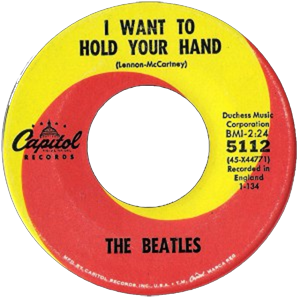 From the moment the record hit the airwaves, the phones at WWDC lit up. Teenagers demanded to hear it again and again, and Carroll obliged, spinning the single every hour. Capitol executives, blindsided, suddenly faced a crisis: their unreleased property was being played illegally, and the demand was spiraling out of control. At first, the label considered legal action against WWDC, fearing that unauthorized airplay would undermine their marketing strategy. But the sheer force of public enthusiasm made litigation impossible.
Instead, Capitol pivoted. Recognizing that Carroll had tapped into something unstoppable, they rushed the single into stores weeks ahead of schedule. The gamble paid off spectacularly. I Want to Hold Your Hand shot to the top of the Billboard Hot 100, becoming the Beatles’ first U.S. number one. By accelerating the release, Capitol transformed what could have been a legal battle into a cultural breakthrough. Carroll’s broadcast had forced the hand of a major record company, proving that radio — and its listeners — could dictate the course of the music industry.
The Listener Frenzy
The frenzy that followed Carroll’s broadcast was unprecedented in American radio. Teenagers flooded WWDC’s phone lines, begging for the Beatles’ record to be played again. The station responded by spinning I Want to Hold Your Hand every hour, turning the airwaves into a nonstop celebration of this new sound from across the Atlantic.
Parents, bewildered by their children’s obsession, began to notice the strange new harmonies filling their homes. The Beatles’ cheeky charisma, their tight harmonies, and their raw energy resonated with a generation hungry for something fresh. For many young listeners, hearing the Beatles on WWDC felt like being part of a secret revolution — a discovery shared among peers before the mainstream press had caught on.
Radio was the perfect medium for this moment. Unlike television, which was bound by schedules and gatekeepers, radio was immediate, intimate, and omnipresent. Carroll’s decision to play the Beatles gave listeners a sense of ownership: they weren’t just hearing a record, they were participating in history. The Beatles’ American invasion began not with a press release or a corporate campaign, but with a DJ’s daring spin and the voices of countless teenagers demanding more.
This frenzy foreshadowed the tidal wave of Beatlemania that would engulf America in 1964. It showed how radio could ignite passion, amplify demand, and transform a single broadcast into a cultural turning point.
Radio as Cultural Gatekeeper
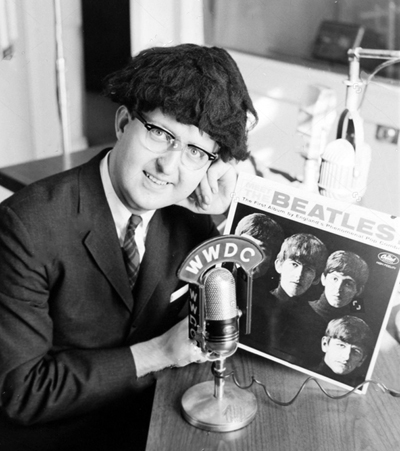
Carroll James poses in-studio at WWDC with a Beatles’ wig and the band’s first U.S. Capitol LP release in early-1964.
The James Carroll episode underscores the extraordinary influence of radio DJs in the mid-20th century. DJs were tastemakers, curators, and cultural gatekeepers. They could elevate unknown artists to stardom or consign them to obscurity. Carroll’s broadcast exemplifies this power. By trusting his instincts and responding to his audience, he ignited a cultural movement that reshaped American music.
This was not an isolated phenomenon. Throughout radio history, DJs have played similar roles — from Alan Freed popularizing rock and roll in the 1950s to Wolfman Jack shaping the soundscape of the 1970s. Carroll’s decision belongs in this lineage of radio legends who changed the course of popular culture with a single broadcast.
Beatlemania Explodes
The ripple effects of Carroll’s broadcast were immediate and profound. By January 1964, I Want to Hold Your Hand had reached number one on the U.S. charts. The Beatles’ arrival at JFK Airport in February drew thousands of screaming fans, a scene that stunned the American press. Days later, their appearance on The Ed Sullivan Show captivated 73 million viewers — more than a third of the U.S. population.
But it all began with radio. Carroll’s broadcast gave American audiences their first taste of the Beatles, priming them for the tidal wave of Beatlemania. Without WWDC’s daring spin, the Beatles’ U.S. breakthrough might have been slower, less dramatic, or even delayed. Instead, it was explosive.
Legacy: The DJ Who Lit the Fuse
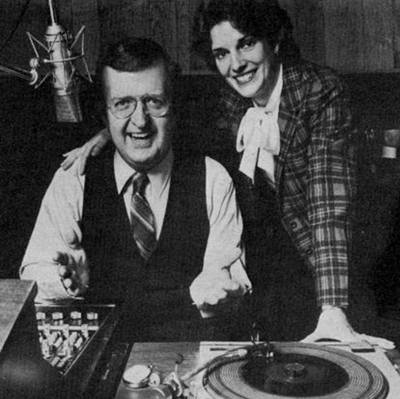
James Carroll with Martha Albert, years later. She was the first to call in to WWDC on the Carroll James Show about the Beatles’ new single she heard while watching the Fab Four on a U.K. TV clip in 1963.
James Carroll’s name may not be as widely remembered as Ed Sullivan’s, but his role in the Beatles’ American story is no less significant. He was the first to broadcast the Beatles in the United States, the DJ who lit the fuse of Beatlemania. His story is a reminder of radio’s unique ability to connect artists with audiences, to bypass corporate skepticism, and to amplify cultural moments.
For the USA Radio Museum, Carroll’s broadcast is a milestone worth preserving. It illustrates the symbiotic relationship between radio and popular music, and it honors the DJs whose instincts shaped history. Carroll’s decision was not just about playing a record — it was about trusting the audience, embracing the new, and recognizing the transformative power of sound.
Carroll James: The DJ Who Lit the Fuse of Beatlemania
Carroll James Jr. (1937–1997) was the Washington, D.C. disc jockey who made history on December 17, 1963, when he became the first American broadcaster to play a Beatles record on U.S. radio. Working at WWDC, James aired I Want to Hold Your Hand at the request of 15‑year‑old listener Marsha Albert, who had seen the Beatles on a British television clip and wanted to hear more. James arranged for a copy of the single to be flown in from the UK, and invited Albert to introduce the song live on air.
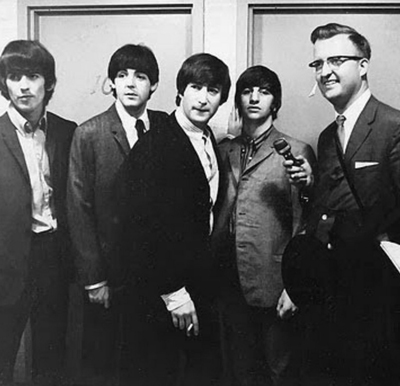
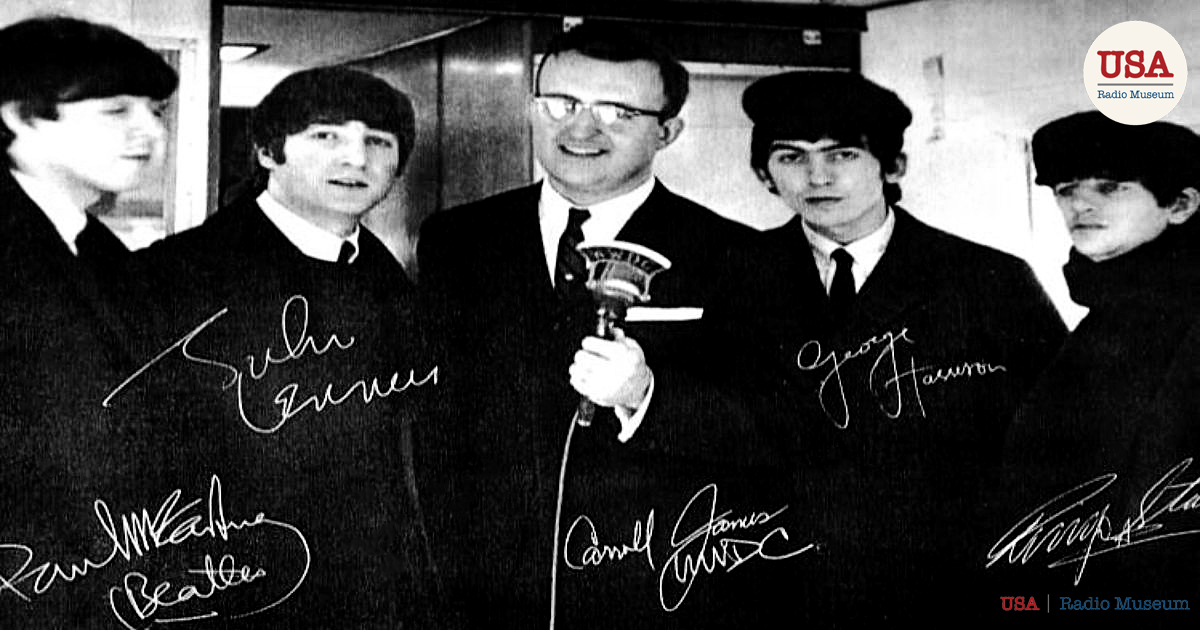
Carroll James interviews the Beatles at the Washington Coliseum, two days after the group’s debut on CBS’ The Ed Sullivan Show, February 11, 1964.
The broadcast sparked an immediate frenzy. WWDC was inundated with requests, and the song was played every hour. Capitol Records, initially considering legal action, instead rushed the single’s release weeks ahead of schedule. Within a month, the Beatles had their first U.S. number one, and by February 1964, Beatlemania had swept the nation.
James was a Princeton graduate (Class of 1958) and a respected broadcaster who later worked in television and narration projects. Though his career extended beyond radio, he is best remembered for his pivotal role in launching the Beatles in America. On February 11, 1964, he interviewed the Beatles for WWDC at the Washington Coliseum, further cementing his place in their U.S. story.
Carroll James died of cancer on March 24, 1997, at Holy Cross Hospital in Silver Spring, Maryland. He was 60 years old. His legacy endures as the DJ who trusted his audience, took a chance on a record from overseas, and helped ignite one of the greatest cultural revolutions of the 20th century.
Conclusion: Radio’s Enduring Power
The Beatles’ first U.S. record single introduction in 1963 is more than a footnote in music history. It is a testament to the power of radio as a cultural force. In a moment of national grief, Carroll’s broadcast offered joy, energy, and hope. It connected America to a global phenomenon and ushered in a new era of music.
For the USA Radio Museum, this story embodies the essence of radio’s legacy: its ability to shape culture, to amplify voices, and to bring people together. James Carroll’s broadcast reminds us that history is often made not in boardrooms or concert halls, but in the intimate space between a DJ, a record, and a listener tuning in to the radio . . . just like it happened that day, 62 years ago, December 17, 1963.
_____________________
Sources and Credits:
Princeton Alumni Weekly – How CJ the DJ Gave the Beatles Their Big Break in America
Ultimate Classic Rock – When the Beatles Finally Hit U.S. Radio
School of Pop (YouTube) – The Accident That Started Beatlemania in the US
Woodstock Whisperer Blog – Busy Beatle December 1963
Beatle.net – 60 Years Ago: I Want to Hold Your Hand Makes U.S. Radio Debut
______________________________
Contact: jimf.usaradiomuseum@gmail.com
______________________________
A USARM Viewing Tip: On your PC? Mouse/click over each image for expanded views. On your mobile or tablet device? Finger-tap all the above images inside the post and stretch image across your device’s screen for LARGEST digitized view. Then click your brower’s back arrow to return to the featured post.
© 2025 USA Radio Museum. All rights reserved.
