

Radio history is shaped not only by stations and formats, but by the people whose voices, instincts, and creativity made those stations matter.
Radio history is shaped not only by stations and formats, but by the people whose voices, instincts, and creativity made those stations matter. This story honors two such figures—Jerry St. James and Bob Green—whose careers left lasting marks on music radio, and the communities they served. Though their paths were different, both embodied the craft, passion, and human connection that defined radio at its best, and both are remembered here for what they gave to the medium and the people who loved it.
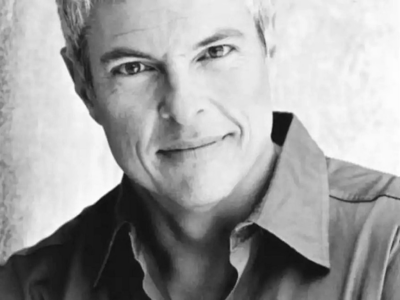
Jerry St. James
Of all the great morning radio teams, located right near the top would be Jeff & Jer, aka Jeff Elliott (Detrow) and his longtime radio-mate Jerry St. James (Cesak). It’s now half of what it was, with the passing of Jerry at the age of 74 from multiple health issues. Born in Maryland in 1951, he died in the arms of his wife Pam at their home in Suburban San Diego on January 4th.
Jerry St. James was a solo act in Washington, DC, Minneapolis and when he arrived in Detroit in 1977 at WDRQ. He was paired with longtime Motor City mainstay Jim Harper at WNIC. At his next stop he teamed up with Jeff, a northeast Ohio DJ, and the chemistry was instantaneous at Magic 95 WMJC (now WCSX 94.7). After Motown, they landed at Chicago’s WFYR for a couple of years then the duo hit San Diego in 1988 with the force of an earthquake! They danced through a multitude of stations in America’s Finest City, most notably B-100, Star 100.7 and Q-106.
Audio Digitally Remastered by USA Radio Museum
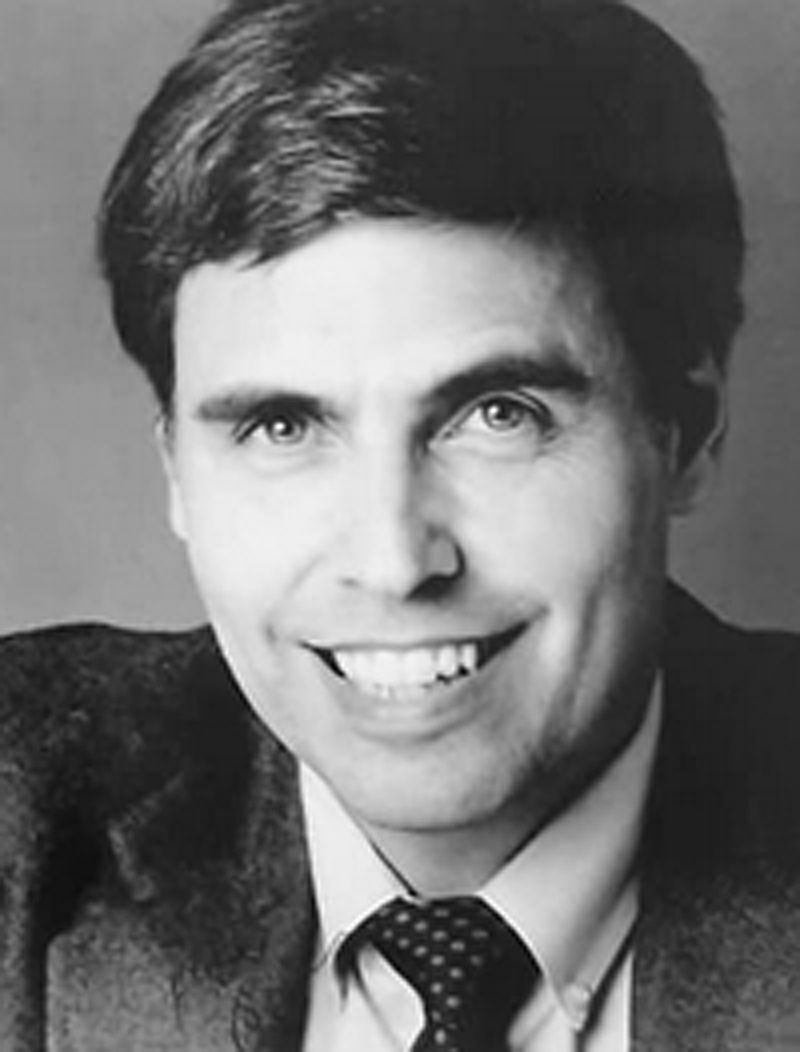
Bob Green, 1998 (Credit: Bob Green)
Detroit has always been a bastion of great radio talent and one of the best was Bob Green. He was one of the original Key Men of Music at WKNR (Keener 13) rubbing elbows with legends like: Gary Stevens, Robin Seymour, Mort Crowley and Jerry Goodwin.
Born Robert Alan Greenstone in 1937 in upstate New York, he started at WSAY in Rochester and WGVA in Geneva, but he set his sights on Detroit and a “suburban” Dearborn station known as WKMH. Frustrated by stagnation, he detoured to Miami powerhouse WQAM-AM. Soon as a change was brewing back in The Motor City, as 1310 AM was about to morph into WKNR Keener 13, the lure was too tempting, and with his phenomenal production skills, and imaging talents helped the station rise to meteoric ratings practically overnight! One of the many dimensions of Bob’s wisdom was “never let the allure of stardom diminish important relationships.”
For Bob Green, the magic of WKNR was never just about programming—it was about emotional connection. His “Keener Philosophy” centered on keeping radio simple, spontaneous, and sincere. Strip away the clutter, he believed, and the music and message could shine. Keep the sound fresh and alive, and listeners would feel the energy. Speak with heart, and they would feel like friends.
_____________________
WKNR | The Bob Green Show (European International Hits) | June 1966
Audio Digitally Remastered by USA Radio Museum
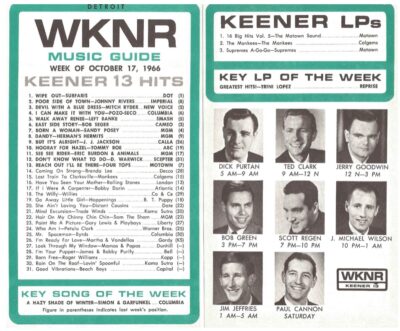
WKNR Music Guide from October 17, 1966
To Bob, radio was meant to be clean, compelling, and deeply connective. Every jingle, every segue, every spoken word carried intention—crafted to make the listener feel something real. here’s what Bob Green once said of the station’s euphoric success at the time: “We didn’t just play records. We created moments. That was the Keener way.”

Worked with the brilliant talent, Bob Green, in Miami (WQAM) and Detroit (WKNR). Can’t say enough about his amazing production skills. “How we shall laugh at the trouble death makes, dear friend, should we meet again.”