
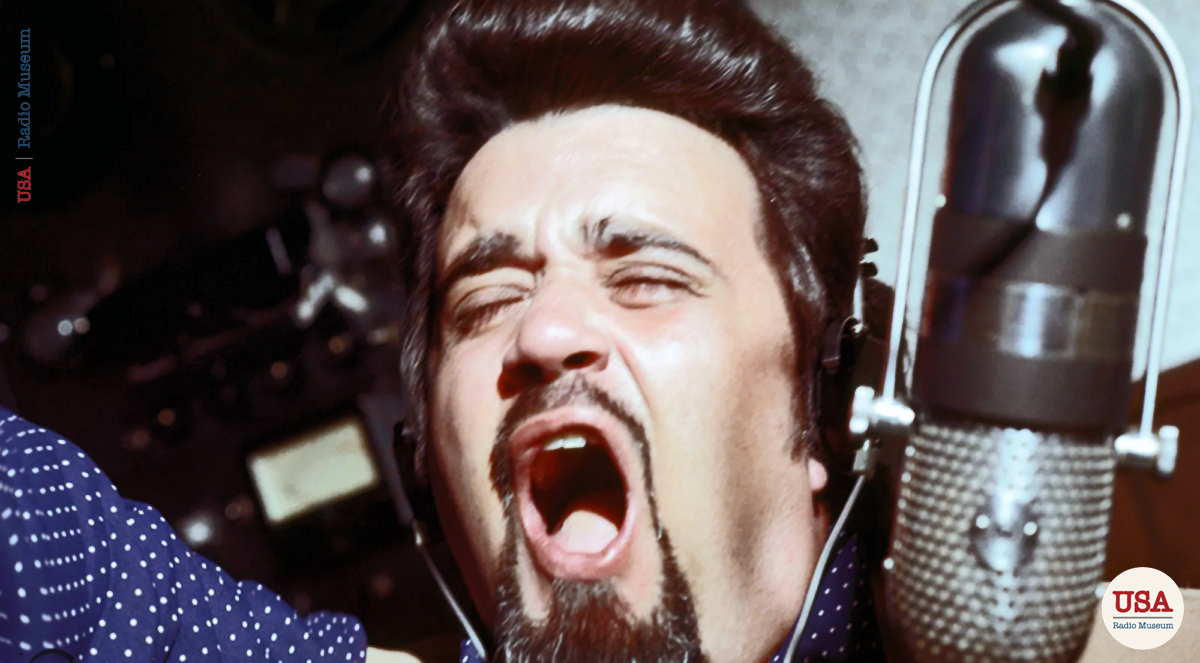
INTRODUCTION: WOLFMAN JACK — THE HOWL THAT ROCKED AMERICA Wolfman Jack didn’t just arrive on the airwaves — he burst into them with a howl tha
INTRODUCTION: WOLFMAN JACK — THE HOWL THAT ROCKED AMERICA
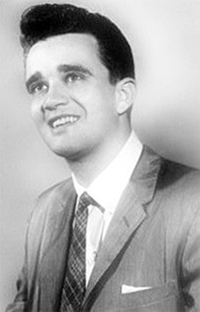
Robert Weston Smith, early years.
Wolfman Jack didn’t just arrive on the airwaves — he burst into them with a howl that felt like a cultural lightning strike. His voice wasn’t merely a sound; it was a sensation; a jolt of midnight electricity that made radios feel alive in your hands. Before anyone knew his face, they knew that unmistakable growl — raw, rhythmic, mischievous, and full of promise.
He became the secret companion of teenagers cruising under neon lights, the late‑night friend of truckers rolling across endless highways, and the spark that made small towns feel plugged into something vast and thrilling. His show wasn’t just a broadcast; it was a world — a place where music, mischief, and magic collided. You didn’t just listen to the Wolfman. You stepped into his universe.
What made him unforgettable wasn’t just the howl or the gravel or the laughter bubbling beneath every word. It was the intimacy he created, the sense that he was speaking directly to you. He made radio feel dangerous in the best way — unpredictable, alive, and deeply human. By the time America finally saw his face, the legend was already fully formed, carried on a voice that had rolled across the continent and captured the soul of a generation. — USA RADIO MUSEUM
_____________________
From Brooklyn to the Border: The Making of a Legend
Born Robert Weston Smith in Brooklyn in 1938, he grew up in a city that never slept — a place where noise was constant and life moved fast. But the sound that captured him most wasn’t outside his window. It was coming from the radio. As a kid, he’d sit close to the speaker, mesmerized by the raw power of rhythm and blues drifting in from distant stations. Those late‑night broadcasts lit a fuse in him. They felt dangerous, alive, and full of possibility.
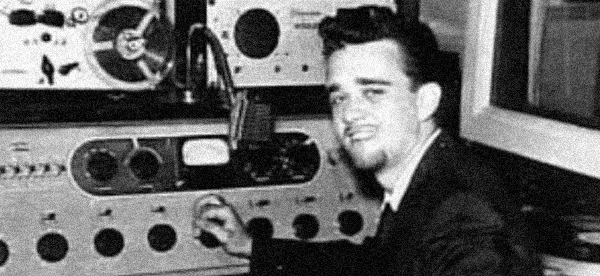 He wasn’t a classroom kid. He was a dreamer, a mimic, a natural performer who could slip into characters with uncanny ease. He studied voices the way musicians study scales. He absorbed the swagger of street hustlers, the cadence of preachers, the timing of comedians. All of it would eventually find its way into the Wolfman.
After high school, he followed his instincts straight to the National Academy of Broadcasting in Washington, D.C. He learned the technical craft — mic technique, pacing, production — but the real magic was already in him. Early radio jobs were modest, but they gave him a place to experiment. He’d stay late, riffing, growling, laughing, building the persona that would one day electrify the nation.
Still, he was searching for a stage big enough for the voice he was building.
He found it across the border.
XERB: Where the Wolfman Was Unleashed
In the early ’60s, Smith headed to Ciudad Acuña, Mexico, home of XERB — a 500,000‑watt border‑blaster that ignored U.S. limits and reached half a continent. American stations were capped at 50,000 watts. XERF laughed at that. Its signal didn’t just travel — it roared, reaching deep into the Midwest, across the Plains, up into Canada, and down into the Caribbean.
It was the perfect stage for a young man with a wild imagination and a voice ready to explode.
This was where Bob Smith stepped aside and Wolfman Jack stepped forward.
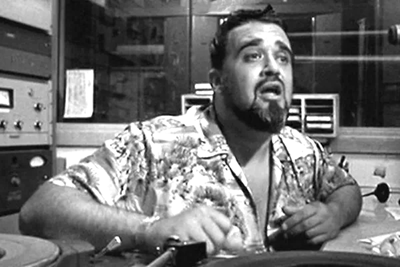
Wolfman Jack’s appearance in the 1973 motion picture, American Graffiti.
The Wolfman wasn’t created — he was unleashed. A growling, laughing, howling force of nature who turned radio into theater. He spoke in riffs, whispers, shouts, and characters, slipping between personas like a magician. He wasn’t just a DJ spinning records; he was a one‑man carnival, a blues preacher, a rock ’n’ roll shaman conjuring a world where anything could happen.
Listeners couldn’t get enough. Kids in small towns huddled under blankets with transistor radios. Truckers barreling down lonely highways kept him on for company. Teenagers cruising on warm summer nights turned him up until the speakers rattled. Soldiers overseas wrote home about hearing him in the dark.
And the music — that was the revolution.
Wolfman Jack championed the artists mainstream radio ignored: Muddy Waters, Little Richard, Ray Charles, Etta James, James Brown. He played the raw, the soulful, the joyful — the sounds that would become the backbone of American music. He didn’t just spin records. He broke barriers. He brought Black artists to white audiences long before the industry caught up.
Behind the scenes, XERB was chaos — preachers, pitchmen, hustlers, dreamers. The Wolfman thrived in that environment. It was dangerous, exhilarating, and unforgettable. This was where the legend took shape.
_____________________
XERB 1090 | The Wolfman Jack Show | July 20, 1965
Audio Digitally Remastered by USA Radio Museum
_____________________
The National Breakthrough: From Mystery Voice to American Icon
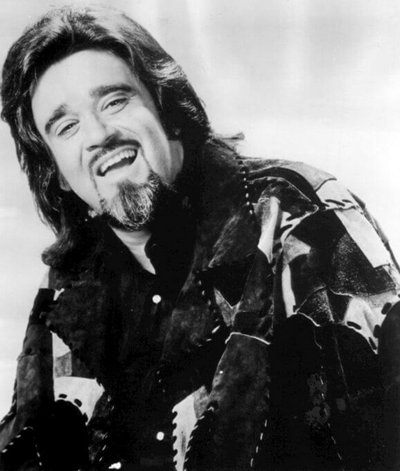 For years, Wolfman Jack existed as a beautiful rumor — a voice without a face. Kids argued about who he was. Some swore he lived in a cave. Others insisted he was part wolf, part man, part supernatural force. The truth didn’t matter. The mystery was the magic.
But America wasn’t going to let a voice that powerful stay hidden forever.
By the mid‑’60s, syndication carried his show nationwide. Suddenly, the Wolfman wasn’t just a late‑night secret — he was a national phenomenon. His timing was perfect. Rock ’n’ roll was exploding. Youth culture was rising. Radio was becoming the heartbeat of a generation hungry for something real.
Then came American Graffiti.
In 1973, George Lucas cast Wolfman Jack as the unseen voice guiding teenagers through a single night of cruising and dreaming. When audiences finally saw him, the myth only grew stronger. He became the emotional anchor of the film — the symbol of how radio once connected us all.
Television followed. As host of The Midnight Special, he introduced the biggest artists of the era with the same swagger that made him a legend. By the late ’70s, Wolfman Jack was everywhere: on TV, in films, in commercials, in print, and always on the air.
Part Showman, Part Shaman
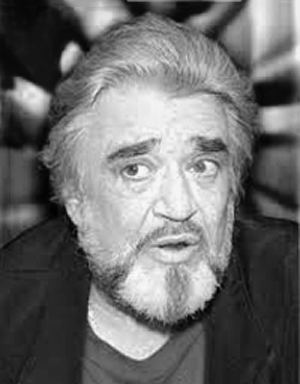
Robert Weston Smith, 1994.
Wolfman Jack’s genius wasn’t just performance — it was connection. He could growl like a beast one moment and whisper like a confidant the next. His voice was smoke and rhythm, danger and warmth. He created a world where listeners felt seen, understood, and part of something bigger.
He wasn’t just spinning records.
He was guiding people through the night.
His persona transcended radio. He became a symbol of freedom, fun, and the untamed spirit of rock ’n’ roll.
Influence That Still Echoes
Wolfman Jack didn’t follow trends — he set them. He democratized music by championing Black artists long before the mainstream caught up. He shaped youth culture, gave cruising its soundtrack, and proved that radio personalities could be stars in every medium.
His improvisational style became the blueprint for modern broadcasting. Every personality‑driven DJ, every high‑energy host, every character‑driven show owes something to the Wolfman.
He didn’t just change how radio can sound. He expanded what radio could be.
The Final Howl
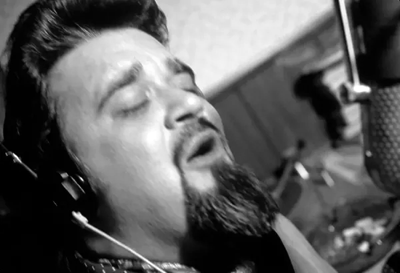 Wolfman Jack died on July 1, 1995, shortly after returning from a promotional tour for his autobiography. He passed away at home in North Carolina, having spent his final days doing what he loved — meeting fans and celebrating the music that shaped his life. He was 57.
Radio reacted instantly. Stations broke format. DJs mourned his passing on the air. Old broadcasts resurfaced. Listeners called in with memories. Many stations played a single howl — that joyous, rolling, unmistakable howl — and let it echo across the night one more time.
A Legacy That Lives On
He will always be connected to the early rock ’n’ roll hits that first set America’s heart racing, and American Graffiti forever tied him to that shimmering moment in time. Those songs weren’t just part of his story — they were the music he loved most, the rhythm that lived in his bones and shaped his every howl, every chuckle, with his known delivery and phrases he chanted behind every microphone in front of him.
Wolfman Jack was inducted into the National Radio Hall of Fame in 1999, one of the highest honors in American broadcasting. This is his official, documented industry honor — and it came four years after his passing, recognizing the enormous cultural and broadcasting impact he left behind.
At the USA Radio Museum, we honor him not just as a broadcaster, but as a living pulse in America’s story — a man whose voice didn’t simply travel across the map, but awakened something in all of us, stirring our memories, and celebrating the very music that powered rock ’n’ roll’s greatest era.
______________________________
Sources and Credits:
Wikipedia – Wolfman Jack
Encyclopaedia Britannica – Wolfman Jack
Radio Hall of Fame (1999 Inductee)
Encyclopedia.com – Wolfman Jack (1938–1995)
Have Mercy! (Autobiography, 1995)
______________________________
Contact: jimf.usaradiomuseum@gmail.com
______________________________
A USARM Viewing Tip: On your PC? Mouse/click over each image for expanded views. On your mobile or tablet device? Finger-tap all the above images inside the post and stretch image across your device’s screen for LARGEST digitized view. Then click your brower’s back arrow to return to the featured post.
© 2026 USA Radio Museum. All rights reserved.

Hey Jim here’s something that you might be surprised about him, Wolfman Jack was the 1st ever radio DJ to host Knott’s Scary Farm back in the late ’70’s.
As a young man who wanted nothing more than a career in radio, I had a few mentors — people I could learn from and model myself after. There were several, but primarily Porky Chedwick in Pittsburgh an John R in Nashville. But just as importantly, Wolfman Jack (on the rare nights I could actually hear him where I lived). Bob Smith, AKA the Wolfman, was a one of a kind in every way. There was nobody like him before and will be no other like him after. His timing, cadence, knowledge of the music and ability to talk as if you were the only one listening were amazing. And his role in “American Graffiti” summed it all up.It’s exactly what is was like any place you were fortunate enough to hear him. And the scene where the kids got to meet him in the radio studio was classic. Just a regular guy who was the Wolfman on the radio. Goodbye to the Wolfman, who died too young. This howl’s for you, Wolfman.
And congratulations to the USA Radio Museum for another spot-on profile capturing the essence of a true radio star.
J. Paul Henderson, AKA Robbie D
J. Paul, your expressed comments mean more than you know. Your memories carry the warmth of someone who didn’t just listen to radio — you lived it. The way you describe hearing the Wolfman on those rare nights, learning from giants like Porky Chedwick and John R, and finding your own voice as Robbie D . . . that’s the true soul of broadcasting. Thank you for honoring the Wolfman with such heart, and for honoring us with your story. We’re proud to celebrate legends like him — and voices like yours.