
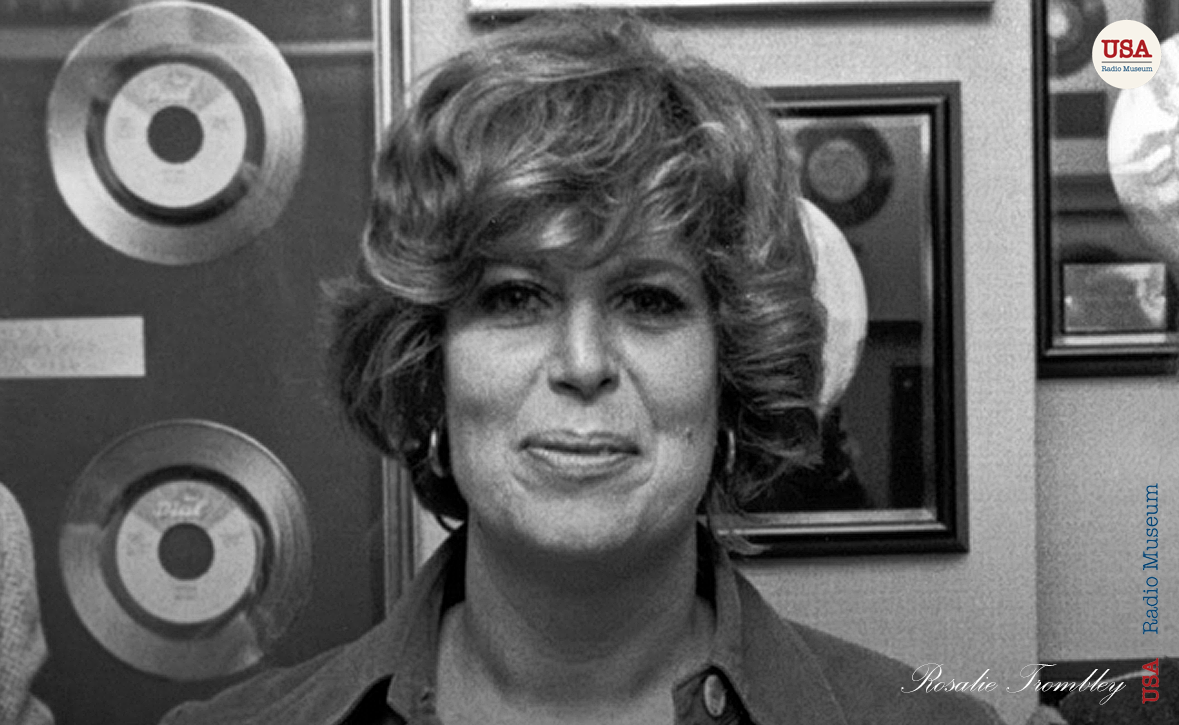
A Tribute to the Most Influential Music Director in North American Top‑40 Radio History Few figures in broadcasting ever shaped the sound of a
A Tribute to the Most Influential Music Director in North American Top‑40 Radio History
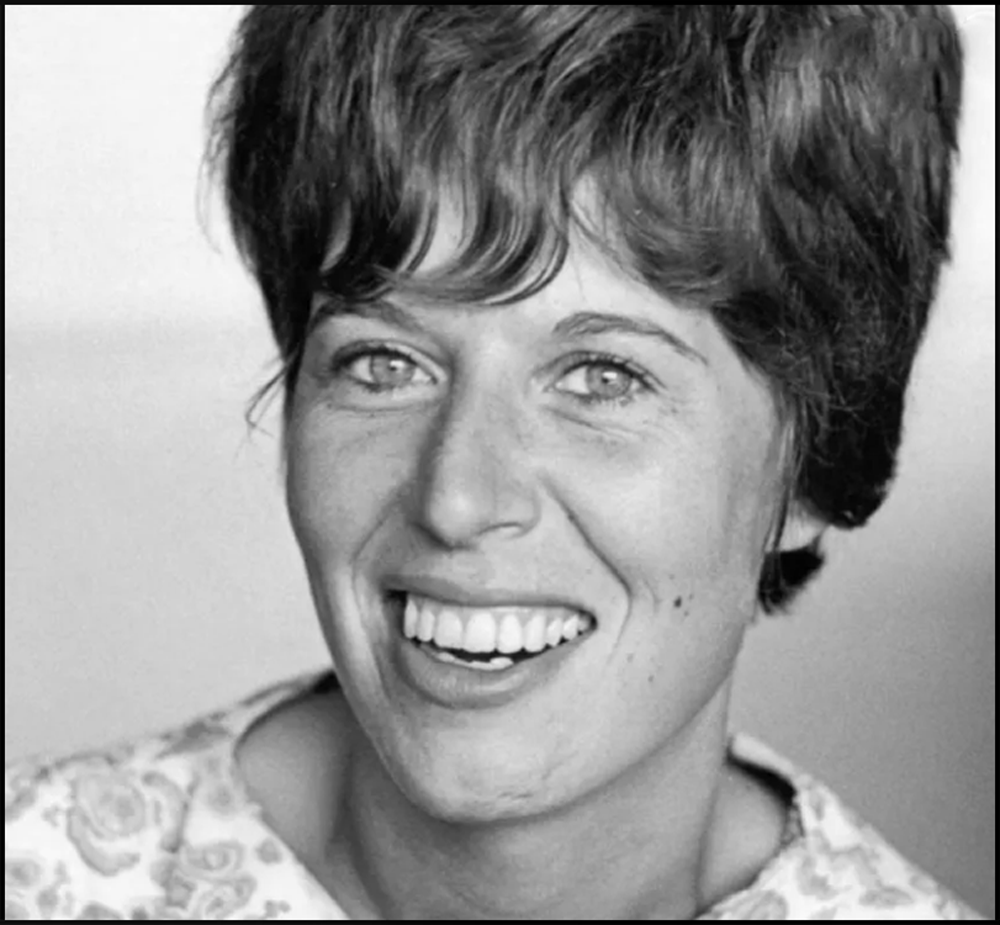
Rosalie. (Credit: The Windsor Star)
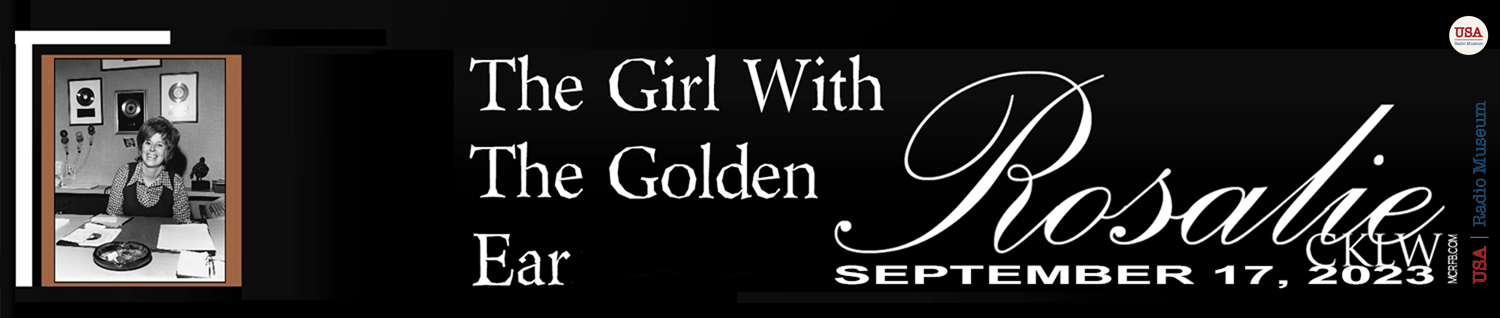
Few figures in broadcasting ever shaped the sound of a continent. Fewer still did it from behind the scenes, without a microphone, without a spotlight, and without the industry’s traditional pathways of power. And only one did it with such uncanny instinct that artists, producers, and record executives across North America came to revere her by a title that said everything: “The Girl with the Golden Ear.”
That woman was Rosalie Trombley, the legendary music director of CKLW—The Big 8, the Windsor‑Detroit powerhouse whose 50,000‑watt signal and tightly engineered format made it one of the most influential Top‑40 stations in the world. From the late 1960s through the early 1980s, Trombley’s decisions didn’t just shape playlists—they shaped careers, genres, and the very direction of popular music.
Her story is one of talent, tenacity, and trailblazing brilliance. It is also a story of a woman who, in an era when few women held any authority in broadcasting, rose to become the most powerful music director in North America. — USA RADIO MUSEUM
_____________________
Early Life and the Road to CKLW
Rosalie Trombley was born on September 18, 1939, in Leamington, Ontario, a small agricultural town near Windsor. She grew up in a region where American and Canadian cultures blended across the Detroit River, and where radio—especially Detroit radio—was a constant presence. Music was not just entertainment; it was a lifeline to the world.
In 1963, seeking stable work while raising three children, Rosalie joined CKLW as a part‑time switchboard operator. It was a modest beginning, but one that placed her at the crossroads of a station on the verge of transformation. CKLW was about to become “The Big 8,” a tightly formatted, high‑energy Top‑40 juggernaut engineered by Bill Drake and Paul Drew. The station’s sound would soon become iconic—and Rosalie would become one of its architects.
Her talent revealed itself quickly. She was promoted to the music library, where she handled new releases, chart data, and record company communications. Her ear for hits—raw, instinctive, and unerring—was impossible to ignore. By 1968, she was promoted again, this time to Music Director, a role almost unheard of for a woman in Top‑40 radio at the time.
It was the beginning of a revolution.
The Rise of a Hitmaker
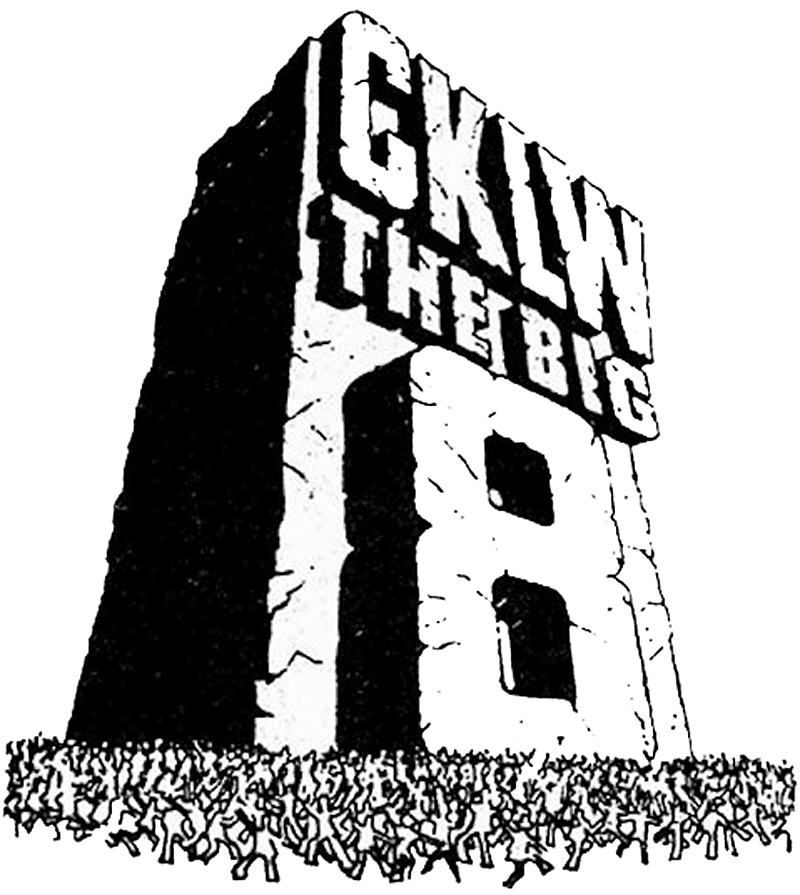 CKLW’s reach was extraordinary. With its 50,000‑watt signal blow-torching across Ontario, across several Canadian provinces, Michigan, Ohio (by 1968 CKLW was the number-one station in Toledo and Cleveland!), and with a night-time signal expanding across 23-28 States, the station became a kingmaker — and Rosalie Trombley was the one holding the crown. When she added a song to The Big 8 playlist, it didn’t just get airplay; it got traction, momentum, and national attention. By 1970, CKLW was the second most listened to radio station in North America.
Her reputation for spotting hits before they broke was so consistent that Kal Rudman, founder of Friday Morning Quarterback, repeatedly described her as the most powerful music director in the United States. But perhaps the most heartfelt testament to her influence came from one of Canada’s greatest voices: Burton Cummings of The Guess Who.
Burton Cummings and The Guess Who
Cummings has long credited Rosalie Trombley for helping introduce The Guess Who to North American radio audiences. Before 1969, the band was in a transitional period — shifting labels, experimenting with new material, and searching for the breakthrough that would define their future. They had released singles on Amy and Quality, hosted a Winnipeg television series, and collaborated with The Staccatos, but widespread U.S. success remained elusive.
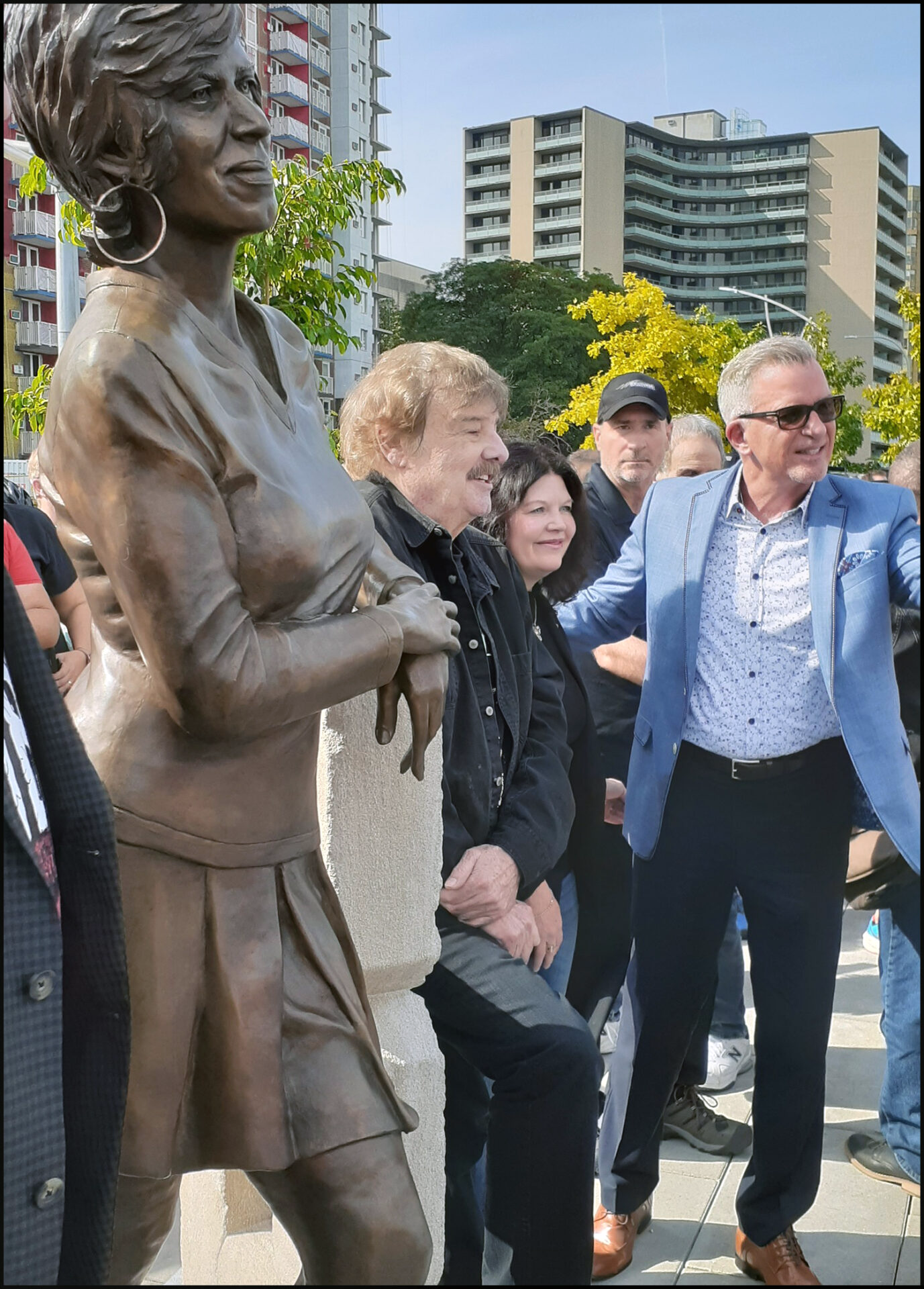
Deverons and Guess Who alumnus BURTON CUMMINGS, Saint Clair College President PATTI FRANCE and Rosalie’s son, TIM TROMBLEY after the unveiling of the statue honoring former CKLW Music Director ROSALIE TROMBLEY in Winddsor, Ontario on Sunday 17 September 2023. (Photo: Michael McDowell. C&P 2023 Blitz Magazine – The Rock And Roll Magazine For Thinking People. All rights reserved).
That changed when Rosalie heard “These Eyes.” After the song saw modest success in Canada in late 1968, she placed it into heavy rotation at CKLW in early 1969. Her belief in the record transformed it into an instant classic and propelled The Guess Who into the American mainstream. One hit followed another — “Laughing,” “Undun,” “No Time,” “American Woman,” “Hand Me Down World,” “Share the Land,” “Rain Dance,” “Sour Suite,” “Glamour Boy,” “Running Back to Saskatoon” — and Rosalie championed every one of them.
Cummings’ admiration for Rosalie was not casual or distant. It was personal, enduring, and deeply felt. When Windsor unveiled a statue honoring Trombley — a permanent tribute to her legacy — while in the middle of a pre-scheduled concert series in London, Ontario, Cummings drove to Windsor the night before just to be there. He stood before the crowd and spoke candidly, emotionally, and with unmistakable gratitude about the woman who had believed in his band when belief mattered most. His presence underscored what insiders already knew: Rosalie Trombley didn’t just influence charts; she changed lives.
And he was not alone. Many of the CKLW luminaries who had worked alongside Rosalie during the station’s golden era gathered to honor her memory, all stood together in paying homage to her one last time — a living constellation of Big 8 history. Their presence spoke volumes about the respect Rosalie commanded and the family‑like bond forged inside the CKLW studios.
Her Process
Rosalie’s ability to identify hits wasn’t mystical — it was instinct sharpened by empathy and experience. She listened for melodic hooks that would resonate instantly, lyrics that connected emotionally, and production that would cut through AM radio compression. She also understood something many male programmers overlooked: what women wanted to hear. Her ear was intuitive, unpretentious, and unclouded by industry politics.
She trusted her instincts, and the artists trusted her in return.
Breaking Artists, Shaping Legends
Rosalie Trombley’s track record reads like a hall of fame roster. She didn’t just play hits—she created them:
Alice Cooper
In 1970, she received a promo copy of a song called “Eighteen.” She predicted it would be a hit and added it to CKLW’s rotation. The song exploded, launching Alice Cooper’s career. Cooper himself has credited Trombley for being the first major‑market programmer to believe in the record.
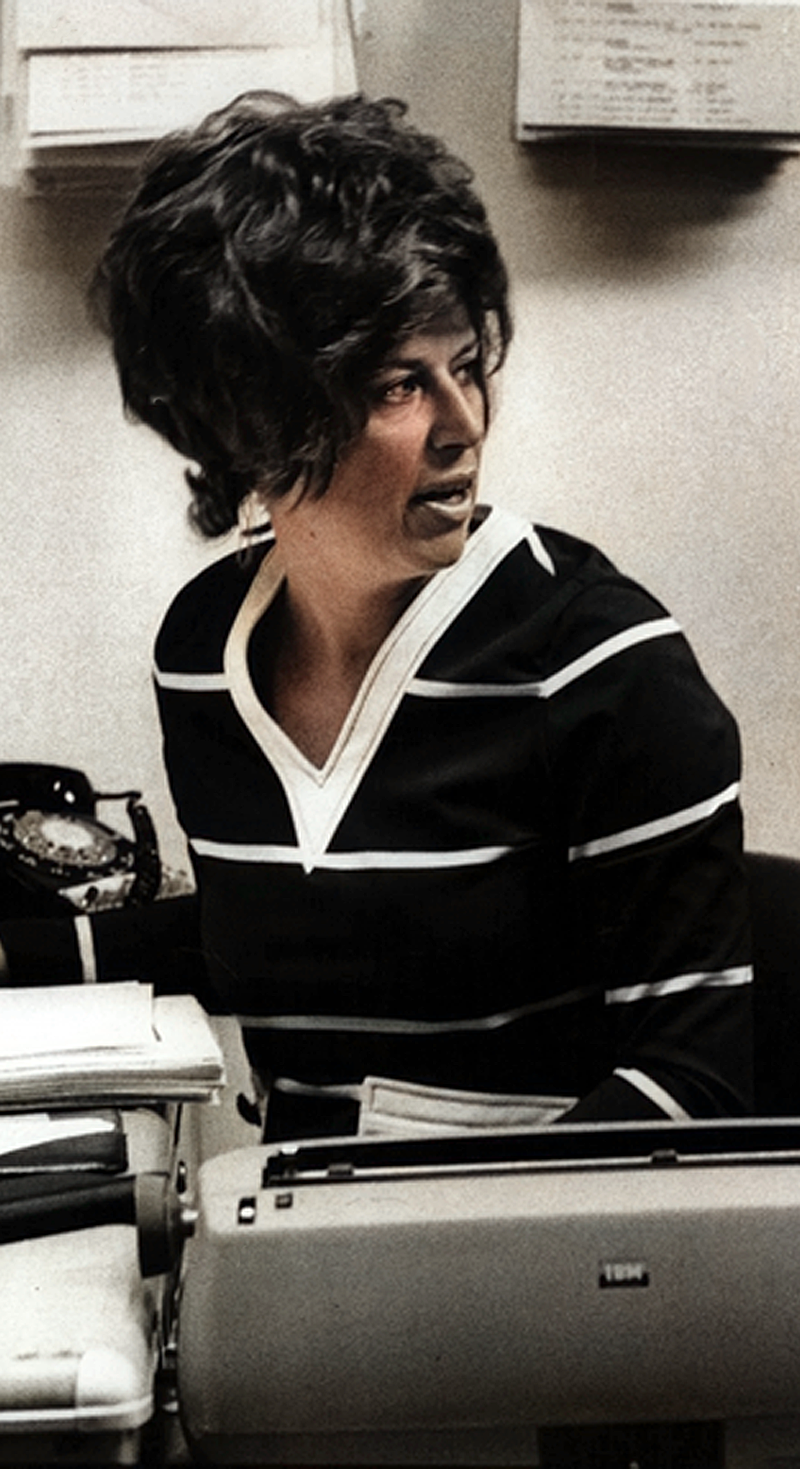
Rosalie Trombley circa 1972.
Bob Seger
Seger’s early career struggled for traction—until Rosalie championed him. CKLW’s heavy airplay of “Ramblin’ Gamblin’ Man” and later tracks helped propel him from regional favorite to national star. Seger later honored her in the song “Rosalie” on his 1973 album Back in ’72, immortalizing her influence.
Elton John
Elton John’s American breakthrough owes part of its momentum to CKLW’s early support. Trombley recognized his potential before many U.S. programmers did, helping accelerate his rise. Elton John credits Rosalie Trombley for single-handedly launching his single, “Bennie And the Jets”, when Rosalie first heard it and placed it for air play in the CKLW rotation in 1974. Never intended as a release as a single, the song originally was an album track from his platinum album ‘Goodbye, Yellow Brick Road’. According to Wikipedia, the track was a massive hit in the United States and Canada, released as an A-side using the spelling “Bennie”. In most territories the track was released as the B-side of “Candle in the Wind”. The single hit the Billboard Hot 100 at #1 and was placed at #9 overall for year’s-end, 1974.
And there’s more . . . .
Her early spins helped launch or elevate countless artists, including Gordon Lightfoot, Aerosmith, Bruce Springsteen, Earth, Wind & Fire, Stevie Wonder, and The Commodores. Her influence crossed genres—rock, soul, pop, R&B—and crossed borders, shaping both Canadian and American music landscapes.
The Power of CKLW and the Big 8 Sound
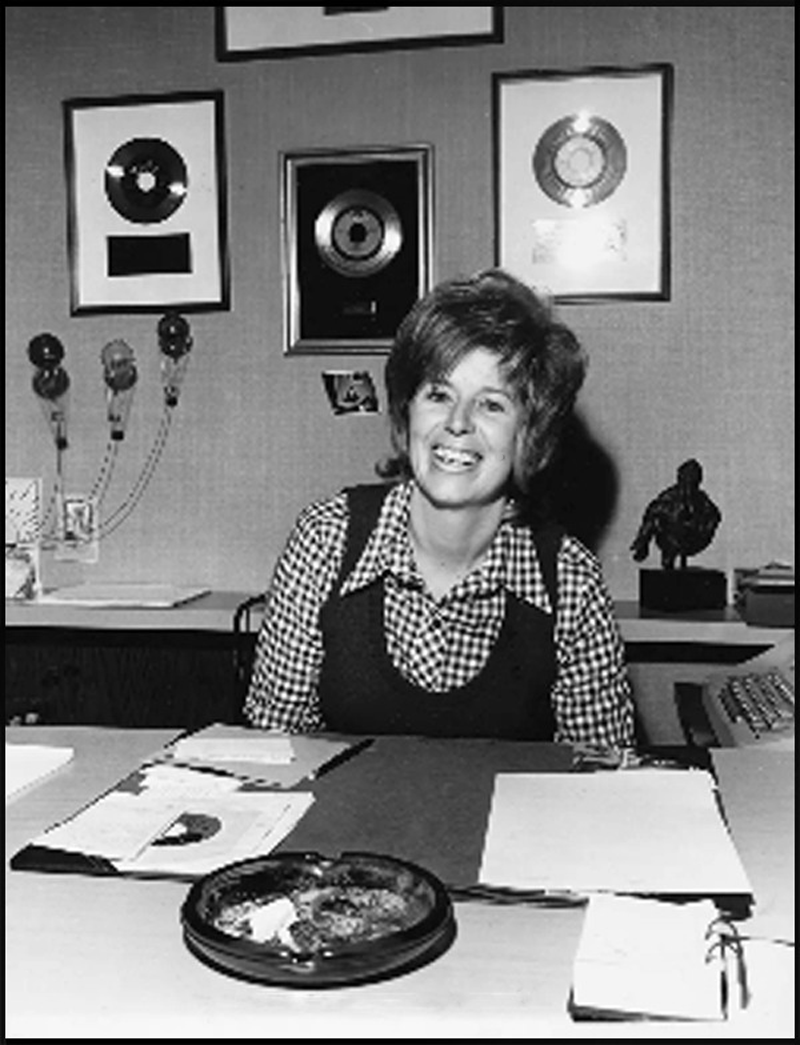 CKLW’s format was revolutionary: tight playlists, high‑energy jingles, fast pacing, and compelling news and production. But the heart of the station—the engine that powered its chart dominance—was Rosalie’s music direction.
The station became one of the top‑rated outlets in North America, influencing Billboard and Cash Box charts and serving as a breakout platform for new artists. When Rosalie added a record, labels pressed more copies. Artists booked more gigs. Other stations followed suit.
She was, in every sense, a power broker in the music industry.
A Woman in a Man’s World
Rosalie Trombley’s rise was extraordinary not only because of her talent, but because of the era in which she rose. In the 1960s and 1970s, radio programming was overwhelmingly male. Women were rarely given authority in music selection, let alone at a major‑market station. Yet Rosalie commanded respect from the biggest names in the business.
Record promoters lined up outside her office. Artists visited her personally. Executives flew to Windsor hoping for a few minutes of her time.
She was known for being direct, honest, unintimidated, uncompromising, and fair. She didn’t play favorites. She didn’t bend to pressure. She didn’t chase trends—she set them.
Her success opened doors for future generations of women in programming, A&R, and music direction.
The Challenges of the 1980s
By the early 1980s, CKLW faced new pressures. Canadian content regulations, shifting audience habits, and changes in ownership affected the station’s direction. Rosalie continued to influence charts well into the decade, but the station’s format evolution eventually led to her departure in 1984.
Even after leaving CKLW, her reputation remained legendary. Artists continued to credit her for their breakthroughs. Industry veterans spoke of her with reverence. And her legacy only grew as the decades passed.
Honors, Recognition, and Legacy
Rosalie Trombley’s influence extended far beyond CKLW’s walls. During her tenure from 1968 to 1984, she was widely regarded as the #1 Music Director in the United States, a remarkable distinction for anyone — and even more so for one of the very few women in Top 40 programming at the time. She received a Special Juno Award recognizing her impact on Canadian music. Years in the planning, Windsor erected a statue in her honor, ensuring her presence remains part of the city’s cultural landscape.Her uncanny ability to identify future hits helped launch or accelerate the careers of Alice Cooper, Aerosmith, Bob Seger, Elton John, Earth, Wind & Fire, Ted Nugent, and The Guess Who. Seger immortalized her impact in his 1973 song “Rosalie,” a testament to the respect she commanded among artists.
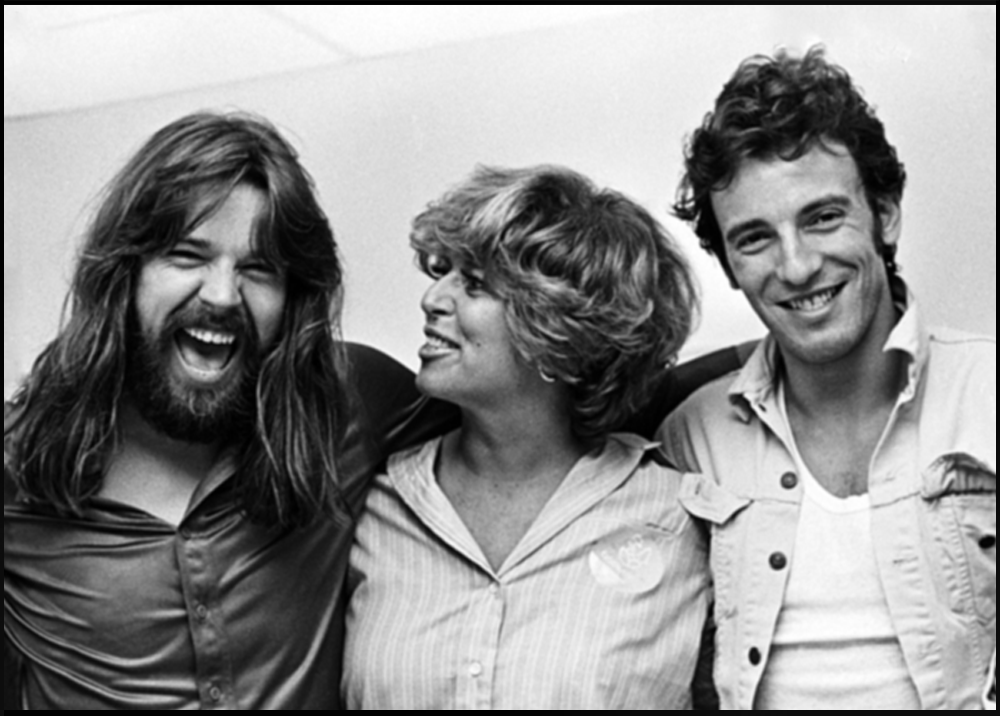
Bob Seger, Rosalie, and Bruce Springsteen, 1970s.
Her influence became so deeply woven into the fabric of North American music culture that Canadian Music Week established an annual award in her name, honoring excellence in music programming and acknowledging her profound impact on both Canadian and American radio. CKLW’s unique position — broadcasting from Windsor, Ontario while shaping the Detroit market — meant Rosalie’s decisions resonated across borders, elevating artists on both sides of the river.
And in 2022, Rosalie Trombley received one of the industry’s highest honors: a Legends Induction into the Radio Hall of Fame, cementing her place among the most important and influential figures in broadcasting history. It was a recognition long overdue, and one that affirmed what artists, programmers, and historians had known for decades: Rosalie Trombley didn’t just shape playlists — she shaped the sound of a generation.
Despite the honors she has received, one major recognition remains conspicuously absent. For years, there has been a growing movement among broadcasters, artists, historians, and fans to see Rosalie Trombley inducted into the Rock & Roll Hall of Fame in Cleveland. Her influence on the trajectory of popular music — from breaking artists to shaping the sound of an entire era — places her squarely among the figures whose work defined rock and roll’s evolution. Yet, to date, the Hall has not acted on those calls. The ongoing effort to secure her induction stands as a testament to both her impact and the passionate belief that her contributions merit a place among the genre’s most influential architects.
Her legacy lives on in the artists she helped launch, the programmers she inspired, the women she empowered, and the sound of modern Top‑40 radio.
Passing and Reflection
Rosalie Trombley passed away on November 23, 2021, at the age of 82. Tributes poured in from across the music and broadcasting worlds. Many described her as a mentor, a visionary, and a pioneer. Others simply said she changed their lives.
Her passing marked the end of an era, but her influence remains woven into the fabric of North American music history.
_____________________
_____________________
Afterthoughts: The 2023 Rosalie Trombley Commemorative Day
Windsor, Ontario — Sunday, September 17, 2023
More than fifty years after Rosalie Trombley helped shape the radio sound of North America, Windsor honored her with a celebration worthy of her legacy. The city’s Open Streets Festival transformed Riverside Drive into a living tribute, drawing hundreds of radio veterans, musicians, historians, and fans to witness the unveiling of a statue dedicated to the woman whose golden ear changed the course of popular music.
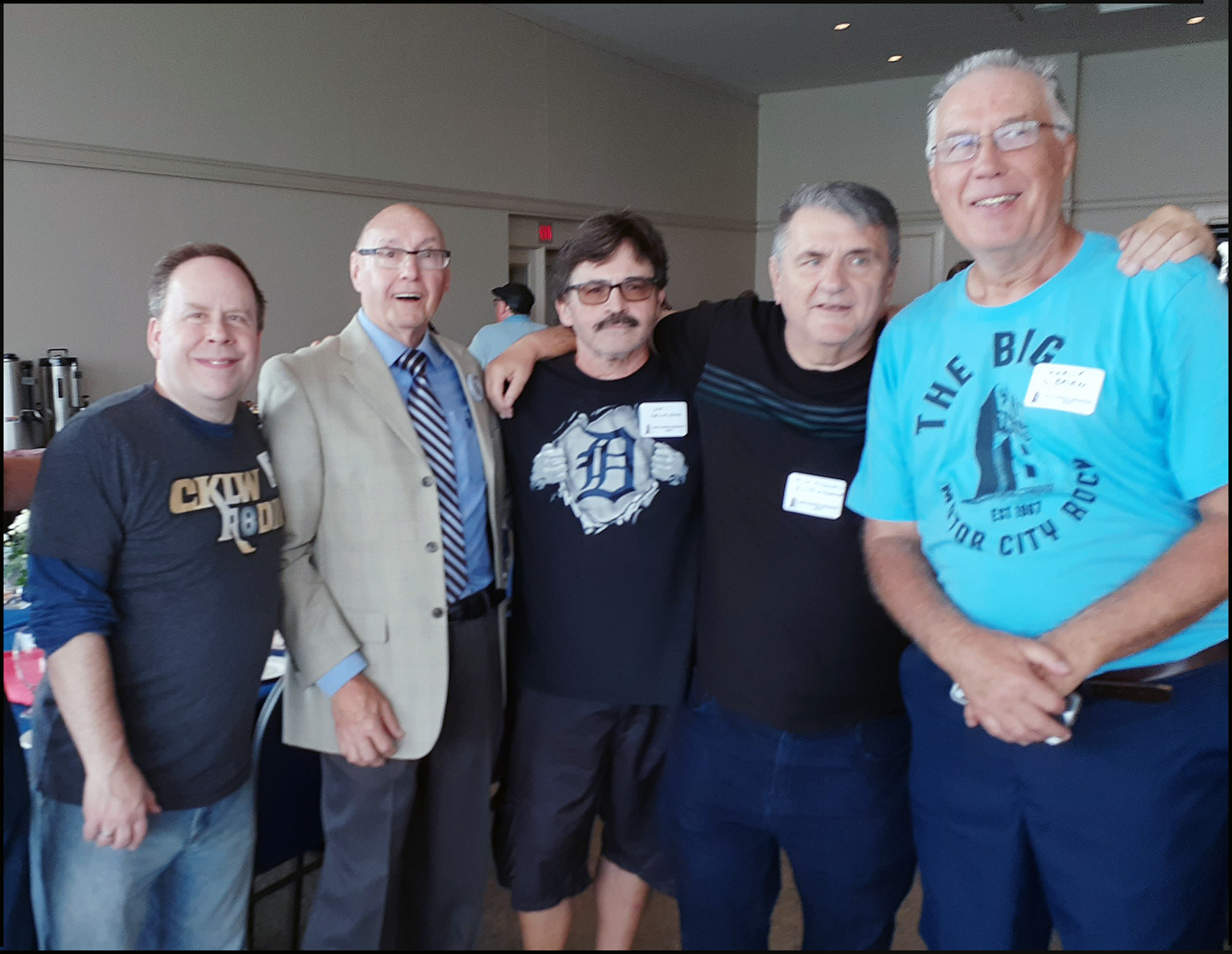
After the reception at Saint Clair College in Windsor, Ontario, following the unveiling of the statue honoring former CKLW Music Director ROSALIE TROMBLEY. Left to righr: Musicologist JIM JOHNSON, CKLW alumnus LEN ROBINSON, Motor City Radio Flashbacks’ curator JIM FELICIANO, Blitz Magazine – The Rock And Roll Magazine For Thinking People Editor / Publisher MICHAEL McDOWELL, CKLW alumnus and big8radio.com CEO CHARLIE O’BRIEN. (Copyright 2023, Blitz Magazine. All rights reserved).
The ceremony was led by Windsor Mayor Drew Dilkens, Saint Clair College President Patti France, and sculptor Donna Jean Mayne, whose bronze likeness of Rosalie now stands as a permanent reminder of her influence. But the emotional center of the event belonged to Burton Cummings, who graciously accepted the invitation by Trombey’s immediate family to honor the woman who helped launch his career.
Cummings spoke with raw gratitude, recalling the early days of The Guess Who and the moment Rosalie placed “These Eyes” into heavy rotation at CKLW. That decision, he said, changed everything — opening the door to Detroit, to America, and to the world. He credited Rosalie with giving him a life he never could have imagined: the tours, the gold records, the enduring legacy. “I would not be here without Rosalie,” he reflected.
The unveiling also became a reunion of CKLW legends. Charlie O’Brien, Jo‑Jo Shutty‑MacGregor, Pat Holiday, Ted Richards, Scott Miller, Joe Donovan, Keith Radford, Jon Belmont, Len Robinson, Randall Carlisle, Jack Anthony, and other CKLW luminaries who knew and worked with Trombley gathered once more — a constellation of Big 8 history standing together in tribute to the woman who had shaped their professional lives. Their presence affirmed what insiders had always known: Rosalie didn’t just build a radio station; she built a family.
Also present were the chroniclers and preservationists of radio’s history — the people who have spent their lives documenting, analyzing, and safeguarding the legacy of Top 40 music and the artists who shaped it. Among them were Art Vuolo, widely known as ‘Radio’s Best Friend’; Sean Ross, one of the industry’s most respected analysts; Michael McDowell, publisher and editor of Blitz: The Rock & Roll Magazine for Thinking People; Jim Johnson, esteemed Motor City musicologist; and Jim Feliciano, presently co‑publisher of the USA Radio Museum and former curator of Motor City Radio Flashbacks website.
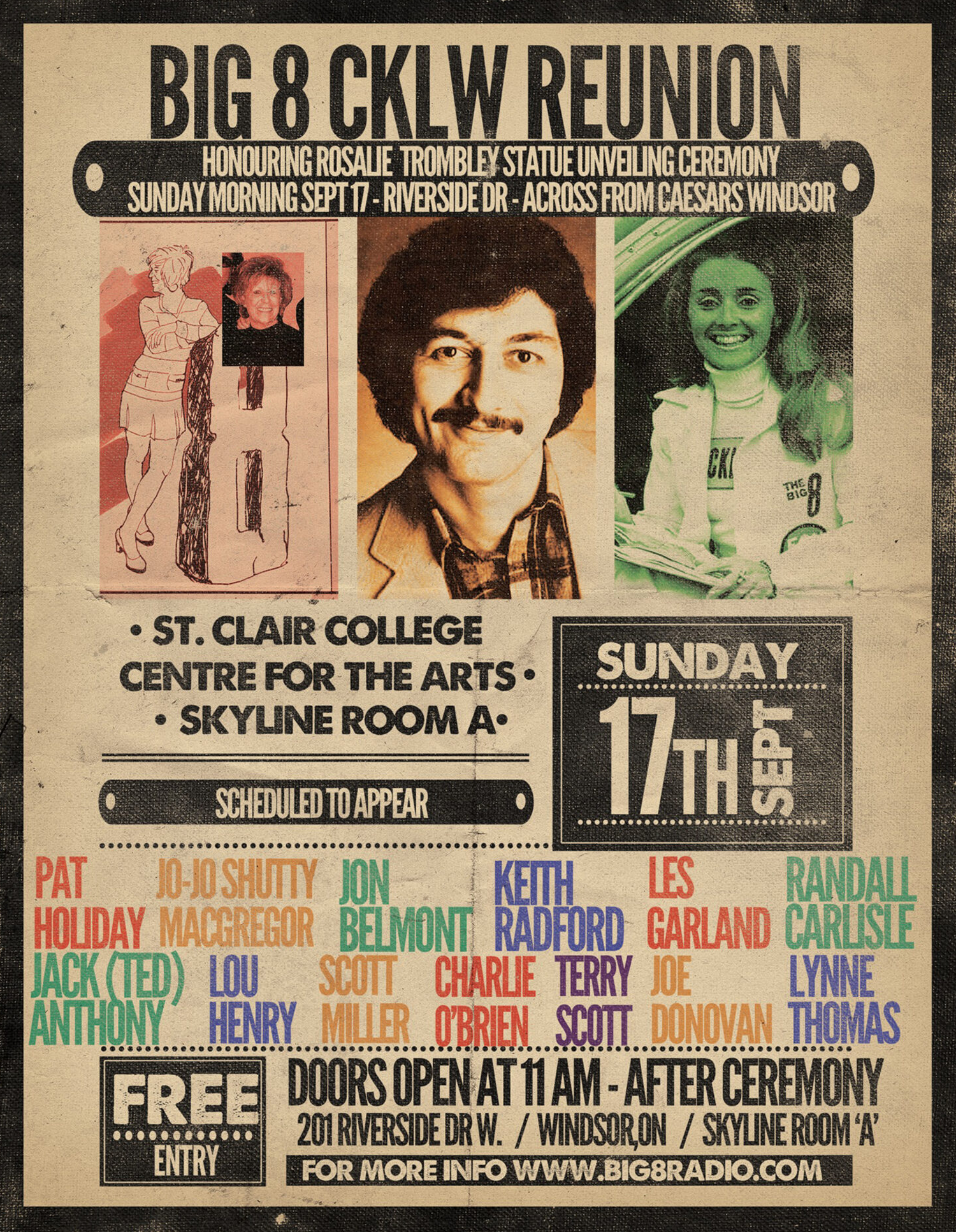
Poster courtesy of Charlie O’Brien and Big 8 Radio.
Their attendance underscored a generational responsibility: to ensure that Rosalie’s influence is not only remembered, but preserved, studied, and passed forward.
The day was filled with emotion, humor, and memory of a life cherished and celebrated. Rosalie’s son, Tim Trombley, offered heartfelt reflections on his mother’s ability to balance her pioneering work at CKLW with the responsibilities of raising a family — a reminder that behind her professional brilliance stood a woman of extraordinary strength and devotion.
Immediately after the official unveiling outdoors at the shoreline plaza across the street from the Windsor Casino, CKLW legend Ted Richards brought a burst of laughter to the Rosalie Trombley memorial dinner with a story about “the record Rosalie hated” — the 1970s novelty hit “Convoy.” Rosalie famously relegated the song to late‑night rotation, a small but revealing glimpse into her uncompromising standards and her wonderfully wry sense of humor. One could almost imagine the studio memo: “CONVOY — To be played OVERNIGHTS only.” It was a record she simply didn’t care for, and according to Richards, it just may well have never been played on CKLW throughout the day-time hours!
Today, the statue stands proudly at Riverside Drive and McDougall Street, overlooking the city she helped put on the musical map. It is more than a monument; it is a testament to a woman whose instincts shaped generations of artists, whose decisions influenced millions of listeners, and whose radio legacy continues to echo across North America.
______________________________
Contact: jimf.usaradiomuseum@gmail.com
______________________________
A USARM Viewing Tip: On your PC? Mouse/click over each image for expanded views. On your mobile or tablet device? Finger-tap all the above images inside the post and stretch image across your device’s screen for LARGEST digitized view. Then click your brower’s back arrow to return to the featured post.
© 2026 USA Radio Museum. All rights reserved.

https://en.wikipedia.org/wiki/Rosalie_Trombley
REMEMBERED R.I.P. CKLW TOP 40 ERA END!