
A Nation Listening: Radio, Memory, and the Challenger Tragedy A USA Radio Museum Commemorative Reflection on January 28, 1986 On the morning of Ja
A Nation Listening: Radio, Memory, and the Challenger Tragedy
A USA Radio Museum Commemorative Reflection on January 28, 1986
 On the morning of January 28, 1986, the United States awoke with the kind of optimism that only a space launch could inspire. The Space Shuttle Challenger stood poised on Launch Complex 39B at Cape Canaveral, its white fuselage gleaming against a crystalline winter sky. It was to be the 25th shuttle mission—routine by NASA standards, yet extraordinary for the millions of schoolchildren who would watch one of their own, teacher Christa McAuliffe, make history as the first civilian educator in space. The nation’s classrooms were tuned in. Families gathered around televisions. And across the country, radios crackled with anticipation as networks prepared for live coverage.
No one could have imagined that within minutes, the day would become one of the most searing tragedies in American memory. — USA RADIO MUSEUM
_____________________
The Morning of Hope
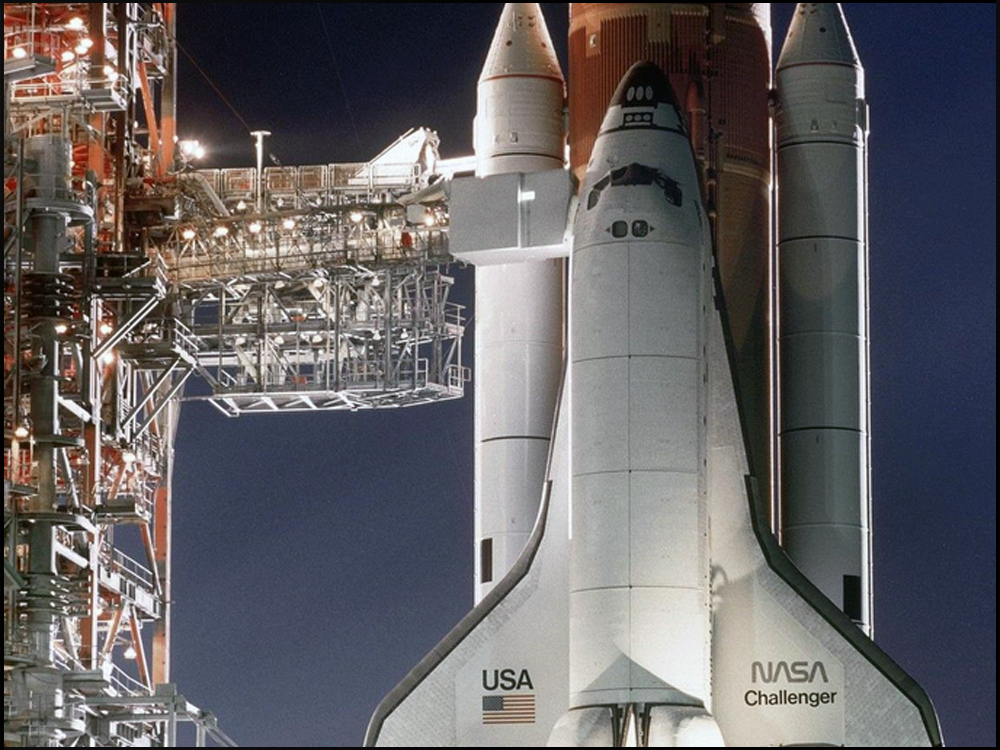 The hours leading up to the launch carried a sense of celebration. NASA had postponed the mission several times due to weather and technical concerns, but on that cold Tuesday morning, the countdown resumed. The temperature hovered below freezing—rare for Florida—and icicles clung to the launch tower. Yet the mood remained buoyant. The Teacher in Space program had captured the imagination of the country, and Christa McAuliffe’s presence on the crew symbolized a renewed connection between the space program and everyday Americans.
Radio networks prepared accordingly. CBS Radio, ABC, Mutual, and NPR all had correspondents stationed at Cape Canaveral. Their voices conveyed the familiar cadence of launch-day coverage: the final checks, the go/no-go confirmations, the rising excitement as the shuttle’s engines roared to life.
For many listeners, radio was the preferred medium. It allowed them to carry the launch with them—in cars, in classrooms, in offices, in kitchens. The sound of the countdown, the ignition, the liftoff—these were moments that radio delivered with a kind of purity. You didn’t need to see the shuttle rise; you could feel it in the broadcaster’s voice.
The sense of anticipation that defined the morning made what followed all the more devastating. As the shuttle climbed into the sky, the nation watched with pride and expectation. But within moments, that optimism gave way to confusion, disbelief, and a sudden rupture in the narrative of routine spaceflight. The shift from celebration to catastrophe was instantaneous, and it is in that moment that the story of January 28, 1986 truly begins.
The Moment of Disaster
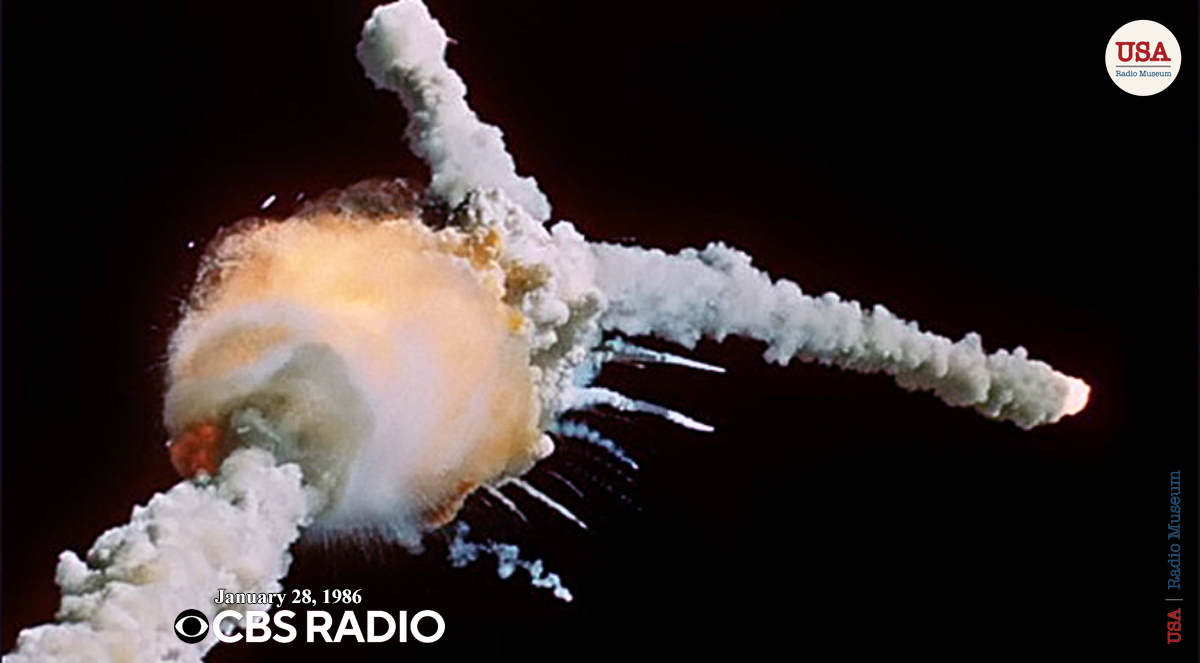
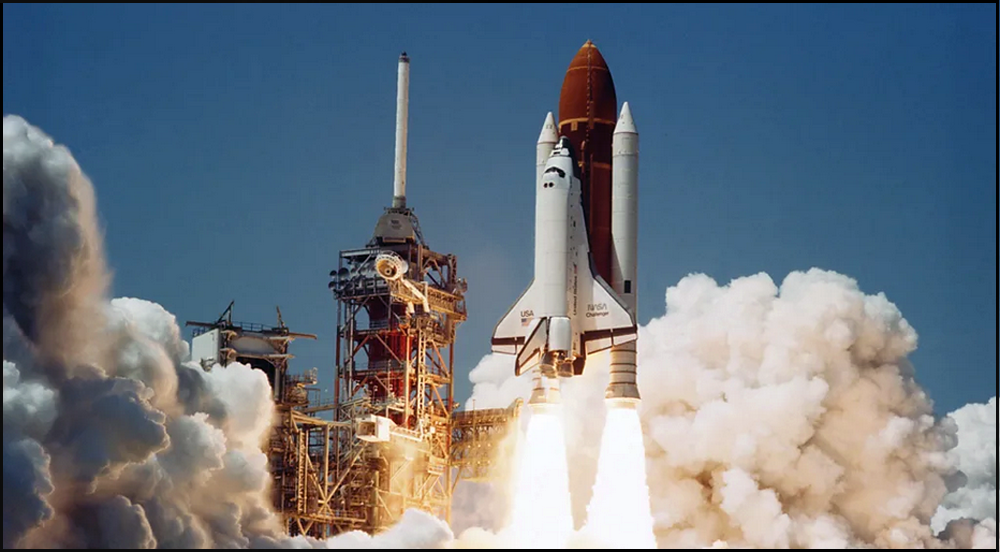
At 11:38 a.m. EST, Challenger lifted off, its ascent appearing smooth and controlled. But at 73 seconds into the flight—11:39:13 a.m. EST—the shuttle broke apart in a burst of flame and smoke. On television, the image was shocking. On radio, the shock was conveyed through something even more visceral: the sudden break in a broadcaster’s voice, the hesitation, the uncertainty, the attempt to describe the indescribable.
CBS Radio’s Special Report captured this moment with a starkness that remains haunting. The correspondent’s tone shifted from routine narration to stunned disbelief. Words came slowly, carefully, as the reality of what had happened began to take shape. There was no script for this. No prepared language for a shuttle disintegrating before the nation’s eyes.
Radio listeners heard the rawness of the moment—the pauses, the breaths, the struggle to maintain composure. In those first minutes, broadcasters became the nation’s eyes, interpreting what they saw with a mixture of professionalism and humanity. They were not detached observers; they were witnesses, processing the tragedy alongside their audience.
The shock of the explosion reverberated far beyond Cape Canaveral. What began as a technical anomaly quickly became a national trauma, carried across the country through the voices of broadcasters struggling to comprehend what they had just witnessed. As the plume of smoke lingered in the sky, the nation entered a period of stunned silence, searching for answers and trying to make sense of the unthinkable. That collective moment of disbelief set the stage for the emotional landscape that unfolded in the hours ahead.
A Nation in Shock
 As news bulletins spread across the airwaves, the country entered a collective state of disbelief. Schools that had gathered students to watch the launch scrambled to turn off televisions. Offices fell quiet. People reached for radios, seeking clarity, seeking reassurance, seeking connection.
Radio stations across the country interrupted programming with special reports. Some anchors struggled to maintain composure; others leaned into the solemnity of the moment. The language was careful, respectful, and measured. Broadcasters understood the gravity of their role: they were not only delivering news—they were guiding the nation through grief.
In the hours that followed, radio became a lifeline. It provided updates from NASA, reactions from officials, statements from the White House, and reflections from astronauts and experts. But it also provided something more subtle: companionship. The human voice, steady and empathetic, helped listeners process the enormity of the loss.
For many Americans, the memory of that day is inseparable from the sound of radio. The tone of the announcer. The quiet moments between updates. The sense that, even in tragedy, they were not alone.
As the initial shock settled, the focus shifted from the event itself to the people aboard the shuttle. The nation’s grief became personal, centered on the seven astronauts whose lives were lost in the tragedy. Their names, their stories, and their dreams became the heart of the unfolding narrative. To understand the full weight of the moment, one must pause to remember who they were and what they represented.
The Crew We Lost
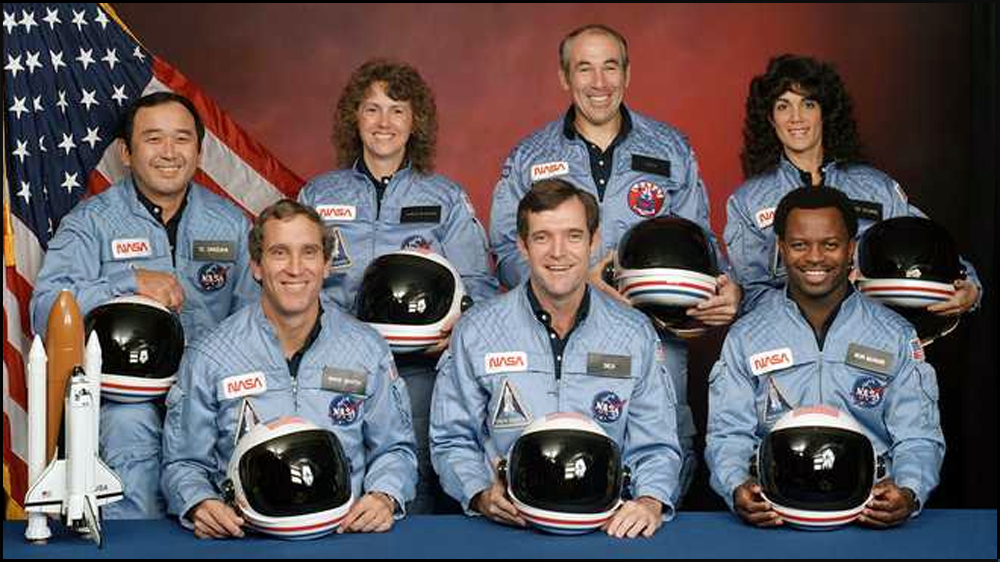 The seven astronauts aboard Challenger represented the best of the nation’s spirit—courageous, curious, dedicated to exploration and discovery. Their names became part of the national vocabulary, spoken with reverence and sorrow: Francis R. Scobee, Michael J. Smith, Ronald McNair, Ellison Onizuka, Judith Resnik, Gregory Jarvis, and Christa McAuliffe.
Christa McAuliffe, in particular, held a unique place in the public’s heart. As a teacher, she represented the everyday American invited into the extraordinary world of spaceflight. Her presence on the mission brought millions of students into the story. Her loss was felt not only as a national tragedy, but as a personal one for countless children who had followed her journey.
Radio honored each crew member with profiles, interviews, and reflections. Stations replayed earlier conversations with the astronauts, allowing listeners to hear their voices once more. These recordings became part of the nation’s grieving process—a way to remember not only how they died, but how they lived.
The loss of the Challenger crew was not only a national tragedy; it was a moment that demanded interpretation, compassion, and steadiness from the voices entrusted to carry the news. As the nation struggled to absorb the enormity of what had happened, radio became the medium through which millions processed their first emotions. It was in those early minutes—when facts were scarce, fear was rising, and disbelief hung in the air—that radio revealed its deepest strength. This leads naturally to the way broadcasters became mirrors of the country’s collective grief.
Radio as a Mirror of National Emotion
In moments of crisis, radio has a unique ability to reflect the emotional state of the country. It does so not through images, but through tone, pacing, and presence. On January 28, 1986, radio mirrored the nation’s shock, sorrow, and search for meaning with a clarity that remains unforgettable.
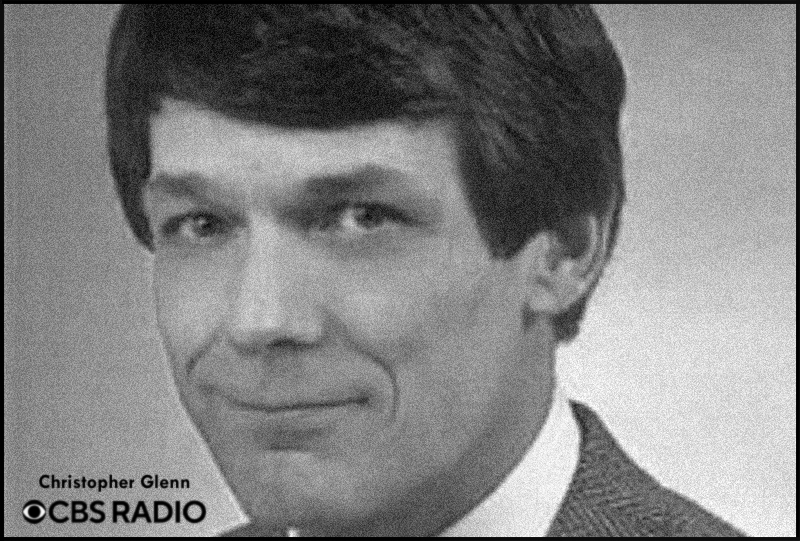
 At 11:38 a.m. EST, as Challenger rose into a cloudless Florida sky, just 73 seconds later, at 11:39:13 a.m., the shuttle was lost in a sudden plume of fire and vapor that stunned even veteran launch commentators. While television carried the images live, radio networks were forced to interpret the disaster in real time, relying on NASA’s public affairs feed and the first urgent wire flashes. Within two to three minutes, as confirmation reached the newsroom, Christopher Glenn broke into CBS Radio programming—at approximately 11:42 to 11:43 a.m. EST—with one of the earliest national audio bulletins of the tragedy. His voice, steady but weighted with disbelief, became the moment many Americans first learned that something had gone terribly wrong. The timing of Glenn’s bulletin places it squarely in the immediate aftermath of the explosion, capturing the raw shock of a nation still struggling to understand what it had just witnessed.
[Note:You will hear three CBS Radio net/bulletins in this presentation.]
 Broadcasters across the country spoke slowly, choosing words with care. They avoided speculation, focusing instead on verified information. They acknowledged the uncertainty, the fear, the sadness. They allowed themselves to be human.
Listeners heard not only the news, but the emotion behind it. They heard the tremble in a correspondent’s voice. They heard the solemnity of a network anchor delivering updates. They heard the compassion in the voices of experts and officials. In those moments, radio became more than a medium—it became a national gathering place, a shared space where grief could be expressed, processed, and understood.
The emotional weight carried through the airwaves that morning set the stage for what would follow in the hours ahead. As the shock settled into sorrow, the nation looked to its leaders for clarity and comfort. Radio, having already guided listeners through the immediate aftermath, now became the channel through which the country would hear its first attempt at meaning-making. That evening, the President addressed a grieving nation, and once again, radio delivered the moment with an intimacy that shaped how Americans experienced it.
_____________________
CBS Radio News | Christopher Glenn | January 28, 1986
Audio Digitally Remastered by USA Radio Museum
_____________________
Special Audio Source Acknowledgement
This recording is presented courtesy of the exceptional Past Daily website and is the property of its founder and curator, Gordon Skene, whose remarkable archive continues to preserve and share historic audio of lasting cultural significance. The featured broadcast—like many in Past Daily’s vast collection—was made freely available for streaming play and downloading in the earlier years of the site. During that period, the author acquired numerous historic recordings from Past Daily, several of which have been respectfully featured on the (former) Motor City Radio Flashbacks website over the years—to the site’s (and the owner’s) sole credit. Founded in 2012, Past Daily remains active and thriving online, dedicated to preserving and presenting audio history to a global audience. To support their ongoing mission and explore more of their archival treasures, please visit Past Daily—or simply click HERE.
_____________________
The Presidential Address and the Role of Radio
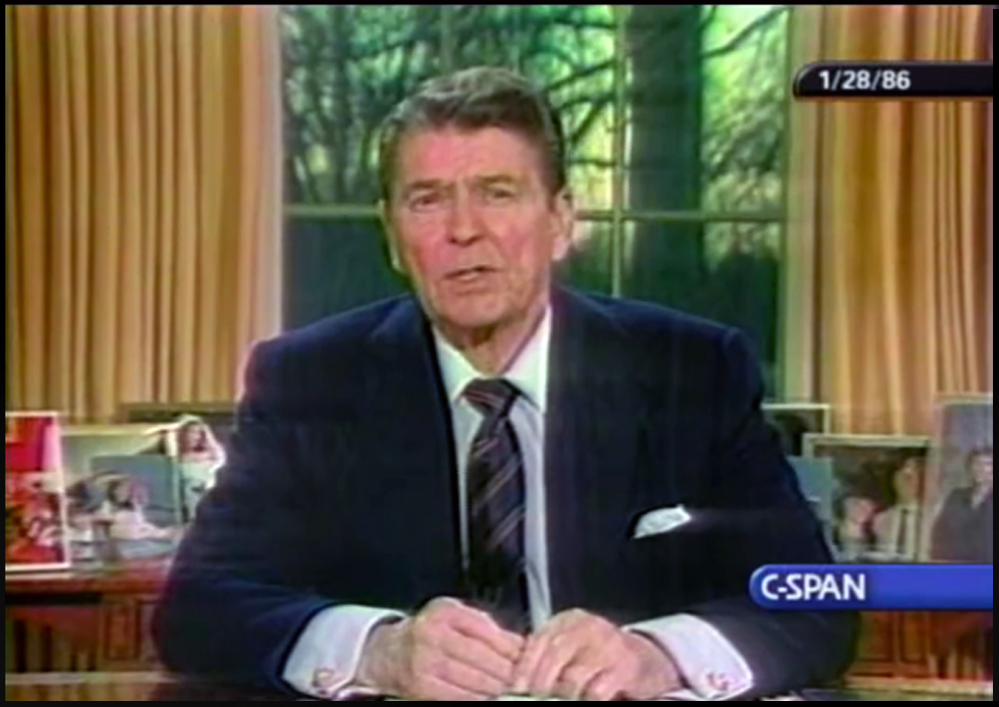 That evening, as the nation struggled to comprehend the magnitude of its loss, President Ronald Reagan addressed the country in a message carried live across radio networks. For millions who were no longer watching television, it was the sound of his voice—steady, solemn, and deeply human—that offered the first sense of collective mourning. Radio once again became the nation’s gathering place, delivering not just the words of a president, but the emotional cadence of a country in grief.
Reagan’s tribute to the Challenger Seven reached its most poignant moment when he spoke directly to the memory of the crew, offering a line that has echoed through four decades of remembrance:
“We will never forget them, nor the last time we saw them… as they prepared for their journey and waved goodbye and ‘slipped the surly bonds of earth’ to ‘touch the face of God.’”
In the silence that followed, radio carried something more than a presidential address — it carried a nation’s grief. Listeners heard the tremor beneath the resolve, the compassion behind the cadence, and the unmistakable sorrow in the pauses between his words. In that moment, the President’s tribute and the medium that delivered it became intertwined: a voice speaking into the darkness, and millions of Americans leaning in to hear. Through radio, those final lines — about waving goodbye, slipping the surly bonds of earth, and touching the face of God — became not just poetry, but a shared act of remembrance. It was radio that transformed those words into a collective heartbeat, allowing the country to mourn together, even while scattered across distance and disbelief.
The Days That Followed
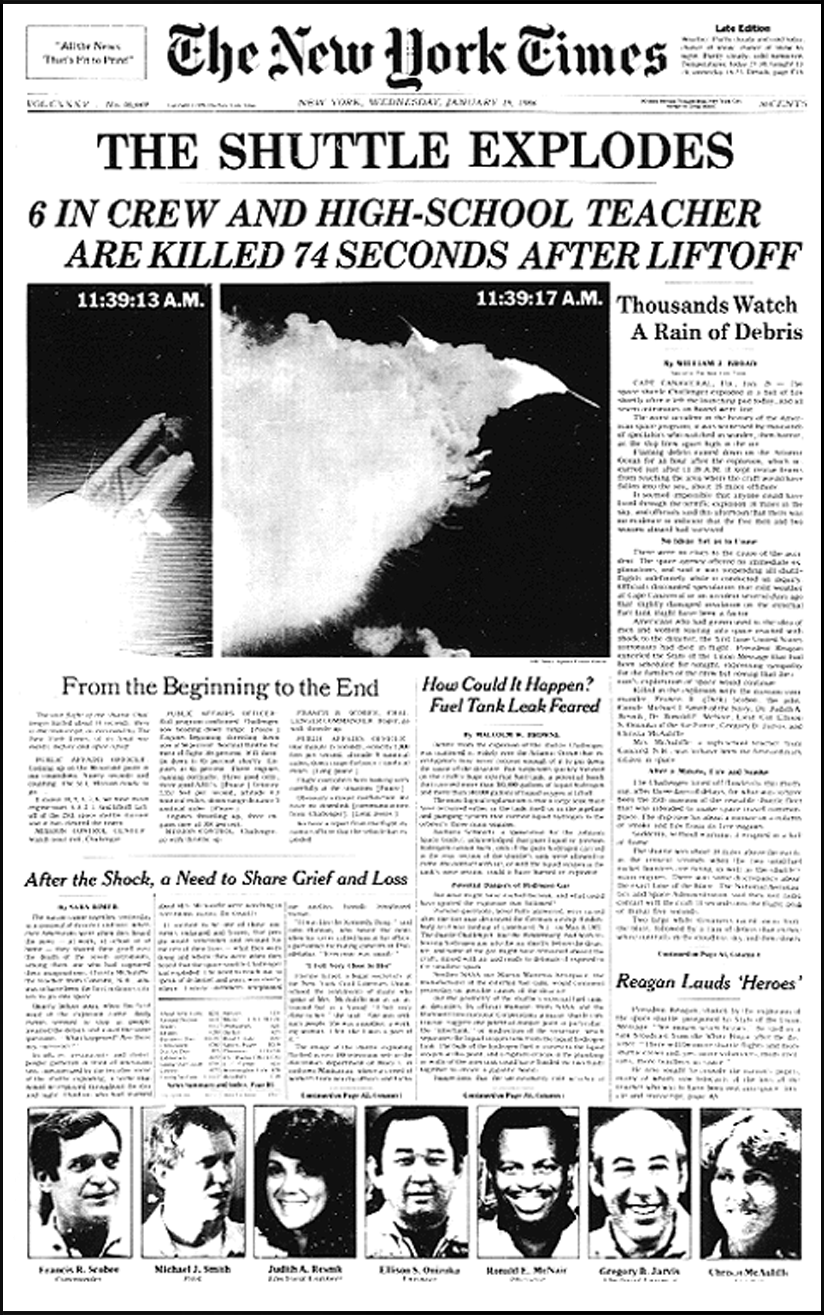 In the days after the tragedy, radio continued to play a central role. Stations aired memorials, interviews with educators, conversations with NASA officials, and reflections from astronauts who had flown with the crew. They replayed earlier launch-day coverage, allowing listeners to revisit the moment with new understanding.
Talk radio programs opened their lines to callers who shared their grief, their memories, their questions. Public radio stations aired long-form documentaries exploring the history of the shuttle program, the risks of spaceflight, and the legacy of exploration.
Radio did not rush the nation through its grief. It walked with listeners, step by step, offering context, comfort, and connection.
As the immediate shock gave way to deeper reflection, attention turned to the recordings themselves—the broadcasts that captured the raw emotion of the moment. These audio documents, preserved with care, became more than news reports; they became artifacts of national memory. Their preservation allows us to revisit not only what happened, but how it felt. This brings us to the enduring legacy of the Challenger tragedy within the radio archive.
Why We Remember

Christa McAuliffe.
The Challenger tragedy remains one of the most defining moments in the history of American spaceflight. But it is also a defining moment in the history of American broadcasting. It revealed the essential role of radio in times of crisis. It demonstrated the power of the human voice to carry not only information, but emotion. It showed that, even in an age of television, radio remained a vital thread in the fabric of national life.
We remember the crew.
We remember the moment.
We remember how radio carried us through.
And so, as we reflect forty years later, we do so with a deeper appreciation for the courage of the crew, the resilience of the nation, and the role radio played in shaping our understanding of that day. The passage of time has not softened the memory; it has sharpened its meaning. This anniversary invites us not only to look back, but to consider how the legacy of Challenger continues to inspire, teach, and remind us of the enduring human spirit.
Radio did not simply report the Challenger tragedy. It carried the nation through it. And in doing so, it became part of the story. For the USA Radio Museum, this anniversary is not only a moment of remembrance—it is a reaffirmation of our mission. To preserve the broadcasts that shaped our collective memory. To honor the voices that guided us through history. To ensure that future generations can hear, feel, and understand the moments that defined us.
______________________________
Contact: jimf.usaradiomuseum@gmail.com
______________________________
A USARM Viewing Tip: On your PC? Mouse/click over each image for expanded views. On your mobile or tablet device? Finger-tap all the above images inside the post and stretch image across your device’s screen for LARGEST digitized view. Then click your brower’s back arrow to return to the featured post.
© 2026 USA Radio Museum. All rights reserved.

But Christa’s legacy was alive in 1996 on Nickelodeon’s sci-fi adventure series “Space Cases”, in the form of a spaceship simply named “The Christa”.