
A Day Selected in April — When Radio, Revolution, and Reinvention Converged Some dates in music history feel like crossroads — moments when differe
A Day Selected in April — When Radio, Revolution, and Reinvention Converged
 Some dates in music history feel like crossroads — moments when different eras, genres, and cultural energies intersect in ways that reveal how deeply music shapes the world around it. April 3 is one of those days. Across the 1960s and early 1970s, this single date captures the arc of American pop culture: the rise of socially conscious songwriting, the psychedelic counterculture, the flowering of Motown’s most poetic work, and the turbulence that shadowed rock’s most charismatic, yet highly controversial frontman.
For the USA Radio Museum, these stories aren’t just chart trivia. They’re reminders of how radio, artistry, and public life collided to create the soundtrack of a generation. Here are four defining April 3 moments — each one a window into a different corner of music history. — USA RADIO MUSEUM
_____________________
1964: Bob Dylan Enters the UK Charts — and the Times Begin to Change
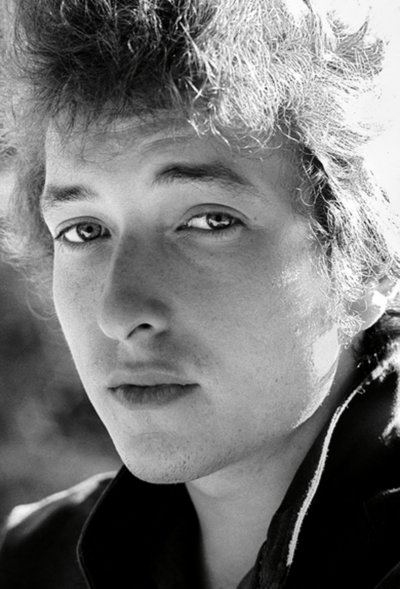
Bob Dylan, 1964.
On April 3, 1964, Bob Dylan made his first appearance on the UK charts with “The Times They Are A‑Changin’.” The song, written as a deliberate anthem for a shifting world, captured the urgency of a generation confronting civil rights struggles, political upheaval, and cultural transformation.
Dylan’s rise in the UK was pivotal. Britain was in the midst of its own musical revolution — The Beatles, The Rolling Stones, and The Animals were reshaping rock and R&B. Dylan’s arrival added a new dimension: the poet‑prophet with a guitar, whose lyrics carried the weight of social commentary.
The song’s influence would echo far beyond 1964. Two decades later, in January 1984, a young Steve Jobs recited its second verse during Apple’s annual shareholders meeting, moments before unveiling the Macintosh computer. The choice wasn’t accidental. Jobs understood that Dylan’s words — about generational shifts and the inevitability of change — spoke directly to the technological revolution he was ushering in.
That connection between music and innovation, between cultural change and technological progress, is part of what makes this April 3 milestone so enduring. Dylan wasn’t just charting in the UK; he was becoming a voice for every era that followed.
1967: George Harrison Records “Within You Without You” for Sgt. Pepper
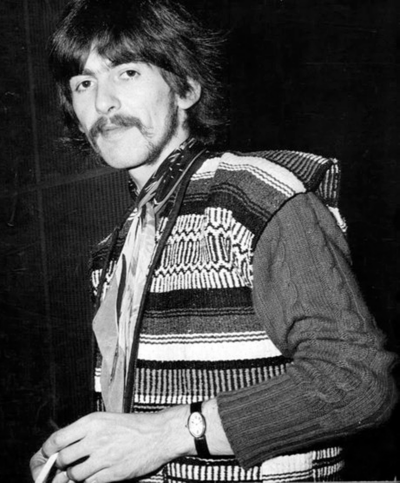
George Harrison, 1967.
Three years later, on April 3, 1967, inside Abbey Road Studios, George Harrison stepped into a creative space that would define his artistic identity. Working on The Beatles’ Sgt. Pepper’s Lonely Hearts Club Band, Harrison recorded his lead vocal for “Within You Without You,” along with sitar and acoustic guitar parts.
This session marked one of the most profound moments of Harrison’s musical evolution. His immersion in Indian classical music — guided by Ravi Shankar — had already shaped “Love You To” on Revolver, but “Within You Without You” was something deeper: a philosophical statement, a spiritual meditation, and a bold departure from Western pop structures.
The April 3 session brought together Indian musicians, classical instrumentation, and Harrison’s increasingly introspective worldview. The song’s message — about illusion, ego, and interconnectedness — reflected the counterculture’s growing fascination with Eastern thought. Yet it also stood apart from the psychedelic experimentation of the era. Harrison wasn’t chasing trends; he was following a personal path.
When Sgt. Pepper was released two months later, “Within You Without You” became one of its most debated tracks. Some listeners found it hypnotic; others found it challenging. But over time, its influence has only grown. It represents the moment when Harrison fully emerged as a songwriter with his own voice — one that would eventually lead to All Things Must Pass and a solo career defined by spiritual depth.
April 3, 1967, is the day that voice truly took shape.
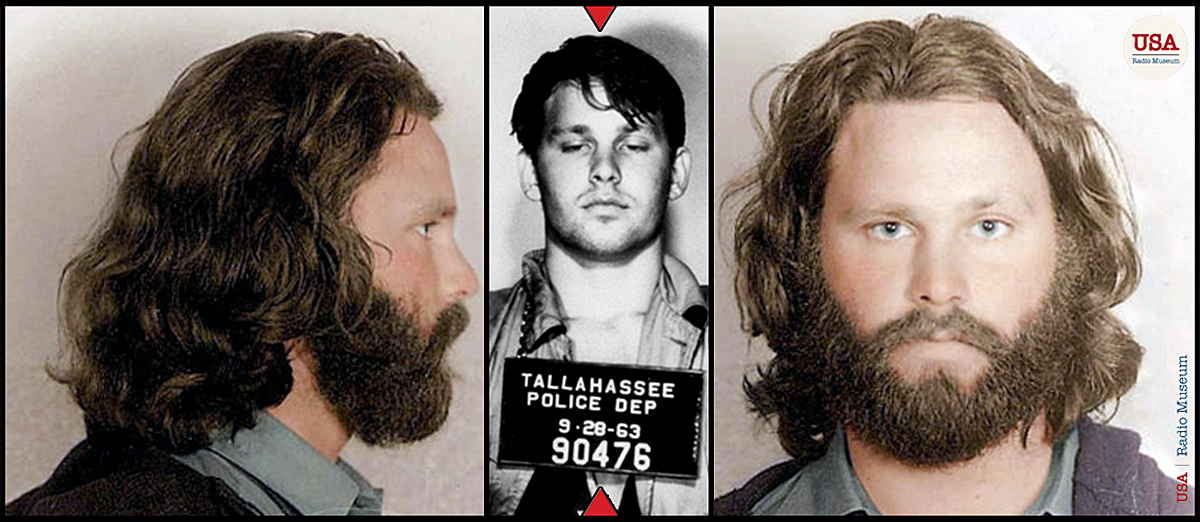
1969: Jim Morrison Turns Himself In — and Rock’s Wildest Frontman Faces the Law
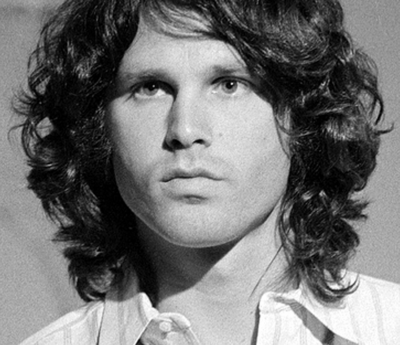
Jim Morrison, 1970.
On April 3, 1969, a very different kind of headline dominated the music world. Jim Morrison, the magnetic and unpredictable lead singer of The Doors, turned himself in to the FBI in Los Angeles. The charges — six counts of lewd behavior and public exposure — stemmed from a now‑infamous concert in Miami on March 2.
The Miami show has become one of rock’s most mythologized events. Accounts vary wildly, as they often do with Morrison: some witnesses insisted he exposed himself onstage; others swore he didn’t. What’s certain is that the performance was chaotic, fueled by Morrison’s provocations and the crowd’s escalating frenzy. In the moral climate of 1969 America — a nation caught between the counterculture and a conservative backlash — the incident became a flashpoint.
When Morrison surrendered on April 3, he was released on $2,000 bail, but the legal battle that followed would shadow the rest of his career. For radio, the moment was complicated. Some stations pulled Doors records from rotation; others doubled down, framing Morrison as a symbol of artistic rebellion.
The 1969 booking was not his first — nor would be his last.
According to the strangedaysbook.org website, quote, “. . . There are at least six officially documented cases; other stories of arrests exist, as recounted in interviews with the three remaining band members conducted over time.” Unquote.
The March 2, 1969 controversy only deepened his legacy and dark side.
In retrospect, this April 3 milestone captures the tension of the era: rock stars were no longer just entertainers — they were cultural lightning rods. Morrison’s arrest wasn’t just a legal matter; it was a referendum on the boundaries of performance, freedom, and public decency in a rapidly changing America.
1971: The Temptations Reach No. 1 with “Just My Imagination (Running Away With Me)”
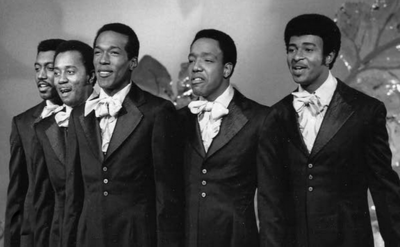
The Temptations, 1971.
Finally, on April 3, 1971, The Temptations claimed their second U.S. No. 1 with “Just My Imagination (Running Away With Me).” Today, it stands as one of the most elegant and emotionally resonant recordings in the Motown catalog.
What makes this moment so significant is how unexpected the song was. By 1971, The Temptations had reinvented themselves as pioneers of “psychedelic soul,” working with producer Norman Whitfield on socially charged, rhythm‑driven hits like “Cloud Nine,” “Ball of Confusion,” and “Psychedelic Shack.” Their sound was bold, political, and unmistakably of its time.
“Just My Imagination” was the opposite — a return to the lush, romantic, harmony‑centered style that defined their mid‑’60s work. Paul Williams and Eddie Kendricks, two founding members whose voices shaped the group’s earliest identity, deliver performances filled with longing and vulnerability. Kendricks’ falsetto floats over Whitfield’s orchestral arrangement like a memory you can’t quite let go of.
The song’s success was bittersweet. It became the final Temptations single to feature both Kendricks and Williams, whose departures marked the end of the group’s original era. Williams, battling health and personal struggles, would leave the group later that year. Kendricks, frustrated with internal tensions, embarked on a solo career.
Yet on April 3, 1971, all of that was still ahead. What listeners heard was a masterpiece — a reminder that even as Motown evolved, its artists could still reach back and create something timeless. Radio programmers embraced the track instantly, and its ascent to No. 1 reaffirmed The Temptations’ place as one of America’s most versatile and enduring vocal groups.
_____________________
A Single Date, Four Selected Worlds — One Musical Story
What ties these April 3 moments together isn’t genre or geography. It’s the way each one reflects a turning point:
• Bob Dylan becoming a global voice for change.
• George Harrison stepping into his own artistic identity.
• Jim Morrison confronting the consequences of fame and excess.
• The Temptations closing one chapter and opening another.
Each story reminds us that music history isn’t linear. It’s a constellation — moments scattered across time that illuminate one another when viewed together.
For the USA Radio Museum, April 3 is a perfect example of how radio, culture, and creativity intersect. These milestones weren’t just events; they were broadcasts, headlines, conversations, and memories shared across airwaves. They shaped listeners’ lives in real time — and they continue to resonate today.
_____________________
Sources and Credits
Research for this feature draws from This Day in Music (thisdayinmusic.com) entries for April 3; historical chart data from Billboard; Motown Records archival notes and interviews regarding The Temptations’ “Just My Imagination (Running Away With Me)”; contemporary reporting and legal documentation surrounding Jim Morrison’s 1969 Miami incident and subsequent arrest; Abbey Road Studios session logs and Beatles scholarship detailing the April 3, 1967 recording of “Within You Without You”; and cultural analyses of Bob Dylan’s “The Times They Are A‑Changin’,” including its chart history and Steve Jobs’ 1984 Apple shareholders meeting remarks.
Additional context was informed by period radio programming trends, artist biographies, and verified music‑industry reference materials.
Note: The aforementioned quote, attributed to Jim Morrison’s bookings and arrests, above, was obtained from the strangedaysbook website; by .
_____________________
Contact: jimf.usaradiomuseum@gmail.com
_____________________
A USARM Viewing Tip: On your PC? Mouse/double-click over the images for expanded views. On your mobile or tablet device? Finger-tap all the above images inside the post and stretch image across your device’s screen for LARGEST digitized view. Then click your browser’s back arrow to return to the featured post.
© 2026 USA Radio Museum. All rights reserved.
