
The TM Productions Jingles That Stamped WJLB in Time (1977–1979) Some stations play music. A rare few define the emotional temperature of a city. I
The TM Productions Jingles That Stamped WJLB in Time (1977–1979)
Some stations play music. A rare few define the emotional temperature of a city. In Detroit, during the 1960s and ’70s, no AM signal carried more cultural weight, community presence, or spiritual grounding than WJLB 1400. Before the FM era, before “FM 98” became a Motor City powerhouse, WJLB’s AM identity was the heartbeat of Black Detroit — a station where gospel, soul, community talk, and street‑level storytelling lived in harmony.
And in the late 1970s, at the height of that identity, WJLB commissioned a set of TM Productions jingles that captured the station’s warmth, swagger, and unmistakable Detroit soul. These jingles — now preserved in the USA Radio Museum archives — are more than sonic branding. They are cultural artifacts. They freeze a moment when WJLB was both a community anchor and a musical force, and when Detroit radio was undergoing one of its most dynamic transitions.
As we mark April 7, we honor this remarkable slice of broadcast history: the voices, the jingles, and the era that made WJLB 1400 a Detroit original. — USA RADIO MUSEUM
_____________________
A Station Rooted in Community, Spirit, and Soul
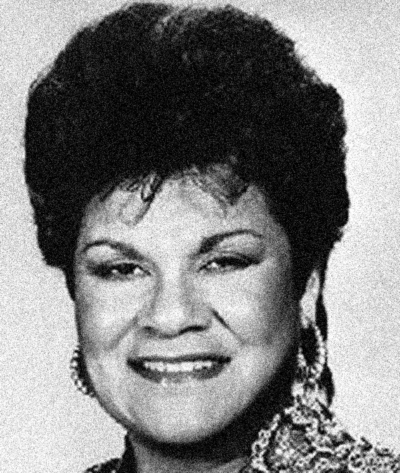
Martha Jean Steinberg.
WJLB’s identity in the late 1970s was built on decades of trust and connection. A major turning point came at the start of 1967, when Martha Jean “The Queen” Steinberg — already a rising force in Detroit radio — joined WJLB after three influential years at WCHB (1963–1966). Her arrival reshaped the station’s mission. She brought a deeply loyal audience, a spiritual authority, and a community‑first broadcasting philosophy that made her one of the most important voices in Detroit media.
By the time the TM Productions jingles were created in the late ’70s, Martha Jean had become the station’s moral and emotional center. Her presence in the sung DJ shout‑outs is not just a production flourish — it is a testament to her status as the station’s guiding light.
She was surrounded by a roster of personalities who gave WJLB its kinetic, street‑level energy:
• Lee Norris
• Claude Young
• Al Perkins
• Jay Butler
• John Edwards
• And a young Donnie Simpson, on the cusp of national stardom
Heritage Note: Jay Butler — Six Decades of Detroit Radio
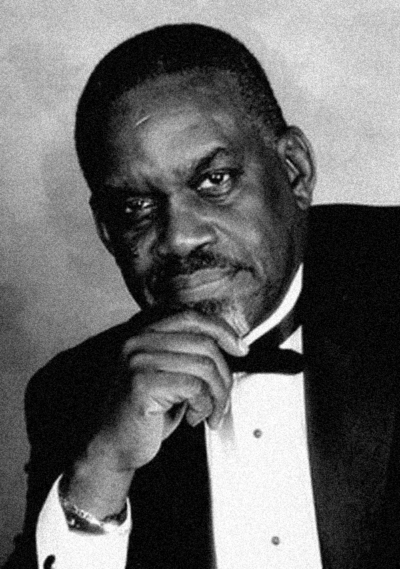
Jay Butler.
Among the names featured in WJLB’s late‑1970s TM Productions jingle package, Jay Butler stands out as one of Detroit’s longest‑serving and most versatile broadcasters. With a career spanning over 60 years, Butler remains an active presence on WDET Radio, continuing a legacy that began in the early days of Motor City soul radio in the latter 1960s.
His deep, resonant baritone — instantly recognizable to generations of Detroit listeners — has carried him across formats, eras, and stations. His influence extends beyond radio: Butler served as the on‑stage emcee introducing The Funk Brothers in the acclaimed early‑2000s documentary Standing in the Shadows of Motown, delivering one of the film’s most memorable moments.
For Detroiters who grew up with WJLB 1400 on the dial, hearing Jay Butler’s name sung in harmony on the TM jingles is more than nostalgia — it’s a reminder of a broadcaster whose voice helped define the sound of the city.
TM Productions Meets Detroit Soul
In the late ’70s, TM Productions of Dallas was at the height of its creative power. Known for lush vocal stacks, tight brass, and a modernized Top 40 sheen, TM was producing custom and semi‑custom packages for stations across the country. Their sound was polished, contemporary, and unmistakably “big city.”
But what makes the WJLB 1400 package so special is how TM adapted its signature style to fit the soul‑driven, community‑rooted identity of Detroit radio.
These weren’t jingles built for a slick CHR station.
They were built for a soul powerhouse.
Warm harmonies.
R&B‑leaning grooves.
A pacing that reflected the AM dial’s blend of music, talk, and personality‑driven programming.
And then there are the DJ shout‑outs — a hallmark of TM’s custom work during this era. Hearing names like Martha Jean, Donnie Simpson, and Lee Morris sung with full TM vocal treatment creates a bridge between two worlds: the national polish of Dallas production and the local authenticity of Detroit radio.
It’s a sound that could only have existed in that moment.
_____________________
Sidebar: TM Productions — The Dallas Sound That Shaped American Radio
 In the world of radio imaging, few names carry the legacy and influence of TM Productions. Founded in Dallas in the late 1960s, TM quickly became one of the most innovative and prolific jingle houses in the country, defining the sound of American radio throughout the 1970s and beyond.
By the mid‑to‑late ’70s, TM had perfected a signature style:
lush vocal harmonies, tight brass, rhythmic energy, and a modern sheen that made even small‑market stations sound big‑city bold.
What set TM apart was their adaptability. For soul and urban AM stations — including Detroit’s WJLB 1400 — TM softened the edges, warmed the harmonies, and leaned into R&B‑inflected grooves that honored the station’s identity without losing the polish of Dallas production.
The WJLB package preserved in the USA Radio Museum archives is a perfect example of this versatility. It carries the unmistakable TM sparkle, yet it feels grounded in Detroit — shaped by the voices, rhythms, and community spirit that defined the city’s soul scene in the late 1970s.
_____________________
Why These Jingles Matter Today
For the USA Radio Museum, this package is more than a curiosity. It represents:
1. A rare audio snapshot of WJLB before the FM transition
2. A convergence of legendary Detroit talent
3. A late‑1970s TM Productions time capsule
4. A reminder of how radio once sounded — and felt
These jingles weren’t just branding. They were emotional cues. They told listeners:
You’re home. You’re with family. You’re tuned to Detroit.
Detroit in Transition — And WJLB at the Center
The late 1970s were a turning point for Detroit radio:
• FM was spanning fast in sound and popularity
• AM music stations were fighting to stay relevant
• Urban formats were evolving
• Community‑driven programming was becoming more essential than ever
WJLB 1400 stood at the crossroads — modernizing its sound while holding tight to its roots. Within just a few years, the WJLB identity would shift to FM 98, where it would dominate Detroit radio for decades. But the AM era remains a foundational chapter in the station’s story.
These jingles are the soundtrack to that chapter.
_____________________
TM Productions, Inc. (Dallas) | WJLB Shotgun Jingles | 1977-1979
Audio Digitally Remastered by USA Radio Museum
_____________________
Preserving the Sound of a City
The USA Radio Museum is proud to preserve and showcase this (1970s-era) TM Productions jingle package as part of Detroit’s broadcast heritage. It is a reminder of the artistry behind radio imaging, the power of local voices, and the way a station can become woven into the cultural fabric of a community.
WJLB 1400 wasn’t just a frequency.
It was a gathering place.
A sanctuary.
A soundtrack to Detroit urban life.
And thanks to these TM‑produced jingles — and the WJLB personalities who defined the era — that sound still echoes in the memories of the 1970s generation who grew up with the city’s grooviest soul station long locked in at 1400 on the Detroit radio dial.
_____________________
Contact: jimf.usaradiomuseum@gmail.com
_____________________
A USARM Viewing Tip: On your PC? Mouse/double-click over the images for expanded views. On your mobile or tablet device? Finger-tap all the above images inside the post and stretch image across your device’s screen for LARGEST digitized view. Then click your browser’s back arrow to return to the featured post.
© 2026 USA Radio Museum. All rights reserved.

I Cannot wait for the WJLB fm 98’s version of TM’s “FirePlay” jingles soon Jim along with the WJLB fm 98’s version of Toby Arnold’s “The Transformer” jingles too as well, because these 2 iconic and legendary jingle packages really put the “Strong” in “Strong Songs! fm 98 WJLB”.