
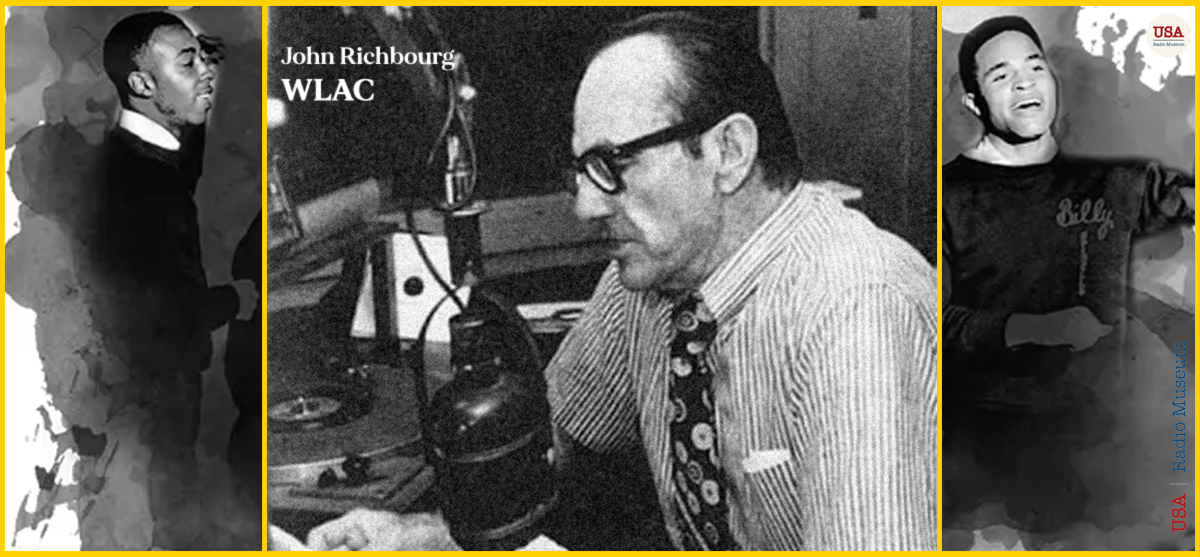
JOHN R.: THE VOICE THAT CARRIED THE BLUES ACROSS AMERICA A USA Radio Museum Tribute Feature Long before FM dominated the dial, before playlists
JOHN R.: THE VOICE THAT CARRIED THE BLUES ACROSS AMERICA
A USA Radio Museum Tribute Feature
Long before FM dominated the dial, before playlists were researched and consultants shaped every segue, there was a voice that cut through the night like nothing else on American radio. It rolled across cotton fields, small towns, big cities, and even across oceans — a warm, sly, knowing baritone that felt like it belonged to the listener alone. That voice belonged to John Richbourg, known to millions simply as John R., the late‑night king of WLAC Nashville and one of the most influential rhythm & blues broadcasters in American history.
 From the late 1940s through the early 1970s, John R. helped define what R&B radio sounded like. Broadcasting on WLAC’s powerful 50,000‑watt clear‑channel signal, his show reached the American South, the Midwest, the East Coast, Canada, and even the Caribbean. For countless teenagers — Black and white — his program was a nightly education in blues, soul, gospel, and the emerging sound that would become rock & roll. His delivery was unmistakable: smooth, streetwise, playful, and deeply connected to the music he championed. Later DJs, including Alan Freed and Wolfman Jack, openly borrowed from his style.
Born in 1910 in Manning, South Carolina, Richbourg came to WLAC in 1942 as a newscaster, but it was his transition into nighttime R&B programming that cemented his legacy. He wasn’t just spinning records — he was shaping taste, breaking artists, and bridging racial divides during an era when segregation still defined much of American life. His show was a lifeline for listeners hungry for the raw, emotional power of Black music, and his influence extended far beyond the airwaves. He became a record producer, artist manager, and cultural force whose impact is still felt today.
John R. wasn’t simply a disc jockey. He was a curator, a tastemaker, a storyteller, and a pioneer whose voice became part of the soundtrack of mid‑century America. His work helped elevate R&B from regional roots to national prominence, and his broadcasts remain some of the most cherished artifacts of radio’s golden age.
_____________________
Early Life & Path to WLAC
John Richbourg’s story begins far from the neon glow of Nashville or the late‑night electricity of WLAC’s airwaves. Born August 20, 1910, in Manning, South Carolina, he grew up in a region where music was woven into daily life — gospel in the churches, blues drifting from front porches, and the early stirrings of what would become rhythm & blues carried through small Southern towns. Though he was not raised in a musical household, he developed a fascination with voices: the cadence of preachers, the warmth of storytellers, and the commanding presence of early radio announcers.
Richbourg attended Furman University, where he studied drama and speech. Those years sharpened his sense of timing, diction, and performance — skills that would later define his on‑air persona. After college, he worked in theater and briefly in film, but the pull of broadcasting proved stronger. By the early 1940s, he was looking for a station where he could build a career.
That opportunity arrived in 1942, when he joined WLAC Nashville as a staff announcer and newscaster. At the time, WLAC was a respected CBS affiliate with a strong regional presence, but it had not yet become the nighttime powerhouse that would define its legacy. Richbourg’s early duties were conventional — news, commercials, daytime announcing — but he quickly distinguished himself with his smooth delivery and professional polish.
The turning point came in the mid‑1940s, when WLAC’s management began experimenting with late‑night programming aimed at African American listeners across the South. The station’s 50,000‑watt clear‑channel signal could reach from the Great Lakes to the Gulf of Mexico, and after sunset, its coverage expanded dramatically. There was a growing appetite for blues, gospel, and what was then called “race music,” and WLAC saw an opportunity to serve a vast, underserved audience.
Richbourg was not the first WLAC announcer to host an R&B program — Gene Nobles had begun doing so in 1946 — but he was the one who would elevate the format into a cultural force. When he stepped behind the microphone for his first nighttime shift, something clicked. His formal newscaster voice softened. His delivery loosened. He began speaking directly to listeners, not at them. The transformation was subtle at first, but unmistakable: John Richbourg was becoming John R.
The WLAC Transformation: Becoming “John R.”
By the early 1950s, WLAC had begun to recognize the extraordinary potential of its nighttime signal. As a clear‑channel station, WLAC’s broadcasts traveled hundreds of miles after sunset, reaching listeners in rural towns where local stations signed off at dusk. For many — especially Black listeners in segregated communities — WLAC was the only station playing the music that spoke to their lives.
John R. sensed immediately that the traditional announcer’s cadence would not work. The music demanded something else. The audience demanded something else. So he began to experiment.
He slowed his delivery. He let his voice settle into a warm, smoky baritone. He adopted the rhythms and cadences of the communities he was speaking to — not as mimicry, but as respect. He spoke with a sly humor, a knowing wink, a sense of intimacy that made listeners feel like they were part of something shared and secret.
This was the birth of “John R.” — a persona that felt authentic, grounded, and deeply connected to the music he played.
Listeners responded immediately. Letters poured in. Record shops saw orders spike. Musicians on the chitlin’ circuit tuned in from their cars after gigs. Teenagers — Black and white — listened under their blankets, discovering a world of sound they couldn’t hear anywhere else.
His partnership with WLAC’s legendary sponsors — Randy’s Record Shop and Ernie’s Record Mart — became a defining part of his show. The commercials were as iconic as the music itself. Delivered in his rhythmic, hypnotic cadence, they helped fuel the spread of R&B across the country, allowing listeners in remote towns to order records they couldn’t find locally.
By the late 1950s and early 1960s, John R. had become a phenomenon. His voice was instantly recognizable. His influence was undeniable. WLAC’s nighttime lineup — John R., Gene Nobles, Hoss Allen, and Herman Grizzard — became known as the “Four Horsemen of the Airwaves.” Together, they shaped the musical tastes of a generation.
The Sound of the South After Dark
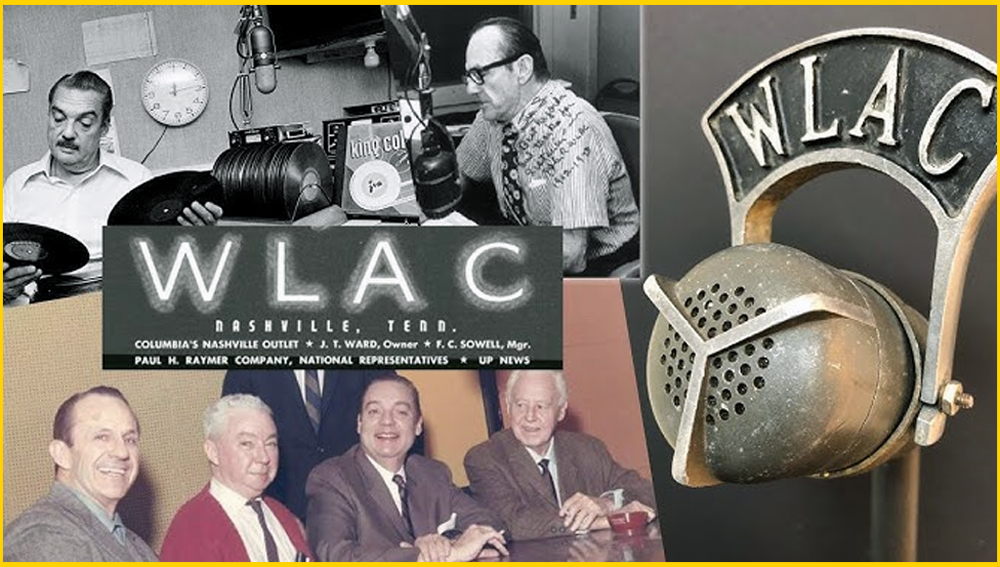 When darkness settled across the South and the daytime stations powered down, a different world came alive on the radio — a world shaped, voiced, and illuminated by John R. His show wasn’t simply a broadcast; it was a place, a nightly gathering spot that existed somewhere between the hum of the ionosphere and the quiet corners of a listener’s room.
John R.’s voice was unlike anything else on the air. It had weight, warmth, and a sly, unhurried confidence that made listeners lean in. He didn’t rush. He didn’t bark. He didn’t perform in the theatrical style of many mid‑century announcers. Instead, he spoke with a low, velvety baritone that felt like a conversation — intimate, personal, and unmistakably human.
His linguistic signature was a carefully crafted blend of Southern ease, streetwise rhythm, and deep respect for the culture he was speaking into. His patter had a musicality to it — a cadence that mirrored the blues and soul records he played. He stretched certain words, whispered others, and laughed softly at his own jokes.
Every broadcast had an emotional architecture. He opened with energy, eased into slower blues as the night deepened, and lifted the tempo again toward the end. His show felt like a journey — one listeners trusted him to lead.
Truck drivers called it their lifeline. Teenagers called it their education. Musicians called it their inspiration. For many Black listeners in the Jim Crow South, it was one of the few places on the radio where their culture was celebrated rather than ignored.
_____________________
WLAC (Nashville) | John R. | February 1967
Audio Digitally Remastered by USA Radio Museum
_____________________
Breaking Artists, Building a Movement
John R.’s influence extended far beyond the microphone. He wasn’t simply a disc jockey; he was a gatekeeper and tastemaker whose choices shaped the careers of countless musicians.
WLAC’s nighttime signal gave him a reach that rivaled national networks. Artists who couldn’t get airplay in their own hometowns suddenly found themselves heard in dozens of states. A single spin on WLAC could change a career. A week of spins could launch one.
He championed blues artists like B.B. King, Junior Parker, Bobby “Blue” Bland, Howlin’ Wolf, and Muddy Waters long before they were widely known. He embraced soul as it emerged, supporting labels like Stax, Chess, Duke, Excello, and Vee‑Jay.
His mail‑order commercials for Randy’s and Ernie’s created a national distribution pipeline for R&B. Listeners in remote towns could order records directly, bypassing local stores that refused to stock Black artists. This system helped break countless artists who otherwise would have remained regional.
As rock & roll began to take shape, John R.’s influence became even more pronounced. Teenagers — including future rock stars — tuned in religiously. His show became a classroom for the next generation of musicians.
Beyond the Microphone: Producer, Manager, Cultural Force
John R.’s power as a broadcaster was immense, but his impact didn’t stop when the WLAC microphone went cold. Behind the scenes, he became a producer, manager, label partner, and trusted advisor to artists navigating a music industry often stacked against them.
He produced records with a warm, uncluttered, emotionally honest style. He managed artists, protected them from predatory contracts, and helped them find the right labels. He served as a cultural translator in a segregated industry — advocating for Black musicians in rooms where their voices were often ignored.
He worked quietly, strategically, and with a long‑term view. His business ventures included production partnerships, artist management, consulting roles, and A&R‑style scouting. He mentored younger DJs and producers who admired his authenticity and connection to the audience.
He believed in fairness. He believed in the music. And he believed in the artists who created it.
The End of an Era & Later Life
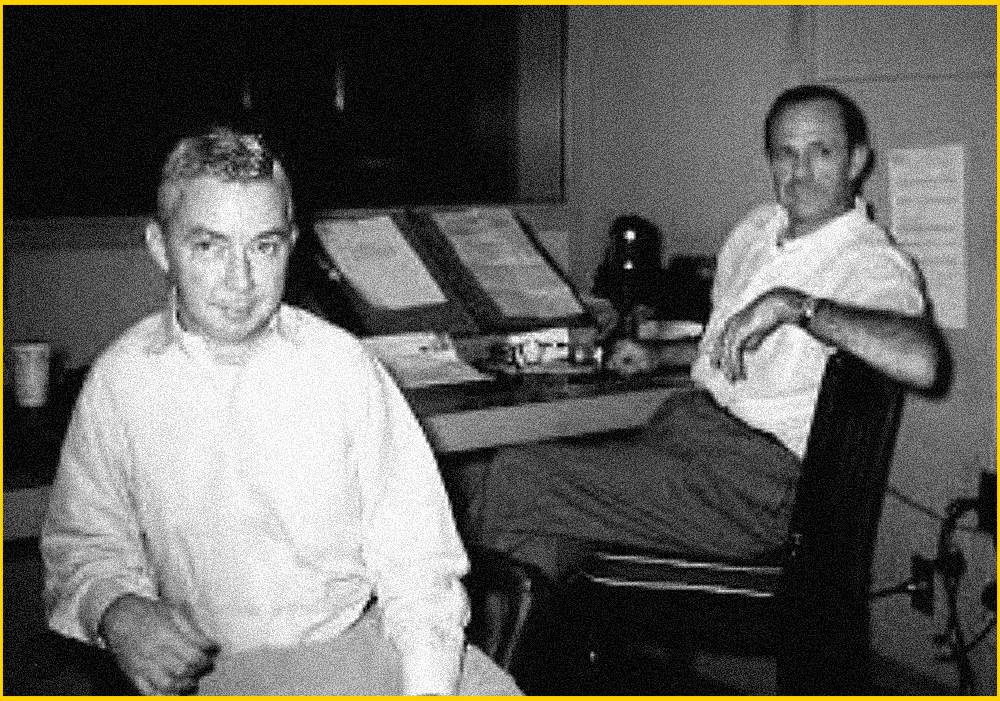
WLAC Gene Nobles and John R., circa 1971.
By the early 1970s, the world that had made John R. a legend was beginning to change. FM radio was rising fast. Regional labels were struggling. Mail‑order record shops were declining. WLAC began shifting toward talk programming and more mainstream formats.
John R. retired from WLAC in 1973, ending one of the most influential runs in American broadcasting history. But retirement from radio did not mean retirement from music. He devoted himself to producing and managing artists, continuing to shape the sound of Southern soul and blues.
He lived a quieter life in Nashville, remaining connected to the music community, mentoring younger broadcasters, and offering guidance to musicians who sought him out. He carried himself with humility and dignity, never seeking the spotlight.
John Richbourg passed away on February 15, 1986, at the age of 75. His death marked the end of an era — not just for WLAC, but for American radio.
Legacy & Lasting Impact
John R.’s legacy is one of those rare cultural forces that continues to resonate long after the signal fades. His voice became a cultural landmark — a presence that shaped the emotional memory of millions.
In 1994, he was inducted into the Blues Hall of Fame, alongside fellow WLAC legends Gene Nobles and Bill “Hoss” Allen. The Blues Foundation honored them for their “groundbreaking work in exposing millions of listeners, Black and white, to the sounds of blues and rhythm & blues.” It was a recognition not from the broadcasting establishment, but from the music community he had championed.
His influence can be traced through the blues, soul, R&B, and early rock & roll. It can be heard in the voices of DJs who adopted his warm, conversational style. It lives in the memories of listeners who grew up with his voice in the dark.
He helped create a shared cultural space in a segregated nation. He helped elevate Black music into the national consciousness. He helped shape the soundtrack of mid‑century America.
_____________________
WLAC (Nashville) | John R. | June 1969
Audio Digitally Remastered by USA Radio Museum
_____________________
Curator’s Note
Growing up in Detroit in the 1960s, I listened to John R. on WLAC 1510 AM under starry Midwestern nights, the signal arriving as clearly as if he were broadcasting from the next block. WLAC’s 50,000‑watt nighttime reach was legendary — stretching from Canada to the Caribbean, covering as many as forty states, and drawing between five and ten million listeners during its peak years, according to The Tennessean. I was one of them. His voice carried across the darkness, steady and familiar, introducing me to the blues, soul, and R&B that shaped my understanding of American “soul” music during that incredible era, mainly from obscure independent labels and artists, aside from the Motown and Stax sound. This tribute is not only a historical record — it is a thank‑you to the man whose voice helped shape my own love for R&B radio.
— Jim Feliciano, USA Radio Museum
_____________________
Closing Reflection
John R.’s story is, at its heart, a story about connection — the kind of connection that can only happen through a human voice carried across the night. He didn’t set out to be a pioneer. He didn’t set out to change American music. He simply loved the records he played, respected the artists who made them, and understood the emotional truth they carried.
His broadcasts were a testament to the power of sound. His career was a testament to the power of sincerity. His legacy is a testament to the power of music to unite us.
He left behind no monuments, no towering buildings, no grand public memorials. What he left behind was something far more enduring: a voice that still echoes in the memory of American music, a legacy carried forward by the artists he championed, and a place in the cultural story that can never be replaced.
In honoring him, we honor not just a broadcaster, but a bridge — a man who helped carry the blues across the night sky and into the heart of a nation.
______________________________
Sources & Credits:
Primary Historical Sources
- Wikipedia – “John R.” (John Richbourg) Biographical details including birth, early career, WLAC tenure, and influence on later DJs such as Alan Freed and Wolfman Jack.
- The Blues Foundation – Blues Hall of Fame Induction (1994) Documentation of John R.’s induction alongside Gene Nobles and Bill “Hoss” Allen, recognizing their groundbreaking role in exposing millions to blues and R&B via WLAC’s 50,000‑watt nighttime signal.
Broadcasting & Cultural Context
- Country Music Hall of Fame & Museum – “Hey John R!” Exhibit Historical context on WLAC’s R&B programming origins, the “Four Horsemen of the Airwaves,” and the station’s cultural impact across the South and beyond.
- Encyclopaedia Britannica – “WLAC: Nashville’s Late Night R&B Beacon” Overview of WLAC’s unique position in American radio, its 50,000‑watt clear‑channel reach, and its role in shaping rock & roll listening habits.
Supplementary Historical Reference
- Rock Radio Scrapbook – “The Daddy of Rhythm and Blues: John R.” Additional narrative on Richbourg’s early career, return from military service, and evolution into WLAC’s most charismatic nighttime voice.
Acknowledgments
The USA Radio Museum extends gratitude to the archivists, historians, and collectors who have preserved WLAC airchecks, artist interviews, and rare recordings that continue to illuminate the legacy of John R. Richbourg. Their stewardship ensures that the voices that shaped American music history remain alive for future generations.
______________________________
Contact: jimf.usaradiomuseum@gmail.com
______________________________
A USARM Viewing Tip: On your PC? Mouse/click over each image for expanded views. On your mobile or tablet device? Finger-tap all the above images inside the post and stretch image across your device’s screen for LARGEST digitized view.Then click your brower’s back arrow to return to the featured post.
© 2026 USA Radio Museum. All rights reserved.

But John R. along with Porky Chedwick also gave birth to Hip-Hop which would make their debut in 1973, so we’ve got give thanks to John R. for not bringing R&B and Soul music to Music City US of A but also inspired a new breed of poets, emcees, and rappers that would come years later.