
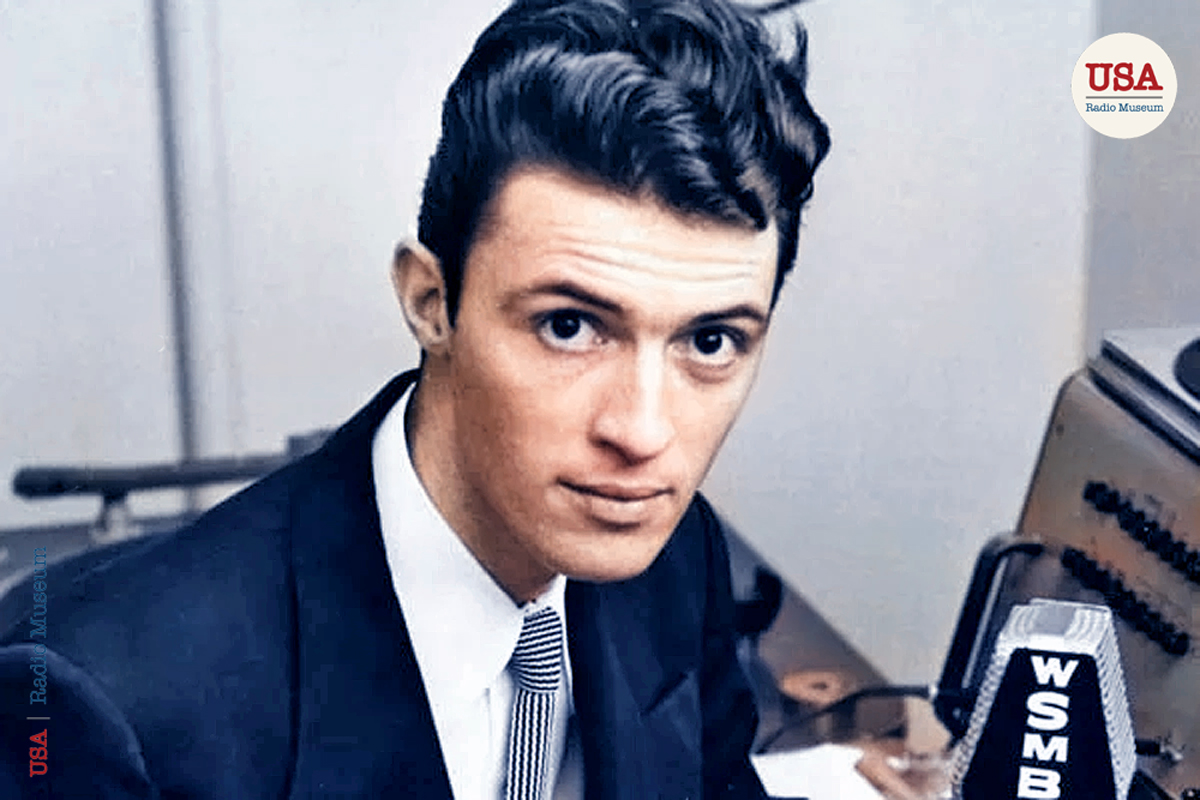
Introduction: A Tribute to the Voice Who Defined New York’s Rock Radio In the long, electric history of New York radio, there are voices that enter
Introduction: A Tribute to the Voice Who Defined New York’s Rock Radio
In the long, electric history of New York radio, there are voices that entertained, voices that informed, and voices that kept the city company. But only a rare few became part of its emotional architecture — woven into late‑night apartments, long commutes, record‑store afternoons, and the private soundtrack of millions. Among them, Scott Muni stands alone.
 For more than forty years, “The Professor” was the steady heartbeat of rock radio. His deep, unhurried baritone didn’t just announce records — it introduced worlds. He guided listeners through the British Invasion, the rise of album‑oriented rock, the birth of FM freeform, and the evolution of artists who would become legends. In a city known for its noise, Muni offered something different: presence, patience, and profound respect for the music.
To tune into Scott Muni wasn’t simply to hear a DJ.
It was to enter a space where artistry mattered, where musicians were honored, and where the listener was treated like a friend. His studio became a sanctuary for rock’s greatest voices — and his own became one of the most trusted in American broadcasting.
This is a memory told of a man who didn’t just play the soundtrack of a generation.
He helped shape it. — USA RADIO MUSEUM
_____________________
Scott Muni: The Gentle Giant of New York Radio
A USA Radio Museum Tribute
Few voices ever wrapped themselves around a city the way Scott Muni’s did around New York. For more than four decades, “The Professor” wasn’t just a DJ — he was a cultural anchor, a trusted companion, and one of the most influential figures in the evolution of American rock radio.
From his early days at WABC to his legendary run at WNEW‑FM, Scott Muni helped define what rock radio felt like. He didn’t shout. He didn’t rush. He didn’t sell. He invited. With that unmistakable baritone — warm, unhurried, and deeply human — he created a space where artists were honored, listeners were respected, and the music always came first.
Biography
Born May 10, 1930, in Wichita, Kansas, Scott Muni (born Donald Allen Muñoz) grew up with a fascination for radio’s ability to shrink the world. After serving in the U.S. Marine Corps, he entered broadcasting in the early 1950s, working at stations in New Orleans and Virginia before landing in New York — the city that would become his lifelong home.
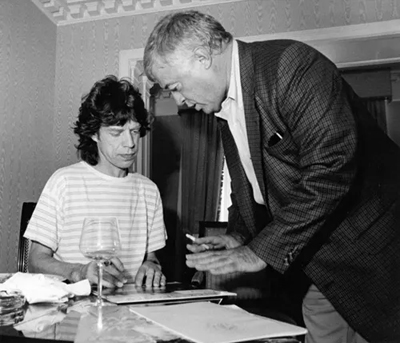
He first made waves at WABC during the Top 40 era, where his warm, authoritative delivery set him apart from the high‑energy style of the time. But it was his move to WNEW‑FM in 1967 that cemented his legacy. As one of the founding architects of the station’s freeform rock format, Muni helped define the sound of FM radio for a generation. His “Things from England” segment championed British rock long before it was fashionable, and his interviews with artists like John Lennon, Pete Townshend, and Mick Jagger became essential listening.
For decades, Muni was the calm center of New York’s rock universe — a curator, a confidant, and a trusted voice who treated listeners with respect and musicians with reverence.
A Pioneer of Freeform FM
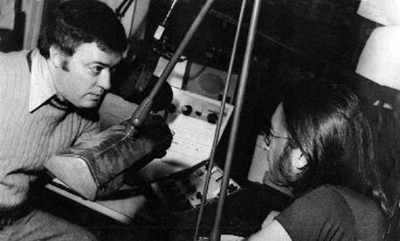
Scott Muni in-studio with John Lennon, late-1970s.
When FM radio was still finding its identity, Muni became one of its architects. At WNEW‑FM, he championed the emerging rock scene with a curator’s ear and a fan’s heart. His studio became a revolving door for icons — John Lennon, The Rolling Stones, The Who, Bruce Springsteen, and countless others who trusted him not just as a broadcaster, but as a friend.
He didn’t just play records.
He introduced artists.
He contextualized movements.
He elevated the craft of radio storytelling.
A Voice of Comfort and Continuity
Listeners often described Scott Muni as “the voice that made New York feel like home.” His calm, steady presence carried the city through triumphs, tragedies, and everything in between. Whether he was unveiling a new album side, sharing a quiet memory, or simply letting the music breathe, Muni created a sense of intimacy that modern radio rarely achieves.
_____________________
WOR-FM | Scott Muni | April 8, 1967
Audio Digitally Remastered by USA Radio Museum
_____________________
A Legacy That Still Resonates
 Scott Muni’s influence extends far beyond playlists and airchecks. He helped shape the very idea of what a rock DJ could be — a guide, a historian, a confidant, and a champion of artistry. His dedication to authenticity set a standard that generations of broadcasters continue to chase.
At the USA Radio Museum, we honor Scott Muni not only for the music he shared, but for the humanity he brought to the airwaves. His voice may be silent now, but his spirit echoes in every DJ who speaks with sincerity, every station that values storytelling, and every listener who remembers the magic of discovering music through a trusted friend.
Broadcasting Awards & Honors
While Scott Muni was famously modest and rarely emphasized accolades, his peers and the industry recognized his enormous influence. Among his honors:
• Inducted into the Radio Hall of Fame (1995) — acknowledging his pioneering role in shaping album‑oriented and freeform FM radio.
• Recipient of multiple industry honors from Billboard and FMQB for programming excellence and contributions to rock broadcasting.
• Honored by the Rock & Roll Hall of Fame for his decades of support for emerging and established artists.
• Celebrated by WNEW‑FM and WAXQ (Q104.3) with on‑air tributes and commemorations marking his anniversaries and milestones.
Even with these recognitions, Muni’s true reward was the loyalty of his audience and the trust of the artists who saw him as a friend, not a gatekeeper.
Death and Legacy
Scott Muni suffered a stroke in early 2004 and passed away on September 28, 2004, at the age of 74. His death marked the end of an era — not just for New York radio, but for the entire culture of rock broadcasting.
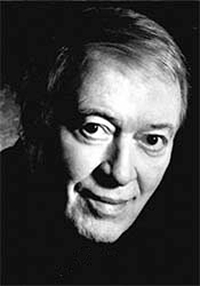 Stations across the country aired tributes. Musicians sent statements of gratitude. Fans shared memories of late‑night album premieres, quiet conversations, and the comfort of his steady voice during uncertain times.
But perhaps the most fitting tribute came from those who worked beside him:
“He never made it about himself. He made it about the music.”
And for this author, on some clear starry nights, listening from Detroit in the 1960s — a city with its own deep musical heartbeat — Scott Muni felt like a lifeline to another world. His WABC voice drifted across the nighttime air like a signal meant just for me, steady and familiar, even from hundreds of miles away. There was something comforting in knowing that while I was tuning in from the Motor City, he was there in New York, guiding listeners through the music with that same warmth and quiet authority. It made the country feel smaller, the distance between cities disappear.
His influence lives on not only in the DJs who try to capture that same ease, but in listeners like me who carried his voice from one city to another — a reminder that great radio doesn’t just travel. It stays with you.
______________________________
Contact: jimf.usaradiomuseum@gmail.com
______________________________
A USARM Viewing Tip: On your PC? Mouse/click over each image for expanded views. On your mobile or tablet device? Finger-tap all the above images inside the post and stretch image across your device’s screen for LARGEST digitized view. Then click your brower’s back arrow to return to the featured post.
© 2025 USA Radio Museum. All rights reserved.

But not only that Scott was also the imaging voice of WNEW-FM during the ’80’s too as well.