
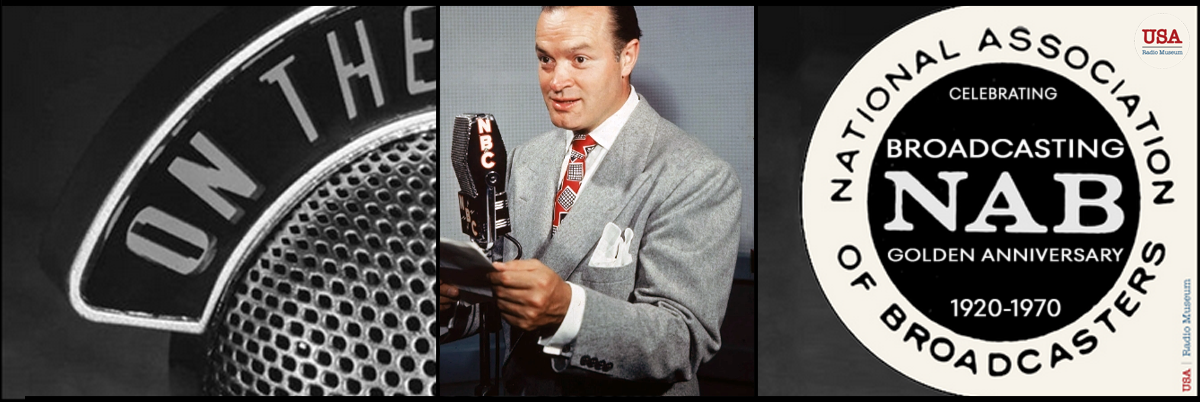
Introduction — Honoring Half a Century of Voices, Sounds That Shaped a Nation In 1970, the American broadcasting industry paused to celebrate a mil
Introduction — Honoring Half a Century of Voices, Sounds That Shaped a Nation
In 1970, the American broadcasting industry paused to celebrate a milestone unlike any other: fifty years of radio broadcasting, a Golden Anniversary marking the journey from the earliest commercial stations of 1920 to the dynamic, format‑rich, personality‑driven medium of 1970. It was a celebration not of a single organization, but of an entire industry — the stations, the voices, the engineers, the advertisers, the audiences, and the innovators who shaped the soundscape of the 20th century.
To honor this half‑century of service, the National Association of Broadcasters commissioned a special package of commemorative radio jingles performed by Bob Hope, one of the most beloved entertainers in American history. These jingles — preserved today in the USA Radio Museum archives — captured the pride, humor, and optimism of an industry that had grown from experimental transmissions to a national institution.
The Golden Anniversary of 1970 was a moment of reflection, gratitude, and celebration — a recognition of how radio had informed, entertained, and united the nation for five decades. — USA RADIO MUSEUM
_____________________
1920: The Year That Became the Beginning
Although radio technology predates 1920 by several years, the industry chose 1920 as the symbolic starting point of American broadcasting. That year saw the rise of pioneering stations like KDKA in Pittsburgh, whose election‑night broadcast on November 2, 1920, became a cultural landmark. It was the moment when radio shifted from experiment to public service — from laboratory curiosity to mass communication.
By selecting 1920 as “Year One,” the industry created a shared origin story, a way to honor the birth of organized broadcasting and the dawn of a new era in American life.
The 1920s and 30s: Radio Takes Root
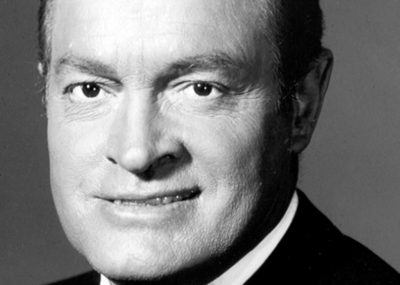
Bob Hope circa early-1970s.
The early decades of broadcasting were a whirlwind of innovation and expansion. Stations multiplied rapidly, programming diversified, and radio became a fixture in American homes. News, comedy, drama, sports, and music flowed across the airwaves, creating a new kind of national community.
During this period, broadcasters recognized the need for coordination and advocacy. In 1923, the National Association of Broadcasters (then the National Association of Radio Broadcasters) was formed in Chicago to help guide the industry’s growth, establish ethical standards, and represent broadcasters’ interests in Washington.
But the Golden Anniversary celebrated in 1970 was not the NAB’s milestone — it was the industry’s. The NAB simply helped lead the commemoration.
The Golden Age: 1930–1950
By the 1930s and 40s, radio had become the dominant medium in American culture. Families gathered nightly around the living‑room set to hear Bob Hope, Jack Benny, Fibber McGee and Molly, Edward R. Murrow, and the latest news from Europe and the Pacific.
Radio was intimate, immediate, and trusted.
During World War II, it became indispensable. Broadcasters delivered breaking news, presidential addresses, war‑bond drives, and morale‑boosting entertainment. The industry’s service during this era cemented radio’s place in American life.
The 1950s: Television Arrives, Radio Reinvents Itself
The arrival of television in the 1950s transformed the media landscape. While TV captured the nation’s imagination, radio adapted — and survived — by reinventing itself.
The rise of:
• Top 40 formats
• Rock ’n’ roll
• Portable transistor radios
• Car radios
• Local personalities and community‑driven programming gave radio a new identity: mobile, youthful, immediate, and personal.
The NAB, reflecting the industry’s evolution, expanded its scope to include television, but radio remained a vital and resilient medium.
The 1960s: FM, Format Innovation, and a New Era of Sound
The 1960s brought FM stereo, album‑oriented rock, talk formats, and a new generation of broadcasters who saw radio as a creative canvas. While television dominated national events, radio remained the soundtrack of daily life — in cars, workplaces, and communities.
To support and promote radio’s continued relevance, the NAB launched a series of promotional campaigns beginning in 1964. These included the beloved Johnny Mann Singers jingles, which celebrated radio’s portability, personality, and intimacy.
By the end of the decade, radio was stronger than ever — and ready to celebrate its first half‑century.
1970: The Golden Anniversary — A Celebration of Service
 And then came 1970 — the year the broadcasting industry celebrated its Golden Anniversary, marking 50 years of American radio, from 1920 to 1970. To honor this milestone, the National Association of Broadcasters commissioned a special package of commemorative jingles featuring Bob Hope, whose voice and presence had been woven into the fabric of American entertainment for decades.
Hope’s participation was far more than a celebrity cameo. At the time, he served as Chairman of the NAB’s Radio Advisory Committee, making him not only a beloved entertainer but also an official leader within the industry’s advocacy structure. His selection as the spokesman for the 50‑year celebration was both natural and deeply fitting. Hope embodied the continuity of American broadcasting — from vaudeville stages to radio microphones, from radio to television, from wartime USO tours to primetime specials.
The jingles he recorded for the industry’s Golden Anniversary were upbeat, patriotic, and unmistakably infused with Hope’s trademark charm. They celebrated:
• 50 years of radio service
• 50 years of public trust
• 50 years of innovation and adaptation
• 50 years of broadcasters shaping the American story
Now digitally remastered by the USA Radio Museum, these jingles stand as vibrant audio time capsules — reminders of a moment when the broadcasting industry paused to honor its past while looking confidently toward its future.
_____________________
National Association of Broadcasters [NAB] | Bob Hope: Broadcasting 50th Golden Anniversary 1920-1970 | Scot Textor Productions
Audio Digitally Remastered by USA Radio Museum
A Legacy That Endures
The Golden Anniversary of 1970 was more than a celebration of the past — it was a reaffirmation of radio’s enduring power. For fifty years, broadcasting had informed, entertained, comforted, and connected the nation. And despite competition from television and emerging technologies, radio remained a medium of immediacy, personality, and community.
From 1920 to 1970, radio shaped American culture. And thanks to the broadcasters, creators, engineers, and archivists who preserved its legacy, its story continues to resonate today.
_____________________
Special Acknowledgments
A special thank‑you goes to Norman Barrington’s Jingles (UK) for providing the USA Radio Museum with these historic 1970 Golden Anniversary jingles featuring Bob Hope. Norman’s dedication to preserving jingle heritage — and his generosity in sharing rare archival material — ensures that these sonic treasures continue to educate and inspire.
As a side note, to historically add dimension and credit to these jingles, we acknowledge Scot Textor Productions and Bob Fines Recording Studio, both based in New York City, whose original production and recording work brought this commemorative package to life. Their craftsmanship (56 years ago) reflects the artistry and professionalism that defined broadcasting’s golden era.
Contact: jimf.usaradiomuseum@gmail.com
_____________________
A USARM Viewing Tip: On your PC? Mouse/double-click over the images for expanded views. On your mobile or tablet device? Finger-tap all the above images inside the post and stretch image across your device’s screen for LARGEST digitized view. Then click your browser’s back arrow to return to the featured post.
© 2026 USA Radio Museum. All rights reserved.
