
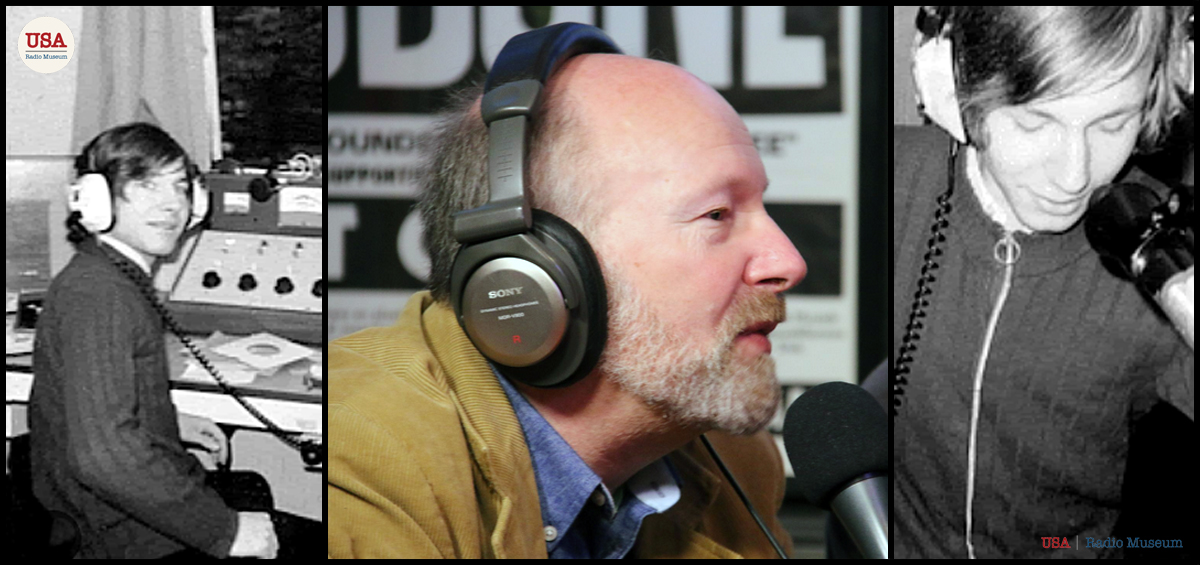
How Norman Barrington Captured the Transatlantic Spirit of Radio for All Generations Introduction: There are people who collect things, and then th
How Norman Barrington Captured the Transatlantic Spirit of Radio for All Generations
Introduction: There are people who collect things, and then there are people who preserve culture. Norman Barrington has spent a lifetime doing the latter. From his home in Britain, he became one of the world’s most passionate custodians of American and international radio jingles — a man whose enthusiasm crossed oceans, eras, and broadcasting traditions. Long before the internet made archives easy, Barrington was already building one: cataloguing, digitizing, and sharing the sonic signatures that defined generations of radio.
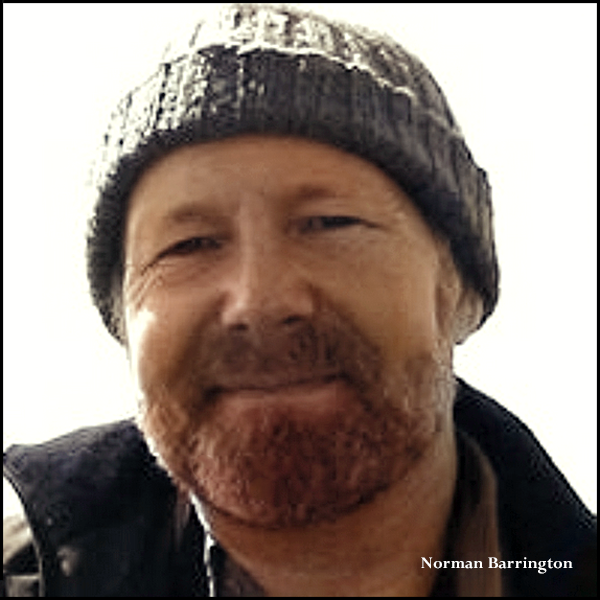 His story is not just about jingles. It’s about connection — the way a few seconds of harmony can evoke a station, a city, a moment in time. It’s about the transatlantic love affair between British offshore radio and the bold, melodic branding of American broadcasting. And it’s about one man who understood that these tiny musical masterpieces were more than promotional tools; they were cultural artifacts worth saving.
From his formative years with the legendary Radio Caroline to the creation of his globally respected Barrington Jingles archive, Norman Barrington has become a bridge between continents, collectors, and eras. His passion has inspired broadcasters, historians, and fans across the U.K., Europe, and the United States — and his generosity has extended directly to the USA Radio Museum, where he has shared and donated many of his rare American jingle treasures to help build and enrich our growing archives.
Because of him, sounds that once floated across the airwaves of Dallas, Detroit, Chicago, Los Angeles, and hundreds of other cities now live on for future generations to study, enjoy, and celebrate. His dedication has ensured that the sound of radio’s golden age will never fade.
This is the story of a curator, a historian, a broadcaster, and a lifelong believer in the magic of the jingle. — USA RADIO MUSEUM
Early Life and the Spark of Radio
Norman Barrington grew up in a Britain where radio was both intimate and expansive — a companion in the home, a soundtrack to daily life, and a window to a wider world. But for a young man with a curious ear, it was also a gateway to something bigger: the thrill of distant signals, the excitement of new sounds, and the irresistible pull of American radio.
In the 1950s and early 1960s, U.K. broadcasting was formal, structured, and tightly regulated. Yet across the Atlantic, American stations were exploding with personality, energy, and musical identity. Their jingles — bright, melodic, and unmistakably modern — were unlike anything heard on British airwaves. For Norman, these sonic signatures were more than branding. They were art. They were culture. They were the sound of possibility.
That early fascination would shape the rest of his life.
Pirate Radio Caroline: The Formative Years
If American radio lit the spark, Radio Caroline fanned it into a flame. In the mid‑1960s, Caroline was the rebellious heartbeat of British broadcasting — an offshore pirate station broadcasting from international waters, free from government control, and powered by passion, ingenuity, and a love of music. It was a revolution disguised as entertainment.
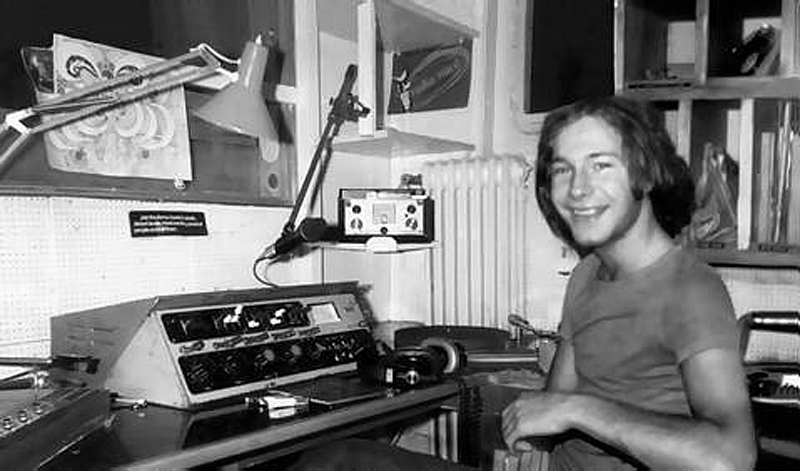
Younger days. Norman Barrington circa 1970s.
Norman Barrington became part of that revolution. His association with Radio Caroline placed him at the center of one of the most important chapters in U.K. radio history. Caroline was more than a station; it was a movement. It challenged the status quo, inspired a generation, and introduced Britain to a new kind of radio — one that felt alive, immediate, and deeply personal.
And jingles were part of that magic. Caroline’s sound was shaped by American jingle packages from PAMS, TM, and others that gave the station a polished, professional identity. Norman saw firsthand how these short musical bursts could define a brand, energize a format, and create emotional connection. Those years on the high seas didn’t just influence his taste. They cemented his mission.
The Birth of a Jingle Archivist
After Caroline, Norman’s passion for jingles didn’t fade — it intensified. He began collecting with the dedication of a historian and the enthusiasm of a fan. Long before digital storage, long before online trading, long before collectors’ forums, Norman was preserving reels, tapes, carts, and discs that most people overlooked or discarded. He understood something that few did at the time: jingles were cultural artifacts, and they deserved to be saved.
His collection grew not through casual accumulation, but through relationships — trades with broadcasters, conversations with producers, correspondence with collectors, and visits to studios. Every tape had a story. Every cut had a lineage. Every melody carried a piece of radio history. He wasn’t just gathering audio. He was building a living archive.
But to understand how Norman became one of the world’s most respected jingle archivists, we must return to the offshore era — and to the sounds that first captured his imagination.
Barrington Jingles: A Global Resource
As technology evolved, Norman did something visionary: he opened his archive to the world. Barrington Jingles, his website, became one of the most respected and beloved online resources for jingle fans, historians, and broadcasters. It wasn’t flashy. It wasn’t commercial. It wasn’t designed for profit. It was designed for sharing.
The site offered rare American jingle packages, European and offshore radio jingles, historical notes, production details, and a curator’s insight into the artistry behind the sound. For many, it became the first place they ever heard a PAMS Series 18 cut, a JAM “WLS” logo, or a TM “You” package. For others, it was a place to rediscover the jingles of their youth. For all, it was a gift.
Champion of American Jingle Culture
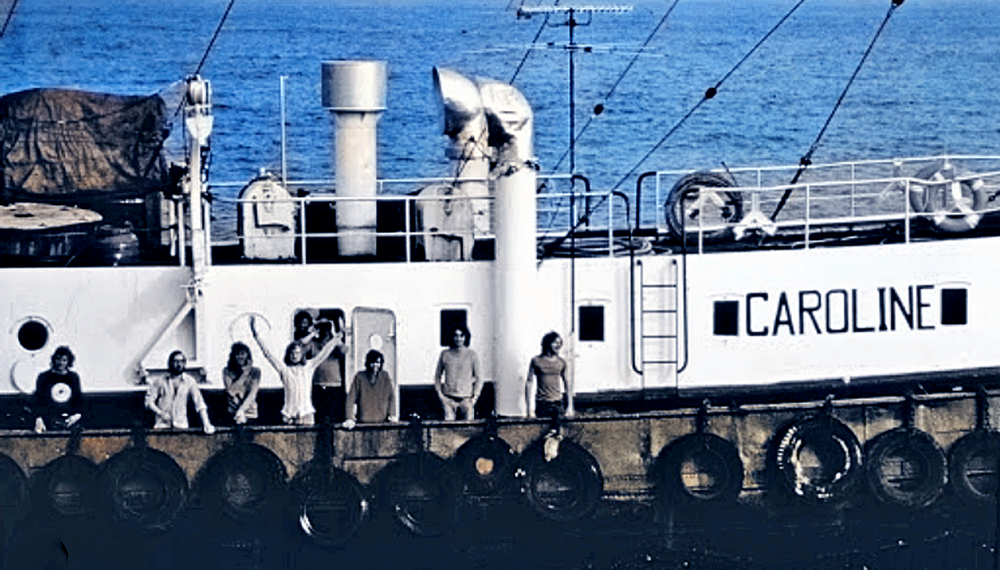
Radio Caroline, 1970s.
Norman Barrington’s love for American jingles is not casual — it is deep, informed, and lifelong. He has spent decades studying the work of PAMS, JAM Creative Productions, TM Productions, Pepper Tanner, and countless others. He has preserved demos, full packages, alternate mixes, resings, instrumentals, and rare variations that might otherwise have been lost. His knowledge extends into production techniques, vocal groups, session musicians, logo melodies, and the evolution of jingle styles across decades.
He is not just a collector. He is a historian of the craft. And his passion has helped bring American jingle culture to Europe in a way few others have achieved.
A Bridge Between Continents
Norman occupies a unique place in radio history. He is British by birth, but his heart beats to the rhythm of American radio. He understands the cultural significance of jingles in a way that transcends geography, and he has spent decades building connections between U.S. producers, U.K. offshore veterans, European collectors, and fans around the world.
Through his work, he has introduced American jingles to new audiences, preserved the offshore radio sound for future generations, and inspired broadcasters to revisit classic branding. His influence stretches across continents, creating a global community bound together by melody, memory, and shared passion.
A Friend and Contributor to the USA Radio Museum
 For the USA Radio Museum, Norman Barrington is not just a respected figure — he is a cherished partner. His generosity in sharing and donating rare American jingles has enriched our archives immeasurably. Many of the cuts now preserved for research, education, and exhibition exist in our collection because Norman believed in our mission and wanted these sounds to live on.
His contributions help us preserve the artistry of American radio, educate new generations of broadcasters, and celebrate the cultural impact of jingles. He has given not just audio, but trust — and that is a gift we honor deeply.
Influence Across Generations
Norman’s impact is felt across decades and across borders. He has inspired young producers discovering jingles for the first time, veteran broadcasters reconnecting with their past, historians documenting the evolution of radio, and collectors seeking rare and forgotten gems. His work has shaped documentaries, podcasts, museum exhibits, radio specials, and countless personal journeys into the world of sonic branding.
He is a mentor without trying to be one, a teacher without a classroom, and a curator whose museum spans continents.
A Legacy of Preservation, Passion, and Joy
Norman Barrington’s legacy is not measured in the size of his collection, but in the depth of his impact. He has preserved sounds that define eras, connected communities that span oceans, and shared freely, generously, and joyfully. He has kept alive an art form that might otherwise have faded. And he has done it all with humility, curiosity, and a genuine love for the craft.
In the world of radio history, Norman Barrington is not just a collector. He is a guardian of memory, a steward of sound, and a believer in the magic of the jingle. His work ensures that the melodies that once lit up the airwaves will continue to inspire, educate, and delight for generations to come.
[Note: For more jingles please visit the official Norman Barrington Jingles and Radio Pages website, GO HERE]
_____________________
Norman Barrington | Exclusive 1960s PAMS Non-Series Jingles Montage | By KenR@JingleSamplers.com
Audio Digitally Remastered by USA Radio Museum
_____________________
The Jingles That Lit the Spark: Norman’s Own Story
Norman Barrington’s lifelong devotion to jingles didn’t begin in a studio or an archive — it began on the deck of a revolution.
By the mid‑1960s, offshore radio was rewriting the rules of British broadcasting. Stations like Radio London and Radio Caroline were introducing the U.K. to a bold, American‑influenced sound built on personality, energy, and — crucially — jingles. Radio London had invested in the now‑legendary PAMS Series 18 “Sonosational” package, along with cuts from Series 17, 26, and 16. Their sound was polished, confident, and unmistakably American.
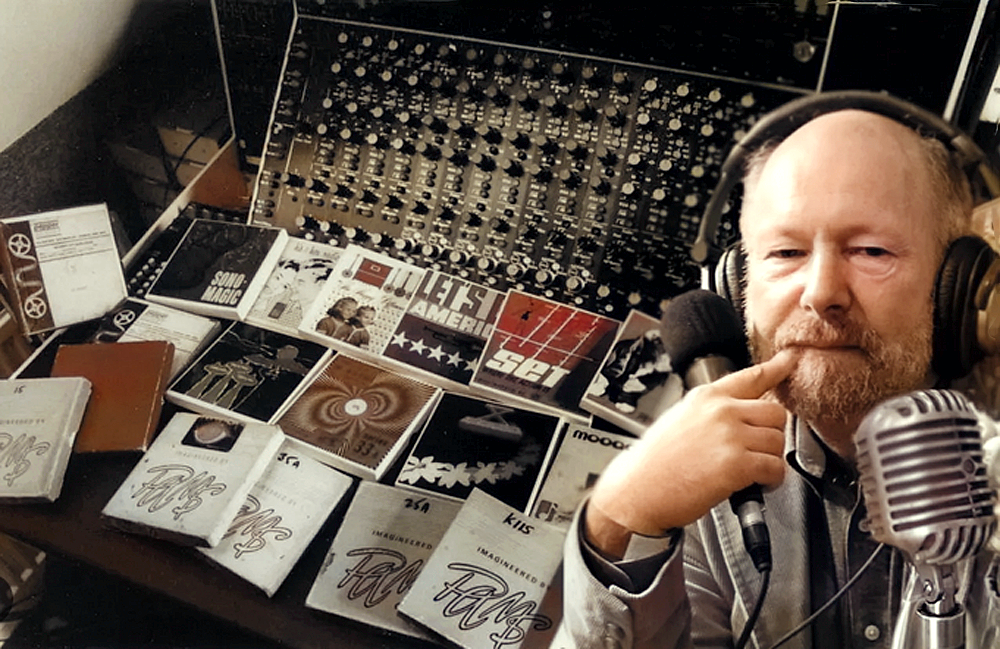 Caroline, by contrast, operated on a shoestring. They stitched together their identity from home‑grown singers, borrowed cuts, SESAC and NAB generics, and — in true pirate fashion — whatever they could record off the air. When Swinging Radio England (SRE) launched in 1966 with the explosive PAMS Series 27 “The Jet Set”, they made a rookie mistake: they played their entire package clean, in the clear, during test transmissions. Caroline engineers, hearing pristine audio with unusually wide bandwidth, recorded everything. Within days, Caroline was airing “borrowed” SRE jingles — leading listeners to believe Caroline had been copied, not the other way around.
For Norman, this was more than a curiosity. It was a revelation.
He heard how Radio London used clever edits from PAMS demo reels — Series 15, 16, 22, 23, 25, 26, 27, 28, 29 — to expand their sound. He heard how SRE blended PAMS cuts with WFUN Miami’s “Fun Radio” jingles, Futursonic and CRC elements, and even the hyper‑dramatic WFUN news format. He heard how American stations used superlatives — “Wonderful WIL,” “High‑Flying WING,” “Colourful KQV” — and how the pirates adapted them into “Wonderful Radio London” and “Swinging Radio England.”
These weren’t just jingles. They were identity. They were culture. They were art.
_____________________
Norman Barrington | Exclusive 1970s PAMS Non-Series Jingles Montage | By KenR@JingleSamplers.com
Audio Digitally Remastered by USA Radio Museum
_____________________
Norman spent his teenage years with his finger on the record button, capturing every jingle he could before a DJ talked over it. He traded tapes with friends. He discovered collectors in the United States. He wrote to every jingle company he could find — Pepper, TM, Heller, Drake, and PAMS — and was rewarded with giant jiffy bags of demos, sometimes “the size of pillows,” as he later recalled.
 Jonathan Wolfert, then at PAMS, recognized a kindred spirit and sent Norman unusual and rare packages — the kind that didn’t circulate widely. Norman wasn’t a buyer. He was something more important: a believer.
By the time he celebrated his 50th anniversary as a collector in 2017, Norman’s archive had grown to over 50,000 jingle packages — a vast, global treasury of sonic identity. What once would have filled rooms now fit on a hard drive the size of a deck of cards. And yet, Norman always insisted that his collection “paled into insignificance” compared to the giants in the American jingle world — a humility that defined him as much as his passion.
His 50th‑anniversary sampler, created as a salute to the collectors and traders who shaped his journey, included clever edits, rare cuts, and nods to the vintage samplers that first inspired him in the late 1960s. It was, in his words, a tribute to “everyone, past and present, for your generosity over the years.”
This was Norman’s world — built on curiosity, community, and the joy of sharing sound.
And it became the foundation of everything he later contributed to the USA Radio Museum.
Closing Dedication and Tribute
 For Norman — whose love for radio has never been a hobby but a heartbeat. Your generosity, your passion, and the quiet devotion you’ve carried across a lifetime have touched more people than you will ever know. This tribute is offered in gratitude for the joy you’ve preserved, the memories you’ve protected, and the music you’ve kept alive for all of us.
In honoring Norman Barrington, we honor the spirit of radio itself — inventive, passionate, borderless, and sustained by the self‑determined devotion he continues to carry for the medium. His life’s work reminds us that the smallest sounds can hold the biggest stories, and that a few seconds of harmony can echo across decades.
The USA Radio Museum proudly celebrates Norman Barrington — a true transatlantic keeper of the jingle flame.
______________________________
Contact: jimf.usaradiomuseum@gmail.com
______________________________
A USARM Viewing Tip: On your PC? Mouse/click over each image for expanded views. On your mobile or tablet device? Finger-tap all the above images inside the post and stretch image across your device’s screen for LARGEST digitized view. Then click your brower’s back arrow to return to the featured post.
© 2026 USA Radio Museum. All rights reserved.
