
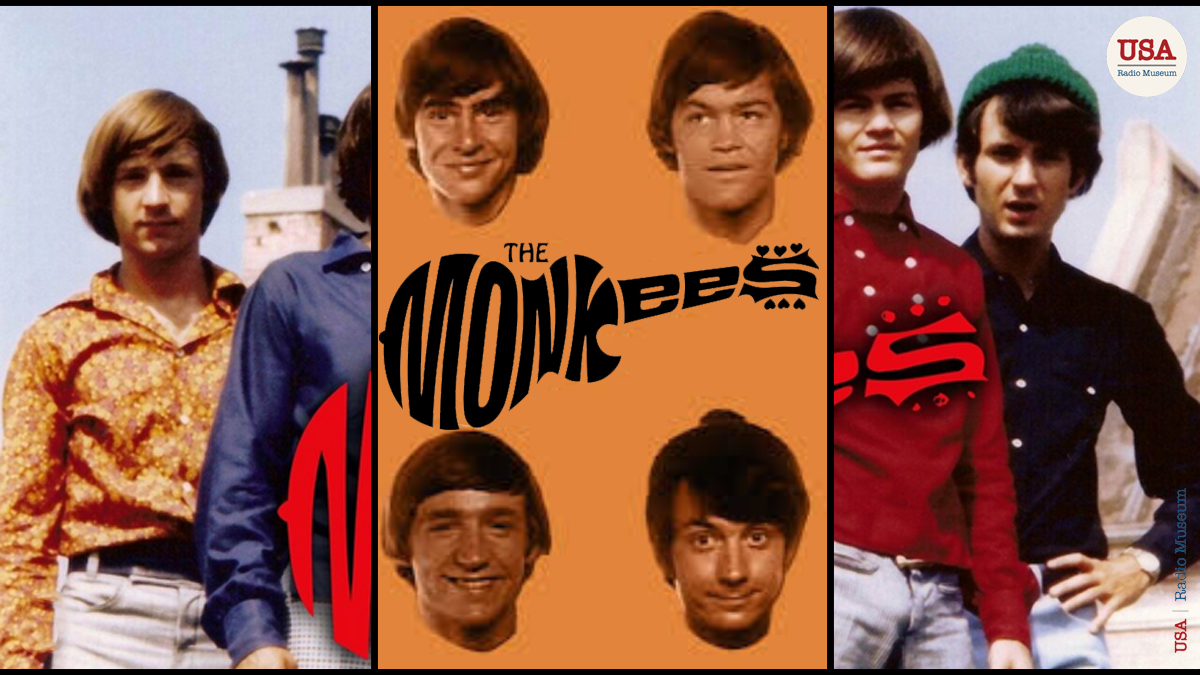
INTRO: The Story of How a TV Show Became a Band, and a Band Became a Televised Movement Long before streaming, before MTV, before the idea of a “mu
INTRO: The Story of How a TV Show Became a Band, and a Band Became a Televised Movement
Long before streaming, before MTV, before the idea of a “multimedia franchise” became part of the entertainment vocabulary, four young men burst onto American television with a kind of energy that felt brand‑new. It was the fall of 1966, and NBC had taken a wild gamble on a show about a fictional rock band — a half‑hour swirl of music, comedy, improvisation, and visual experimentation unlike anything else on the air. What arrived wasn’t just a sitcom. It was a cultural spark that rewired how pop music could be presented, promoted, and experienced on television.
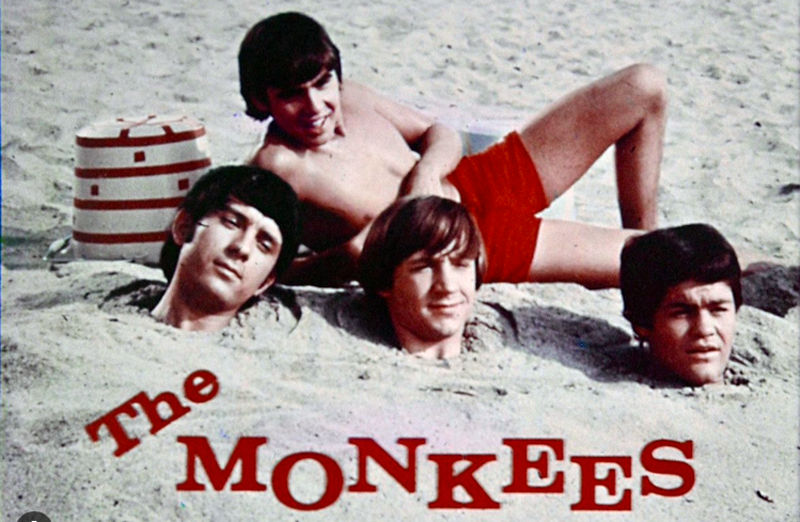 The Monkees didn’t simply entertain; they pioneered a new visual language for music on TV — fast‑cut, self‑aware, playful, and deeply tuned to the rhythms of youth culture. Their episodes functioned as proto‑music‑videos years before MTV existed, blending narrative, performance, and surreal humor in a way that felt revolutionary. And in the process, they transformed four actors into real‑life chart‑topping musicians, reshaped the pop landscape, and created a legacy that still resonates six decades later.
Today, with Micky Dolenz — now 80 years old — carrying the torch as the last surviving Monkee, the story feels even more poignant. The laughter, the harmonies, the whirlwind fame, and the groundbreaking creativity all trace back to a single moment: January 17, 1966, when NBC officially bought the series and set this extraordinary journey in motion.
This is the story of how a television experiment became a musical phenomenon, how radio amplified its rise, and how four young men — Davy Jones, Micky Dolenz, Peter Tork, and Michael Nesmith — became icons of an era. — USA RADIO MUSEUM
_____________________
NBC’s Gamble: A New Kind of Television for a New Kind of Audience
On January 17, 1966, NBC made a programming decision that seemed, at first glance, like a quirky experiment. The network ordered 32 episodes of a new television series called The Monkees, a half‑hour comedy about a fictional rock band of four young men trying to make it big in Los Angeles. Inspired by the Beatles’ A Hard Day’s Night and Help!, the show aimed to capture the anarchic charm of the British Invasion while appealing to American teens hungry for their own pop idols.
_____________________
KHJ (Boss Angeles) | Monkees on NBC-TV | September 1966
Audio Digitally Remastered by USA Radio Museum
_____________________
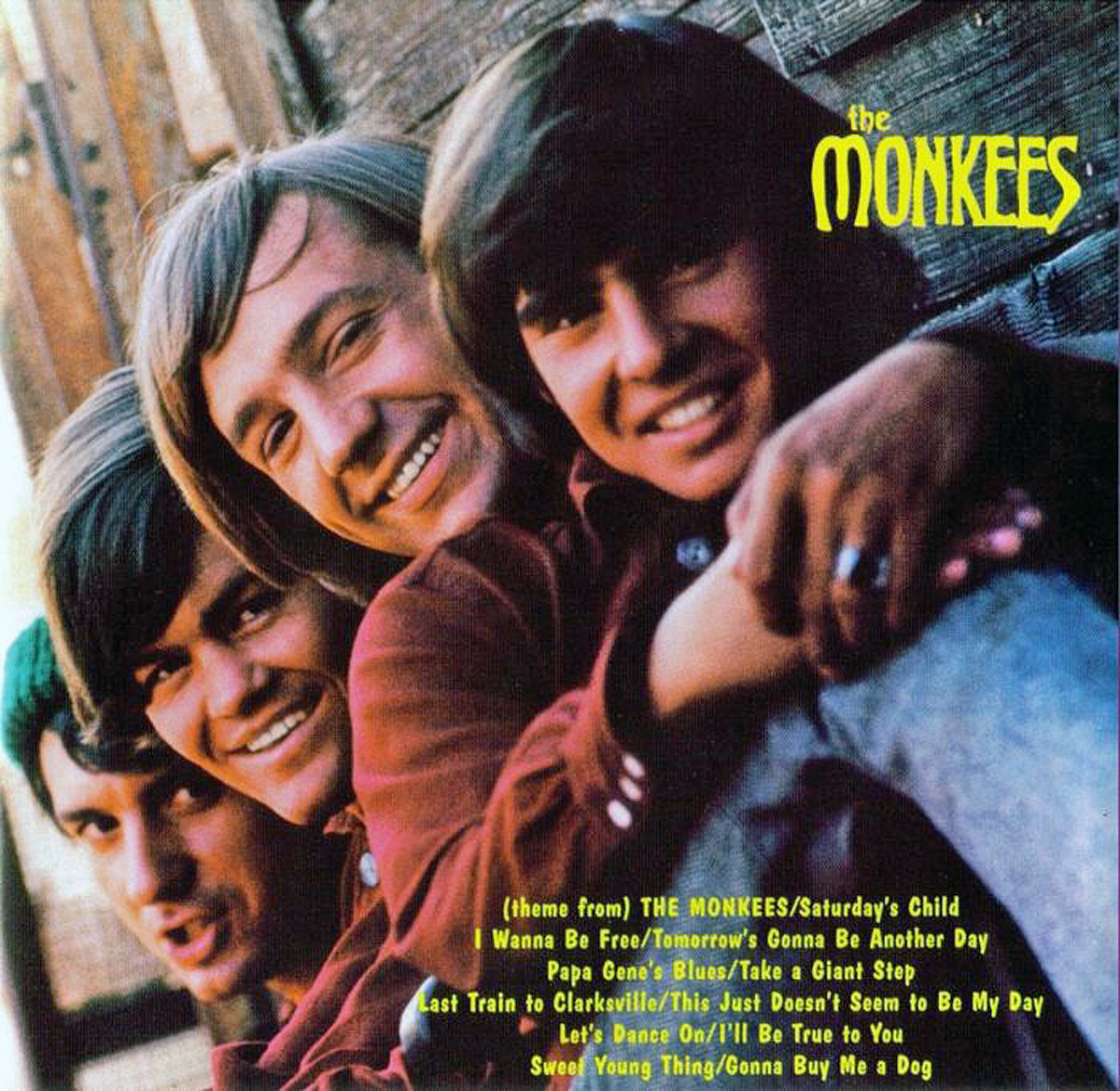
The Monkees’ debut LP on Colgems, issued September 1966.
Producers Bob Rafelson and Bert Schneider placed a now‑legendary ad in Daily Variety seeking “4 insane boys” aged 17 to 21. More than 400 hopefuls auditioned, including future stars like Stephen Stills. Ultimately, the roles went to Davy Jones, Micky Dolenz, Michael Nesmith, and Peter Tork — four young men with distinct personalities, comedic instincts, and varying degrees of musical experience.
When NBC greenlit the series, the network was betting on a concept that had never been tried on American television. The show would be fast‑paced, visually inventive, and stylistically daring. It incorporated jump cuts, handheld camera work, improvisational humor, and fourth‑wall breaks — techniques more common in European art films than in U.S. sitcoms. It was, in many ways, the first “new‑wave” television series.
A Fictional Band That Became a Real One
What NBC and Screen Gems didn’t anticipate was that the fictional band at the center of the show would become a real‑world musical force. Don Kirshner, the Brill Building powerhouse, assembled a team of elite songwriters — Tommy Boyce, Bobby Hart, Neil Diamond, Carole King, Gerry Goffin — to craft radio‑ready pop songs for the group.
The result was immediate and explosive. Even before the show premiered on September 12, 1966, The Monkees’ debut single, “Last Train to Clarksville,” shot up the charts. Their first album followed, and within months, The Monkees were outselling the Beatles and the Rolling Stones combined.
_____________________
WKSG-FM (Detroit) | John Bailey Interviews The Monkees | May 22, 1987
Audio Digitally Remastered by USA Radio Museum
_____________________
Radio stations across the country embraced the music, often blurring the line between the show’s fictional narrative and the real‑life band. Teen magazines, AM radio DJs, and television promotions all fed into the frenzy. What began as a television experiment had become a multimedia juggernaut.
Television Reinvented: The Monkees’ Visual Breakthrough
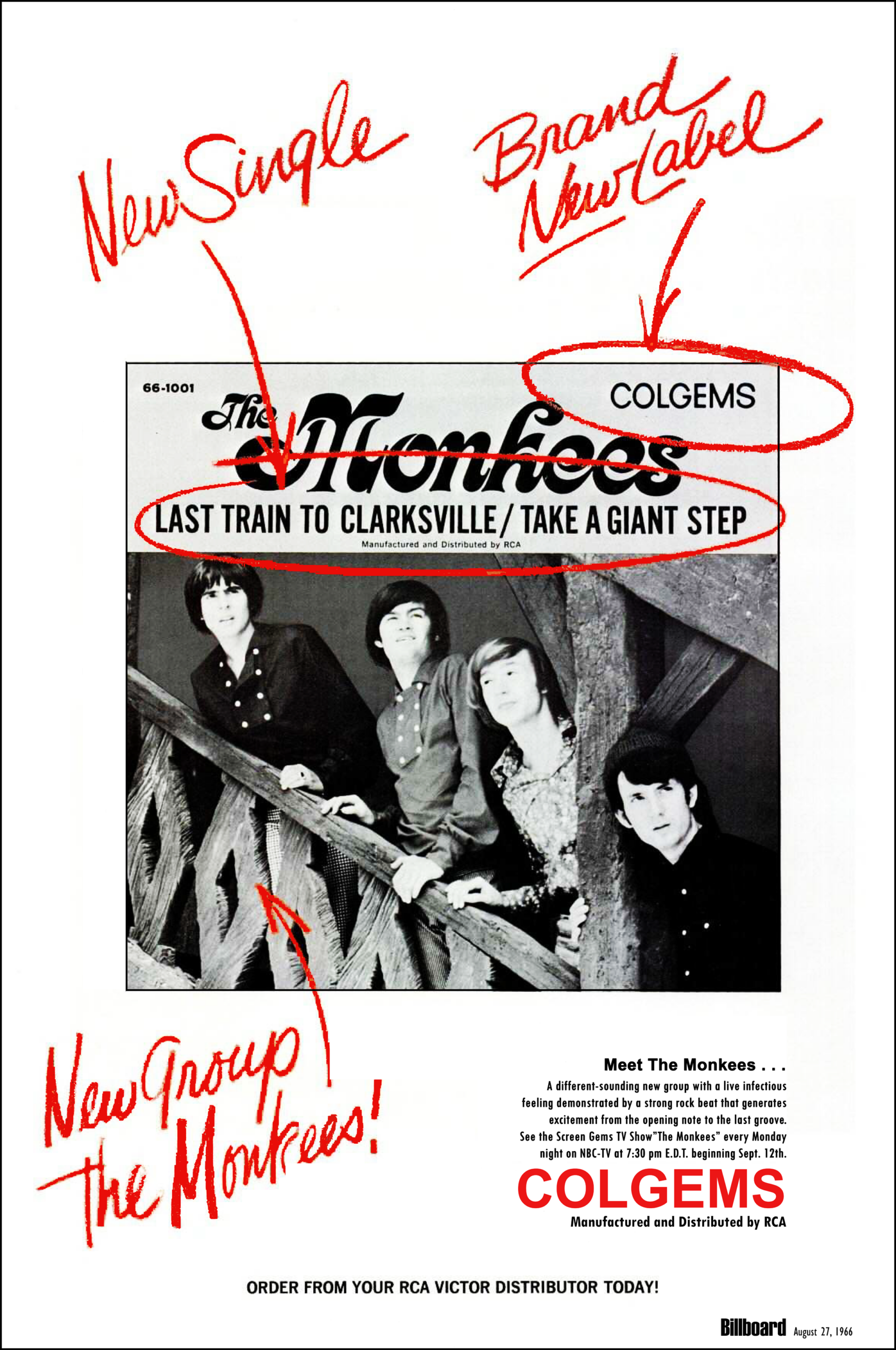
Billboard “Last Train To Clarksville” singles ad, August 27, 1966.
When The Monkees premiered on NBC’s fall schedule, it immediately stood out. Scenes were cut rapidly, often to the beat of the music. The characters spoke directly to the camera. Plotlines dissolved into fantasy sequences. Episodes ended with music videos — years before MTV would popularize the format.
This was television shaped by the rhythms of pop music and the sensibilities of a generation coming of age in the 1960s. It was youthful, irreverent, and self‑aware — and it resonated deeply.
The show ran for two seasons, producing 58 episodes before ending its original broadcast run in 1968. But its afterlife was long and influential. Reruns in the 1980s introduced the group to a new generation, sparking reunion tours, new recordings, and a renewed appreciation for the band’s musical contributions.
A Legacy Carried Forward: Micky Dolenz as the Last Living Monkee
Today, the story of The Monkees carries a deeper emotional resonance. Of the four young men who burst onto television screens in 1966 with boundless energy and comedic charm, only one remains with us: Micky Dolenz, born March 8, 1945, and now 80 years old as of January 17, 2026. Still touring, still singing, and still radiating the same mischievous spark that defined the group’s spirit, Dolenz has become the living heartbeat of the Monkees’ legacy.
His unmistakable voice — bright, elastic, and instantly recognizable — powered many of the band’s biggest hits. In recent years, he has embraced the role of steward and storyteller, performing the Monkees’ catalog with reverence, humor, and gratitude. He often says he never performs alone; the memories, harmonies, and spirit of Davy, Peter, and Mike are always onstage with him.
As the last surviving Monkee, Dolenz carries not just the music but the shared history of a band that began as a television experiment and evolved into a genuine cultural force.
_____________________
WKNR (Detroit) | Bob Green Talks w/ Davy Jones | 1967
Audio Digitally Remastered by USA Radio Museum
_____________________
Remembering the Monkees We Lost
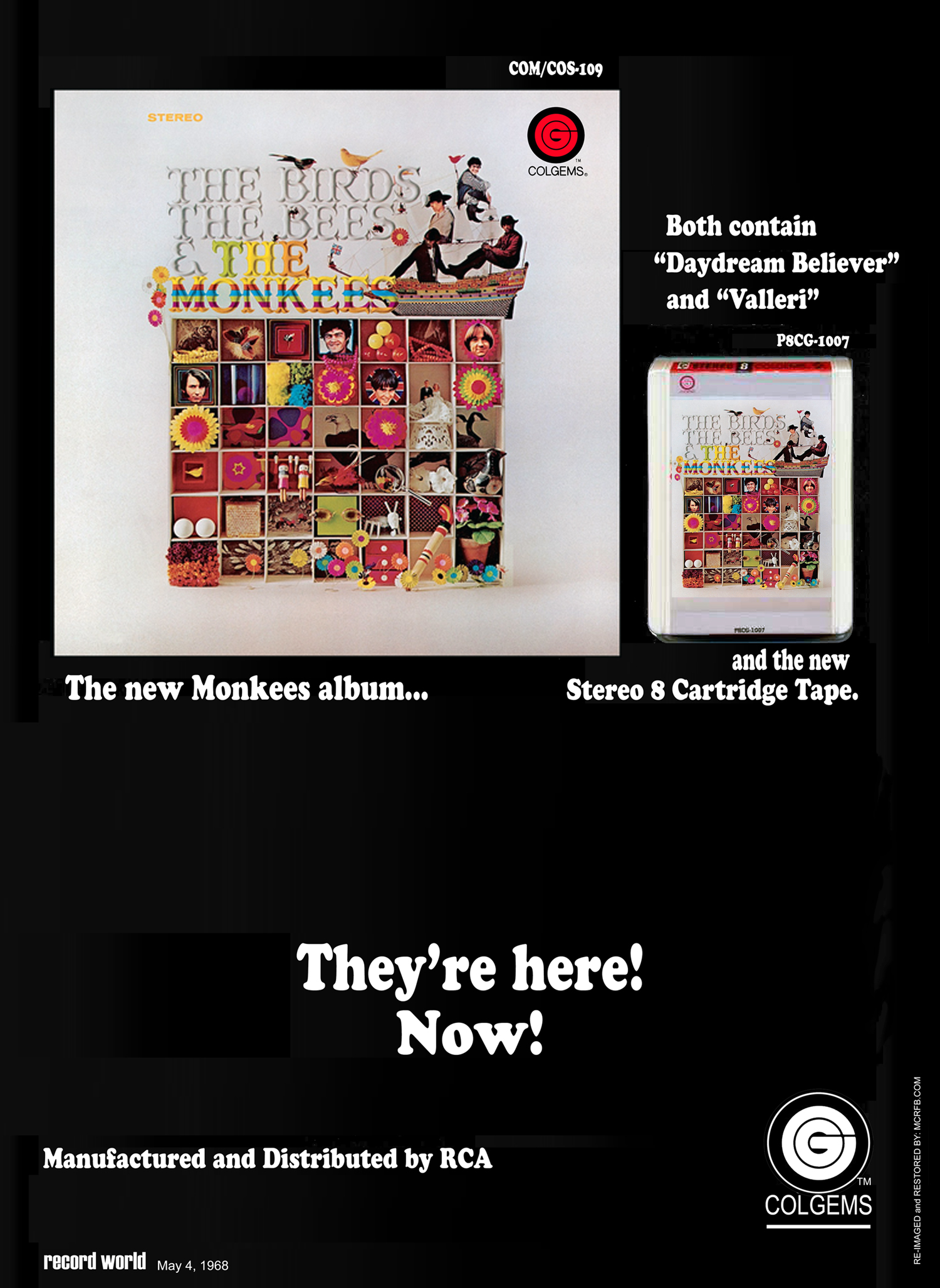
Record World ad, May 4, 1968.
Davy Jones (1945–2012)
Davy Jones passed away on February 29, 2012, at age 66. His warm tenor and boyish charm made him the group’s heartthrob and the emotional center of many of their biggest hits. His last performance happened on February 19th in Oklahoma, just ten days before he died in his sleep of a massive heart attack at age 66.
Peter Tork (1942–2019)
Peter Tork died on February 21, 2019, at age 77. A gifted multi‑instrumentalist, he brought folk‑blues authenticity and gentle humor to the group.
Michael Nesmith (1942–2021)
Michael Nesmith passed away on December 10, 2021, at age 78. A visionary songwriter and later a pioneer of music video, he pushed the Monkees toward artistic autonomy.
The Monkees and Radio: A Symbiotic Relationship
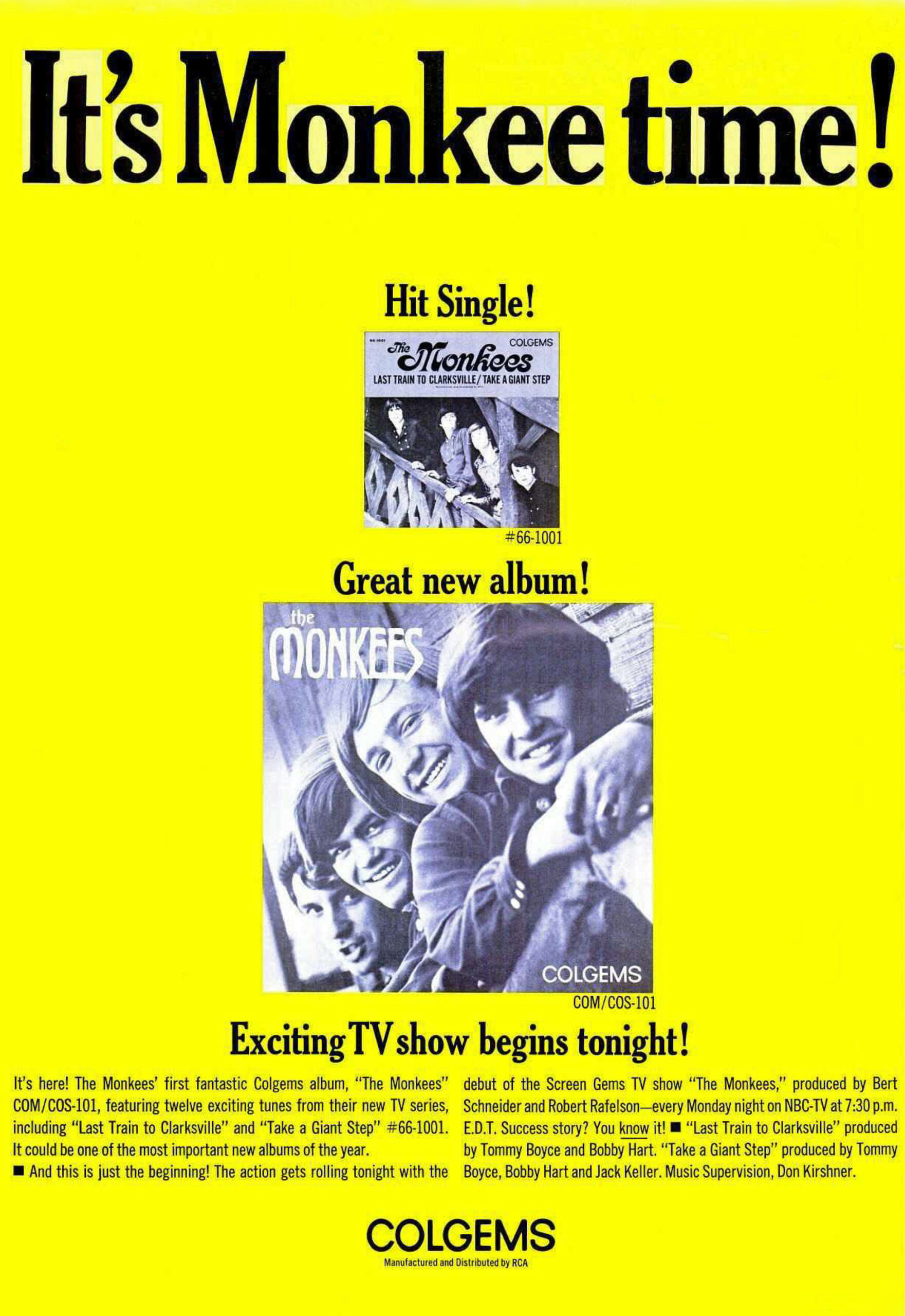
Billboard Colgems Records ad, September 17, 1966.
For the USA Radio Museum, the story of The Monkees is not just a television milestone — it’s a radio story. Top 40 radio embraced the group early, spinning their singles relentlessly and helping propel them to the top of the charts. DJs interviewed them, promoted their concerts, and treated them as legitimate artists even during the early period when studio musicians handled much of the instrumentation.
The Monkees’ rise mirrored the evolution of radio itself: more youth‑driven, more personality‑driven, more attuned to the tastes of the baby‑boom generation. Their music — melodic, upbeat, and instantly memorable — was tailor‑made for AM radio.
Cultural Impact and Legacy
The Monkees became a cultural touchstone — a symbol of the 1960s’ playful, rebellious spirit. Their music, once dismissed as manufactured pop, has since been reevaluated and celebrated for its craftsmanship and emotional resonance. Their 1968 film Head is now considered a psychedelic cult classic. Their influence can be seen in MTV’s early aesthetic and in later multimedia pop acts.
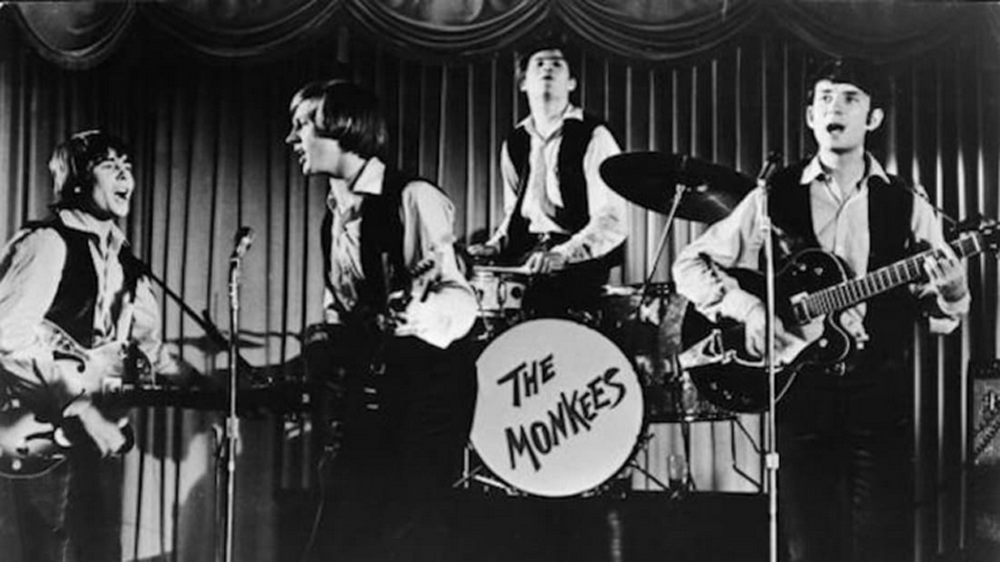 But it all began on January 17, 1966, when NBC took a chance on a wild idea: a sitcom about a band that didn’t exist — yet.
Conclusion: The Enduring Joy of The Monkees
Nearly six decades after their debut, The Monkees continue to inspire joy, nostalgia, and scholarly interest. Their music remains vibrant. Their television series is still studied for its innovative style. And their story — improbable, charming, and deeply American — continues to resonate.
______________________________
WKNR (Detroit) | Steve Robbins Show – The Monkees In Detroit! | January 24, 1967
Audio Digitally Remastered by USA Radio Museum
______________________________
For the USA Radio Museum, this moment in 1966 is more than a date on a timeline. It’s a reminder of how creativity, risk‑taking, and cross‑media collaboration can produce something magical. It’s a celebration of the artists, producers, DJs, and fans who helped turn a television experiment into a pop‑culture legend.
Hey hey, while they were The Monkees — and though only one remains, they still are.
______________________________
Contact: jimf.usaradiomuseum@gmail.com
______________________________
A USARM Viewing Tip: On your PC? Mouse/click over each image for expanded views. On your mobile or tablet device? Finger-tap all the above images inside the post and stretch image across your device’s screen for LARGEST digitized view. Then click your brower’s back arrow to return to the featured post.
© 2026 USA Radio Museum. All rights reserved.

great presentation