
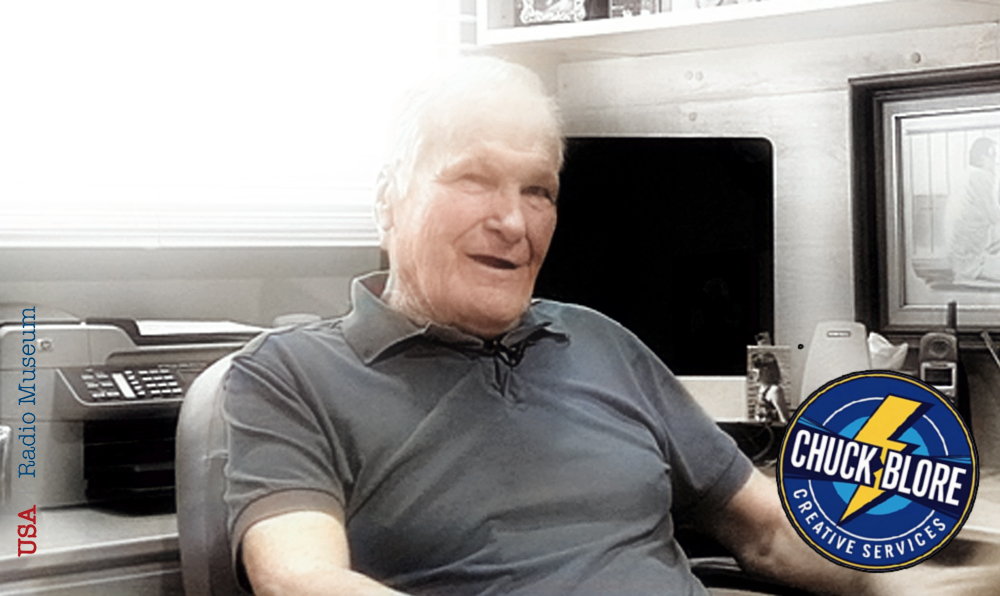
Introduction: A Visionary in Crafting Radio with Artistic Productions Few figures in broadcasting reshaped the sound of American radio as profoundl
Introduction: A Visionary in Crafting Radio with Artistic Productions
Few figures in broadcasting reshaped the sound of American radio as profoundly as Chuck Blore. From his revolutionary “Color Radio” format in Los Angeles to the founding of Chuck Blore Creative Services, his career was defined by innovation, personality, and a belief that radio was not just a medium of information, but a theater of the imagination. His jingles and creative productions became the heartbeat of stations nationwide, including Chicago’s WCFL, cementing his reputation as one of radio’s most influential architects. — USA RADIO MUSEUM
_____________________
Early Life and Career Beginnings
Chuck Blore was born in Los Angeles in 1930, and from an early age he was drawn to the magic of broadcasting. His first professional steps came in smaller markets, where he worked as both a disc jockey and programmer, learning the rhythms of radio and the nuances of audience connection. His talent caught the attention of Gordon McLendon, the “Old Scotchman” and one of radio’s great innovators, who recruited Blore to program KELP in El Paso, Texas. It was there that Blore began to demonstrate the instincts that would later revolutionize the industry: a knack for blending tight playlists with personality-driven presentation, and a belief that radio should be as entertaining as it was informative.
Blore as Program Director
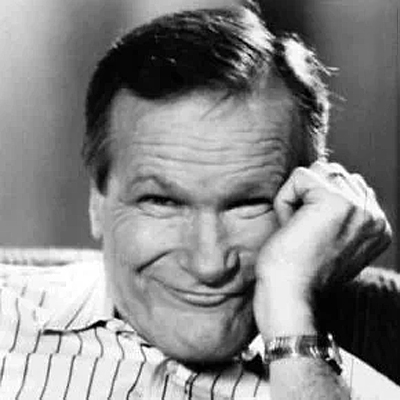 Chuck Blore’s programming career began when Gordon McLendon recruited him in 1955 to be Program Director at KELP in El Paso, Texas. His success there led to his appointment at KFWB Los Angeles in 1958, where he introduced “Color Radio.” Under his leadership, KFWB became the dominant station in Southern California, often commanding 30% or more of the total listening audience.
By 1962, Blore was named National Program Director for Crowell-Collier Broadcasting, overseeing multiple stations nationwide. This role cemented his reputation as one of the most influential programmers of the Top 40 era.
Transition to Production and Jingles
In 1964, Blore founded Chuck Blore Creative Services in Los Angeles, shifting from direct programming to producing commercials, imaging, and jingles for stations across the country. His jingles were theatrical, cinematic, and designed to give stations a unique identity.
One notable client was WCAR Detroit, which adopted Blore’s jingles between 1970 and 1972. Packages like “WCAR Makes You Feel Good All Over” gave the station a distinctive Motor City flavor, though WCAR struggled to compete against CKLW and WKNR despite its powerful 50,000-watt signal.
The “Color Radio” Revolution
His defining moment arrived in 1958 when he took over programming at KFWB 980 AM in Los Angeles. With “Color Radio,” Blore introduced a format that emphasized energetic, personality-rich DJs, carefully curated hit music, and polished jingles that gave the station a distinctive identity. Within months, KFWB skyrocketed to the top of the Los Angeles ratings, dethroning long-established competitors. Blore’s approach transformed radio from a passive medium into an immersive experience, where sound design and personality were inseparable. By 1961, his achievements earned him “Man of the Year” honors from Billboard, Broadcasting, and The Gavin Report—a rare trifecta of industry acclaim.
_____________________
Chuck Blore Creative | KWFB-AM (Jingles) | Los Angeles
Audio Digitally Enhanced by USA Radio Museum
_____________________
Chicago Connection: WCFL and the Jingle Wars
Chicago’s WCFL 1000 AM became one of the most prominent showcases for Blore’s work. In the mid-1960s, the station adopted his jingles, positioning itself as a polished rival to WLS. His productions carried slogans like “WCFL in love with Chicago” and “As much a part of Chicago as . . . . ,” embedding the station into the cultural fabric of the city. This era became known as the “jingle wars,” with stations competing fiercely for sonic branding supremacy. Blore’s theatrical style gave WCFL a distinctive edge, and his jingles became part of the city’s soundtrack.
The Color Radio Revolution: KFWB’s Meteoric Rise
When Chuck Blore arrived at KFWB Los Angeles in 1958, the station was struggling to find its identity in a crowded market. Los Angeles radio was dominated by established voices, and KFWB seemed destined to remain a second‑tier player. Blore, however, saw opportunity. He believed radio could be more than a jukebox—it could be a living theater of sound, where personalities, music, and production elements combined to create an immersive experience.
Blore introduced “Color Radio”, a format that was as much about mood and atmosphere as it was about music. DJs were encouraged to bring their personalities to the microphone, speaking with energy, humor, and intimacy. The playlist was tightly curated, ensuring that listeners heard the biggest hits of the moment, but the presentation was what made it unforgettable. Each show was punctuated by custom jingles, station IDs, and production flourishes that gave KFWB a polished, cinematic feel.
The results were staggering. Within months, KFWB leapt to the top of the Los Angeles ratings, commanding as much as 30 percent of the listening audience. Anecdotes from the time describe teenagers carrying transistor radios tuned to KFWB everywhere they went—on buses, in diners, at the beach. The station became the soundtrack of Southern California youth culture.
One famous story recalls how Blore insisted that every element of the station should feel “alive.” Even the weather reports were delivered with flair, often accompanied by jingles or playful banter. The DJs—among them Elliot Field, Joe Yocam, and Bill Ballance—became celebrities in their own right, their voices instantly recognizable across the city. KFWB’s meteoric rise was not just about music; it was about creating an emotional bond between station and listener.
KFWB’s Color Radio format became a model for stations across the country, proving that radio could be both structured and spontaneous, disciplined yet full of personality.
Chicago Spotlight: WCFL and the Jingle Wars
 While Los Angeles was experiencing the Color Radio revolution, Chicago was entering its own era of fierce competition. The city’s Top 40 landscape was dominated by WLS 890 AM, a powerhouse with deep roots and a loyal audience. But in the mid‑1960s, WCFL 1000 AM, owned by the Chicago Federation of Labor, sought to challenge WLS’s supremacy.
WCFL turned to Chuck Blore Creative Services to craft a sound that could rival WLS. Blore’s jingles became the station’s secret weapon. Packages like “WCFL in love with Chicago” and “As much a part of Chicago as…” gave the station a civic identity, embedding it into the cultural fabric of the city. These jingles weren’t just musical tags—they were emotional declarations, designed to make listeners feel that WCFL was their station, their voice, their soundtrack.
Listeners still recall the impact of those jingles. One recollection describes hearing “WCFL—The Voice of Labor” booming out of car radios during rush hour, a reminder that the station was tied to the working‑class spirit of Chicago. Another memory captures the thrill of hearing WCFL’s jingles at night, their polished harmonies cutting through the static as the station’s 50,000‑watt signal carried across the Midwest.
The competition between WCFL and WLS became known as the “jingle wars.” Each station invested heavily in branding, knowing that jingles were more than filler—they were identity. WLS relied on packages from PAMS in Dallas, while WCFL leaned on Blore’s cinematic style. The result was a sonic arms race, with listeners caught in the middle, enjoying some of the most memorable radio imaging ever produced.
Though WCFL never fully dethroned WLS, its jingles gave it a distinctive edge. For many Chicagoans, WCFL’s sound remains inseparable from their memories of the late 1960s and early 1970s. The station’s partnership with Blore demonstrated how jingles could be cultural artifacts, shaping not just how a station was heard, but how it was remembered.
Museum Resonance
Together, the stories of KFWB’s Color Radio revolution and WCFL’s jingle wars illustrate Chuck Blore’s dual genius. In Los Angeles, he proved that programming could transform a station into a cultural phenomenon. In Chicago, he showed that jingles could give a station its soul, embedding it into the identity of a city. Both chapters highlight his belief that radio was more than a medium—it was an experience, a theater of sound that could capture hearts and imaginations.
WCAR’s Detroit Dream Team
By 1970, WCAR was positioning itself as a serious contender in Detroit’s crowded Top 40 market. To strengthen its lineup, the station recruited some of the city’s most recognizable voices.
Dave Prince, who had been a popular DJ at WXYZ, brought his smooth delivery and deep connection to Detroit listeners. Scott Regen, already a legend from his WKNR “Keener 13” days, was one of the most beloved personalities in Motor City radio, known for his rapport with the Beatles and his ability to make every broadcast feel intimate. And Jim Hampton, formerly of WXYZ (and co-publisher of this website today), added both on‑air talent and behind‑the‑scenes creative energy, having already proven himself as a versatile broadcaster and producer.
Together, this trio gave WCAR a roster that could stand toe‑to‑toe with CKLW’s “Big 8” and WKNR’s Keener personalities. Their presence signaled that WCAR wasn’t just another station trying to break into the market — it was a station with heritage voices, familiar to Detroit audiences, now united under one banner.
Blore’s Role in the WCAR Identity
Chuck Blore’s contribution was to wrap this talent in a soundscape that matched their stature. His jingles and imaging packages gave WCAR a polished identity, one that emphasized warmth, civic pride, and emotional resonance. The slogan “WCAR Makes You Feel Good All Over” became a calling card, reinforcing the personalities’ ability to connect with listeners.
In effect, Blore provided the branding glue that tied together Prince, Regen, Hampton, and the rest of the WCAR team. His productions gave the station a sonic identity that matched the caliber of its DJs, helping WCAR project confidence in a market dominated by CKLW’s relentless format and WKNR’s loyal following.
_____________________
Chuck Blore Creative | WCAR-AM (Jingles) | Detroit
Audio Digitally Enhanced by USA Radio Museum
_____________________
The Cultural Moment
For Detroit listeners, WCAR in the early 1970s was a fascinating experiment. It had the wattage, the talent, and the jingles to compete. Hearing Scott Regen’s familiar voice framed by Blore’s cinematic jingles was a thrill for fans who remembered his Keener days. Dave Prince brought continuity from WXYZ’s Top 40 era, while Jim Hampton bridged both on‑air and production worlds.
Although WCAR never achieved the dominance of CKLW or WKNR, its lineup and Blore’s creative touch remain a memorable chapter in Motor City radio history. It was a moment when Detroit’s favorite voices converged under one station, supported by one of radio’s greatest creative minds.
Museum Resonance
For the USA Radio Museum, the WCAR connection is a perfect regional anchor. It ties Blore’s national reputation into Detroit’s vibrant radio history, showing how his jingles were part of the city’s cultural soundtrack. Visitors will recognize the competitive energy of CKLW and WKNR, and appreciate how WCAR, with Blore’s help, tried to carve its own identity.
Beyond Jingles: Advertising Innovation
Blore’s company expanded into advertising, producing award-winning radio and television spots. His work proved that the storytelling power of radio could translate seamlessly into broader media. His campaigns often blurred the line between entertainment and advertising, making listeners feel engaged rather than sold to. In this way, Blore helped elevate radio commercials into an art form, demonstrating that creativity and commerce could coexist.
Chuck Blore’s legendary “Mouth” commercials were among the most unforgettable TV spots ever created to promote radio stations—wild, fast-talking, fourth-wall-breaking bursts of energy that captured the spirit of Top 40 radio in a way no one had ever seen before. Using nothing more than a pair of lips filling the entire screen, Blore turned the “Mouth” into a character of its own: brash, funny, unpredictable, and absolutely impossible to ignore. The spots were low-budget but high-impact, and they worked because they distilled the excitement, urgency, and attitude of contemporary hit radio into a simple, surreal, perfectly timed visual gag. For many stations across the country, the “Mouth” commercials became instant branding—proof that radio could still be the loudest voice in the room, even on television.
Chuck Blore’s Radio Hall of Fame Induction
• Induction Year: 2024, as part of the Legends of Radio category.
• Recognition: The Hall of Fame cited Blore’s pioneering work at KFWB Los Angeles, where his “Color Radio” format transformed Top 40 programming, and his later achievements with Chuck Blore Creative Services, which redefined jingles and radio advertising.
• Legacy: His induction places him alongside other radio greats like Alan Colmes, Jim Ladd, Byron MacGregor, and Rusty Walker, all honored for their lasting impact on the industry.
Why It Matters
Chuck Blore’s Hall of Fame recognition validates his dual legacy:
• As a program director, he revolutionized formats and made KFWB a ratings powerhouse.
• As a creative producer, he gave stations like WCFL Chicago and WCAR Detroit their sonic identity through jingles.
• As a mentor, he nurtured talents like Gary Owens and Wink Martindale, ensuring his influence extended far beyond his own broadcasts.
_____________________
Chuck Blore Creative | WPIX-FM (Jingles) | New York
Audio Digitally Enhanced by USA Radio Museum
_____________________
Mentorship and the Human Side of Chuck Blore’s Legacy
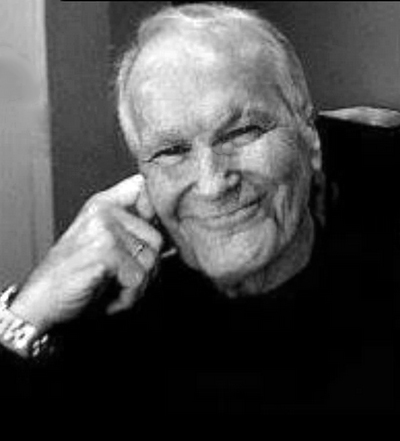 Chuck Blore’s genius was not confined to programming strategies or the artistry of jingles. At the heart of his career was a deep belief in the power of personalities—voices that could connect with listeners on an emotional level. He understood that radio was not just about music or branding; it was about people. And throughout his career, he nurtured and mentored talents who would go on to define broadcasting for generations.
One of his most famous protégés was Gary Owens, whose rich baritone and playful wit made him a standout on Los Angeles radio. Under Blore’s guidance, Owens developed the style that later made him a national figure as the announcer on Rowan & Martin’s Laugh-In. Owens often credited Blore with teaching him how to balance professionalism with humor, how to be both authoritative and entertaining. In many ways, Owens embodied Blore’s philosophy: a broadcaster who could deliver information while also creating joy.
Another figure shaped by Blore’s mentorship was Wink Martindale, who began as a radio personality before becoming a television host known for game shows like Tic Tac Dough and Debt. Martindale’s career trajectory illustrates Blore’s broader impact: he didn’t just train radio voices, he cultivated communicators who could thrive across media. Blore’s emphasis on personality, timing, and audience connection translated seamlessly into television, proving that his lessons were universal.
Blore also worked closely with Robert W. Morgan and The Real Don Steele, two of the most iconic voices of Los Angeles Top 40 radio. Both men became stars at KHJ during the “Boss Radio” era, but their roots in Blore’s philosophy were clear. They understood that a DJ was not just a record spinner but a performer, someone who could make listeners feel part of a shared experience.
What made Blore’s mentorship unique was his ability to see potential where others saw risk. He encouraged broadcasters to embrace their quirks, to lean into their individuality rather than conform to a rigid mold. In doing so, he created a generation of personalities who were authentic, memorable, and beloved. His protégés often spoke of his generosity, his willingness to share wisdom, and his insistence that radio should always be fun.
_____________________
Chuck Blore Creative | KYA-AM (Jingles) | San Francisco
Audio Digitally Enhanced by USA Radio Museum
_____________________
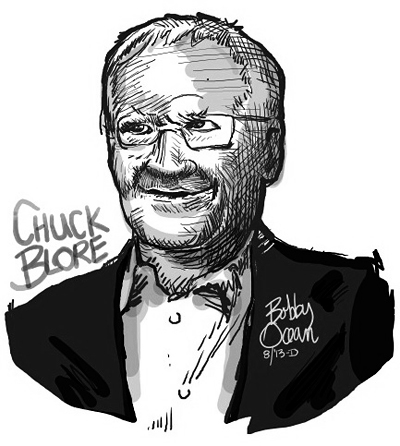
Credit: Bobby Ocean
This human side of Blore’s legacy is perhaps his most enduring. Formats change, jingles evolve, and technologies advance, but the essence of radio—the bond between voice and listener—remains timeless. By mentoring personalities like Owens, Martindale, Morgan, and Steele, Blore ensured that his influence would ripple outward, shaping not just stations but the very culture of broadcasting.
Obituary: Honoring Chuck Blore
Chuck Blore, the legendary broadcaster and creative force behind some of radio’s most iconic sounds, passed away on December 4, 2023, at the age of 92. Born in Los Angeles in 1930, Blore’s career spanned decades of innovation, from his groundbreaking “Color Radio” format at KFWB to the founding of Chuck Blore Creative Services, which redefined the art of jingles and radio advertising. His work touched millions of listeners, giving stations their soul and shaping the soundscape of an era.
Blore was celebrated not only for his professional achievements but also for his mentorship of talents like Gary Owens and Wink Martindale, and for his unwavering belief that radio was a medium of imagination. His jingles for WCFL in Chicago remain etched in the memory of a generation, symbols of a time when radio was the heartbeat of American culture.
Chuck Blore’s passing marks the end of a chapter in broadcasting history, but his influence lives on in every station that understands the power of branding, every jingle that makes a listener smile, and every broadcaster who believes that radio is more than words—it is theater, music, and memory combined. The USA Radio Museum honors his legacy as one of radio’s true architects, a man whose creativity and vision forever changed the sound of the airwaves.
______________________________
Contact: jimf.usaradiomuseum@gmail.com
______________________________
A USARM Viewing Tip: On your PC? Mouse/click over each image for expanded views. On your mobile or tablet device? Finger-tap all the above images inside the post and stretch image across your device’s screen for LARGEST digitized view. Then click your brower’s back arrow to return to the featured post.
© 2025 USA Radio Museum. All rights reserved.
