

Introduction: WINS New York — The Beat of a City Becoming Itself From its earliest days on the air in the 1920s, WINS New York stood at the crossro
Introduction: WINS New York — The Beat of a City Becoming Itself
From its earliest days on the air in the 1920s, WINS New York stood at the crossroads of American broadcasting — a station shaped by the restless energy of the city it served. Originally launched in 1924 as WGBS, the station began as a modest experiment in the new medium of radio, broadcasting from the Gimbels department store and offering a mix of music, news, and variety programming to a rapidly growing audience. Over the next three decades, through ownership changes, technical upgrades, and a move to the now‑iconic 1010 AM frequency, the station evolved alongside New York itself, absorbing the city’s rhythms, ambitions, and contradictions.
 By the early 1950s, WINS had transformed from a traditional full‑service outlet into a bold, youth‑oriented force — one of the first major stations in the nation to embrace the emerging sound of rhythm & blues and the revolutionary spirit of rock ’n’ roll. What began as a conventional broadcaster soon became a cultural lightning rod, a place where new music found its first champions and where a generation of young listeners discovered a voice that sounded unmistakably like their own.
This tribute explores the remarkable Top 40 era that followed — a period when WINS helped define the sound of modern American radio, launched legendary disc jockeys, and captured the heartbeat of a city in motion. From Alan Freed’s rock ’n’ roll evangelism to Murray the K’s Beatlemania broadcasts, from the station’s signature pacing to its street‑smart swagger, WINS became more than a frequency. It became a phenomenon. — USA RADIO MUSEUM
_____________________
The City, the Moment, the Frequency
In mid‑century New York, everything moved fast — the music, the fashion, the slang, the ambition. The city was a living amplifier, humming with the energy of teenagers discovering their own cultural power. And at 1010 on the AM dial, WINS became the station that captured that electricity and shot it straight back into the streets.
Before it was the all‑news powerhouse we know today, WINS was a pioneering Top 40 giant — a station that helped define the sound of postwar youth culture. It was loud, brash, stylish, and unmistakably New York. Its DJs were personalities, its jingles were signatures, and its playlist was a revolution. WINS didn’t just play records; it curated the soundtrack of a generation coming of age in the most dynamic city in the world.
From the early 1950s through the mid‑1960s, WINS stood at the center of a cultural storm. It was the place where rock ’n’ roll first found a home in New York, where teenagers discovered new idols, and where the city’s pulse was measured not in minutes, but in beats per minute.
This is the story of WINS during its golden Top 40 years — a story of innovation, personality, risk‑taking, and the birth of modern pop radio.
The Rise of a New Sound
WINS began the 1950s as a modest, personality‑driven station, but the seeds of transformation were already in the air. The postwar baby boom had created a new demographic force: teenagers with disposable income and a hunger for music that spoke to them, not their parents. Radio programmers across the country were beginning to notice, but in New York — the nation’s media capital — the stakes were higher.
WINS was one of the first major stations in the city to embrace the emerging sound of rhythm & blues and early rock ’n’ roll. While some stations hesitated, WINS leaned in. It recognized that the music bubbling up from small labels, independent producers, and neighborhood record shops was more than a fad. It was a movement.
By the mid‑1950s, WINS had begun to assemble a roster of disc jockeys who understood the moment — personalities who could speak the language of the city’s youth and deliver the music with style, humor, and authority. The station’s identity sharpened. Its sound grew bolder. And then came the catalyst that would change everything.
Alan Freed and the Rock ’n’ Roll Revolution
If WINS was the spark, Alan Freed was the lightning bolt.
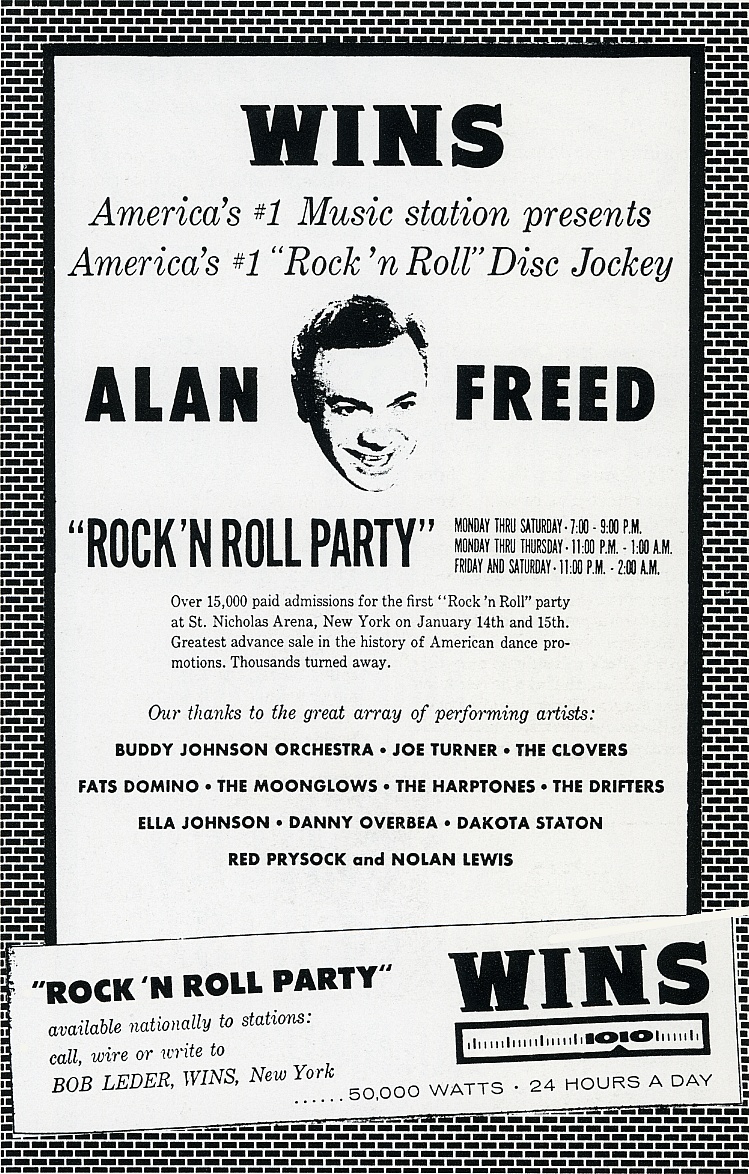
WINS 1955 Billboard Alan Freed Ad. (Credit New York Radio Archive website)
In 1954, WINS hired the Cleveland DJ who had already made national waves by championing rhythm & blues under a new name: rock ’n’ roll. Freed brought his “Moondog” persona, his gravelly enthusiasm, and his unshakeable belief that this music was the future.
New York had never heard anything like him.
Freed’s arrival at WINS was a cultural earthquake. His nightly show became a ritual for teenagers across the tri‑state area. He didn’t just play records — he evangelized. He introduced artists, broke new singles, and gave rock ’n’ roll a legitimacy that mainstream media had denied it.
Under Freed, WINS became the epicenter of the rock ’n’ roll explosion. The station sponsored concerts, promoted new acts, and helped launch careers. Freed’s legendary stage shows at the Brooklyn Paramount and the Fox Theatre became rites of passage for young fans and essential showcases for rising stars.
Though Freed’s tenure at WINS ended in the late 1950s amid the turbulence of the payola investigations, his impact was permanent. He had changed the station — and American radio — forever. WINS had become synonymous with the new sound of youth culture.
The WINS Sound: Fast, Tight, and Unmistakably New York
As the 1950s gave way to the 1960s, WINS refined its Top 40 format into a sleek, high‑energy machine that matched the pace of the city it served. The DJs spoke in quick, punchy bursts — no rambling, no filler, just personality delivered with precision. Every word mattered, every second counted, and the station’s rhythm mirrored the heartbeat of New York itself.
The music moved with the same urgency. Hits cycled through the rotation with a momentum that made WINS feel alive, familiar, and constantly in motion. Its jingles and sounders became part of the city’s daily soundtrack, instantly recognizable signatures that cut through the noise of subways, street corners, and crowded apartments. They weren’t just identifiers — they were sonic landmarks.
WINS carried a street‑smart attitude that set it apart from its competitors. It sounded confident, witty, and just rebellious enough to feel authentic to the teenagers who claimed it as their own. The station didn’t try to imitate New York; it was New York — bold, restless, and always pushing forward.
And the playlist reflected the city’s diversity. WINS embraced rhythm & blues, doo‑wop harmonies, girl‑group sparkle, surf‑rock energy, Motown soul, and the fresh shock of the British Invasion. It was a melting pot of sound that mirrored the melting pot of New York itself, giving listeners a sense that the world was expanding right through their transistor radios.
WINS wasn’t just a station; it was a vibe — a companion for millions navigating the city’s stoops, sidewalks, and subway cars. It became a presence woven into the fabric of daily life, a soundtrack that felt as much a part of New York as the skyline.
The Voices That Defined an Era
WINS’ golden years were shaped by a remarkable lineup of disc jockeys — each with a distinct style, each contributing to the station’s identity. They were more than announcers; they were celebrities, tastemakers, and trusted friends to the city’s youth.
Among the most iconic WINS personalities of the Top 40 era:
- Alan Freed – The Moondog himself, the man who brought rock ’n’ roll to New York.
- Murray Kaufman (“Murray the K”) – The self‑proclaimed “Fifth Beatle,” a master showman and one of the most influential DJs of the 1960s.
- Stan Z. Burns – Known for his humor and quick wit.
- Jack Lacy – Smooth, polished, and immensely popular.
- Bob Dayton – A dynamic presence with a loyal following.
- Paul Sherman – A steady, authoritative voice in the lineup.
Each brought something unique, but together they created a station that felt alive — a station that understood the city’s heartbeat.
WINS and the British Invasion
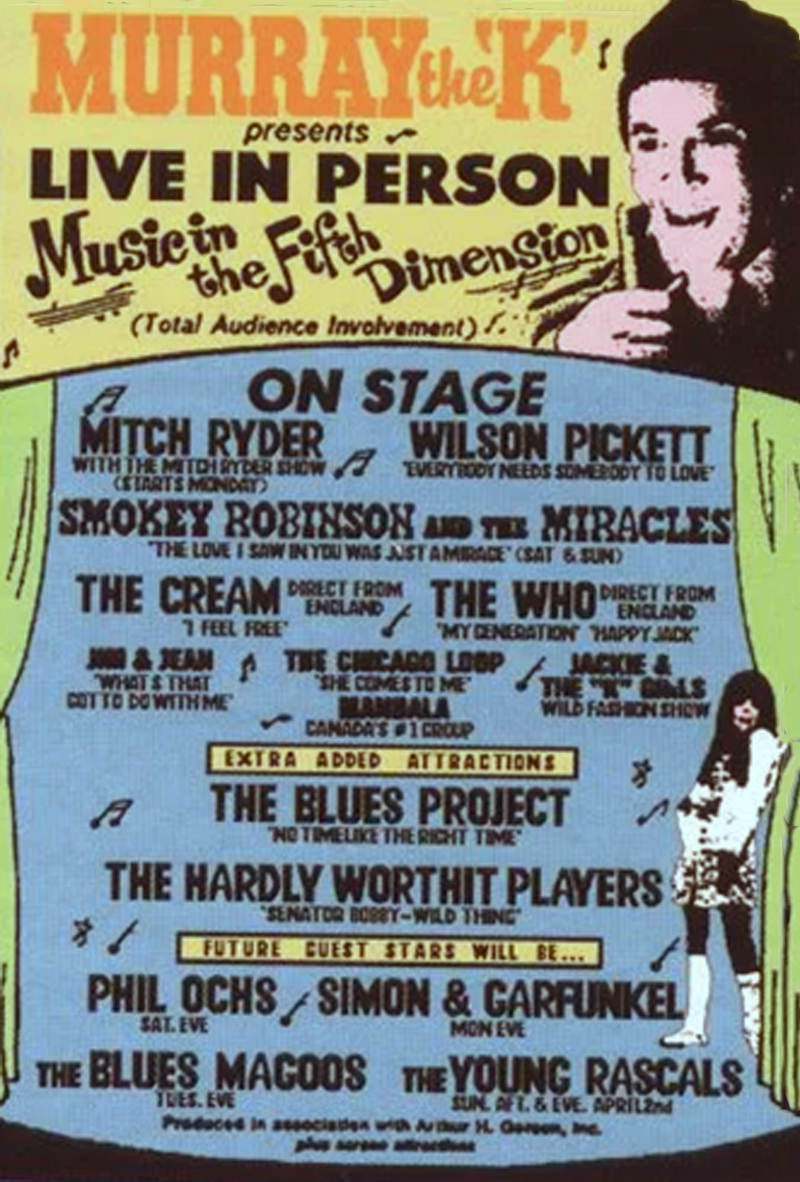
WINS Murray the K Brooklyn Fox Theater advertisement, 1967. (Credit: NY Radio Archive website)
When The Beatles landed in America in 1964, WINS was ready.
The station had already built a reputation for breaking new acts and embracing musical change. Murray the K, in particular, became one of the earliest and most vocal champions of The Beatles in New York. His marathon broadcasts, interviews, and promotional stunts helped cement Beatlemania in the city.
WINS’ coverage of the British Invasion was exuberant, comprehensive, and deeply influential. The station played The Beatles, The Rolling Stones, The Dave Clark Five, The Animals, and dozens of other UK acts that reshaped the American charts.
For many New Yorkers, WINS was the gateway to this new world of sound.
The Competition: WMCA and WABC
No tribute to WINS’ Top 40 years is complete without acknowledging the fierce competition that defined New York radio in the 1960s.
- WMCA (“The Good Guys”) offered a warm, personality‑driven approach.
- WABC (“Musicradio 77”) delivered a polished, powerhouse sound with massive reach.
WINS stood between them — grittier than WABC, faster than WMCA, and always unmistakably itself. The rivalry pushed all three stations to innovate, refine, and elevate their craft.
For listeners, it was a golden age. For radio historians, it remains one of the most fascinating competitive landscapes in broadcasting history.
The Turning Point: 1965 and the Birth of All‑News
By the mid‑1960s, the radio landscape was shifting. FM was rising. Top 40 was evolving. And WINS’ owners made a bold, unprecedented decision: to transform the station into the nation’s first 24‑hour all‑news operation.
On April 19, 1965, WINS played its final Top 40 record.
The station that had helped introduce rock ’n’ roll to New York, that had shaped the sound of a generation, that had given the city some of its most iconic radio personalities — suddenly pivoted to a new mission.
The transformation was dramatic, but it was also visionary. WINS’ all‑news format would become one of the most successful and enduring in American broadcasting. The famous slogan — “You give us 22 minutes, we’ll give you the world” — became part of the city’s cultural fabric.
But the Top 40 years never faded. They remained a cherished chapter in the station’s identity, a testament to its willingness to innovate and its deep connection to the city’s youth.
The Legacy of WINS’ Top 40 Era
The WINS of the 1950s and 1960s left an indelible mark on American radio and popular culture.
Its legacy includes:
- Pioneering the acceptance of rock ’n’ roll in major‑market radio WINS helped legitimize a genre that would define the century.
- Launching and elevating legendary DJs Personalities like Alan Freed and Murray the K became national icons.
- Shaping the sound of Top 40 radio Its pacing, production, and attitude influenced stations nationwide.
- Reflecting the diversity and dynamism of New York WINS embraced the city’s cultural mosaic long before it was fashionable.
- Creating a blueprint for modern radio branding From jingles to promotions, WINS understood the power of identity.
Even after the switch to all‑news, the echoes of the Top 40 years remained — in the memories of listeners, in the careers of the artists it championed, and in the DNA of every station that followed its lead.
A Station That Helped a City Find Its Voice
To honor WINS’ Top 40 era is to honor a moment when radio was the beating heart of youth culture — when a station could change the course of music history, when a DJ could launch a movement, when a city could hear itself reflected in the sound coming through a transistor speaker.
WINS was more than a broadcaster. It was a cultural force.
It captured the spirit of New York at a time when the city was reinventing itself — bold, restless, creative, and alive. It gave teenagers a voice, gave artists a platform, and gave the city a soundtrack.
Today, as WINS continues its remarkable run as one of the most trusted news stations in America, its Top 40 years remain a shining chapter — a reminder of the station’s fearless innovation and its deep connection to the people it served.
For the USA Radio Museum, this tribute stands as a testament to WINS’ enduring legacy: a station that helped shape the sound of modern America and left a permanent imprint on the history of broadcasting.
______________________________
Contact: jimf.usaradiomuseum@gmail.com
______________________________
A USARM Viewing Tip: On your PC? Mouse/click over each image for expanded views. On your mobile or tablet device? Finger-tap all the above images inside the post and stretch image across your device’s screen for LARGEST digitized view. Then click your brower’s back arrow to return to the featured post.
© 2026 USA Radio Museum. All rights reserved.
