
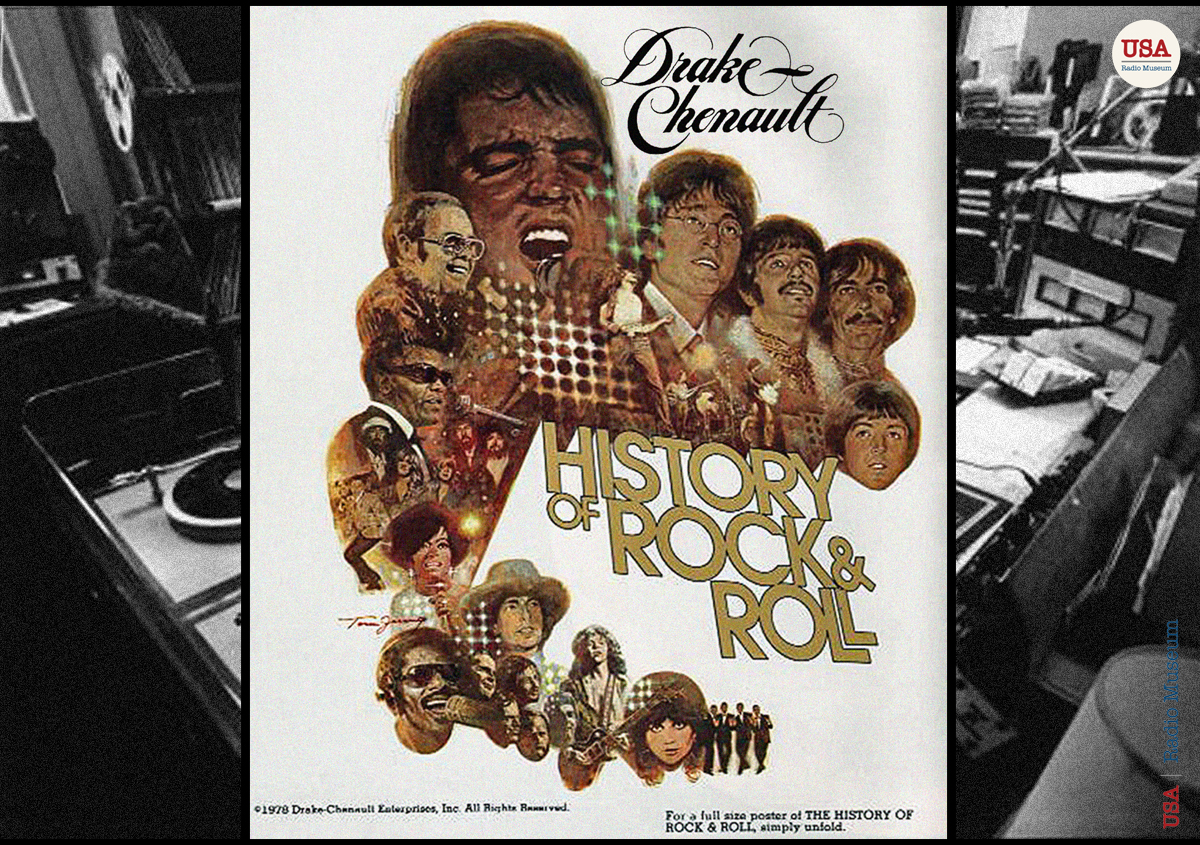
Introduction: The "Rockumentary" That Narrated Radio’s First and Second Generations of R&R History In the early-winter of 1969, Los Angeles lis
Introduction: The “Rockumentary” That Narrated Radio’s First and Second Generations of R&R History
 In the early-winter of 1969, Los Angeles listeners tuning to 93/KHJ encountered something astonishing — a broadcast so ambitious, so sweeping in scope, and so unprecedented in radio history that it instantly became a cultural landmark. For 48 uninterrupted hours (or four 12 hour days), KHJ surrendered its airwaves to a single, monumental documentary that attempted to tell the entire story of rock and roll. Not through print. Not through film. But through the medium that had carried the music from its earliest sparks to its electrified present.
This was The History of Rock & Roll, conceived by Bill Drake and Gene Chenault, produced by the brilliant Ron Jacobs, and narrated first by Robert W. Morgan. It was the birth of the “rockumentary,” a term coined for this very project — and a format that would influence audio storytelling for generations.
What follows is the USA Radio Museum’s definitive tribute to this landmark achievement, presented in a series of curated segments that illuminate the vision, the craft, and the enduring legacy of the most ambitious radio documentary ever produced. — USA RADIO MUSEUM
_____________________
The Spark: Drake, Chenault, and the Boss Radio Mindset
 By 1969, Bill Drake and Gene Chenault had already reshaped American radio. Their Boss Radio format — tight playlists, forward momentum, minimal chatter, and a sleek, modern sound — had turned KHJ into a ratings powerhouse. But Drake wanted to do something more lasting. He believed rock and roll deserved a comprehensive narrative, and he believed radio was the only medium capable of telling it with the emotional immediacy the story required.
The idea was radical: a multi‑day documentary that would trace the entire evolution of rock and roll, from its roots in rhythm and blues to the contemporary sounds dominating the charts. It would be meticulously researched, dramatically narrated, and produced with the same precision that defined the Boss Radio sound.
This was not a stunt. It was a statement — that radio could be both an entertainer and its own historian.
_____________________
The History of Rock n’ Roll | Drake Chenault Productions | 1969
Audio Digitally Remastered by USA Radio Museum
_____________________
February 1969: KHJ Unleashes a 48‑Hour Epic
When KHJ aired the first broadcast in late February 1969, listeners were immediately aware that something extraordinary was happening. The station’s usual format vanished. In its place came a sweeping overture of early R&B, gospel shouts, and the unmistakable crackle of 1950s vinyl. Then came the voice of Robert W. Morgan — warm, authoritative, and reverent — guiding listeners through the birth of a musical revolution.
The documentary unfolded like a cinematic journey. Early doo‑wop harmonies gave way to the swagger of rockabilly. Elvis emerged not as a myth but as a young man whose voice carried the tension of a changing America. The British Invasion arrived with the force of a cultural earthquake. Motown shimmered with polish and precision. Psychedelia swirled into view. Each era flowed into the next with the pacing and emotional arc of a feature film.
Listeners were captivated. KHJ’s phone lines lit up. Newspapers covered the broadcast. Competing stations took notice. And radio — for one weekend — felt like the center of the cultural universe.
_____________________
The History of Rock n’ Roll | Time Sweep 1956-1964 | Drake Chenault Productions | 1969
Audio Digitally Remastered by USA Radio Museum
_____________________
The Craft: How the Rockumentary Was Built
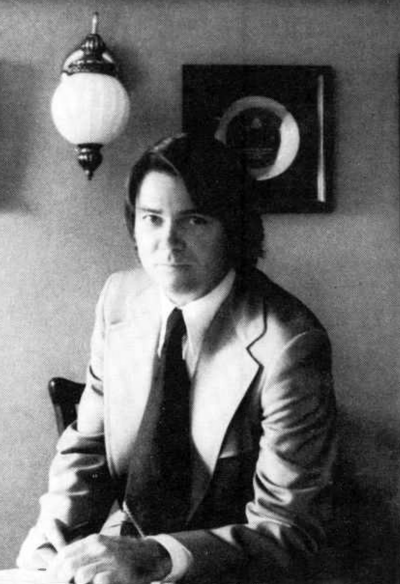
Bill Drake, of Drake-Chenault Productions, L.A.
Behind the scenes, the production was a feat of craftsmanship that bordered on the impossible. This was the pre‑digital era. Every edit was a razor blade. Every transition was a physical splice. Every music cue had to be timed by hand.
Three years in the making, producer Ron Jacobs orchestrated the project with a combination of discipline and creative fire. Writer Pete Johnson crafted a script that was both scholarly and emotionally resonant. Director Ellen Pelissero shaped the pacing and structure. And the KHJ production team assembled hundreds of interviews, chart records, archival clips, and musical transitions into a seamless tapestry of sound.
The result was a new genre — the rockumentary — a fusion of journalism, musicology, and radio drama that treated rock and roll not as entertainment but as a cultural force worthy of serious exploration.
A Nation in Transition: Why 1969 Was the Perfect Moment
The timing of the broadcast was no accident. The year 1969 was a turning point in American culture. The country was divided, restless, and searching for meaning. Rock and roll had become the soundtrack of a generation grappling with war, civil rights, and social upheaval. Woodstock was months away. The Beatles were nearing their final chapter. FM stereo was rising, threatening the dominance of AM Top 40.
In this climate, KHJ’s decision to air a 48‑hour documentary was both bold and strategic. It asserted that AM radio still held the power to shape the national conversation. It reminded listeners that radio had been there from the beginning — and that it would continue to tell the story of the music that defined their lives.
The Syndication Wave: RKO General Takes It Nationwide
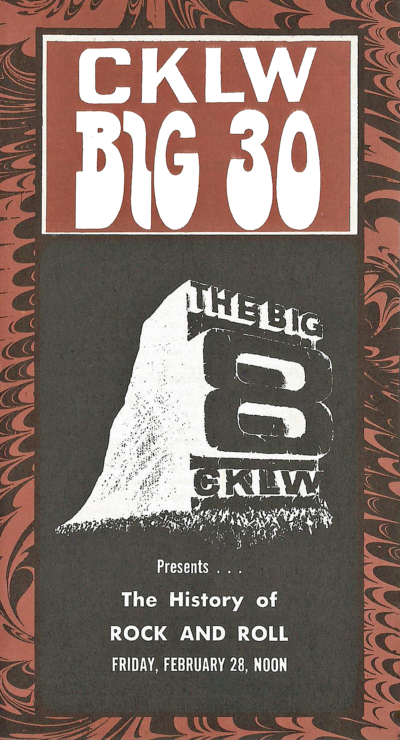
CKLW February 18, 1969
The success of the KHJ broadcast led RKO General to syndicate the program nationwide. Stations received the documentary on large reels of tape, full‑track mono, with strict instructions to return them after airing. Some did. Many didn’t. Copies circulated quietly among collectors, passed from station to station, a testament to the program’s impact and the affection it inspired.
The rockumentary became a national event, airing in markets across the country and cementing its place in radio history.
The 1978 Rebuild: A New Era, A New Vision
Nearly a decade later, music historian Gary Theroux recognized that the original script, while groundbreaking, contained gaps and inaccuracies. Rock and roll had evolved dramatically since 1969, and the story needed to be retold with greater depth and precision.
Theroux rebuilt the documentary from the ground up. The 1978 edition — now 52 hours and produced in stereo — introduced new features such as Chart Sweeps and Time Sweeps, which summarized entire eras in breathtaking musical montages. The structure became modular, allowing stations to air the program in flexible segments. The research was deeper, the production richer, and the storytelling more expansive.
Yet the spirit of the original — the reverence for the music and the belief in radio’s power to tell its story — remained intact.
_____________________
The History of Rock n’ Roll | Time Sweep 1964-1969 | Drake Chenault Productions | 1969
Audio Digitally Remastered by USA Radio Museum
_____________________
A Curator’s Note
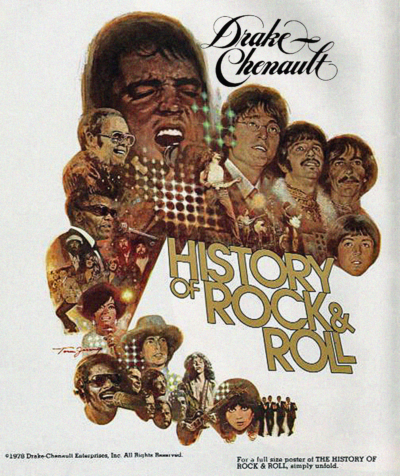 I first heard Bill Drake’s ‘The History of Rock & Roll’ on CKLW — The Big 8 in February 1969, when the station’s signal poured across the border and into millions of homes like a living, breathing force of nature. I was young, wide‑eyed, and completely unprepared for the scale of what I was hearing — coming from across the Detroit River in Windsor, Ontario — a 48‑hour chronicle of the music that shaped my understanding through its meaning, delivered with the urgency and electricity only CKLW could generate. The “Rocumentary” covered four consecutive (12 hours per) days, from 12 noon to 12 midnight at the time, totaling 48 hours.
Unprecedented.
When the expanded and extended version aired again in the 1970s, I was there too, listening once more as the Big 8 carried the story forward with the same power and precision that defined its golden era. Those broadcasts didn’t just document the history of rock and roll; they became part of my own love for history (music and otherwise), part of the soundtrack of growing up in the shadow of one of the most influential stations on the continent.
Decades later, as curator for the USA Radio Museum, I still feel the echo of those moments. The Drake/Chenault rockumentary wasn’t just a radio program — it was an education, a revelation, and a cultural milestone that continues to resonate nearly 60 years after its debut. This tribute is both a historical record and a personal acknowledgment of the broadcast that helped shape my lifelong love of radio. — Jim Feliciano, USARM
_____________________
Legacy: Why the Rockumentary Still Matters
More than fifty years after its debut, The History of Rock & Roll remains one of the most ambitious audio documentaries ever produced. It represents radio at its most creative, its most culturally engaged, and its most technically daring. It captures the evolution of American music, the shifting tides of youth culture, and the social transformations of the postwar era.
For the USA Radio Museum, this documentary is more than a historical artifact. It is a cornerstone of American broadcasting — a work that embodies the artistry, innovation, and cultural impact of radio at its peak.
_____________________
The History of Rock n’ Roll | Time Sweep 1970-1977 | Drake Chenault Productions | 1969
Audio Digitally Remastered by USA Radio Museum
_____________________
Conclusion: The Drake/Chenault HRR Still Echoes Nearly 60 Years Later
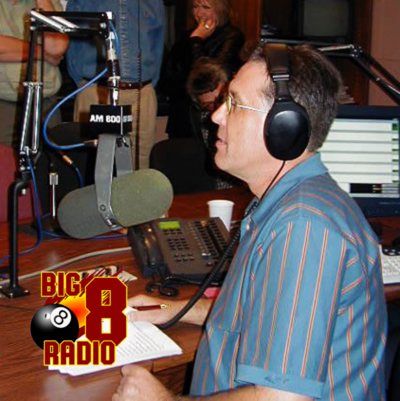
CKLW and Big 8 Radio’s Charlie O’Brien.
Nearly six decades after its debut, The History of Rock & Roll remains one of the most daring and transformative achievements in the history of American broadcasting. What Bill Drake and Gene Chenault created in 1969 was more than a documentary, more than a programming event, more than a ratings triumph. It was a declaration — that radio could be a historian, an archivist, a storyteller, and a cultural guardian all at once.
The rockumentary’s endurance is not an accident. It continues to resonate because it captured something essential about the American experience: the way music shapes identity, the way radio shapes memory, and the way a generation’s soundtrack becomes a nation’s shared history. Drake and Chenault understood that rock and roll was not merely entertainment; it was a social force, a cultural mirror, and a living chronicle of change. Their documentary treated the music with the seriousness it deserved, while still honoring the joy, rebellion, and electricity that made it matter.
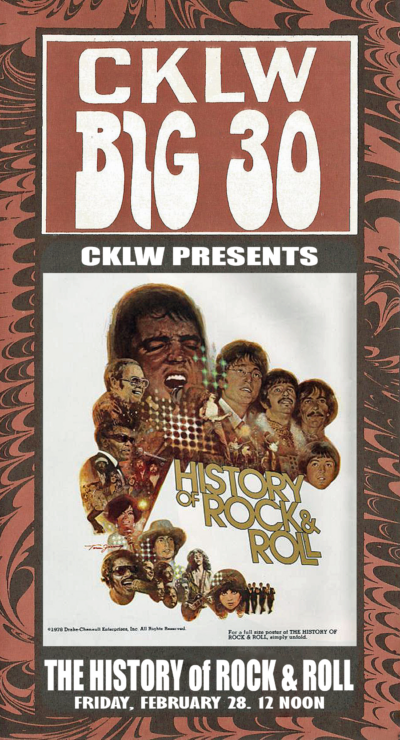
CKLW February 18, 1969.
That is why the HRR still finds new audiences today — through rebroadcasts, restorations, and, most recently, through the February 2026 streaming revival on the CKLW Big 8 Radio website, curated by former Big 8 jock Charlie O’Brien. The fact that listeners in the digital age are still seeking out a 48‑hour documentary produced on tape in the late 1960s speaks to the timelessness of its craft and the universality of its subject.
The Drake/Chenault HRR endures because it was built with intention. It was built with reverence. It was built with the belief that radio could rise to the level of the music it celebrated. And it did.
For KHJ, it was a triumph.
For CKLW, it was a milestone.
For Drake and Chenault, it was a legacy.
For listeners, it was unforgettable.
For the USA Radio Museum, it remains a cornerstone — a reminder of what radio can achieve when it dares to dream on a grand scale.
_____________________
Sources & Credits:
Historical details on the 1969 KHJ debut, the Drake‑Chenault production team, and the Boss Radio era are drawn from long‑established public accounts, interviews, and contemporary trade‑press reporting.
Information on the 1978 rebuild and stereo expansion reflects publicly available commentary and interviews by Gary Theroux. CKLW’s March 1969 broadcast and its significance as an early platform for the rockumentary are supported by documented histories of The Big 8 under Bill Drake’s consultancy.
The 2026 streaming revival is credited to Charlie O’Brien, former Big 8 jock and curator of the CKLW Big 8 Radio website. All narrative framing and interpretive analysis are original to the USA Radio Museum.
_____________________
Contact: jimf.usaradiomuseum@gmail.com
_____________________
A USARM Viewing Tip: On your PC? Mouse/double-click over the images for expanded views. On your mobile or tablet device? Finger-tap all the above images inside the post and stretch image across your device’s screen for LARGEST digitized view. Then click your browser’s back arrow to return to the featured post.
© 2026 USA Radio Museum. All rights reserved.

But for the whole wide world, it was a time traveling journey and a musical history lesson too as well!