
Introduction: From Church Pews to the Rock ’n’ Roll Revolution — the Full Arc of a Radio Legend There are radio stations that play music, and then
Introduction: From Church Pews to the Rock ’n’ Roll Revolution — the Full Arc of a Radio Legend
 There are radio stations that play music, and then there are radio stations that shape culture. WIBG was the latter — a station whose influence stretched far beyond the Delaware Valley, whose personalities became household names, and whose sound helped define an era. From its humble beginnings in the 1920s to its explosive rise as the birthplace of Philadelphia Top 40, and from the unforgettable era of the Good Guys to its enduring legacy, WIBG stands as one of the most important stations in American broadcasting history.
This presentation is the complete story — the history, the voices, and the legacy — woven into one sweeping narrative. — USA RADIO MUSEUM
_____________________
THE EARLY YEARS: A STATION FINDS ITS VOICE
WIBG’s story begins in 1925, when St. Ignatius Catholic Church in Philadelphia received a license to operate a radio station. In those early days, radio was still a marvel — a new technology that brought sermons, music, and community messages into homes for the first time. WIBG’s call letters were widely believed to stand for “I Believe in God,” a reflection of its origins and mission.
Throughout the 1930s and 40s, WIBG evolved alongside the medium itself. It expanded its programming to include news, variety shows, drama, and music. During World War II, the station became a vital source of information and comfort, offering updates from overseas and messages of hope to families at home.
By the late 1940s, WIBG was a familiar presence in Philadelphia households — a station with deep community roots and a willingness to adapt. And as the post‑war era ushered in a new generation of listeners, WIBG was poised for transformation.
THE BIRTH OF TOP 40: A NEW ERA BEGINS
 The 1950s brought seismic change to American radio. Television had stolen away the big network shows, leaving local stations to reinvent themselves. At the same time, a new cultural force was emerging: rock ’n’ roll. Teenagers were becoming a powerful demographic, and the 45 RPM single was reshaping the music industry.
WIBG recognized the moment. The station began shifting toward a music‑heavy format, embracing rhythm and blues, early rock ’n’ roll, and the emerging sounds that were capturing the imagination of young listeners. This shift laid the foundation for WIBG’s most iconic era: the birth of Philadelphia Top 40.
Top 40 was more than a format — it was a revolution. Instead of block programming, stations played the most popular songs repeatedly, creating a fast‑paced, hit‑driven sound that matched the rhythm of teenage life. WIBG didn’t just adopt Top 40. It helped define it.
By the mid‑1950s, WIBG had become the soundtrack of Philadelphia. Its signal reached deep into the suburbs and across the Delaware River, giving it a vast and loyal audience. Teenagers carried WIBG with them everywhere — on car radios, on the beach, at the pool, and through the speaker of a transistor radio tucked into a jacket pocket.
WIBG wasn’t just broadcasting music. It was broadcasting identity.
THE GOOD GUYS: PERSONALITIES WHO MADE THE FORMAT SING
If Top 40 was the engine, the personalities were the spark. WIBG’s rise to dominance was fueled by a lineup of charismatic, unforgettable air talents known collectively as The WIBG Good Guys. They weren’t just DJs — they were cultural icons.
Joe Niagara: The Rockin’ Bird
Joe Niagara was pure energy — a whirlwind of enthusiasm whose show felt like a party every time he cracked the mic. His excitement was contagious, his timing impeccable, and his rapport with listeners unmatched. Niagara didn’t just play the hits. He launched them.
Hy Lit: The Smooth Operator
Hy Lit brought sophistication and warmth to the airwaves. With his smooth delivery and encyclopedic musical knowledge, he became one of the most beloved voices in Philadelphia radio history. His show was intimate, curated, and deeply personal.
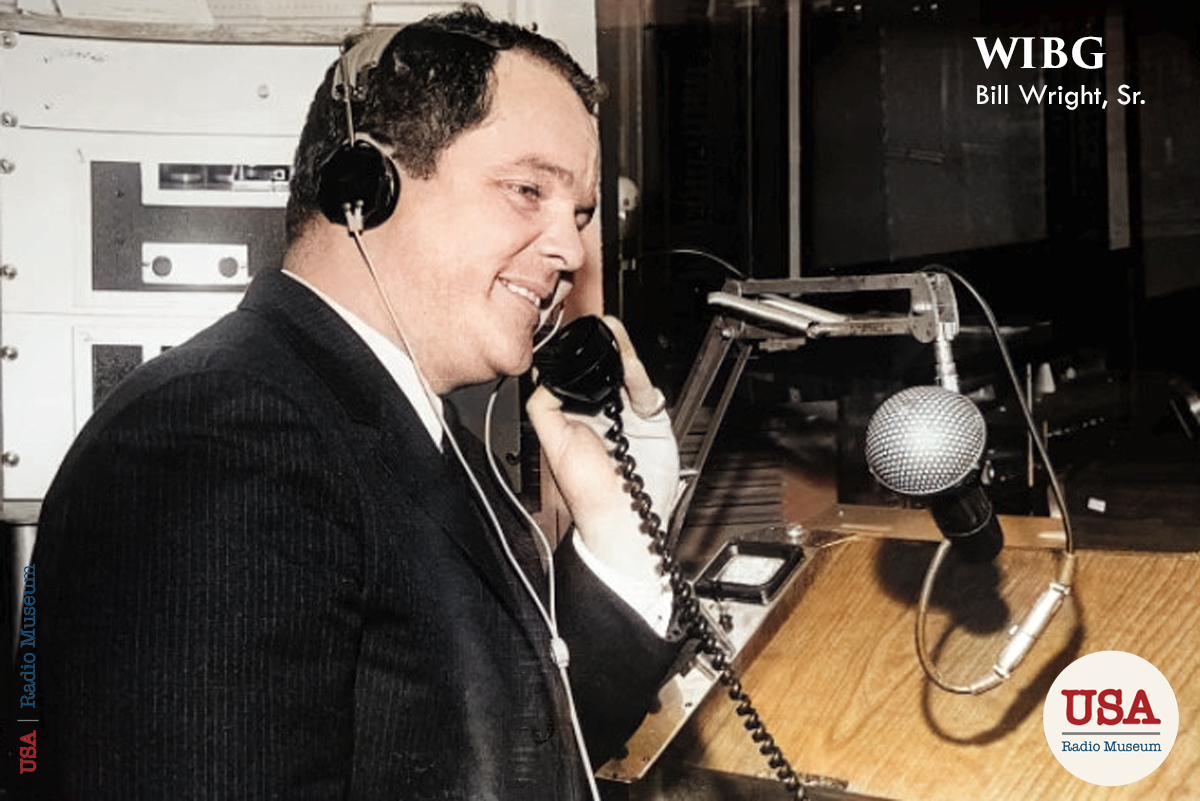
Bill Wright Sr.: The Morning Companion
Bill Wright Sr. was the friendly voice that welcomed Philadelphia into each new day. His humor was gentle, his presence comforting, and his connection to the community unmatched.
Don Cannon: The Voice of Confidence
Don Cannon’s strong delivery and commanding presence made every record sound important. He was polished, witty, and instantly recognizable.
Dean Tyler, Jerry Stevens, Tom Donahue, and more
Each Good Guy brought something unique — professionalism, warmth, edge, humor. Together, they created a sound that was greater than the sum of its parts.
The Good Guys weren’t just broadcasters. They were companions, entertainers, and ambassadors. They hosted dances, emceed concerts, and appeared at community events where crowds gathered just to see them. Their chemistry was electric, their presence unforgettable.
This was personality radio at its finest — a style that has largely disappeared, but whose impact remains profound.
THE SOUND OF A CITY: WIBG AND THE PHILADELPHIA MUSIC SCENE
Philadelphia in the 1950s and 60s was a musical powerhouse. The city was home to pioneering R&B artists, doo‑wop groups, and the emerging “Philadelphia Sound.” WIBG played a crucial role in amplifying that talent.
The station was one of the first to give significant airplay to local artists, helping launch careers and shape the national conversation. When a record broke on WIBG, it didn’t just become a local hit — it often became a national one.
WIBG wasn’t just reflecting Philadelphia’s culture. It was helping create it.
THE RIVALRY WITH WFIL: A BATTLE FOR THE AIRWAVES
No story of WIBG is complete without the legendary rivalry with WFIL. When WFIL adopted the Top 40 format in the mid‑1960s, the battle for Philadelphia’s youth intensified. WFIL’s “Boss Jocks” brought a slick, high‑energy sound that challenged WIBG’s dominance.
The competition was fierce, creative, and at times deeply personal. Promotions escalated. Playlists tightened. Personalities sharpened their on‑air presence. The two stations pushed each other to new heights, creating one of the most exciting radio markets in the country.
For WIBG, the rivalry was both a challenge and a catalyst. It forced the station to innovate, refine its sound, and double down on the personalities and community connections that had made it great.
Even as WFIL gained ground, WIBG remained beloved — a station with history, heart, and a fiercely loyal audience.
THE 1970s AND BEYOND: CHANGE, TRANSITION, AND ENDURING MEMORY
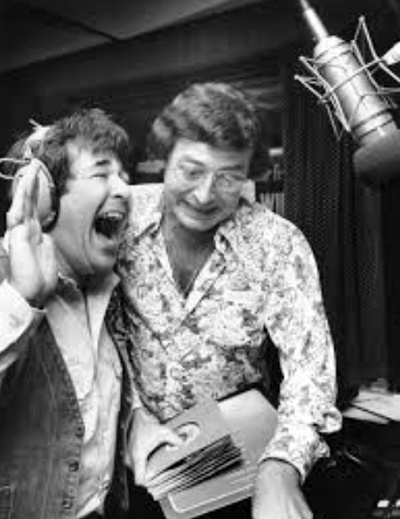
Hy Lit and Joe Niagara on last day of Top 40 WIBG in September 1977.
By the early 1970s, the radio landscape was shifting again. FM radio, with its superior sound quality and album‑oriented programming, began to erode the dominance of AM Top 40. WIBG experimented with new formats — talk, oldies, adult contemporary — but the cultural moment that had made it a powerhouse was fading.
In 1977, WIBG changed its call letters to WZZD, marking the end of an era. But the name WIBG lived on, revived by stations in New Jersey and preserved in the memories of those who grew up with it.
For Philadelphians, WIBG was more than a station. It was a companion, a soundtrack, a piece of their youth. The jingles, the contests, the personalities — these memories became part of the city’s cultural fabric.
_____________________
SIDEBAR I: WIBG BRINGS THE BEATLES TO PHILADELPHIA (1964)
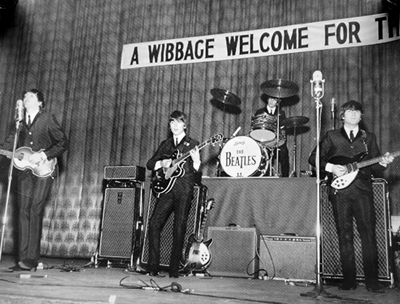
The Beatles’ Philadelphia concert was promoted annd presented by WIBG in September 1964.
When The Beatles arrived in Philadelphia on September 2, 1964, it wasn’t just another stop on their first U.S. tour — it was a WIBG‑made event. Months before Beatlemania exploded, WIBG’s Hy Lit recognized the band’s potential and boldly booked them for the Convention Hall show. After their Ed Sullivan breakthrough, the concert sold out in hours.
WIBG didn’t just promote the event — the station sponsored it, broadcast it live, and sent Hy Lit and Bill Wright Sr. to host. For thousands of screaming fans inside the hall — and tens of thousands listening at home — the night became one of the most electrifying moments in Philadelphia radio history.
WIBG didn’t just play the Beatles. WIBG brought the Beatles to Philly.
_____________________
SIDEBAR II: WIBG’S FINAL DAYS (1977)
WIBG’s long run as Philadelphia’s Top 40 powerhouse came to an end on September 9, 1977, when the station signed off for the last time under its historic call letters. Years of declining ratings, the rise of FM stereo, and fierce competition from WFIL had eroded the audience that once made “Wibbage” a cultural force. Moments after the final broadcast, the station reemerged as WZZD, marking the close of one of the most influential chapters in Philadelphia radio history.
SIDEBAR III: WAS WIBG A STORZ STATION?
A common misconception links WIBG to Storz Broadcasting, the company that pioneered the Top 40 format. In fact, WIBG was owned by Storer Broadcasting — a completely different company with a similar‑sounding name. While WIBG embraced and perfected the Top 40 style, it did so independently, guided by its own programmers and personalities. The station’s success was homegrown, uniquely Philadelphian, and entirely its own.
_____________________
THE LEGACY OF WIBG: WHY IT STILL MATTERS
Today, WIBG stands as one of the foundational broadcasting pillars of American Top 40 radio. Its innovations helped shape the format that would dominate the airwaves for decades. Its personalities set the standard for what a great DJ could be. Its connection to the community demonstrated the power of radio to bring people together.
For the USA Radio Museum, WIBG represents the best of what radio can be: innovative, personal, local, and deeply human. It is a reminder of a time when the airwaves crackled with excitement, when DJs were stars, and when a station could capture the imagination of an entire city.
WIBG didn’t just play the hits. It made them. It didn’t just follow trends. It set them. It didn’t just entertain. It inspired.
And that is why WIBG remains — and will always remain — a Philadelphia institution.
______________________________
Contact: jimf.usaradiomuseum@gmail.com
______________________________
A USARM Viewing Tip: On your PC? Mouse/click over each image for expanded views. On your mobile or tablet device? Finger-tap all the above images inside the post and stretch image across your device’s screen for LARGEST digitized view. Then click your brower’s back arrow to return to the featured post.
© 2026 USA Radio Museum. All rights reserved.

Plus on a another sidenote WIBG alongside WFIL definitely paved the way for the CHR format FM stations like WCAU-FM, WEGX, WIOQ, and of course WTDY.