
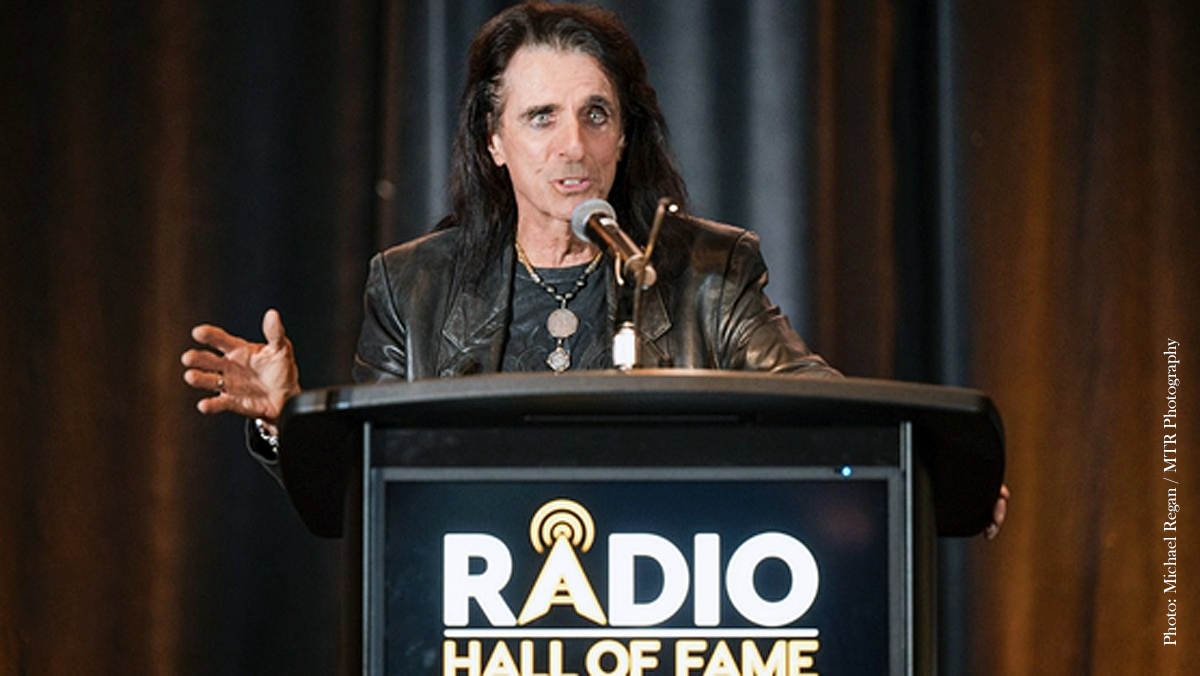
Honoring the Artist Whose 2025 Radio Hall of Fame Induction Honors Decades of Impact Behind the Microphone In the long arc of American broadcasting
Honoring the Artist Whose 2025 Radio Hall of Fame Induction Honors Decades of Impact Behind the Microphone
In the long arc of American broadcasting, some of the most unforgettable voices have come from unexpected places. Actors, comedians, journalists, and storytellers have all shaped the sound of radio — but only a rare few rock stars have stepped off the stage, sat behind a microphone, and built a second legacy in broadcasting. Among them, one name stands alone.
In 2025, Alice Cooper — the master of theatrical shock rock, the Detroit-born showman who redefined the boundaries of performance — was inducted into the Radio Hall of Fame. His honor wasn’t a novelty or a courtesy nod to celebrity. It was a recognition of a quarter-century of authentic, compelling, and wildly successful radio programming that connected with audiences as deeply as his music ever had.
Alice Cooper didn’t just appear on radio. He inhabited it. He shaped it. And he proved that the intimacy of the medium could amplify a rock star’s voice in ways a concert stage never could. — USA RADIO MUSEUM
_____________________
A Rock Star With Radio in His Blood
Long before he became a household name, Alice Cooper grew up in Detroit — a city where radio wasn’t just entertainment, but a cultural lifeline. Detroit radio shaped the sound of Motown, rock, soul, and the musical identity of an entire generation. For a young Vincent Furnier, the future Alice Cooper, radio was a constant companion. It was where he first heard the artists who would inspire him, where he absorbed the rhythms of the city, and where he learned the power of a voice that could reach millions.
That early connection never left him. Even as Alice Cooper became one of the most recognizable figures in rock history — with a stage show that blended horror, humor, and high-voltage performance — he remained a storyteller at heart. And radio, with its intimacy and immediacy, offered him a new stage.
_____________________
SIDEBAR I: Detroit Roots — The City That Shaped Alice Cooper
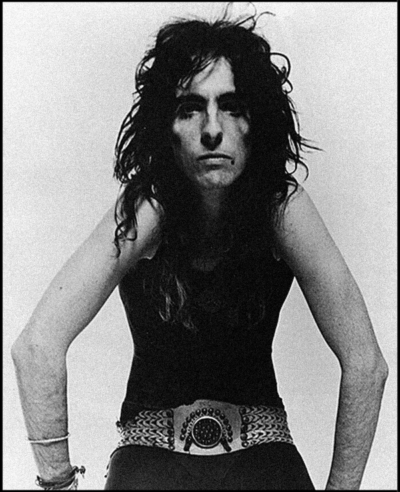 Before he became the architect of shock rock and one of the most theatrical performers in American music, Alice Cooper was a Detroit kid absorbing the sounds, stories, and energy of a city that lived and breathed music. Born Vincent Furnier in 1948, Cooper spent his formative years in Detroit — a place where radio wasn’t just background noise, but the heartbeat of the community. The city’s airwaves carried everything from Motown’s polished soul to the raw edge of emerging rock ’n’ roll, creating a sonic landscape that would shape Cooper’s artistic identity for decades to come.
Detroit’s musical culture was bold, diverse, and unafraid of spectacle — qualities that would later define Cooper’s stage persona. Even after his family relocated to Arizona during his teenage years, the imprint of Detroit never faded. Cooper has often credited the Motor City with giving him his grit, his theatrical instincts, and his understanding of how music connects with everyday people.
That Detroit foundation would come full circle in 1971, when CKLW’s Rosalie Trombley helped propel Cooper’s breakout hit “Eighteen” into national prominence. Long before his induction into the Radio Hall of Fame, Cooper’s relationship with radio — and with Detroit — was already written into the earliest chapters of his story.
_____________________
SIDEBAR II: Rosalie Trombley — “The Girl with the Golden Ear” and the Artists She Launched
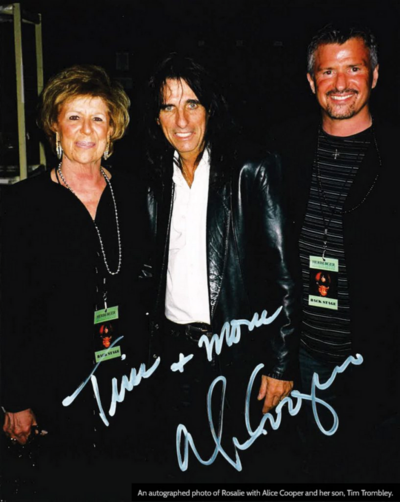
Rosalie Trombley, Alice Cooper, Tim Trombley (Rosalie’s son). Credit: WindsorLife.com
Few individuals in North American radio wielded more influence over the trajectory of popular music than Rosalie Trombley, the legendary music director of CKLW–The Big 8. Known industry‑wide as “The Girl with the Golden Ear,” Trombley possessed an uncanny ability to hear a hit before it became one. Her programming decisions didn’t just shape playlists — they shaped careers.
In 1971, Trombley played a pivotal role in launching Alice Cooper into mainstream stardom. When she first listened to the band’s single “Eighteen,” she recognized its raw emotional power and generational resonance. Her decision to add the track into rotation at CKLW proved transformative.
At the time, CKLW was the third most listened‑to station in North America, behind only WABC in New York and WLS in Chicago. Its 50,000‑watt signal reached across 28 U.S. states and six Canadian provinces, especially after dark when its coverage expanded dramatically. A record that broke on CKLW didn’t just get exposure — it exploded.
Alice Cooper was far from the only artist to benefit from Trombley’s extraordinary ear. She championed early releases from The Guess Who, Bob Seger, Elton John, Earth, Wind & Fire, and many others, often long before other programmers recognized their potential. Her instincts helped define the sound of the 1970s and cemented CKLW’s reputation as a continental radio signal.
Trombley’s influence extended beyond chart success. She helped bridge Canadian and American music markets, elevated emerging artists to national prominence, and demonstrated the power of women in an industry that rarely acknowledged their leadership. Her legacy continues to echo through the careers she shaped — including Alice Cooper, whose rise to fame began, in part, with a single spin on The Big 8.
_____________________
Nights With Alice Cooper: A 20-Year Reign in Syndicated Radio
Credit: Sirius XM
In 2004, Alice Cooper launched Nights with Alice Cooper, a syndicated weeknight program that would run for nearly two decades and become one of the most successful rock radio shows of its era. What made it work wasn’t celebrity. It was authenticity.
Alice didn’t play the role of a radio host. He was one.
He spoke to listeners the way he spoke to fans backstage — candidly, humorously, and with the kind of lived-in authority only a lifelong musician could offer. His show blended:
• Classic rock staples
• Deep cuts and lesser-known tracks
• Stories from the road
• Comedic bits and character voices
• Fan interaction that made listeners feel like part of the show
Even more remarkable was Cooper’s work ethic. While hosting a nightly syndicated show, he continued touring with a full band and theatrical stage production — a dual commitment few performers of his stature have ever attempted, let alone sustained for twenty years.
When the program concluded in 2023, it left behind a legacy of high ratings, loyal listeners, and a blueprint for how musicians could authentically transition into radio.
Alice’s Attic: A New Era for a Familiar Voice
Credit: AlicesAttic.com
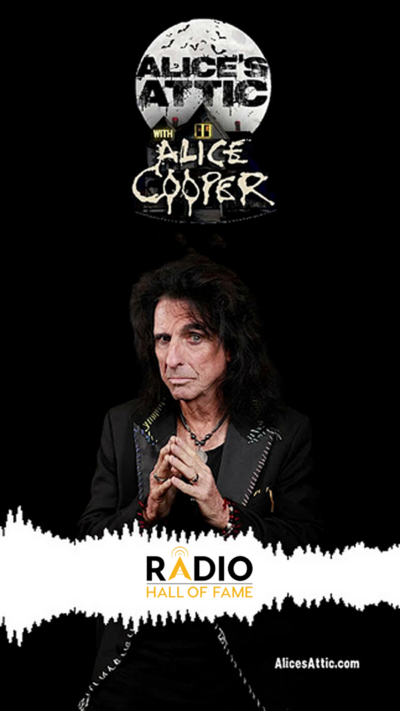
In 2024, Alice Cooper returned to the airwaves with Alice’s Attic, his second nationally syndicated weeknight program. The show debuted to immediate enthusiasm and quickly grew to approximately 100 stations nationwide.
Alice’s Attic preserved the spirit of his earlier program while evolving with the times. The format remained rooted in rock, storytelling, and personality-driven content, but with a fresh creative angle — a sense of rummaging through the attic of Alice’s mind, pulling out memories, influences, oddities, and musical treasures.
Listeners embraced it instantly. The show reaffirmed what two decades had already proven: Alice Cooper wasn’t a rock star dabbling in radio. He was a broadcaster with a genuine connection to his audience.
A Pioneer Among Musicians in Broadcasting
Alice Cooper’s radio career is notable not only for its longevity but for its influence. He was the first of several major rock musicians to take on full-time radio duties, and he set the standard for how to do it well.
What made him stand out?
• Authenticity
• Curatorial instinct
• Storytelling
• Humor
• Connection
In an era when celebrity-hosted programs often felt manufactured, Alice Cooper’s radio presence was refreshingly real.
The 2025 Radio Hall of Fame Induction: A Well-Earned Honor
 When Alice Cooper was inducted into the Radio Hall of Fame in 2025, it marked a milestone not just for him, but for the evolving story of American radio. His induction recognized:
• 25 years of syndicated broadcasting
• A pioneering role for musicians in radio
• A unique ability to bridge rock culture and radio culture
• A sustained connection with audiences across generations
It also underscored something deeper: radio remains a medium defined by personality. And Alice Cooper, with his unmistakable voice, his humor, his candor, and his love of music, embodied that truth.
A Legacy That Lives On
Alice Cooper’s contributions to radio are more than a chapter in his career; they are part of the broader story of how radio adapts, evolves, and thrives. His programs brought rock history to life, gave listeners a nightly companion, and demonstrated that the microphone can be as powerful as the spotlight.
Alice Cooper didn’t just join that tradition. He expanded it.
And now, with his place in the Radio Hall of Fame secured, his voice — both musical and broadcast — stands as a testament to the enduring bond between artist and audience, and to radio’s timeless power to turn a single voice into a shared experience that lives far beyond the moment it’s heard.
_____________________
Contact: jimf.usaradiomuseum@gmail.com
_____________________
A USARM Viewing Tip: On your PC? Mouse/double-click over the images for expanded views. On your mobile or tablet device? Finger-tap all the above images inside the post and stretch image across your device’s screen for LARGEST digitized view. Then click your browser’s back arrow to return to the featured post.
© 2026 USA Radio Museum. All Rights Reserved.
