
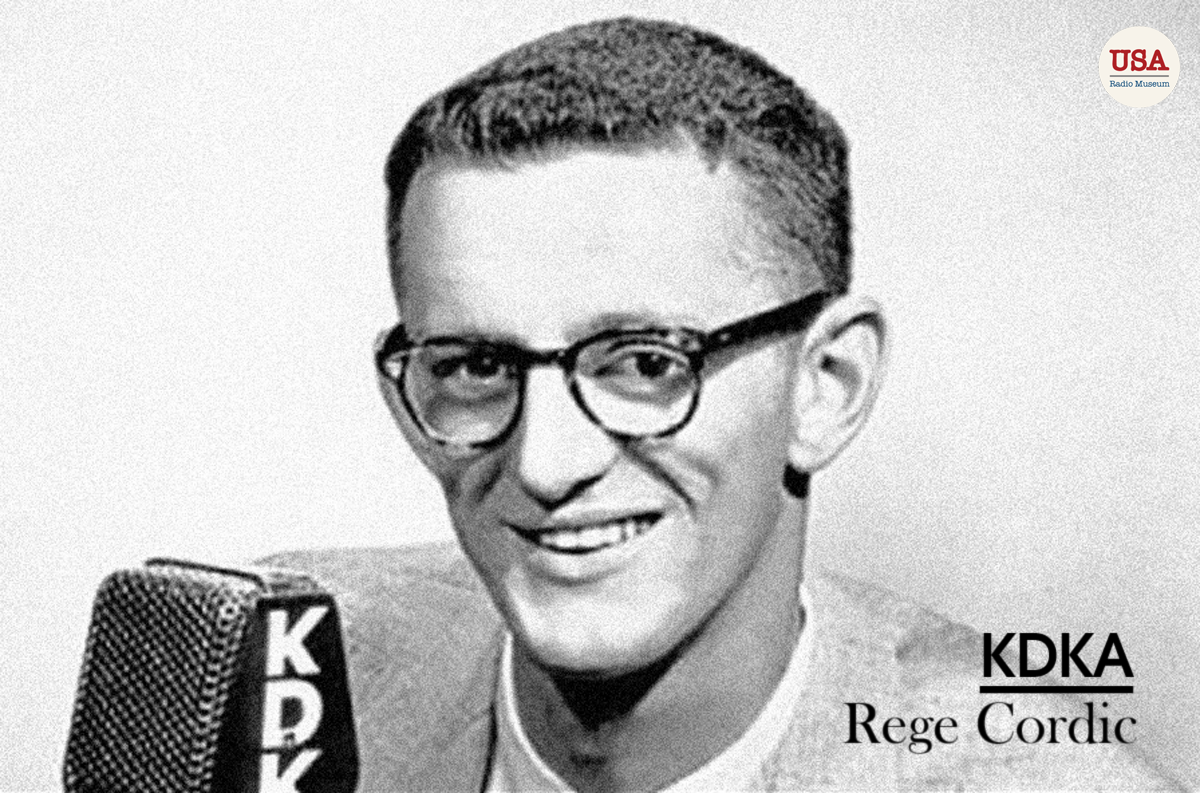
Rege Cordic: The Radio Imagination That Woke Pittsburgh Regis John “Rege” Cordic stands as one of Pennsylvania’s most inventive and influential rad
Rege Cordic: The Radio Imagination That Woke Pittsburgh
Regis John “Rege” Cordic stands as one of Pennsylvania’s most inventive and influential radio figures — a broadcaster whose imagination reshaped the possibilities of morning radio and whose voice became woven into the cultural fabric of Pittsburgh. Born on May 15, 1926, in the city’s Hazelwood neighborhood, Cordic emerged from modest beginnings to become a dominant force on the airwaves, first at WWSW and later at the powerhouse KDKA. For nearly two decades, he commanded Pittsburgh’s mornings with a blend of satire, character‑driven comedy, and local flavor so distinctive that at times more than 80 percent of radios in the region were tuned to him. His program, Cordic & Company, was not merely a show — it was a daily ritual, a shared language, and a mirror held up to the quirks, rhythms, and humor of Western Pennsylvania life.
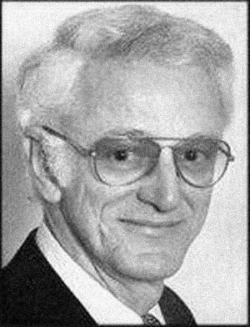
Rege Cordic, 1978.
Cordic’s career unfolded in two remarkable acts. The first, from 1948 to 1965, established him as a radio pioneer whose comedic sensibilities predated and arguably influenced later ensemble‑driven formats. The second, stretching from the late 1950s into the mid‑1980s, revealed his versatility as a voice actor and television performer in Los Angeles, where he brought the same precision, timing, and character depth to screens large and small. Whether portraying aliens from Venus, booming caricatures of Pittsburgh locals, or lending his voice to animated classics, Cordic carried with him the unmistakable cadence and creativity that defined his early work.
Yet beyond the characters, the satire, and the legendary “Olde Frothingslosh” campaigns, Rege Cordic’s legacy rests in something deeper: his ability to create a world. Each morning, listeners stepped into that world — a place where humor softened the edges of daily life, where local culture was celebrated rather than caricatured, and where the boundaries of radio were stretched by a man who understood that imagination was the most powerful transmitter of all. — USA RADIO MUSEUM
_____________________
Early Life and the Birth of a Broadcaster
Cordic’s story begins in Pittsburgh’s Hazelwood neighborhood, a working‑class enclave where the rhythms of steel, streetcars, and tightly knit communities shaped the soundscape of daily life. He attended Central Catholic High School, where discipline and rigor met a young man already gifted with mimicry, timing, and a natural instinct for humor. Even before he touched a microphone, Cordic was quietly building the toolkit that would one day make him Pittsburgh’s most beloved morning companion.
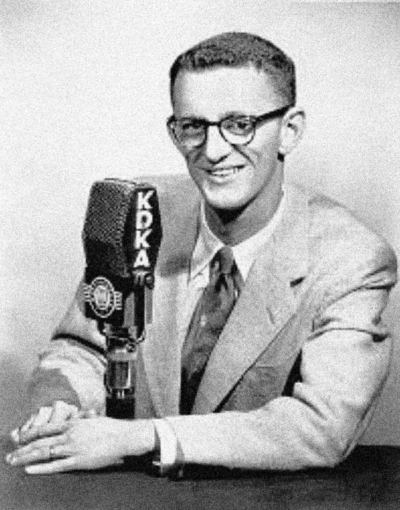
Rege Cordic, 1958. (Credit: Pittsburgh Post-Gazette)
His entry into broadcasting came through WWSW‑AM, where he worked as a staff announcer and substitute sportscaster. These early years taught him the fundamentals of pacing, clarity, and presence — skills that would later become the backbone of his comedic craft. When morning host Davey Tyson left the station in 1948, Cordic was among several staffers given the chance to fill the slot. At first, he played it straight. But gradually, he began slipping humor into the broadcast: fictional sports scores, playful asides, subtle satire. Listeners noticed. More importantly, they responded.
This was the birth of Cordic & Company, though the name would come later. What mattered first was the shift — the moment when Cordic stopped being a staff announcer and became a creator. He wasn’t just reading the news; he was building a world. And Pittsburgh, hungry for something fresh and unmistakably local, embraced him.
Cordic & Company: Reinventing the Morning Show
By the early 1950s, Cordic had begun assembling a cast of characters who would become the backbone of Cordic & Company. These weren’t mere voices; they were fully realized personalities with quirks, backstories, and comedic rhythms that listeners came to know as intimately as their own neighbors. Omicron and Matildacron, the aliens from Venus; Brunhilda with her booming footsteps; Carmen Monoxide with his groan‑worthy puns; Mr. Goat, perpetually offended — each character added a new dimension to the show’s universe.
Cordic’s genius lay in how he blended these characters with the real world. His humor was rooted in Pittsburgh’s culture, dialect, and daily frustrations. He understood the city’s rhythms — the steel shifts, the traffic patterns, the neighborhood rivalries — and he wove them into sketches that felt both absurd and familiar.
In 1954, Cordic & Company made a seismic leap to KDKA, one of the most powerful stations in the country. With KDKA’s reach and resources, the show expanded in ambition and scope. Ratings soared to an astonishing 85 share — a level of dominance almost unimaginable today. Cordic’s fictional products, especially the legendary “Olde Frothingslosh,” became part of Pittsburgh folklore. Behind the scenes, a talented creative team — Sterling Yates, Karl Hardman, Bob Trow, Charlie Sords, and Marilyn Eastman — helped shape the show’s voice and characters, creating an ensemble dynamic years ahead of its time.
_____________________
SIDEBAR I: KDKA — The Powerhouse Behind a Pittsburgh Legend
How America’s First Commercial Radio Station Became the Perfect Stage for Rege Cordic
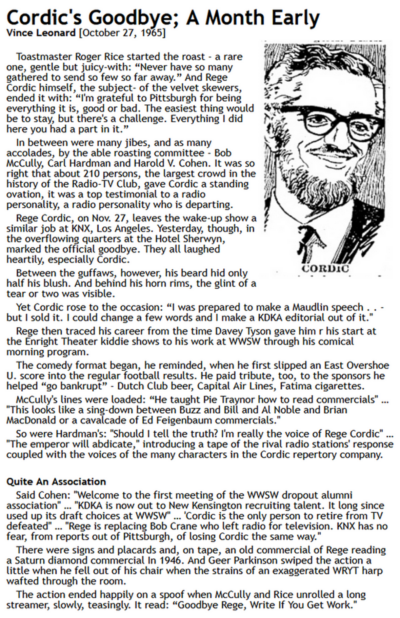
Rege Cordic leaves Pittsburgh. (Credit: Pittsburgh-Post Gazette, October 27, 1965)
When Cordic & Company moved to KDKA on Labor Day 1954, it wasn’t just a station change — it was a cultural event. KDKA, already celebrated as America’s first commercial radio station, brought unmatched reach, prestige, and technical muscle. For a talent like Rege Cordic, it was the ideal launchpad.
A Station Built for Influence
By the mid‑1950s, KDKA was a broadcasting titan. Its powerful signal blanketed Western Pennsylvania and spilled into neighboring states, giving Cordic access to an audience far larger than WWSW’s. The station’s reputation for innovation and public trust meant that any personality who took the morning slot instantly became part of Pittsburgh’s daily rhythm.
A Perfect Fit for Cordic’s Creative Universe
KDKA’s resources — from production staff to promotional support — allowed Cordic’s characters, sketches, and satire to flourish. The show’s sound grew richer, the writing sharper, and the comedic world more expansive. With KDKA, and later, WTAE behind him, Cordic didn’t just entertain Pittsburgh; he defined its mornings.
Ratings That Made History
At its peak, Cordic & Company achieved an astonishing 85 share — meaning nearly nine out of ten radios in the region were tuned to KDKA each morning. It remains one of the most dominant ratings performances in American radio history.
_____________________
A Partnership That Shaped a City
For more than a decade, KDKA and Rege Cordic formed one of broadcasting’s most iconic pairings. The station gave Cordic the platform; Cordic gave KDKA a cultural identity that resonated across generations.
Together, they didn’t just make great radio — they made Pittsburgh history.
Olde Frothingslosh and the Birth of a Pittsburgh Legend
Among Cordic’s many inventions, none became more iconic than Olde Frothingslosh, “the pale stale ale with the foam on the bottom.” What began as a parody of beer commercials soon became a cultural phenomenon. In 1955, Pittsburgh Brewing Company embraced the joke, releasing real cans and bottles of Frothingslosh — packaged upside down to honor Cordic’s tagline. The labels changed annually, becoming collector’s items and cementing the parody’s place in Pittsburgh history.
Frothingslosh was more than a gag; it was a symbol of the city’s humor — self‑aware, unpretentious, and delightfully off‑kilter. It represented the way Cordic’s imagination seeped into everyday life, blurring the line between satire and reality.
_____________________
SIDEBAR II: Help Us Preserve a Lost Piece of Pittsburgh Radio History
Do you have a complete Rege & Company aircheck?
 As the USA Radio Museum honorably recalls the legacy of Rege Cordic, we face one of the most enduring gaps in Pittsburgh’s broadcast history: no complete, full‑length Rege & Company morning show from the late 1950s or early 1960s has yet surfaced.
What exists today are hundreds of short clips — brilliant, funny, essential fragments — but almost all run four to six minutes, and less. They offer glimpses of Cordic’s genius, yet none capture the full scope, pacing, and structure of a complete broadcast during his KDKA peak.
And so we turn to you — the listeners, collectors, families, engineers, and archivists who may hold what history has forgotten.
We are searching for:
- Any complete Rege & Company broadcast
- Full airchecks from the late 1950s or early 1960s
- Reel‑to‑reel recordings, cassettes, transcription discs, or off‑air tapes
- Uncatalogued personal recordings made by fans, staff, or engineers
Even a single full show would be a monumental discovery — a cultural treasure for Pittsburgh and a missing cornerstone of American radio history.
If you have anything — or think you might — we would love to hear from you.
Your contribution could help restore a piece of broadcasting history that has been missing for more than sixty years.
The USA Radio Museum stands ready to preserve, digitize, and honor any material you can share (or from someone you may know). You may contact me at the provided email address provided, below.
_____________________
The Move to Los Angeles: Reinvention and Resilience
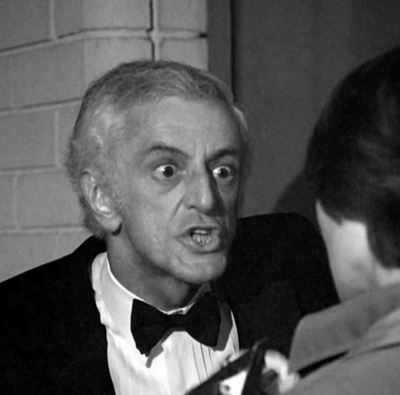
Rege Cordic discovers Hollywood and television, 1967.
In 1965, CBS Radio offered Cordic the morning drive‑time slot at KNX in Los Angeles, replacing Bob Crane. It was a prestigious opportunity, but the transition was rocky. Contract delays left KNX without a permanent host for months, and the show’s ratings suffered. When Cordic finally arrived, the station soon pivoted to an all‑news format.
Yet Cordic’s response revealed his resilience. Rather than retreat, he reinvented himself. He studied acting and soon began landing roles on The Monkees, The Flying Nun, Gunsmoke, Columbo, The Rockford Files, The Waltons, and more. His voice acting career flourished as well, with roles in Scooby‑Doo, Jabberjaw, Spider‑Man, The Incredible Hulk, Transformers, and the animated film The Mouse and His Child.
He even returned briefly to radio in 1981 at KRLA, but ultimately devoted his later years to voice‑over work, becoming a familiar presence in national advertising.
Legacy, Influence, and the Enduring Echo of a Pittsburgh Original
When Rege Cordic died in 1999, he left behind a legacy defined not by fame but by impact. He changed the sound of a city. He expanded the possibilities of a medium. He made people laugh — not with cruelty or shock, but with warmth, wit, and a deep understanding of human nature.
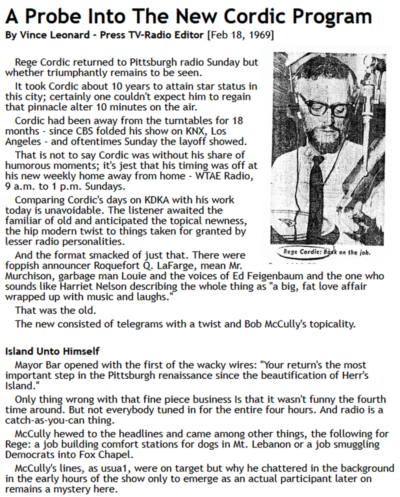
Rege Cordic returns to Pittsburgh. (Credit: Pittsburgh-Post Gazette, February 18, 1969)
His influence lives on in the ensemble‑driven morning shows that dominate radio today, in the collectors’ cans of Frothingslosh that still circulate, and in the memories of Pittsburghers who woke up with him each morning. Cordic gave Pittsburgh a universe. And in return, Pittsburgh gave him immortality.
And yet, his story also reminds us that brilliance is not always matched by recognition. His absence from the Radio Hall of Fame is not a measure of his worth, but a measure of how easily national institutions can overlook the voices that shaped everyday American life. Pittsburgh knows better. Pittsburgh remembers. And Pittsburgh deserves better than to see one of its greatest innovators left outside the official record. Cordic’s legacy endures not because awards validated him, but because a city embraced him — and still carries his voice in its collective memory.
_____________________
WTAE-AM (Pittsburgh) | Rege Cordic & Co. | 1969
Audio Digitally Remastered by USA Radio Museum
_____________________
Rege Cordic’s universe may have been built of characters, satire, and sound, but its foundation was something deeper: a bond with the people of Pittsburgh. That bond remains unbroken. And as long as the city remembers the mornings he shaped, the laughter he sparked, and the imagination he unleashed, Rege Cordic will remain exactly where he belongs — at the heart of Pittsburgh’s radio story.
_____________________
Contact: jimf.usaradiomuseum@gmail.com
_____________________
A USARM Viewing Tip: On your PC? Mouse/double-click over the images for expanded views. On your mobile or tablet device? Finger-tap all the above images inside the post and stretch image across your device’s screen for LARGEST digitized view. Then click your browser’s back arrow to return to the featured post.
© 2026 USA Radio Museum. All Rights Reserved.

Any of his KDKA work floating around?
D. Sheldon: Thank you for your comment. We just implemented a special call-out for such recordings with hope we may acquire any KDKA Rege & Company complete radio shows, or airchecks, from our USARM community. Hopefully we’ll get lucky!
My favorite Reg Cordic “story”. The chief of aVillage in Africa – lived in a typical Straw Hut. He had a big wooden “throne” which he didn’t lie – so he stored it in the upper level. But it was too heavy – dropped through the ceiling – fell on the chief and killed him.
Leading to the warning – “People who live in Grass houses shouldn’t stow thrones.”