
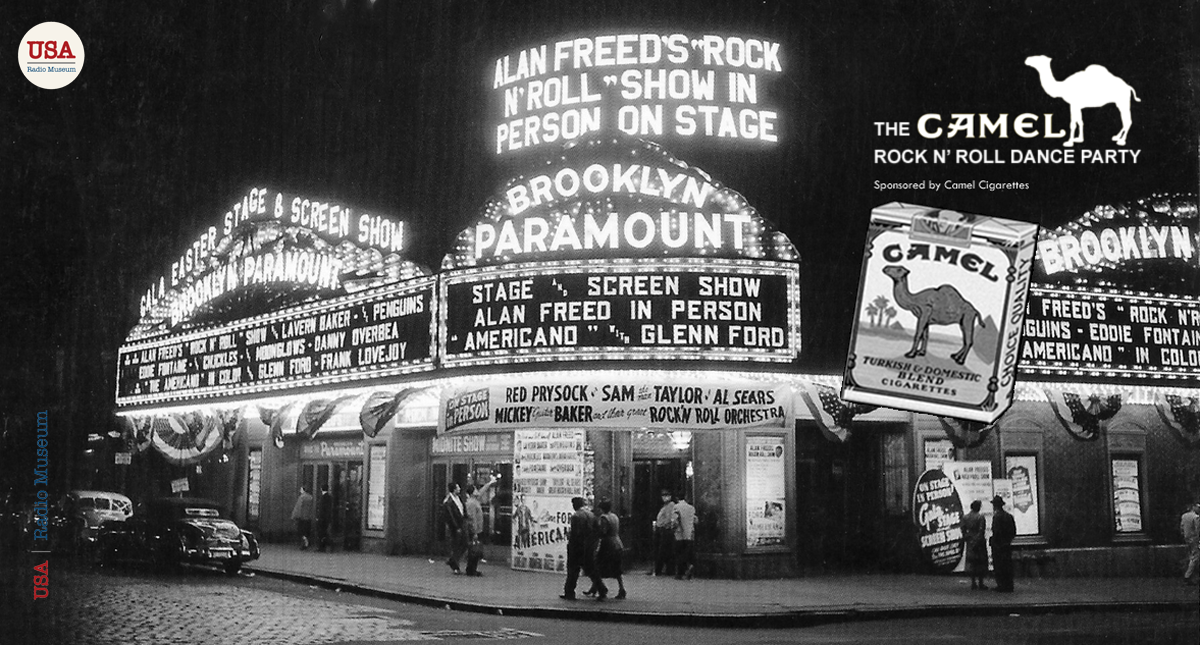
The Camel Rock ’n’ Roll Dance Party Remembered Alan Freed, WINS 1010, and the Sponsored Radio Show That Helped Launch a Revolution Some radio
The Camel Rock ’n’ Roll Dance Party Remembered
Alan Freed, WINS 1010, and the Sponsored Radio Show That Helped Launch a Revolution
 Some radio programs live quietly in the archives. Others feel like they’re still vibrating with the energy of the moment that created them. Alan Freed’s Camel Rock ’n’ Roll Dance Party, produced in 1956 during his peak years at WINS 1010 in New York City, belongs to the latter category. It was a short‑lived series, but it captured a cultural turning point — the moment when rock and roll leapt from regional phenomenon to national force, carried on the back of a cigarette sponsor bold enough to bet on the future.
Today, with twenty‑five complete half‑hour episodes preserved in the USA Radio Museum archives — Camel commercials and all — the show stands as one of the most vivid surviving documents of Freed’s New York era. It is a time capsule of a city, a station, a sponsor, and a DJ who believed that rock and roll wasn’t just music. It was the new movement.
This is the story of the Camel Rock ’n’ Roll Dance Party — and why it still matters. — USA RADIO MUSEUM
WINS 1010: The Crucible of Freed’s New York Power
To understand the Camel show, you have to understand WINS.
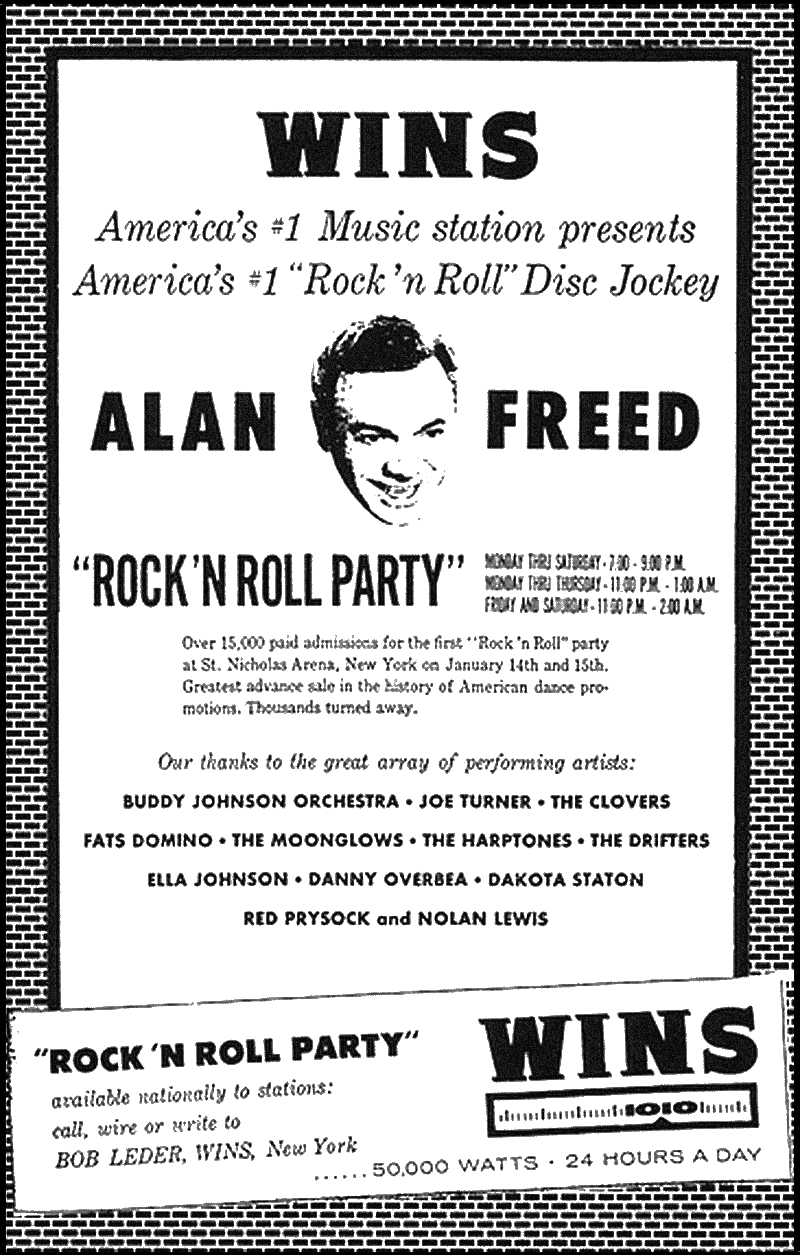 When Alan Freed arrived at WINS in September 1954, the station was already experimenting with youth‑oriented programming. But Freed transformed it. His nightly “Rock ’n’ Roll Party” became the most influential radio show in America. His Brooklyn Paramount stage revues drew thousands of teenagers. His voice — rhythmic, warm, and unmistakably hip — became the sound of a generation discovering itself.
By 1956, Freed wasn’t just a DJ. He was a cultural force.
WINS recognized this and leaned into it. The station’s management understood that rock and roll was not a fad but a demographic shift. They gave Freed freedom, visibility, and the promotional muscle of a major New York outlet. WINS’s aggressive youth strategy — fast pacing, tight playlists, high‑energy presentation — created the perfect environment for a national sponsor to step in.
That sponsor was Camel Cigarettes.
Camel Steps Into the Youth Market
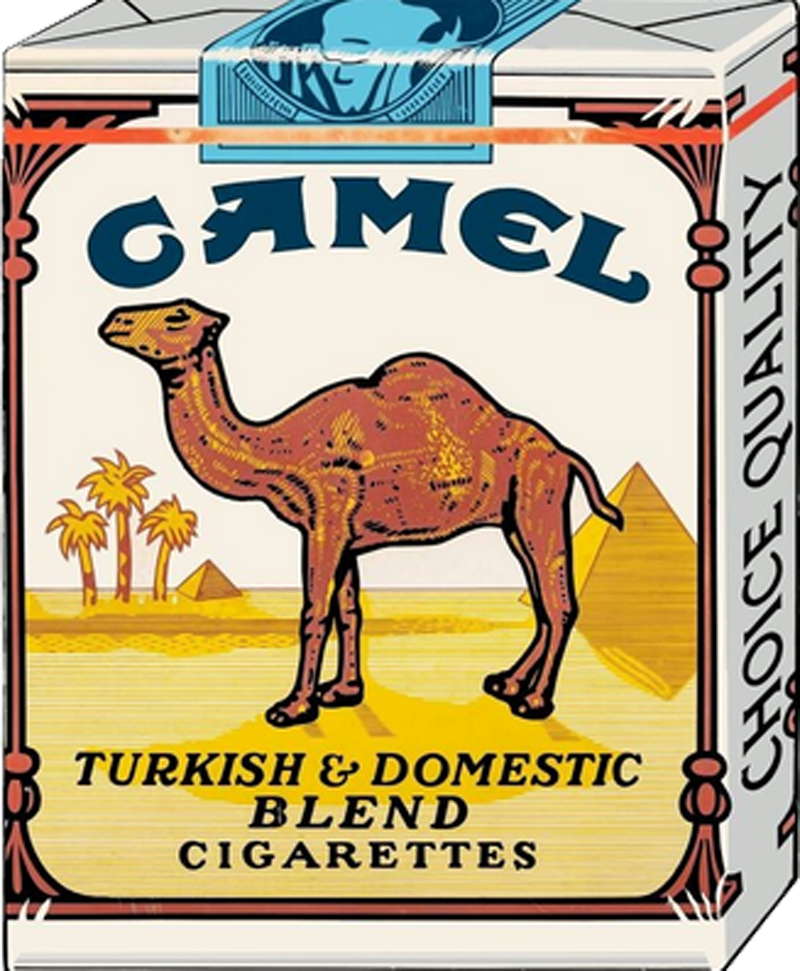
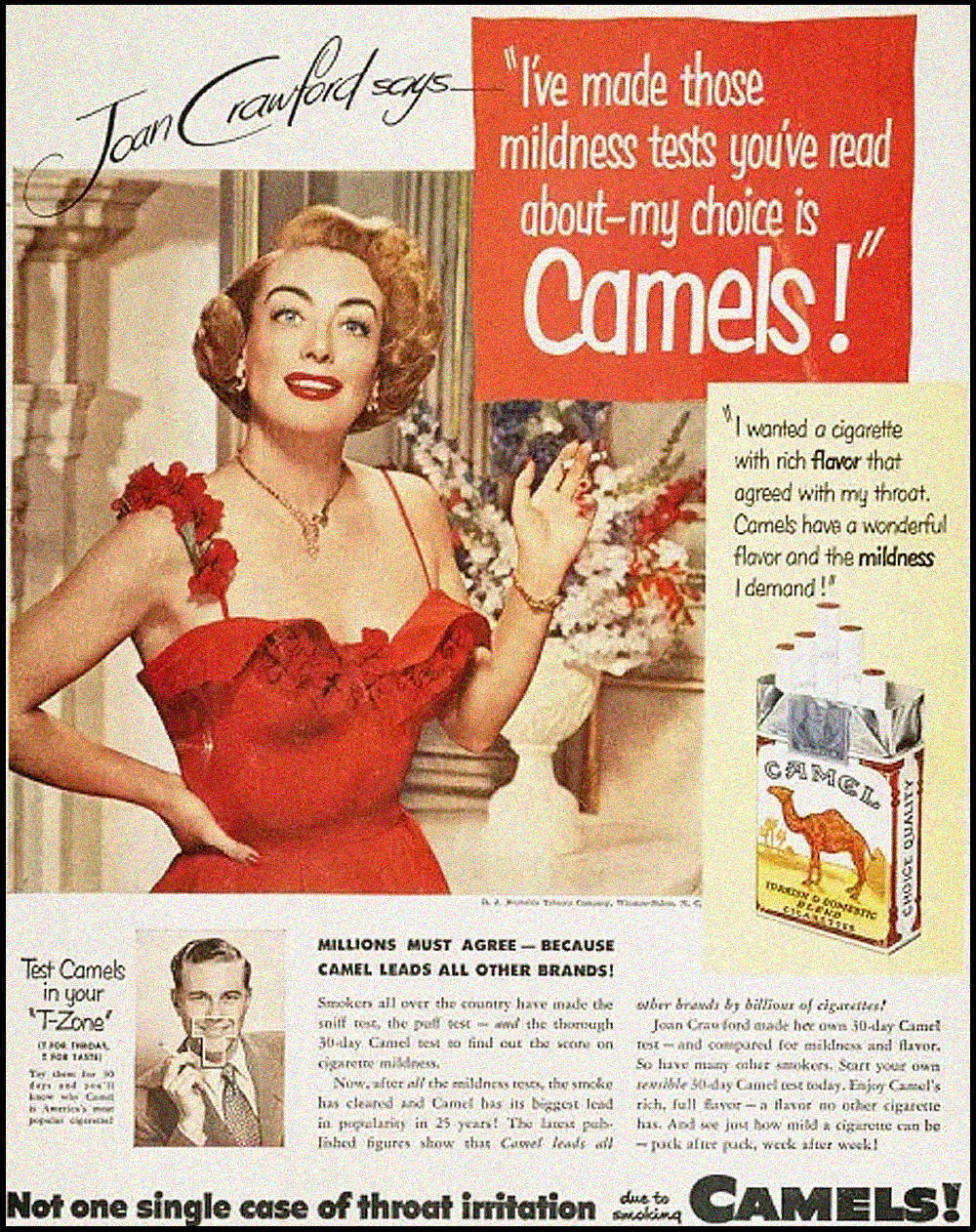
Camel was one of the most dominant advertisers of the mid‑20th century. Their campaigns were everywhere: magazines, billboards, television, and especially radio. But aligning with rock and roll in 1956 was a bold move. The music was controversial. The artists were young, often Black, and pushing boundaries. Parents were uneasy. Politicians were suspicious. The press was divided.
Camel saw opportunity.
They recognized that Freed’s WINS audience — millions of teenagers and young adults — represented a new frontier in national advertising. The Camel Rock ’n’ Roll Dance Party was conceived as a hybrid: part variety show, part dance program, part live performance showcase. It was designed to bring rock and roll into American homes with the polish and authority of a major sponsor.
Camel’s commercials, preserved in every surviving episode, are a masterclass in mid‑century advertising. Confident. Authoritative. Unapologetically of their time. Their presence gives the series a documentary authenticity that few rock and roll broadcasts of the era can match.
New York City: The Center of the Rock ’n’ Roll Universe
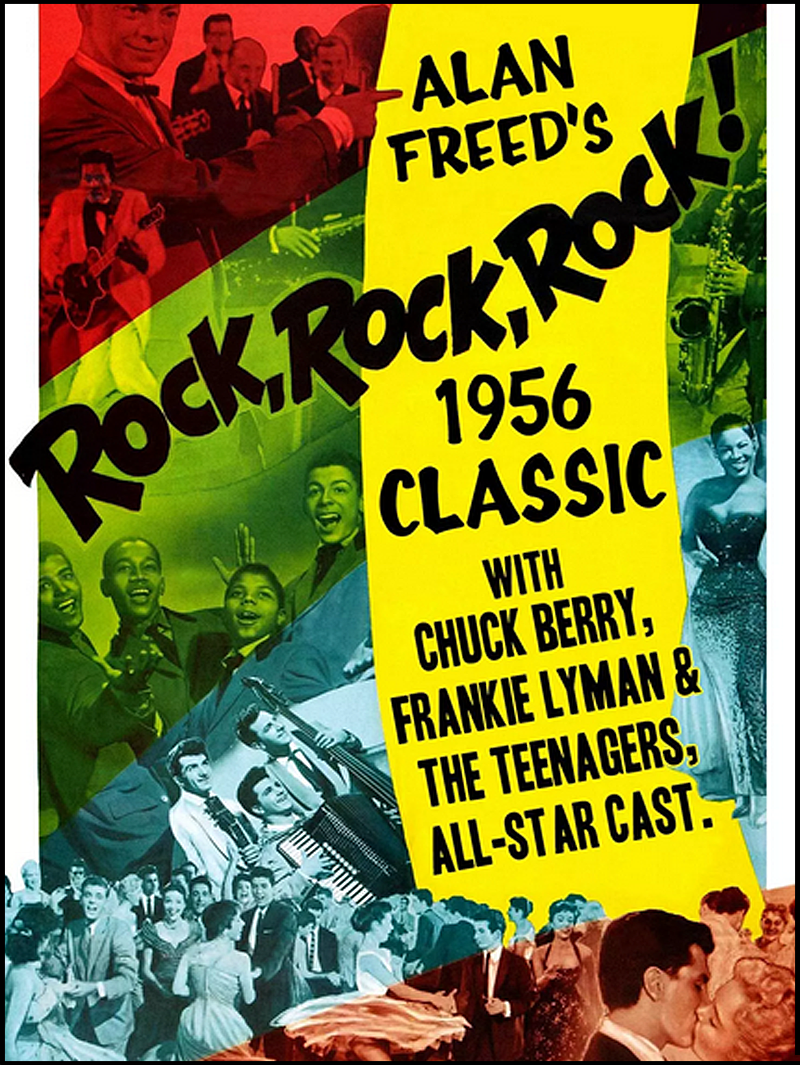 The show was produced in New York — the beating heart of the music industry. Record labels, publishers, promoters, and radio networks all converged there. WINS was perfectly positioned to attract the biggest names in the new music.
And Freed brought them in.
The Camel Rock ’n’ Roll Dance Party featured a rotating cast of performers who would become legends:
- LaVern Baker, the powerhouse voice of Atlantic Records
- The Moonglows, whose harmonies defined doo‑wop’s golden age
- The Flamingos, bringing Chicago soul to the national stage
- Chuck Berry, whose guitar riffs were rewriting American culture
- The Teenagers with Frankie Lymon, the very sound of teenage America
These weren’t just guest spots. They were statements. Freed used the Camel platform to elevate artists — many of them Black — who were often marginalized by mainstream radio. WINS’s willingness to embrace integrated programming made the Camel show possible.
The format blended live performances, Freed’s signature patter, and a dance‑party atmosphere that made listeners feel like they were in the room. It was radio as social space — a place where teenagers gathered, even if only in imagination.
The Sound of a Cultural Shift
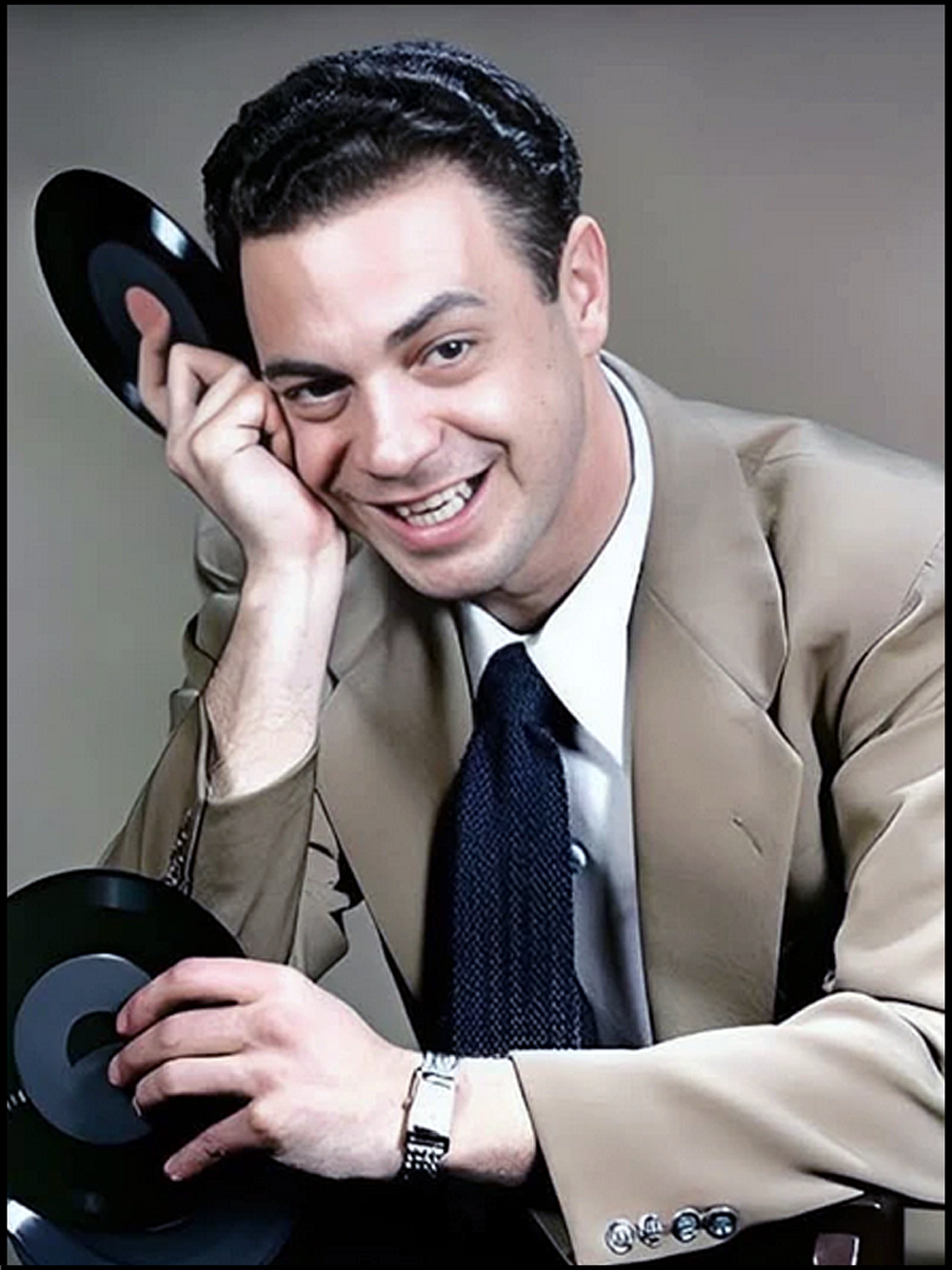 Listening to the surviving episodes today — the ones preserved in the USA Radio Museum archives — is like stepping into a moment when American culture was pivoting in real time.
You hear the urgency in the music. You hear the excitement in Freed’s voice. You hear the confidence of a sponsor betting on youth culture. You hear the birth of a new national identity.
Freed’s style was conversational, rhythmic, and deeply connected to the music. He didn’t just play records; he introduced them, contextualized them, and celebrated them. His voice carried the authority of someone who believed rock and roll was not a fad but a revolution.
And he was right.
WINS’s Role in Making the Camel Show Possible
The Camel Rock ’n’ Roll Dance Party could not have existed without WINS.
Here’s why:
1. WINS gave Freed national credibility.
By 1956, he was the most famous DJ in America. Camel wanted a host with reach — and Freed had it.
_____________________
WINS 1010 | The Camel Rock n’ Roll Dance Party | Alan Freed: Lavern Baker, The Teenagers | April 14, 1956
Audio Digitally Remastered by USA Radio Museum
_____________________
2. WINS embraced youth culture.
While other New York stations (like WNEW) clung to big bands and middle‑of‑the‑road pop, WINS leaned into the teenage market. Camel saw a station aligned with the future.
_____________________
WINS 1010 | The Camel Rock n’ Roll Dance Party | Alan Freed: Lavern Baker, The Cadillacs | June 30, 1956
Audio Digitally Remastered by USA Radio Museum
_____________________
3. WINS had the artists.
Because New York was the center of the music industry, Freed could book top performers on short notice. Camel wanted star power — WINS delivered it.
_____________________
WINS 1010 | The Camel Rock n’ Roll Dance Party | Alan Freed: The Flamingos, Chuck Berry | August 25, 1956
Audio Digitally Remastered by USA Radio Museum
_____________________
4. WINS had the production infrastructure.
The station’s studios, engineers, and promotional machinery made a national dance‑party program feasible.
_____________________
WINS 1010 | The Camel Rock n’ Roll Dance Party | Alan Freed: Bill Haley & The Comets | September 08, 1956
Audio Digitally Remastered by USA Radio Museum
_____________________
5. WINS had the momentum.
Freed’s nightly show, his stage revues, and his national reputation created a perfect storm of visibility. Camel stepped into that storm and rode the wave.
The Camel show wasn’t just a sponsored program. It was the product of a station that understood the moment.
A Show Caught Between Two Worlds
The Camel Rock ’n’ Roll Dance Party also reveals the contradictions that defined Freed’s career.
 He was a champion of Black artists at a time when many white DJs refused to play their records. He insisted on integrated stage shows. He fought for the music’s legitimacy. But he was also navigating a commercial world that wasn’t always ready for the changes he was pushing.
Camel’s sponsorship gave Freed national reach — but it also placed him inside a corporate structure that demanded polish, control, and predictability. The tension between rock and roll’s raw energy and Camel’s corporate image is part of what makes the series so fascinating today.
It is a broadcast caught between two Americas: the old one and the new one.
Why the Surviving Episodes Matter
Many radio programs of the 1950s were never recorded, and countless others that once existed have vanished with time. That is what makes the survival of twenty‑five complete episodes of the Camel Rock ’n’ Roll Dance Party so extraordinary. These broadcasts offer an unbroken window into a moment when rock and roll was still defining itself and Alan Freed was operating at the height of his WINS power.
Within these recordings, listeners can hear Freed in full command of his craft, shaping the sound and spirit of a new generation. They capture live performances that rarely found their way onto tape, preserving artists in their raw, early brilliance. The episodes also hold immense value for cultural historians: the Camel commercials woven through each program reveal mid‑century advertising in its original, unfiltered context, while the pacing, structure, and presentation illuminate how rock and roll was packaged for a national audience.
Taken together, the surviving broadcasts trace the evolution of radio formatting, sponsorship, and youth‑oriented programming during a pivotal year. They also underscore WINS’s central role in elevating rock and roll from a regional curiosity to a national force. For the USA Radio Museum, these episodes are far more than archival holdings. They are a cornerstone of the museum’s mission — a living record that preserves, interprets, and celebrates the history of American radio at the very moment it helped change the culture.
Legacy: A Dance Party That Still Echoes
 Though the Camel Rock ’n’ Roll Dance Party ran for a relatively short period, its impact was lasting.
It demonstrated that rock and roll could attract major national sponsors. It helped legitimize the music in the eyes of advertisers and networks. It showcased artists who would become legends. It captured Freed at the height of his cultural power. And it preserved, in sound, the moment when rock and roll crossed from regional phenomenon to national movement.
The Camel Rock ’n’ Roll Dance Party is a reminder that revolutions don’t always happen in arenas or on television. Sometimes they happen in half‑hour radio broadcasts, sponsored by a cigarette company, hosted by a visionary DJ, and carried across the country on the crackle of AM airwaves.
Conclusion: WINS, Freed, and a Sponsor Who Took a Chance
Seventy years later, the Camel Rock ’n’ Roll Dance Party remains a vivid snapshot of a nation in transition. It captures the excitement, the uncertainty, the energy, and the promise of a new musical era. It preserves the voice of Alan Freed — a man whose passion for the music helped shape a generation.
Most of all, it reminds us that radio was not just a medium. It was also a movement for a new sound in 1956.
And thanks to the USA Radio Museum’s archives, that movement can be heard right here — over and over again.
_____________________
Sources & Credits
Research for this feature draws on several authoritative archival and historical resources documenting Alan Freed’s 1956 Camel Rock ’n’ Roll Dance Party broadcasts. Primary reference material includes the Internet Archive’s collection of surviving episodes, which preserves original performances, artists, and program structure, along with contextual notes identifying the series as one of the final regularly scheduled live‑music radio programs of its era: https://archive.org/details/AlanFreedCamelRockNRollDanceParty (archive.org in Bing)
Additional historical insight comes from Past Daily’s Pop Chronicles, which provide background on Freed’s collaborations with Count Basie, Sam “The Man” Taylor, and other featured performers during the Camel series’ run in 1956: https://pastdaily.com/2013/08/07/alan-freed-and-the-camel-rock-n-roll-dance-party-1956-past-daily-pop-chronicles/ (pastdaily.com in Bing)
Further documentation is supported by Rock Radio Scrapbook, which details the CBS network broadcasts, Armed Forces Radio rebroadcasts, and the program’s role in bridging the Big Band era with the emerging sound of rock and roll: https://rockradioscrapbook.ca/50s-7.html
Biographical context on Freed’s career, influence, and cultural impact is drawn from the Alan Freed entry on Wikipedia, outlining his pioneering role in promoting rock and roll and his significance in breaking racial barriers in American pop culture: https://en.wikipedia.org/wiki/Alan_Freed
Finally, program‑specific broadcast data — including original air dates, performer lineups, and production details from both WCBS‑AM New York and KCBS‑AM Hollywood — are sourced from the archived Geocities listing of the 1956 Camel Rock ’n’ Roll Dance Party, which compiles surviving AFRTS transcription information and artist appearances across the series’ run: https://www.oocities.org/soho/coffeehouse/1454/camel.html (oocities.org in Bing)
Contact: jimf.usaradiomuseum@gmail.com
_____________________
A USARM Viewing Tip: On your PC? Mouse/double-click over the images for expanded views. On your mobile or tablet device? Finger-tap all the above images inside the post and stretch image across your device’s screen for LARGEST digitized view. Then click your browser’s back arrow to return to the featured post.
© 2026 USA Radio Museum. All Rights Reserved.
