
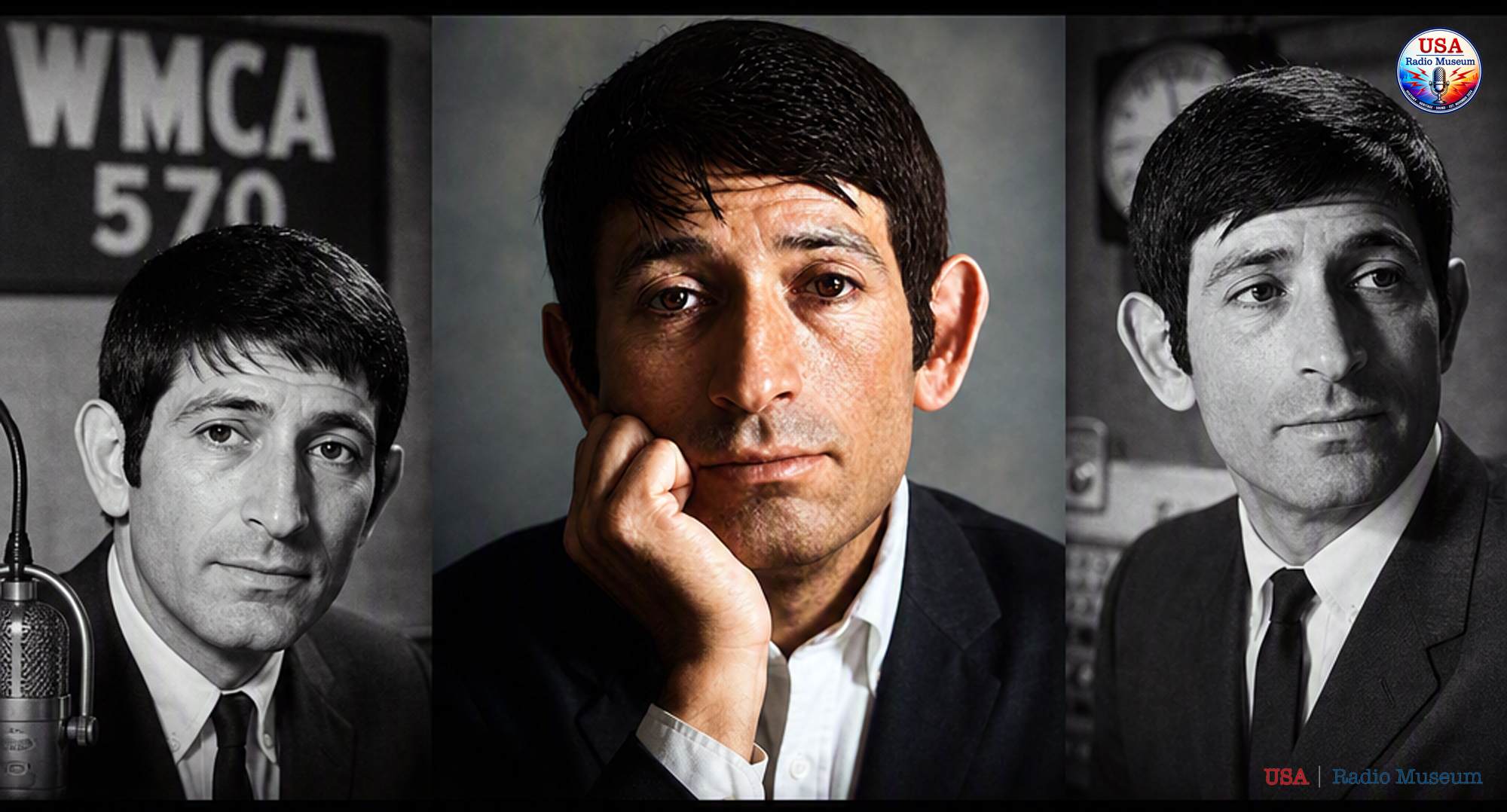
From Jazz to FM Freedom: The Voice That Redefined American Radio In the long sweep of American radio history, certain voices do more than entertain
From Jazz to FM Freedom: The Voice That Redefined American Radio
 In the long sweep of American radio history, certain voices do more than entertain — they redirect the medium itself. B. Mitchell Reed was one of those rare figures. A broadcaster whose velocity, curiosity, and creative restlessness reshaped both coasts, both formats, and ultimately the very definition of what radio could be. From the jazz dens of New York to the neon pulse of Los Angeles, from the AM Top 40 battles of the early 1960s to the birth of FM underground rock, Reed’s career was a living chronicle of radio’s most transformative era.
He was a man who spoke fast, thought faster, and moved even faster — chasing new sounds, new ideas, and new freedoms with a conviction that made him one of the most influential disc jockeys of the 20th century. This tribute honors the legacy of B. Mitchell Reed, a broadcaster whose voice helped usher in Beatlemania, whose instincts helped ignite the FM revolution, and whose impact continues to echo across American radio culture. — USA Radio Museum
_____________________
THE EARLY YEARS: A SCHOLAR WITH A MICROPHONE
Born Burton Mitchel Goldberg in New York City, Reed’s path to radio was anything but typical. He was not a kid who stumbled into a studio; he was a scholar — earning a B.S. in journalism and an M.A. in political science from the University of Illinois. He taught political science at his alma mater, served in the U.S. Air Force, and carried himself with the intellectual curiosity of someone who saw media not just as entertainment, but as a cultural force.
His first major radio role came in 1956 at WOV (AM) in New York, where he hosted the all‑night Birdland Jazz Show. It was here that Reed began shaping his on‑air identity: quick, informed, witty, and deeply connected to the music he played. Jazz was not background noise to him — it was a living art form, and Reed treated it with respect.
But the West Coast was calling.
KFWB LOS ANGELES: COLOR RADIO AND THE RISE OF A STAR
In 1957, Reed moved to Los Angeles and joined KFWB, initially as “The Boy on the Couch,” spinning jazz and speaking with a relaxed intimacy that made him instantly memorable. Everything changed on January 2, 1958, when KFWB transformed into Color Radio/Channel 98, one of the earliest and most influential Top 40 stations in America.
Under Program Director Chuck Blore, KFWB became a ratings powerhouse. Reed was part of the legendary lineup known as “The Seven Swinging Gentlemen”, and he held the crucial 6–9 PM slot — prime time for teenagers, commuters, and the growing youth culture that defined late‑1950s Los Angeles.
This was where Reed earned the nickname that would follow him for life: “The Fastest Tongue in the West.”
He spoke with a velocity that felt electric, modern, and alive. Reed didn’t just introduce records — he propelled them. His pacing, his humor, his command of the microphone made him one of the most recognizable voices in Southern California.
But New York wanted him back.
WMCA NEW YORK: THE GOOD GUYS AND THE BEATLES
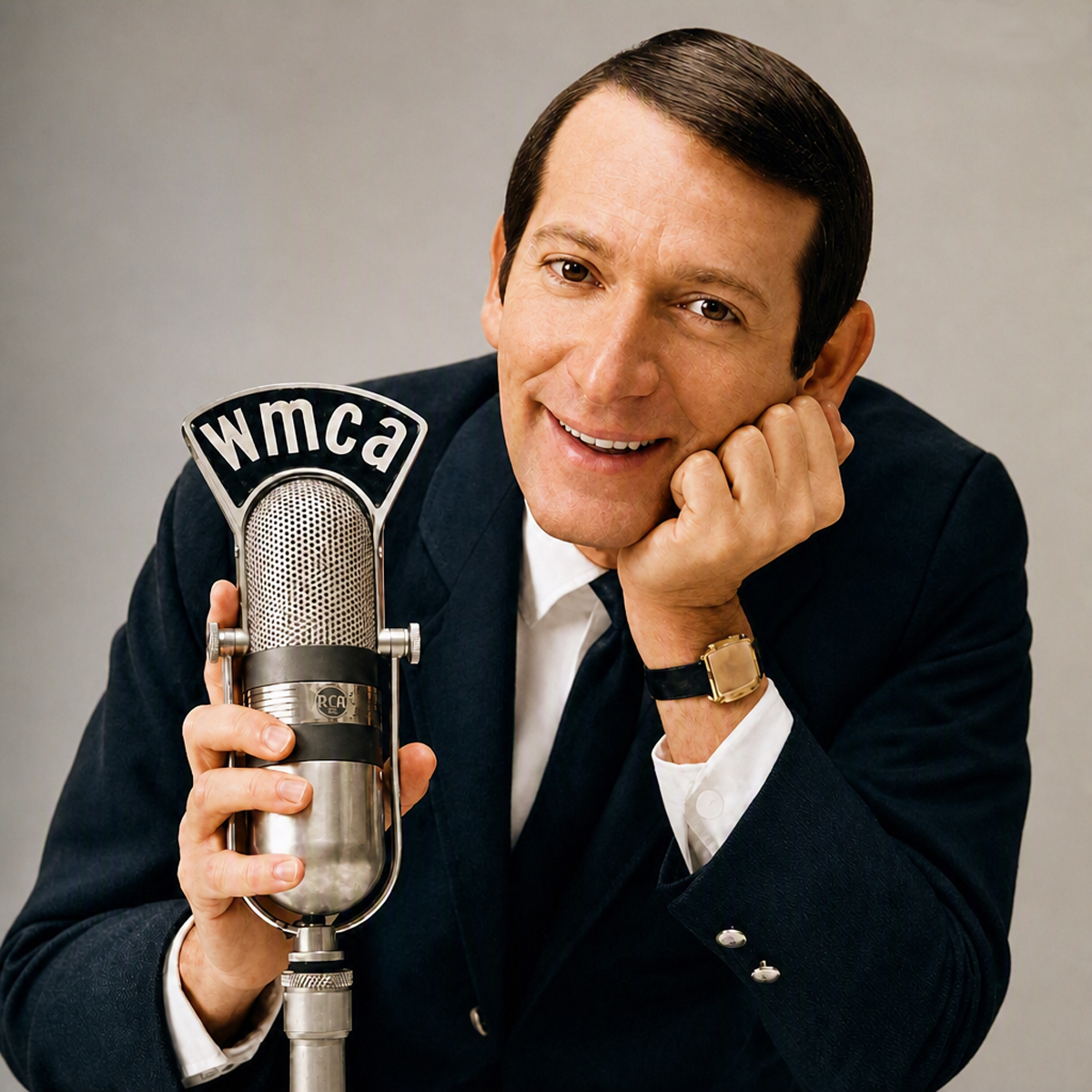
B. Mitchell Reed, WMCA, circa 1965.
On February 7, 1963, Reed returned home to join WMCA, becoming one of the station’s famous “Good Guys.” This was a golden era for New York radio — a time when personality DJs were cultural celebrities, and Reed fit the moment perfectly.
It was during this period that Reed made one of the most consequential moves of his career: He flew to London in pursuit of a young band making noise overseas — The Beatles.
Reed’s persistence paid off. He secured advance pressings, exclusive interviews, and firsthand insight into a phenomenon about to explode. When he returned to New York, he helped usher in the earliest wave of Beatlemania, giving WMCA a competitive edge and cementing his reputation as a DJ with extraordinary instincts.
By 1965, Reed’s heart was pulling him back to Los Angeles. His final WMCA broadcast on March 20, 1965 was emotional, and thousands of fans gathered at the airport to cheer him home. When he landed in LA, thousands more greeted him. It was a hero’s return.
THE WIDE WIDE WEIRD WORLD OF BMR: A SECOND KFWB STINT
Reed’s second era at KFWB was marked by creativity, experimentation, and a growing dissatisfaction with the limitations of AM radio. He launched “The Wide Wide Weird World of BMR,” a show that blended humor, commentary, and adventurous music choices. Reed was pushing boundaries — and he knew radio needed to evolve.
The turning point came in June 1967, when Reed attended the Monterey Pop Festival. The Summer of Love was in full bloom, and Reed saw firsthand the explosion of new music, new culture, and new expectations from listeners. AM Top 40 simply couldn’t contain what was happening.
Reed wanted freedom. FM was the future.
THE FM REVOLUTION: KPPC, KMPX, AND THE BIRTH OF UNDERGROUND RADIO
Reed connected with San Francisco DJ Tom Donahue, who was already pioneering a new format at KMPX-FM — a freeform, album‑oriented approach that rejected the rigid playlists of AM radio. Reed embraced the concept immediately.
Together, Reed and Donahue launched KPPC-FM in Pasadena, creating one of the first true underground FM stations in Southern California. Reed’s show became a hub for emerging artists, counterculture voices, and the new wave of singer‑songwriters.
One of the most famous moments came in March 1968, when Joni Mitchell performed live on Reed’s show shortly after releasing her debut album. Reed championed her relentlessly, and as Barney Hoskyns later wrote, Reed’s support helped sell out her first Los Angeles dates at the Troubadour.
KPPC and KMPX were revolutionary — but revolution often brings conflict. Both stations faced disputes with ownership, leading to the famous DJ strike of 1968, a watershed moment in FM radio history.
KMET AND THE AUTOMATION EXPERIMENT
After the strike, Donahue persuaded Metromedia to adopt the AOR format at KMET-FM, and Reed joined the station in 1968. Here, Reed helped program one of the first 24‑hour automated music stations, an experiment that went live in the summer of 1969.
Reed left briefly for KRLA in 1971, then returned to KMET in 1972, becoming one of the station’s defining voices during its rise as “The Mighty Met.” For nearly two decades, KMET was one of Los Angeles’ top rock stations, locked in a legendary ratings battle with KLOS.
Reed eventually joined KLOS in 1979, working there until 1982 — completing a career that touched nearly every major station in Los Angeles radio history.
THE FINAL CHAPTER: REMEMBERING B. MITCHELL REED
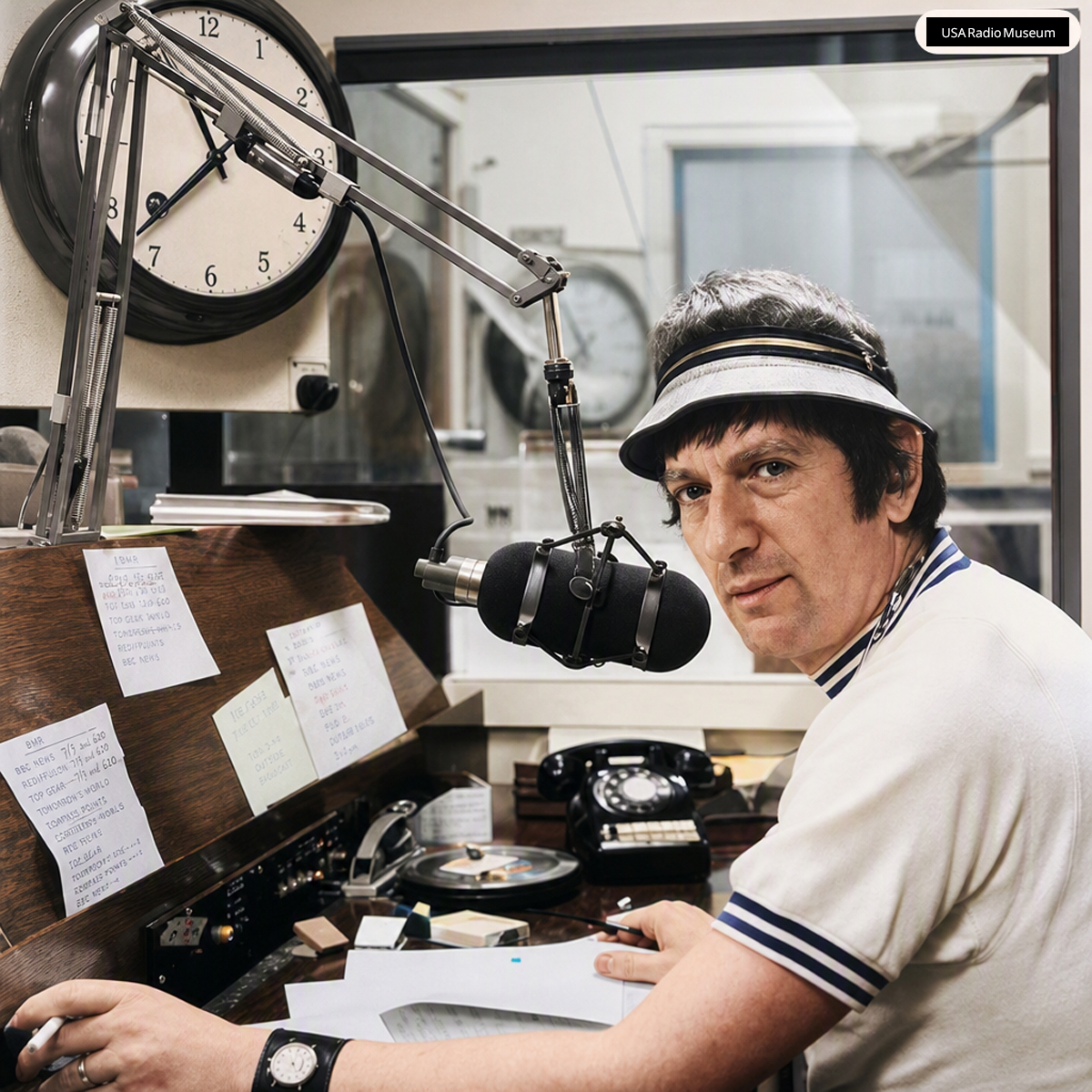 B. Mitchell Reed’s extraordinary life in broadcasting came to a close on March 16, 1983, when he passed away in Los Angeles, California, at the age of 56. His death marked the end of one of radio’s most inventive, restless, and influential voices — a man who had spent three decades reshaping the medium from the inside out.
Reed’s passing sent a ripple through the radio community. Colleagues, artists, and listeners alike remembered him not only for his speed, wit, and unmistakable delivery, but for his courage — the courage to abandon the safety of Top 40, to champion new artists before the world knew their names, and to help build FM underground radio from the ground up. He was a broadcaster who never stopped evolving, never stopped listening, and never stopped pushing for freedom on the airwaves.
In the years following his death, Reed’s legacy only grew. His pioneering work at KPPC and KMET became foundational chapters in the story of album‑oriented rock. His early advocacy for artists like Joni Mitchell, his role in ushering in Beatlemania, and his influence on both coasts cemented him as one of the true architects of modern American radio.
His posthumous honors reflect that legacy. In 2014, Reed was inducted into the Rock Radio Hall of Fame in the “Legends of Rock Radio — Programming” category. In 2026, he entered the Radio Hall of Fame in the “Legends” category — a recognition that placed him firmly among the giants of the medium he helped reinvent.
Today, more than four decades after his passing, B. Mitchell Reed remains a symbol of radio at its most daring — a broadcaster who believed in the power of personality, the importance of musical discovery, and the magic that happens when a microphone becomes a gateway to something larger. His voice may be silent, but his impact continues to resonate across every station that values authenticity, creativity, and the courage to break the rules.
___________________
Cruisin’ 1963 | B. Mitchell Reed | Increase Records (1970)
Audio Digitally Enhanced by USA Radio Museum
_____________________
CONCLUSION: A VOICE THAT CHANGED THE MEDIUM
B. Mitchell Reed was more than a fast talker, more than a personality, more than a DJ. He was a visionary — someone who saw where radio needed to go and had the courage to lead it there. His career bridged eras, formats, coasts, and cultures. He helped define Top 40, then helped dismantle it. He championed artists before the world knew their names. He believed in freedom, creativity, and authenticity on the air.
And he left behind a legacy that continues to inspire broadcasters, programmers, and music lovers today.
For USARM, Reed stands as one of the great architects of American radio — a man whose voice, energy, and imagination helped build the medium we now preserve.
_____________________
Sources & Credits
Research, Archival Context & Historical Verification
Primary Biographical Reference • Public biographical summary of B. Mitchell Reed (Burton Mitchel Goldberg), including career chronology, station affiliations, and format innovations, sourced from publicly available historical entries and radio‑industry documentation. • Wikipedia synopsis (used as a structural foundation for timeline accuracy and station transitions).
Radio Industry & Cultural Context • Historical accounts of KFWB “Color Radio/Channel 98” and the “Seven Swinging Gentlemen” era. • Documentation of WMCA’s “Good Guys” lineup and Reed’s role in early Beatlemania promotion. • Archival references to KPPC‑FM, KMPX‑FM, and the 1968 DJ strike as chronicled in radio‑history retrospectives. • Contextual material from Hotel California by Barney Hoskyns regarding Joni Mitchell’s early Los Angeles performances and Reed’s influence.
FM Underground & AOR Development • Publicly available histories of KMET (“The Mighty Met”), KRLA, and KLOS during the rise of album‑oriented rock radio. • Industry retrospectives on early FM automation experiments (1969).
Legacy & Honors • Rock Radio Hall of Fame (2014) — “Legends of Rock Radio – Programming” category. • Radio Hall of Fame (2026) — “Legends” category.
Image Restoration • Original studio photograph provided by user (USARM archival submission). • Restoration, enlargement, and colorization completed via Copilot AI image enhancement tools.
_______________________
Contact: jimf.usaradiomuseum@gmail.com
_____________________
A USARM Viewing Tip: On your PC? Mouse/double-click over the images for expanded views. On your mobile or tablet device? Finger-tap all the above images inside the post and stretch image across your device’s screen for LARGEST digitized view. Then click your browser’s back arrow to return to the featured post.
© 2026 USA Radio Museum. All Rights Reserved

I loved BMR during his years as a WMCA good guy. Greatest AM rock and roll DJ I ever heard.