
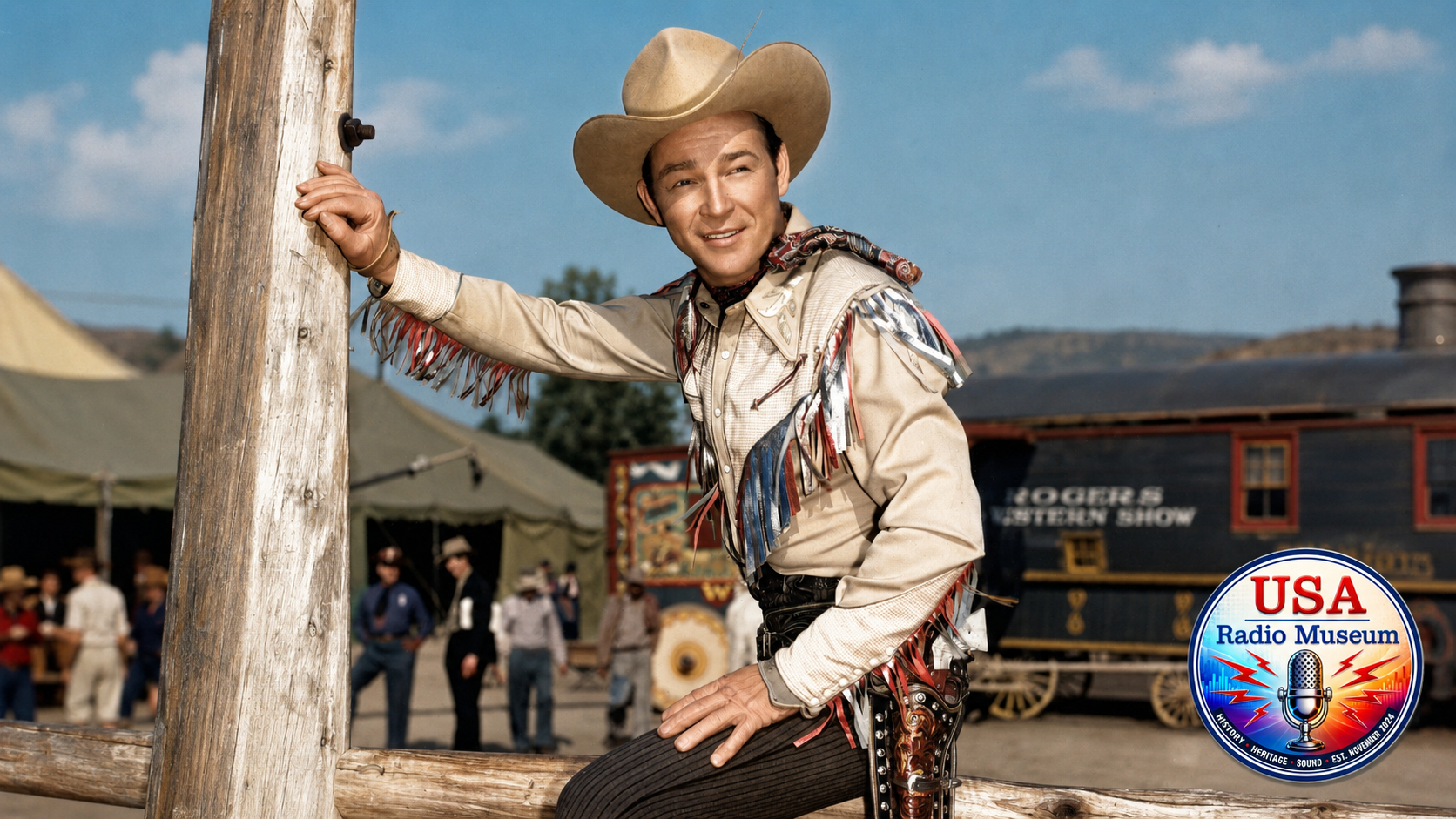
Before Roy Rogers became one of television’s most familiar heroes, he was already riding across America’s movie screens—and into millions of homes ove
Before Roy Rogers became one of television’s most familiar heroes, he was already riding across America’s movie screens—and into millions of homes over the radio.
Born Leonard Franklin Slye in Cincinnati, Ohio, Rogers first found success as a singer. During the early 1930s, he helped form the group that became the Sons of the Pioneers, whose rich harmonies and songs such as “Tumbling Tumbleweeds” and “Cool Water” helped define the sound of the American West.
In 1937, Republic Pictures was searching for a new singing cowboy. Slye won a screen test, received the more marketable name Roy Rogers and was given the starring role in Under Western Stars. Released in 1938, the film made him a star. By 1943, he had become Hollywood’s top Western box-office attraction—the “King of the Cowboys.”
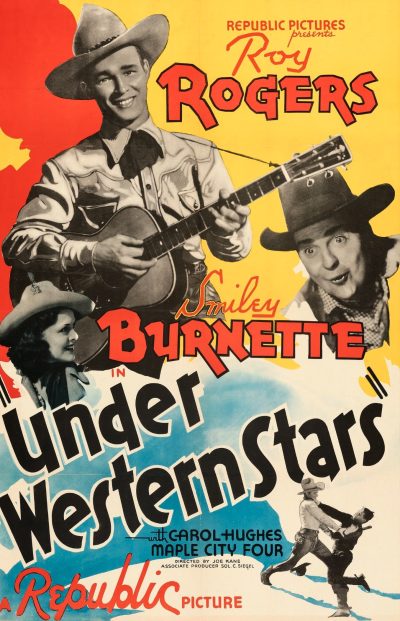
The movie that made Roy Rogers a star
Roy Rogers Comes to Radio
The Roy Rogers Show made its network radio debut on November 21, 1944, over the Mutual Broadcasting System. During its long run, the half-hour program moved between Mutual and NBC and remained on the air until 1955.
Because Rogers was constantly making movies and appearing at theaters, fairs and rodeos, the program was recorded in advance rather than broadcast live. This allowed stations around the country to schedule the show while Roy continued his demanding personal-appearance and film schedule.
The early radio programs mixed Western adventure with music and comedy. Roy and the Sons of the Pioneers performed cowboy favorites while singer Pat Friday handled many of the female vocals. Perry Botkin led the orchestra, and Verne Smith served as one of the show’s announcers.
The program originally opened with “It’s Round-Up Time on the Double R Bar,” introducing listeners to Roy’s fictional ranch in Paradise Valley. Between the songs came humorous conversations, short dramatic scenes and encounters with rustlers, thieves and other frontier troublemakers.
As the series continued, its stories became more dramatic. Music remained important, but later episodes placed greater emphasis on action and suspense. Roy might be called upon to stop a robbery, protect an innocent rancher, capture a horse thief or uncover a dishonest scheme. Whatever the danger, listeners knew that Roy would eventually see that justice was done.
Early radio show from the 1940’s
A later radio show from the 1950s
Dale Evans: The Queen of the West
Dale Evans first appeared with Rogers in the 1944 Republic film The Cowboy and the Señorita. Audiences immediately responded to their chemistry, and Dale became Roy’s leading lady in a succession of films.
She soon joined Roy’s radio family as well. Dale was much more than the woman waiting to be rescued. She was intelligent, courageous and capable of joining Roy in the middle of an adventure. Her warmth and personality provided a perfect balance to his calm, straightforward heroism.
Roy and Dale were married on New Year’s Eve in 1947. Their partnership became one of the most enduring in entertainment history. He was the “King of the Cowboys,” she was the “Queen of the West,” and together they represented an idealized West built around honesty, courage, faith and helping others.
Dale was also an accomplished singer and songwriter. In 1951, she wrote “Happy Trails,” the song that became permanently associated with the couple. Its gentle farewell eventually closed both their radio and television programs.
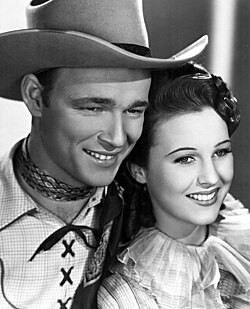
Roy Rogers and Dale Evans
Trigger: More Than a Horse
No account of Roy Rogers would be complete without Trigger, the magnificent golden palomino billed as “The Smartest Horse in the Movies.”
Originally named Golden Cloud, Trigger possessed an unusual combination of beauty, intelligence and patience. Roy selected him from several available movie horses and eventually purchased him. Trigger could respond to numerous cues and perform an astonishing variety of tricks, including counting, bowing, untying ropes and walking on his hind legs.
On radio, listeners could not see Trigger, but the dialogue, music and sound effects made him a living part of every adventure. He was not treated simply as Roy’s transportation. Trigger was Roy’s trusted partner—alerting him to danger, carrying him into pursuit and sometimes helping to save the day.
Dale’s horse, Buttermilk, also became a favorite, as did Bullet, Roy and Dale’s German Shepherd. On television, Bullet was billed as “The Wonder Dog” and often proved just as capable of recognizing a villain as his human companions.
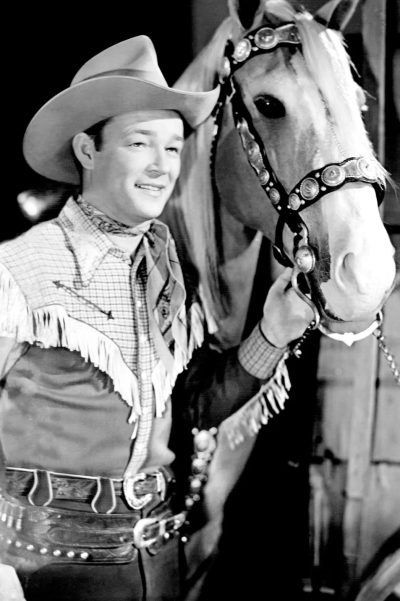
MELODY TIME, Roy Rogers, Trigger, 1948
Gabby Hayes and the Radio Sidekicks
George “Gabby” Hayes was already one of Hollywood’s most beloved Western sidekicks when he joined Roy on radio. With his whiskers, battered hat, colorful expressions and cantankerous personality, Gabby brought humor to the program without weakening the adventure.
Behind the character, Hayes was an experienced actor who understood exactly how to make the hero look good. His Gabby character might complain, sputter or become confused, but when trouble arrived, he was loyal and brave.
Gabby had appeared with Rogers in dozens of motion pictures, so radio listeners immediately recognized the familiar relationship between the steady young hero and his excitable older companion. Hayes later moved into television with his own children’s program and was not a regular on Roy’s NBC television series.
Pat Brady eventually became Roy’s principal comic sidekick. Brady had been a member of the Sons of the Pioneers and brought a younger, more energetic style of comedy to the program. He could be clumsy and easily flustered, but he was always ready to help Roy and Dale.
Other familiar voices included Forrest Lewis as the wise old trail scout Jonah Wilde. The show’s musical lineup also changed through the years. Foy Willing and the Riders of the Purple Sage replaced the Sons of the Pioneers as the featured Western group, while the Whippoorwills were heard during later broadcasts.
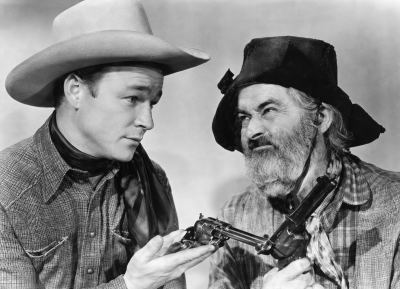
Roy and sidekick Gabby Hayes
Roy Rogers Rides into Television
The Roy Rogers Show premiered on NBC television on December 30, 1951. Rather than ending the radio series immediately, Roy continued producing radio episodes until 1955. For several years, audiences could follow him in both mediums.
The television series placed Roy and his friends in and around Mineral City. Roy was a ranch owner, while Dale operated the Eureka Café and Hotel. Pat Brady worked as Dale’s cook when he was not accompanying Roy on an adventure.
Pat did not ride a noble horse like Trigger. He drove Nellybelle, an aging Willys Jeep with a personality nearly as memorable as any member of the cast. Its unreliable brakes and unpredictable behavior frequently left Pat shouting, “Whoa, Nellybelle!”
The show occupied its own special version of the West. Roy and Dale wore cowboy clothes, rode horses and carried six-shooters, but their world also had automobiles, telephones and electric lights. It was not strictly the Old West. It was Roy Rogers’ West—a place where traditional frontier values existed comfortably alongside modern life.
Episodes usually involved rustlers, robbers, swindlers, dishonest officials or innocent people who needed help. Although there was plenty of riding and action, the violence was restrained. Roy preferred capturing the villains and turning them over to the law. Many stories also carried messages about honesty, responsibility, gun safety, conservation and respect for others.
The cast included Roy, Dale, Pat Brady, Trigger, Bullet, Buttermilk and, of course, Nellybelle. Together, they created one of television’s most recognizable Western families.
NBC broadcast 100 episodes of The Roy Rogers Show over six seasons, ending its original run on June 9, 1957. The program then reached new generations through Saturday-morning reruns and decades of syndication.
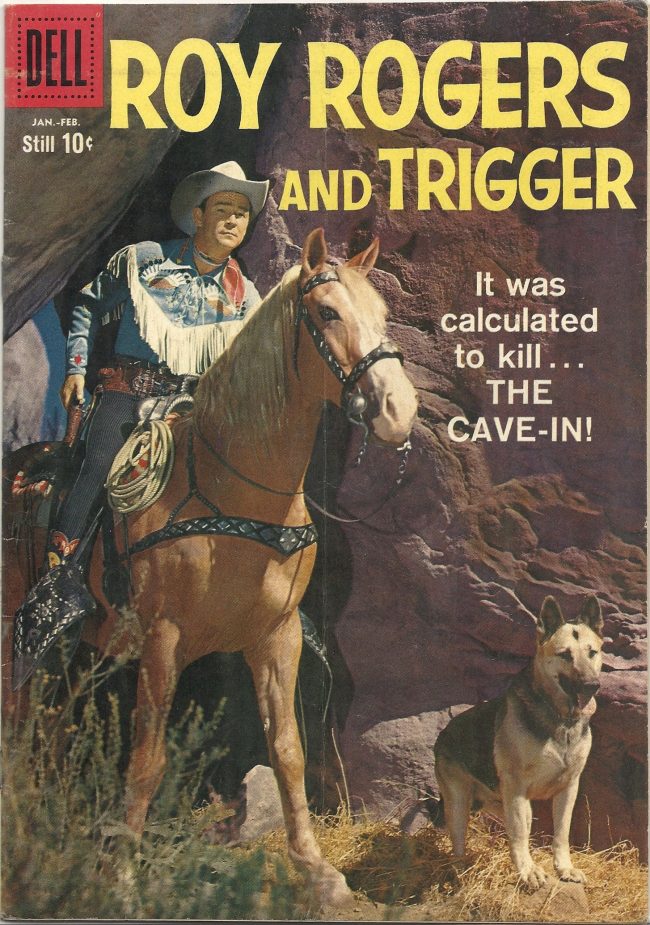
Two Shows from Radio’s Golden Age
The two vintage broadcasts accompanying this article—one from the 1940s and another from the 1950s—offer a rare opportunity to hear how The Roy Rogers Show developed.
The earlier program reflects the series’ musical-variety beginnings, when cowboy songs, comedy and lighter stories shared the spotlight. The later broadcast reveals the program’s movement toward the action-oriented Western adventures that would become familiar to television viewers.
Together, they capture Roy Rogers at an important moment in broadcasting history: riding from the imagination of radio into the new visual world of television.
For millions of Americans, Roy, Dale, Trigger and their friends represented a world in which the good people could be trusted, the villains would be defeated and every adventure ended with a reassuring farewell:
“Happy trails to you, until we meet again.”
Roy Rogers and Dale Evans: An Enduring Love
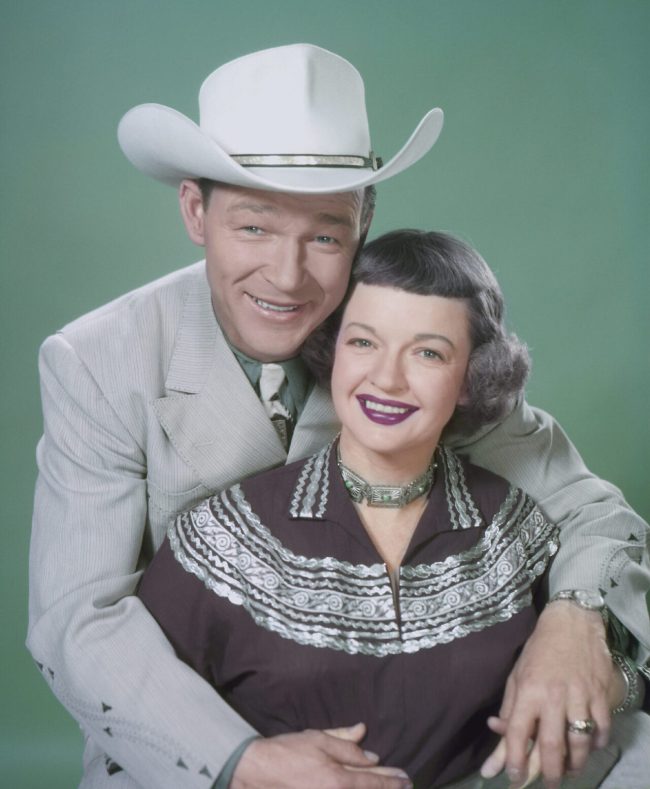
Roy Rogers died of congestive heart failure on July 6, 1998, at his home in Apple Valley, California. He was 86. Dale Evans, his wife and performing partner for more than 50 years, died of congestive heart failure on February 7, 2001, at age 88. She was laid to rest beside Roy at Sunset Hills Memorial Park in Apple Valley. Although the “King of the Cowboys” and “Queen of the West” are gone, their films, recordings, radio and television programs continue to preserve the values they represented—faith, kindness, courage and the belief that good will ultimately triumph.
###
