

At 14, Mike Gormley talked his way backstage to interview Brenda Lee. He had no publication waiting for the story and, by his own admission, probably
At 14, Mike Gormley talked his way backstage to interview Brenda Lee. He had no publication waiting for the story and, by his own admission, probably asked questions such as her favorite color. But he had made it through the door. That same curiosity would carry him into newspaper offices, record companies and a management career involving some of the most recognizable names in popular music.
In our USA Radio Museum interview, Gormley looks back on more than six decades of writing about artists, promoting their records and helping them find their next opportunity. His story connects Rod Stewart, Rush, The Police, the Bangles and Danny Elfman. It also offers a timely reminder from someone who has worked on both sides of the business: radio still has the power to make people care about music—and act on what they hear.
“I just kept walking into situations,” Gormley says, describing a career that rarely followed a predetermined route.
The First Door Opens
Born John Michael Gormley in Ottawa in 1945, Gormley played drums with the Pharaohs and at club gigs before journalism became his way into the music business. While living in the San Francisco Bay Area, he attended a show at the Cow Palace and decided to write about it. He sent his account to Sandy Gardiner at the Ottawa Journal.
The editor printed it and asked for more.
Soon Gormley was covering the musicians passing through Northern California, including the Byrds, the Everly Brothers, the Association and Love. At a Hayward venue that doubled as a roller rink during the week, he could see major acts in a setting where access was remarkably uncomplicated.
He would knock on a dressing-room door, introduce himself as Mike Gormley from the Ottawa Journal and ask to talk. Often, that was enough.
His newspaper column featured a photograph of him leaning out of a San Francisco cable car. More significantly, the assignment introduced him to managers, publicists and the people who could arrange an interview. He was learning the business while reporting on the music.
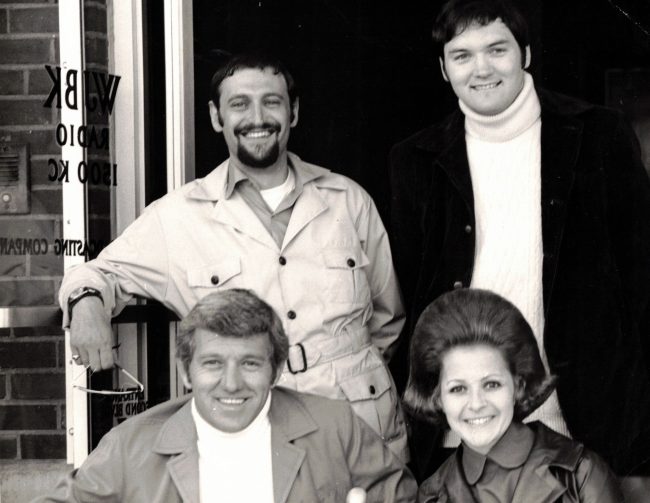
Top – Peter Gideon (Decca Records), Mike Gormley / Bottom – Marc Avery (WJBK Detroit DJ), Brenda Lee
Detroit—and a Different Kind of Audition
After returning to Ottawa, Gormley found another opening through former Motown publicist Al Abrams, who recommended him to the Detroit Free Press.
The job interview nearly went wrong. An early flight left him struggling through a test, but editor Mort Persky gave him another chance: write an imaginary interview with Bob Dylan. Gormley did, and Persky’s enthusiastic reaction told him he had the job.
Detroit put him in the middle of another extraordinary music community. His reporting brought him into contact with Gordon Lightfoot, Grand Funk Railroad and Edwin Starr, among others. He remembers record-company parties where he and fellow writer Dave Marsh could get a meal along with access to the artists.
Radio became part of the work, too. At WABX, Gormley produced and conducted interviews for Sunday-night specials, with Larry Miller handling the narration. One program explored Buddy Holly’s music and included an interview with Holly’s producer.
For Gormley, Holly was more than a figure from rock-and-roll history. As a youngster in Ottawa, he had actually seen him perform. He remembers buying inexpensive seats behind the open stage, close to where the artists made their entrances.
“Even then, I was thinking backstage more than on stage,” he says.
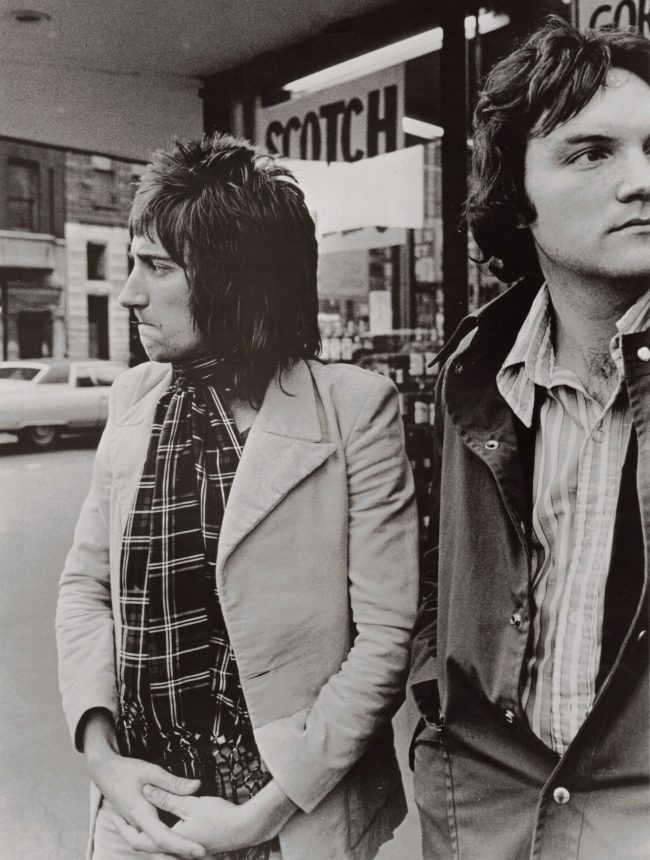
Into the Deep End with Rod Stewart
The next change arrived over lunch. Mercury Records publicity executive Ron Oberman came to Detroit, and Gormley assumed the meeting was intended to generate coverage for Rod Stewart.
Instead, Oberman offered him his job.
In 1971, Gormley became Mercury’s director of publicity without having previously run a publicity department. Within months, “Maggie May” gave him an education that no classroom could have supplied. He spent the next several years working with Stewart as his career accelerated.
“Jumped into the deep end of the pool,” is how he remembers it.
There were practical lessons as well. After organizing an early gold-record celebration for Stewart, Gormley was presented with a bill of roughly $1,200. He thought the expense might get him fired. In the record business of that era, he soon learned, it was hardly an extraordinary sum.
His Mercury years also brought work with Rush, Bachman-Turner Overdrive, the Ohio Players and Thin Lizzy. The newspaper writer was now helping create the coverage he once supplied.
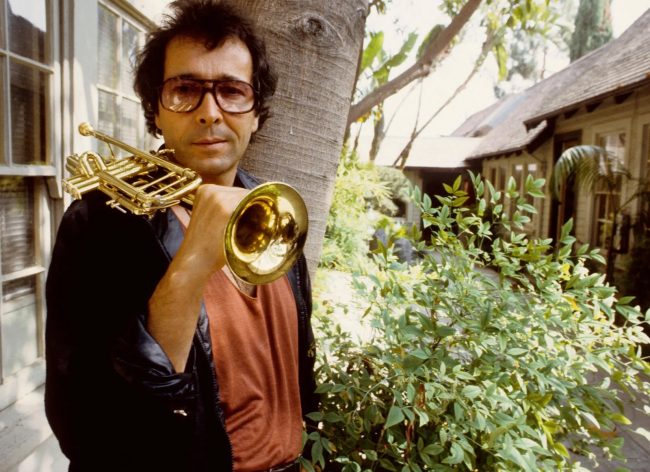
Herb Alpert – A&M Records
A&M: A Family Built Around Music
Corporate work with PolyGram followed, then an invitation to join A&M Records in Los Angeles. There, Gormley worked with The Police, Supertramp, Styx and Squeeze, and remembers the excitement of Herb Alpert reaching No. 1 with “Rise.” His responsibilities grew to include vice president of publicity and assistant to co-founder Jerry Moss, followed by vice president of communications in 1980.
His memories of Alpert are especially warm: a musician who would invite him into the office simply to talk about music and what was happening with the artists.
A&M’s sense of family survived long after the working days on its Hollywood lot. Gormley recalls a gathering honoring co-founder Jerry Moss after his death, with former colleagues arriving from around the world. Sitting with an old friend he had not seen in decades, he felt as though almost no time had passed.
“It was a worldwide fraternity,” he says.
An invitation from The Police’s manager, Miles Copeland, eventually opened the next door. Copeland needed help managing Oingo Boingo and Wall of Voodoo. In 1983, Gormley left A&M to establish the management company LAPD with Copeland, became an artist manager and soon began working with a group then known as the Bangs, later the Bangles.
New responsibilities included something he had never done before: figuring out how to budget a tour. Once again, the opportunity arrived before the experience. He learned by doing.
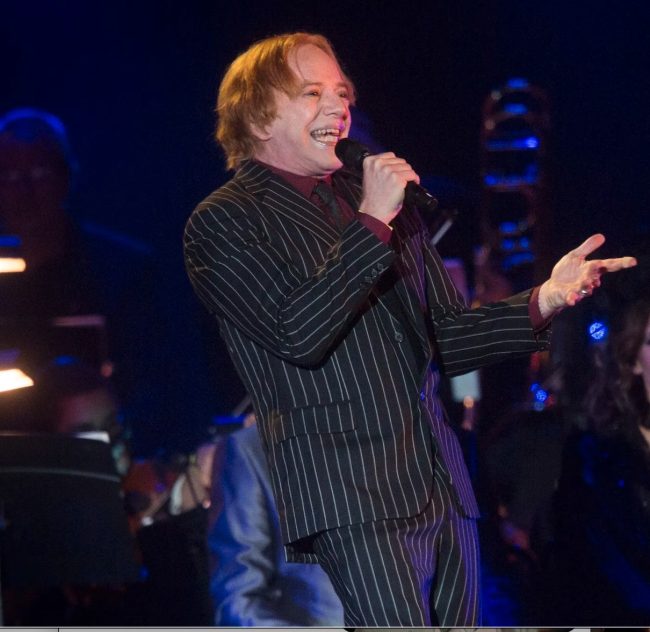
Danny Elfman
Danny Elfman’s Nervous Weekend
One of Gormley’s most consequential stories begins with a Friday meeting at Warner Bros. He and Oingo Boingo’s Danny Elfman met with Tim Burton and Paul Reubens about Pee-wee’s Big Adventure. Elfman left with the opportunity to write the score.
On Saturday, he called Gormley and asked to get out of it.
Elfman was an accomplished musician, but film scoring presented an unfamiliar process. Gormley asked for time to investigate. He learned about the role of a music editor and helped arrange for Oingo Boingo colleague Steve Bartek to support Elfman on the project.
Elfman went ahead and delivered the score. Gormley says he then secured his first four film assignments while trying to find an agent willing to represent him.
It is a vivid example of a manager’s contribution: recognizing ability, finding the right help and keeping an anxious artist from walking away from an opportunity.
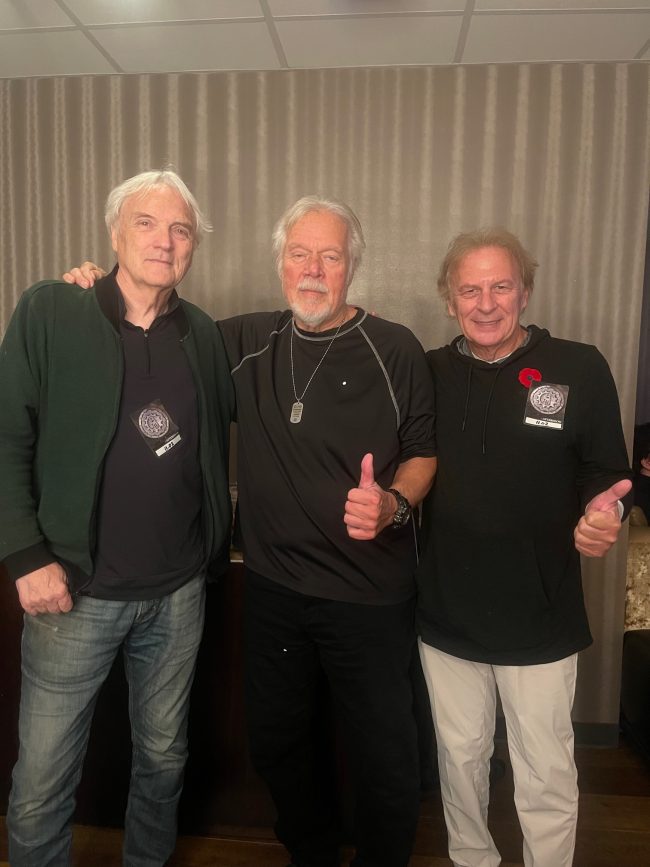
Mike, Randy Bachman (BTO)
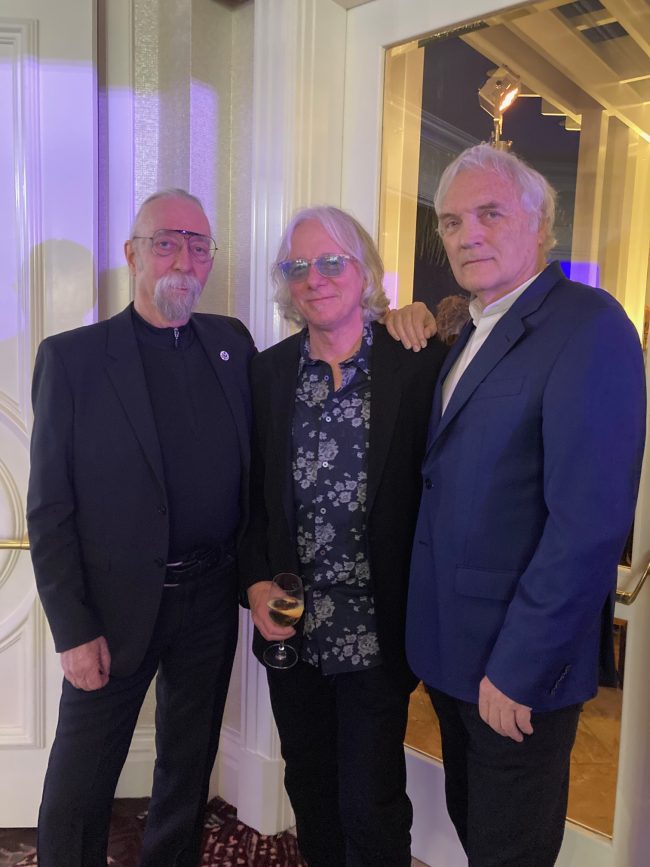
Skunk Baxter, Mike of REM, Mike Gormley
Why Radio Still Matters
Gormley welcomed the internet’s ability to let artists communicate directly with fans. He also saw the difficulty that followed when enormous numbers of musicians began competing for the same attention.
Through those changes, he has remained convinced of radio’s value, particularly for touring artists.
“If you get radio talking about your upcoming show, you’re gonna sell tickets,” he says.
He attributes that response to radio’s immediacy. A voice reaches a listener in the course of an ordinary day and gives that person a reason to get involved.
That connection began for him in Ottawa, listening at night to distant American stations and personalities such as Cousin Brucie on WABC. Years later, when Dick Biondi unexpectedly reached him by phone at A&M, Gormley reacted like a fan receiving a call from a star. He no longer remembers what Biondi wanted. He remembers the voice.
For USA Radio Museum readers, his point will sound familiar: the personalities were part of the entertainment. Their presence helped make listening an experience people wanted to return to.

Another Door Opens
Elfman’s move into film was part of a broader interest in music for the screen. Gormley also helped arrange an early film-scoring assignment for James Newton Howard on Head Office. His music-supervision work included Adventures in Babysitting and the first season of The Equalizer, with music by Stewart Copeland.
His management work extended to Concrete Blonde, Angélique Kidjo, Lowen & Navarro, Anne McCue and Paige O’Hara, the voice of Belle in Disney’s Beauty and the Beast. In the 1990s, he co-founded Wildcat Records, whose releases included Michael Damian and the Canadian band the Boomers.
In 2008, he established UCLA Extension’s “The Insider’s Guide to Music Management,” sharing lessons from a career spent learning what artists need from the people around them. Broadcasting brought him back to interviewing through The Mike Gormley Show. Those varied assignments extend the story of a man who keeps finding new uses for what he has learned.
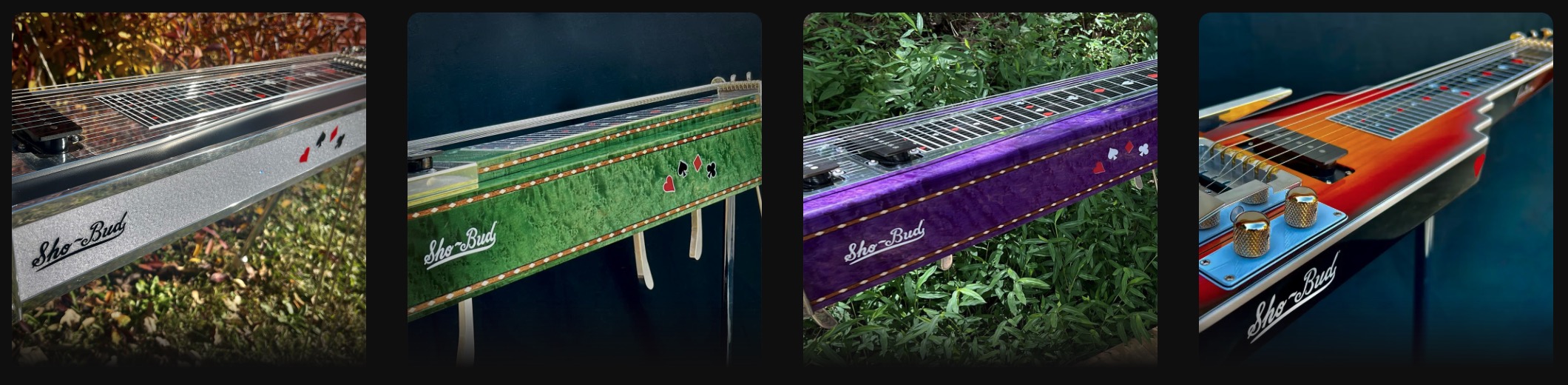
Sho-Bud Pedal Steel Guitars
In the interview, he describes a new chapter leading Sho-Bud Records and continuing his work with Jeff “Skunk” Baxter. The label gives him an opportunity to bring attention to accomplished musicians, including steel-guitar great Lloyd Green and Rocco DeLuca. He also sees possibilities for expanding into singer-songwriter and Americana recordings.
One of his first calls was to a friend who promotes records to radio.
He is interested in new tools, too. Asked about artificial intelligence, Gormley sees value in using it as an assistant or editor. Having it supply the creativity itself leaves him with a question: “What’s the accomplishment there?”
After six decades, Mike Gormley’s enthusiasm still rests with the musicians, their work and the people who help that work find an audience.
The teenager who knocked on dressing-room doors in the 60’s is still looking forward to the next conversation.
###
