
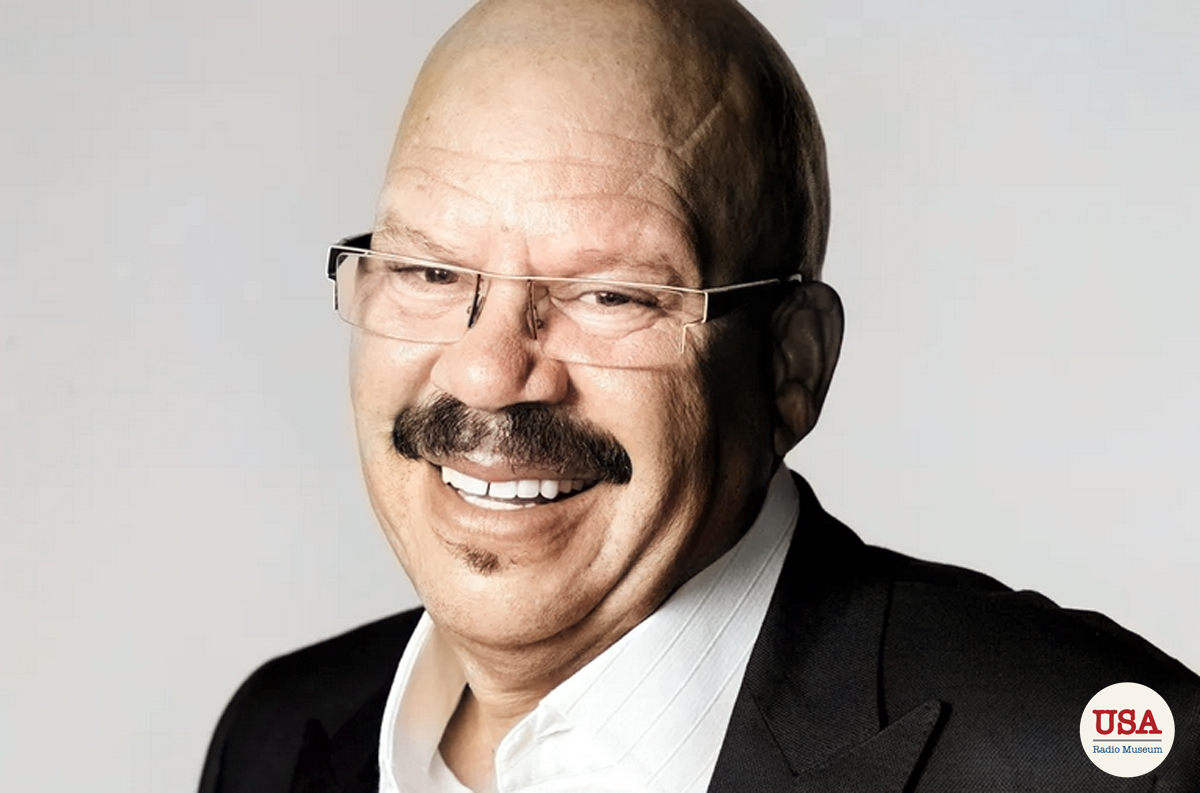
INTRODUCTION: Honoring the Legacy of Tom Joyner at the USA Radio Museum There are voices in American radio that do more than fill the airwaves — th
INTRODUCTION: Honoring the Legacy of Tom Joyner at the USA Radio Museum
There are voices in American radio that do more than fill the airwaves — they shape the culture, lift communities, and redefine what the medium can be. Tom Joyner is one of those rare figures whose presence behind the microphone became a national force, a daily ritual, and a unifying thread woven through generations of listeners. His story is not simply the rise of a broadcaster; it is the evolution of a movement.
 From his beginnings in Tuskegee, Alabama — a place where excellence is heritage and history is lived, not remembered — Joyner carried forward a spirit of purpose that would guide him through every studio he entered. He brought warmth, humor, and humanity to the craft, transforming radio from a one‑way transmission into a shared experience. Whether he was reading the news in Montgomery, lighting up afternoons in Chicago, or flying between Dallas and the Windy City as “The Fly Jock,” Joyner embodied a work ethic and passion that became legend.
But his legacy reaches far beyond ratings or accolades. Joyner built a national community through laughter, music, and conversation. He championed education, elevated Black voices, and used his platform to empower millions. His syndicated morning show didn’t just entertain — it connected, informed, and inspired.
At the USA Radio Museum, we honor Tom Joyner not only for the miles he flew or the markets he conquered, but for the lives he touched and the culture he helped shape. His story is a testament to the power of personality, perseverance, and purpose — a reminder that radio, at its very best, is not just heard. It is felt.
This is the legacy of Tom Joyner.
This is the story we celebrate. — USA RADIO MUSEUM
_____________________
THE MAKING OF A BROADCASTER
Tuskegee Roots and the First Spark
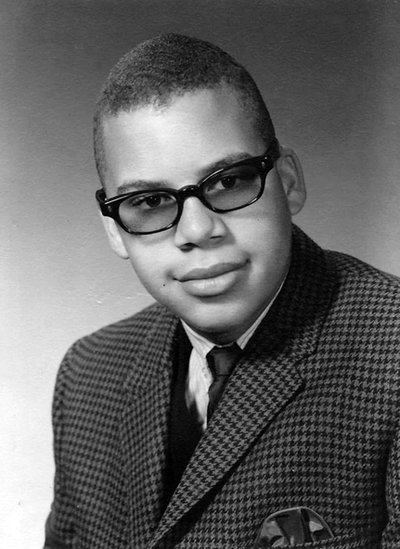 Tom Joyner’s story begins in Tuskegee, Alabama — a town where history breathes from the red clay and excellence is woven into the fabric of everyday life. Growing up in a community shaped by the Tuskegee Airmen, Booker T. Washington, and George Washington Carver, Joyner was surrounded by examples of ambition and achievement. It was the perfect soil for a young man with a quick wit, a warm voice, and a natural instinct for connecting with people.
At the Tuskegee Institute, Joyner majored in sociology — a degree that would become the quiet foundation of his broadcasting career. Sociology taught him how people think, how communities form, and how messages resonate. It gave him the lens. Radio would give him the stage.
After graduating, Joyner took his first professional step into broadcasting at WRMA in Montgomery, reading the news. It wasn’t glamorous, but it was a beginning — a microphone, a newsroom, and a young man discovering that he could make information feel human. He learned pacing, tone, and the art of speaking to one listener at a time.
From there, he moved through the Southern circuit — WLOK in Memphis, KWK in St. Louis, KKDA in Dallas — absorbing the rhythms of each city and learning how radio could become a community’s heartbeat. These were stations where the DJ wasn’t just a voice; they were a neighbor, a guide, a trusted presence.
By the time he reached Chicago, Joyner wasn’t just a young man with a good voice. He was a fully formed communicator — someone who understood the craft, the responsibility, and the potential of radio.
CHICAGO: WHERE TALENT BECOMES LEGEND
Chicago radio in the 1970s and 1980s was a world unto itself — fierce, competitive, culturally electric, and alive with personalities who could command a city with nothing more than a microphone and a moment. It was a proving ground where only the sharpest voices survived, and the ones who thrived became icons. Into this arena walked Tom Joyner, carrying with him the warmth of Tuskegee, the discipline of sociology, and a charisma that could light up a room before he even spoke.
Chicago didn’t intimidate him.
Chicago energized him.
At WJPC, Joyner sharpened his comedic instincts, learning how to land a punchline with precision and how to use humor not as a gimmick, but as a bridge. He discovered that laughter could disarm, connect, and create intimacy with listeners who had never seen his face but felt like they knew him.
At WVON, he absorbed the station’s legacy of activism and community leadership. WVON wasn’t just a radio station — it was a cultural institution, a voice for Black Chicago, a platform where music and message lived side by side. Joyner learned how to speak with purpose, how to honor the community he served, and how to balance entertainment with empowerment. It was here that he began to understand the responsibility of the microphone.
At WBMX, he tapped into the city’s evolving sound — R&B, soul, dance, and the rising pulse of urban contemporary radio. The station was a laboratory of rhythm and reinvention, and Joyner thrived in its creative energy. He learned how to ride the beat, how to introduce a song with flair, and how to make even a simple time check feel like part of the show.
But WGCI . . . .
WGCI was the crucible.
WGCI was where Tom Joyner became Tom Joyner.
His afternoon show on WGCI was a masterclass in connection. Joyner didn’t just talk to listeners — he talked with them. He could glide from a joke to a song intro to a moment of reflection without losing momentum. He could tease, comfort, challenge, and uplift, all within the span of a single break. He wasn’t just a DJ; he was a companion. A storyteller. A translator of culture. A voice that felt like home.
Chicago didn’t just listen to him — they trusted him.
They invited him into their cars, their kitchens, their workplaces, their lives.
He became part of the city’s daily rhythm.
And Joyner understood Chicago in a way few broadcasters ever have. He understood its neighborhoods, its humor, its pride, its struggles, its heartbeat. He knew how to speak to the South Side without alienating the West Side, how to connect with downtown professionals and factory workers alike. He knew how to make a city of millions feel like a community of one.
His show wasn’t just popular — it was beloved.
It wasn’t just entertaining — it was essential.
And soon, Chicago’s love for Joyner would follow him across state lines. When he accepted the morning show in Dallas, Chicago listeners didn’t feel abandoned. They felt chosen. They felt like their guy was so good, so magnetic, so undeniable, that another major city wanted him too.
And Joyner, in turn, refused to choose between them.
He would fly to Dallas in the morning, return to Chicago in the afternoon, and give both cities everything he had. Chicago listeners heard the same energy, the same humor, the same warmth — never knowing that their afternoon companion had already lived an entire day in another state.
Chicago made him a star.
But Joyner made Chicago part of his legend.
THE FLY JOCK TAKES FLIGHT
In 1985, Tom Joyner made a decision that would become one of the most astonishing feats in the history of American broadcasting. It was the kind of decision that, on paper, seemed impossible — a logistical nightmare, a physical challenge, a professional gamble. But Joyner didn’t see obstacles. He saw opportunity. And he saw listeners who deserved his very best.
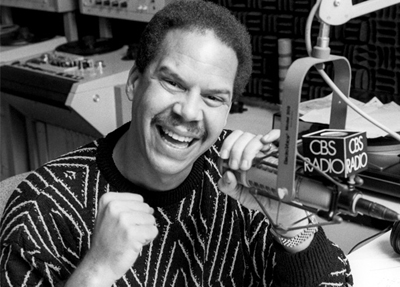 When KKDA in Dallas offered him the morning show, Joyner was already a rising star at WGCI in Chicago. Most broadcasters would have chosen one city, one show, one path. Joyner chose both. He accepted the Dallas morning shift and kept his Chicago afternoon show. Two major markets. Two full‑time jobs. Two audiences who expected him to show up with energy, humor, and heart.
And so began one of the most remarkable daily routines in radio history.
Each morning, before the sun rose, Joyner would arrive at the Dallas airport, often greeted by airline staff who knew him by name. He boarded the same flight so frequently that the crew became part of his extended radio family. They watched him prep bits, review news, and scribble jokes on napkins. They saw him nap between segments, recharge, and then spring back to life the moment the wheels touched down.
He would land in Chicago, step off the plane, and head straight to the WGCI studio — no downtime, no buffer, no break. He walked into the booth as if he had just strolled in from the hallway, not flown nearly a thousand miles. And when the red light came on, he delivered. Every day. Without fail.
Listeners never heard fatigue. They heard joy. They heard momentum. They heard a man who loved radio so deeply that he was willing to live in the sky to do it.
The press took notice. Newspapers ran features on “The Hardest Working Man in Radio.” Television crews followed him through airports. Airline employees joked that he should have his own boarding gate. But the nickname that stuck — the one listeners embraced — was “The Fly Jock.”
It wasn’t just a clever moniker. It was a badge of honor.
The Fly Jock era wasn’t about flights. It was about commitment. It was about a broadcaster who believed that if two cities wanted him, he would find a way to be there. It was about a work ethic that bordered on mythic — a man who refused to choose between audiences because he loved them both.
And it paid off. Joyner’s ratings soared in both markets. Chicago listeners felt like they had a superstar who chose them every afternoon. Dallas listeners felt like they had a morning host who brought big‑city energy to their airwaves. Joyner became a bridge between two communities, two cultures, two cities that rarely intersected — except through him.
But the flights also did something else:
They built the foundation for his national voice.
Flying between Dallas and Chicago every day gave Joyner a unique perspective. He saw firsthand how different cities listened, laughed, and lived. He understood the common threads that connected Black audiences across the country — the humor, the music, the shared experiences, the cultural heartbeat. He realized that what he was doing in two cities could work in twenty. Or fifty. Or a hundred.
The Fly Jock era wasn’t just a chapter in his career.
It was the blueprint for his future.
It taught him that he could reach people anywhere.
It taught him that his voice carried.
It taught him that community wasn’t limited by geography.
And when syndication came calling, Joyner was ready — not because he had planned for it, but because he had lived it. Every mile in the air was a rehearsal for the national stage he would soon command.
The Fly Jock didn’t just fly between cities.
He flew into broadcasting history.
A NATIONAL VOICE EMERGES
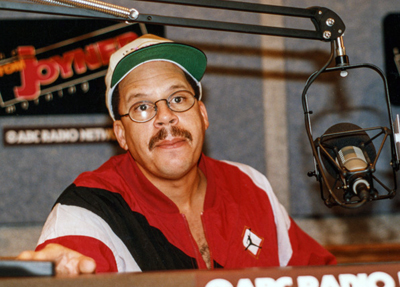
Tom Joyner circa1990s.
By the early 1990s, Joyner’s influence had outgrown any single market. In January 1994, he launched The Tom Joyner Morning Show in syndication, debuting on 29 stations. It was a bold move at a time when syndicated urban morning shows were still rare.
But Joyner’s show wasn’t just another morning program. It was a cultural gathering place.
Music.
Comedy.
Celebrity guests.
Community conversations.
Moments of joy.
Moments of truth.
One hour he might be laughing with Stevie Wonder. The next, he might be discussing voter registration, health disparities, or education. Joyner had an uncanny ability to shift from playful to profound without losing the thread.
The show grew quickly — 29 stations became 50, then 80, then more than 110. Joyner had become a national voice — one that millions trusted to start their day.
Impact magazine recognized his excellence so consistently that their annual “Best DJ of the Year” award eventually became “The Tom Joyner Award.”
In 1998, he was inducted into the Radio Hall of Fame — a fitting honor for a man who had reshaped the medium.
_____________________
WKXI-FM (Jackson, Mississippi) | The Tom Joyner Morning Show | 1997
Audio Digitally Remastered by USA Radio Museum
_____________________
HONORS, ACCOLADES, AND A LEGACY RECOGNIZED
As Tom Joyner’s voice spread across the country, the broadcasting world took notice — not just of his ratings, but of his impact. Joyner wasn’t simply entertaining millions; he was shaping conversations, elevating communities, and redefining what a national morning show could be. His influence was undeniable, and the industry responded with some of its highest honors.
In 1998, Joyner became the first African American inductee into the National Radio Hall of Fame, a milestone that acknowledged both his groundbreaking career and the cultural force of The Tom Joyner Morning Show. Two years later, in 2000, the National Association of Broadcasters inducted him into the NAB Broadcasting Hall of Fame, recognizing the explosive growth of his syndicated program and his unmatched connection with listeners across more than 100 markets.
The accolades continued. In 2004, Joyner received the prestigious NAB Marconi Award for Network/Syndicated Personality of the Year, one of the highest honors in American radio. His influence extended beyond broadcasting as well: he was inducted into the Official R&B Music Hall of Fame in 2003, celebrated for his role in championing Black music and artists. And in 2008, Joyner’s decades of advocacy earned him a place in the International Civil Rights Walk of Fame, honoring his commitment to education, civic engagement, and community empowerment.
In 2015, he received the BET Humanitarian Award, a tribute to the millions of dollars he raised for HBCU students through the Tom Joyner Foundation and the Fantastic Voyage®. It was a recognition not just of his voice, but of his heart.
These honors were not the culmination of his career — they were reflections of a legacy still in motion. Joyner’s awards tell the story of a man whose work transcended entertainment, whose microphone became a tool for change, and whose dedication reshaped the landscape of American radio.
THE PARTY WITH A PURPOSE: THE FANTASTIC VOYAGE
Even as his radio empire grew, Tom Joyner was quietly building something else — something bigger than broadcasting, bigger than ratings, bigger than any single show. He was building a movement. And that movement took shape not in a studio, but on the open sea.
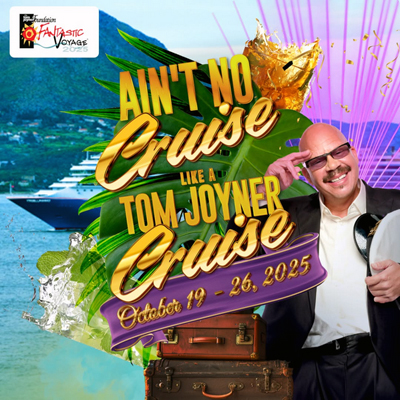 The Fantastic Voyage® began as a bold idea: a week‑long, star‑studded cruise that would bring together music, culture, community, and purpose. But Joyner didn’t want just another themed vacation. He envisioned a floating celebration of Black excellence — a place where joy and philanthropy could coexist, where entertainment could fuel education, and where thousands of people could gather not only to party, but to uplift.
He called it “The Party With a Purpose.”
And he meant every word.
From the moment the ship first set sail, the Fantastic Voyage became unlike anything else in American entertainment. It wasn’t just a cruise — it was a cultural institution. A traveling festival. A reunion. A sanctuary. A fundraiser. A celebration of identity and community that stretched far beyond the shoreline.
On board, the days were filled with concerts from legendary artists, comedy shows that echoed through the decks, empowerment seminars, health screenings, art exhibitions, and late‑night jam sessions that felt like history in the making. It was a place where you could dance to Frankie Beverly & Maze under the stars, laugh with the nation’s top comedians, attend a panel on HBCU leadership, and then run into Tom Joyner himself in the hallway — smiling, greeting, connecting, always present.
But beneath the joy was a mission.
A mission Joyner never let anyone forget.
The Fantastic Voyage was the flagship fundraiser of the Tom Joyner Foundation, raising millions of dollars for scholarships at Historically Black Colleges and Universities. Every ticket sold, every concert performed, every auction item bid on — it all fueled the education of students who might otherwise never have had the chance to attend college. Joyner used celebration as a vehicle for empowerment, proving that philanthropy didn’t have to be solemn to be meaningful.
And he promoted it with the same passion he brought to his morning show. On the air, Joyner hyped the cruise with humor, urgency, and pride. He teased surprise guests, announced new performers, and reminded listeners that this wasn’t just a vacation — it was a mission wrapped in joy. His promos became legendary, blending excitement with purpose in a way only Joyner could.
Even after retiring from daily radio in 2019, Joyner never stepped away from the Fantastic Voyage. He continued to champion it, appear on it, and serve as its guiding spirit. The cruise remained active, vibrant, and sold‑out — a testament to the community he built and the trust he earned.
For many, the Fantastic Voyage became a pilgrimage — a once‑in‑a‑lifetime experience that blended culture, celebration, and contribution. It was a place where generations gathered, where strangers became family, where music and mission danced together on the same deck.
It was joy with intention.
It was celebration with impact.
It was a party — with a purpose.
And in the story of Tom Joyner, it stands as one of his greatest achievements: a living, sailing embodiment of everything he believed in — community, culture, education, empowerment, and the transformative power of coming together.
TOM JOYNER TODAY — AND WHY HE STILL MATTERS
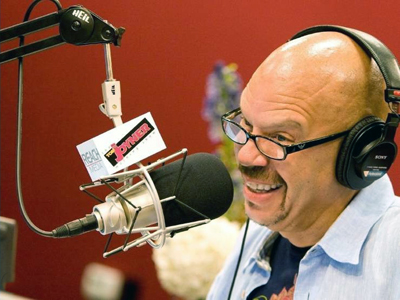 Though Tom Joyner signed off from daily radio in 2019, his presence has never faded. Today, he continues to champion HBCUs, lead his philanthropic foundation, and advocate for Black health and education. His voice may no longer greet millions each morning, but his influence still echoes across the airwaves he helped transform.
Every personality‑driven morning show that blends music with conversation, humor with heart, entertainment with empowerment — they are all walking a path Joyner helped clear.
Tom Joyner matters today because he made radio matter.
He made it personal.
He made it communal.
He made it powerful.
CURATOR’S REFLECTION
The Enduring Echo of Tom Joyner
Every era of radio has its giants — the voices that rise above the noise, the personalities who turn a medium into a movement. Tom Joyner is one of those rare figures whose influence cannot be measured by airtime alone. His story stretches far beyond the studio walls, into classrooms, campuses, communities, and the daily lives of millions who found comfort, laughter, and purpose in his voice.
At the USA Radio Museum, we honor Tom Joyner not simply as a broadcaster, but as a builder of community. His voice may no longer greet the nation each morning, but its echo is still here — in the shows he influenced, the students he supported, and the culture he helped shape.
Some broadcasters leave behind recordings.
Tom Joyner left behind a movement.
And that is why his story belongs here — preserved with reverence, celebrated with gratitude, and carried forward to inspire generations yet to come.
______________________________
Contact: jimf.usaradiomuseum@gmail.com
______________________________
A USARM Viewing Tip: On your PC? Mouse/click over each image for expanded views. On your mobile or tablet device? Finger-tap all the above images inside the post and stretch image across your device’s screen for LARGEST digitized view. Then click your brower’s back arrow to return to the featured post.
© 2025 USA Radio Museum. All rights reserved.

But not only that Tom was also a very good rapper too at that time, here he is in a Otis Conner jingle package called; “Jammin It!” and then you’ll see why Tom Joyner is, was, still, always, and forever will be Flyin’ the radio history books no matter what.
https://soundcloud.com/djwizardmastermc/otis-conner-productions-k104-is-jammin-it