
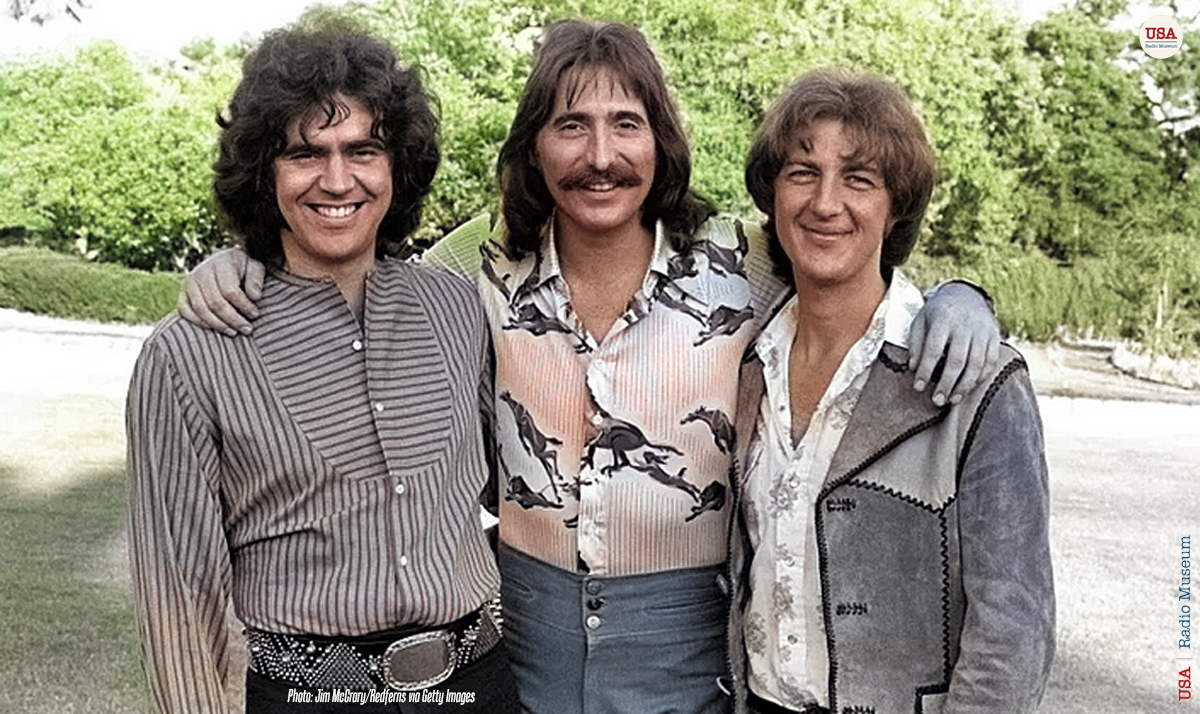
CHUCK NEGRON: THE VOICE THAT CARRIED A GENERATION A USA Radio Museum Tribute Introduction: There are voices that define a moment, and then there ar
CHUCK NEGRON: THE VOICE THAT CARRIED A GENERATION A USA Radio Museum Tribute
Introduction: There are voices that define a moment, and then there are voices that define a lifetime. Chuck Negron’s did both.
 With his passing on February 2, 2026, the world lost not only the soaring tenor behind some of rock’s most enduring anthems, but a man whose life embodied the full spectrum of the human experience — brilliance, struggle, resilience, and ultimately, grace. As one of the founding vocalists of Three Dog Night, Negron helped shape the sound of American radio during one of its most vibrant eras. His voice — urgent, soulful, unmistakable — became part of the nation’s soundtrack.
This tribute honors the artist, the survivor, the storyteller, and the man whose voice continues to echo across generations. — USA RADIO MUSEUM
_____________________
A Life of Highs, Lows, and Hard‑Won Redemption
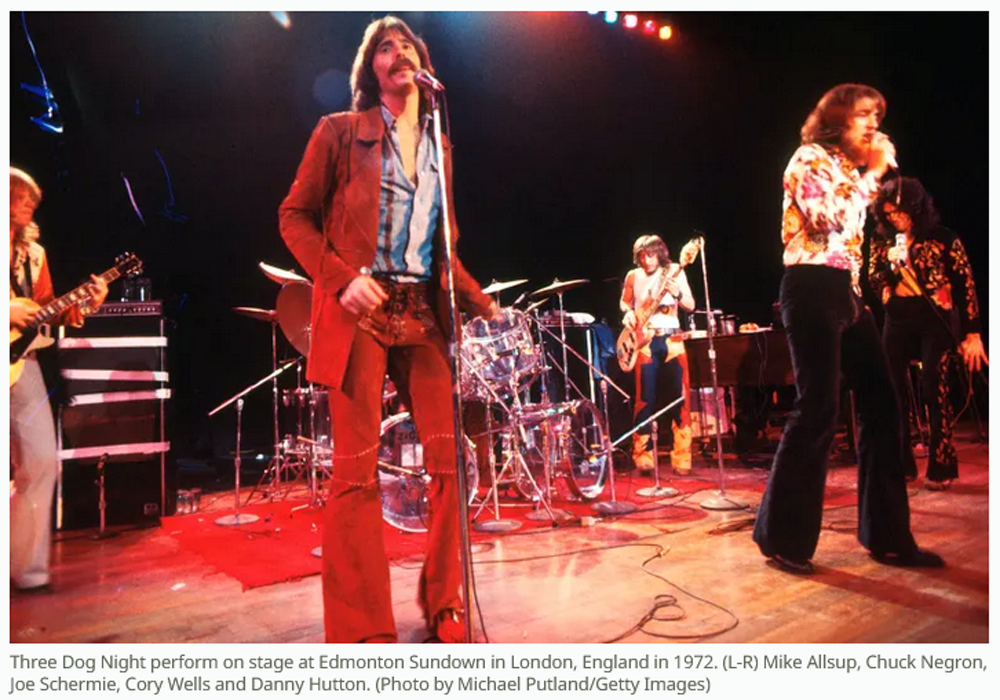
Credit: Daily News
Chuck Negron’s rise was meteoric, but it was never accidental. Born in Manhattan and raised in the Bronx, he grew up surrounded by the harmonies of New York’s doo‑wop scene. By 15, he was recording with the Rondells and performing at the Apollo Theater — early signs of a talent destined for bigger stages.
Basketball brought him to California, but music kept him there. In 1967, Negron joined Danny Hutton and Cory Wells to form Three Dog Night — a daring concept built around three lead vocalists. Their blend of rock, R&B, soul, and doo‑wop created a sound unlike anything else on the airwaves.
And once the hits started, they didn’t stop.
Between 1969 and 1975, Three Dog Night delivered 21 consecutive Top 40 singles — a run few bands in history have matched. They became known as “the discoverers,” elevating the work of songwriters like Harry Nilsson, Laura Nyro, Randy Newman, Paul Williams, and even a young Elton John and Bernie Taupin. Their interpretations didn’t just chart; they defined the songs for millions.
At their peak, Three Dog Night were out‑grossing Creedence Clearwater Revival, Sly and the Family Stone, Elvis Presley, and even the Rolling Stones. They were a touring powerhouse, a radio staple, and a cultural force.
But fame has its shadows, and for Chuck Negron, those shadows grew long.
His struggles with addiction — particularly heroin — consumed years of his life. At one point, he lost everything: his fortune, his career, his health, and nearly his life. He lived on Los Angeles’ skid row, a devastating fall for a man whose voice had once filled arenas.
The band fractured under the weight of it all. Three Dog Night disbanded in 1976, reunited in 1982, and broke apart again in 1985 after Negron’s relapse. Hutton and Wells continued under the band’s name; Negron stepped away, beginning the long, painful work of rebuilding.
And rebuild he did.

Credit: USA Today
After 37 rehab attempts and 13 years of struggle, Negron achieved sobriety in 1991 — a turning point that reshaped the rest of his life. He returned to music with renewed purpose, releasing seven solo albums between 1995 and 2017. His 1999 memoir, Three Dog Nightmare, became one of rock’s most candid accounts of addiction, survival, and redemption.
In later years, life offered him a final grace: reconciliation. After decades of estrangement, Negron and Danny Hutton met in 2025 to exchange apologies and bury the hatchet — a moment of closure that spoke to the depth of their shared history.
Through it all, Negron never lost sight of what truly mattered. “You must find some peace inside,” he once said. “You must come to terms with the gifts you have, the faults you have … and learn to embrace your life.”
Signature Songs, Vocal Brilliance, and Cultural Impact
Chuck Negron didn’t just sing hits — he transformed them. His voice was the emotional engine of Three Dog Night, capable of both raw power and quiet vulnerability. He could belt with gospel intensity, glide with pop clarity, or deliver a tender line with disarming sincerity.
His Signature Performances
“One (Is the Loneliest Number)” A breakout moment. Negron’s aching, exposed delivery turned Harry Nilsson’s composition into a national anthem of longing.
“Joy to the World” A jubilant, full‑throated performance that became one of the biggest hits of the 1970s — pure, infectious joy.
“An Old‑Fashioned Love Song” Warm, romantic, and deeply human. Negron’s phrasing gave Paul Williams’ ballad its heart.
“Eli’s Comin’,” “Mama Told Me Not to Come,” and more. Even when he wasn’t the sole lead, Negron’s voice was the glue — the blend that made Three Dog Night’s harmonies so distinctive.
Awards, Honors, and an Underrated Legacy
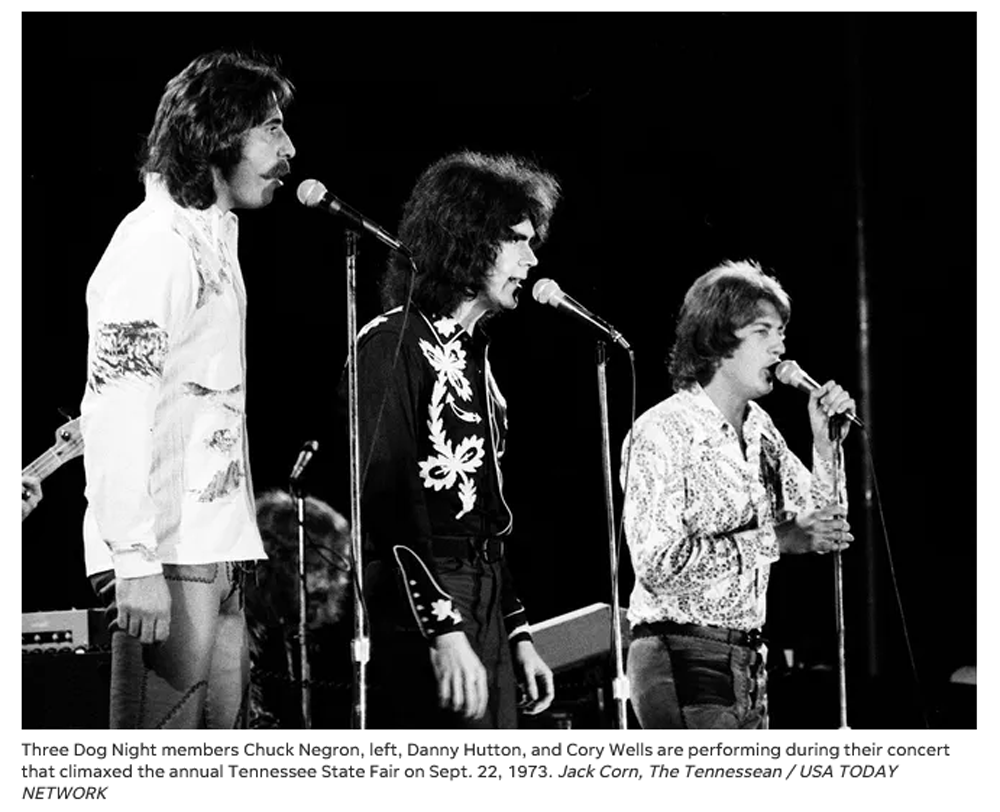
Credit: USA Today
For a band as commercially dominant as Three Dog Night, their awards résumé remains surprisingly modest — a fact that has long puzzled fans and historians alike. Despite selling millions of records, earning 21 consecutive Top 40 hits, and becoming one of the most successful touring acts of the early 1970s, the group received relatively little formal industry recognition.
Their biggest moment in the awards spotlight came at the 14th Annual GRAMMY Awards, where “Joy to the World” earned two nominations:
- Record of the Year
- Best Pop Vocal Performance by a Duo, Group or Chorus
Though they did not take home the trophy, the nominations affirmed what radio listeners already knew — that Three Dog Night were shaping the sound of American pop and rock in real time.
They were never inducted into the Rock & Roll Hall of Fame, a long‑standing point of debate among music historians. But their impact is undeniable:
- 21 consecutive Top 40 hits
- 3 No. 1 singles
- 12 straight Gold LPs
- Tens of millions of records sold worldwide
_____________________
A Personal Preference: “Out in the Country” and the Quiet Power of Chuck Negron’s Voice
For many fans, Chuck Negron’s legacy is tied to the big, explosive hits — the anthems that filled arenas and dominated radio. But some of his most affecting work came in the quieter moments, in songs where his voice didn’t need to soar to be unforgettable.
To this author, one of those moments arrived in 1970 with the Top 40 gem “Out in the Country.”
Written by Paul Williams and Roger Nichols, the song is a gentle plea for escape — a reflection on the need for peace, space, and renewal. And in Chuck Negron’s hands, it becomes something almost spiritual.
The warm acoustics, the soulful organ line, the understated harmonies — all of it creates a sonic landscape that feels like sunlight breaking through trees. Negron’s delivery is calm, centered, and deeply sincere. He doesn’t oversing; he inhabits the lyric.
For listeners who grew up with this record — who felt the acoustics wrap around them and the organ pulse like a heartbeat — “Out in the Country” remains one of the most quietly profound entries in the Three Dog Night catalog.
_____________________


_____________________
Closing Tribute
In remembering Chuck Negron, we honor more than a voice. We honor a life — brilliant, complicated, resilient, and profoundly human. His songs lifted us. His struggles humbled us. His recovery inspired us. And his voice, that extraordinary voice, remains one of the great instruments of American popular music.
For every fan who ever turned up the radio when his tenor came through the speakers, for every family he loved, for every life he touched through honesty and hard‑won wisdom — Chuck Negron’s legacy endures.
His music lives on. His story lives on. And here at the USA Radio Museum, his voice and memory will echo beyond time — carried gently in the hearts of all who still hear him whenever the song begins.
______________________________
Contact: jimf.usaradiomuseum@gmail.com
______________________________
A USARM Viewing Tip: On your PC? Mouse/click over each image for expanded views. On your mobile or tablet device? Finger-tap all the above images inside the post and stretch image across your device’s screen for LARGEST digitized view. Then click your brower’s back arrow to return to the featured post.
© 2026 USA Radio Museum. All rights reserved.

Not only that Jim their song “Celebrate” was reborn for TBS’ 1988 image campaign simply entitled; “Celebrate the best on SuperStation TBS!”