
The Broadcast That Made Mutual National How a Single Winter Night in 1936 Turned a Cooperative Network Into a Coast‑to‑Coast Voice Introduction
The Broadcast That Made Mutual National
How a Single Winter Night in 1936 Turned a Cooperative Network Into a Coast‑to‑Coast Voice
Introduction
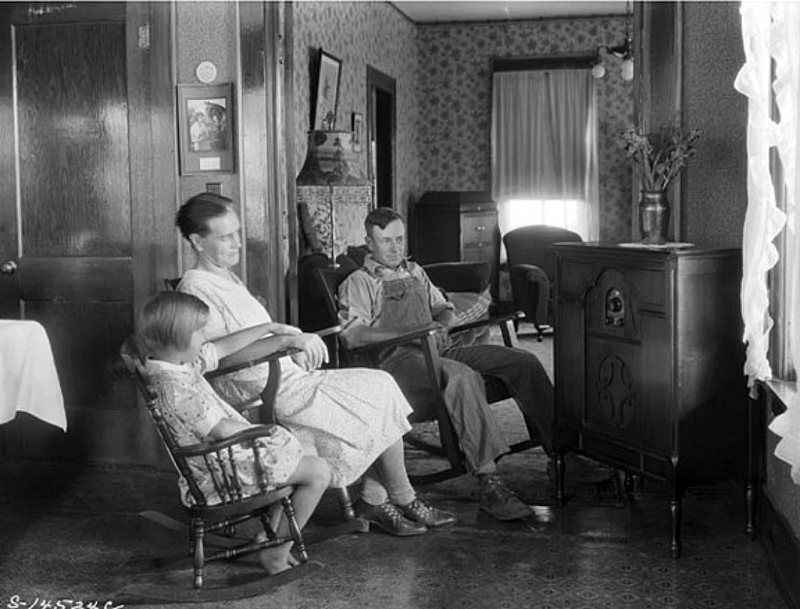
A Depresion-era family listening to radio in the 1930s. (Credit: Idea Stream Public Media)
On a winter night in late 1936, as America edged toward a new year and a new technological era, a young radio network made a bold declaration: it would no longer be a regional experiment or a loose federation of stations. It would speak to the entire nation. At 11 p.m. Eastern on December 29, 1936, the Mutual Broadcasting System inaugurated its first coast‑to‑coast broadcast, a one‑hour program that stitched together voices, orchestras, and commentary from across the country.
For the first time, Mutual was truly Mutual — a network built not on corporate ownership but on cooperation, shared programming, and the belief that local stations could stand shoulder‑to‑shoulder with the giants of NBC and CBS.
Eighty‑nine years later, the USA Radio Museum honors that inaugural broadcast and the remarkable, improbable history of the network that followed: a network that began as an underdog, grew into a powerhouse, and ultimately became one of the most influential — and misunderstood — players in American broadcasting. — USA RADIO MUSEUM
_____________________
The Birth of a Different Kind of Network (1934–1936)
 The Mutual Broadcasting System was formally organized in September 1934, but its roots stretched back to a simple idea: independent stations deserved a national voice. Unlike NBC and CBS — both built on centralized ownership and top‑down programming — Mutual was conceived as a cooperative. Its founding stations, including WOR (Newark/New York), WGN (Chicago), WLW (Cincinnati), and WXYZ (Detroit), pooled resources, talent, and airtime.
This structure was revolutionary. Each station retained autonomy. Each could contribute programming. Each had a stake in the network’s success. Mutual was, in essence, the first crowdsourced national network — decades before the term existed.
But in its early years, Mutual lacked one crucial element: a nationwide line. NBC and CBS had long enjoyed coast‑to‑coast transmission capability through AT&T’s long‑line circuits. Mutual, by contrast, was still stitching together regional clusters.
That changed in late 1936, when AT&T finally granted Mutual access to the full national network of broadcast lines. The stage was set.
December 29, 1936: The Night Mutual Went National
The inaugural coast‑to‑coast broadcast was more than a technical milestone — it was a statement of identity. The one‑hour program showcased the network’s strengths: live music, commentary, and the distinctive personalities of its member stations.
Listeners from New York to Los Angeles heard a network announcing itself with confidence. Mutual was no longer the “third network.” It was a national force.
This broadcast also marked the beginning of Mutual’s ascent into the American mainstream. Within a few short years, the network would become home to some of the most iconic programs in radio history.
_____________________
Mutual Broadcasting System | Inaugural Coast-to-Coast Broadcast | December 29, 1936
Audio Digitally Enhanced by USA Radio Museum
_____________________
The Rise of Mutual: A Network of Legends (Late 1930s–1950s)
Mutual’s cooperative model proved to be its greatest strength. Stations contributed programming that reflected regional tastes, local talent, and innovative formats. The result was a network that felt more democratic, more varied, and often more daring than its competitors.
The Lone Ranger
WXYZ’s masked rider of the plains galloped across the Mutual network, becoming one of the most beloved adventure programs in radio history.
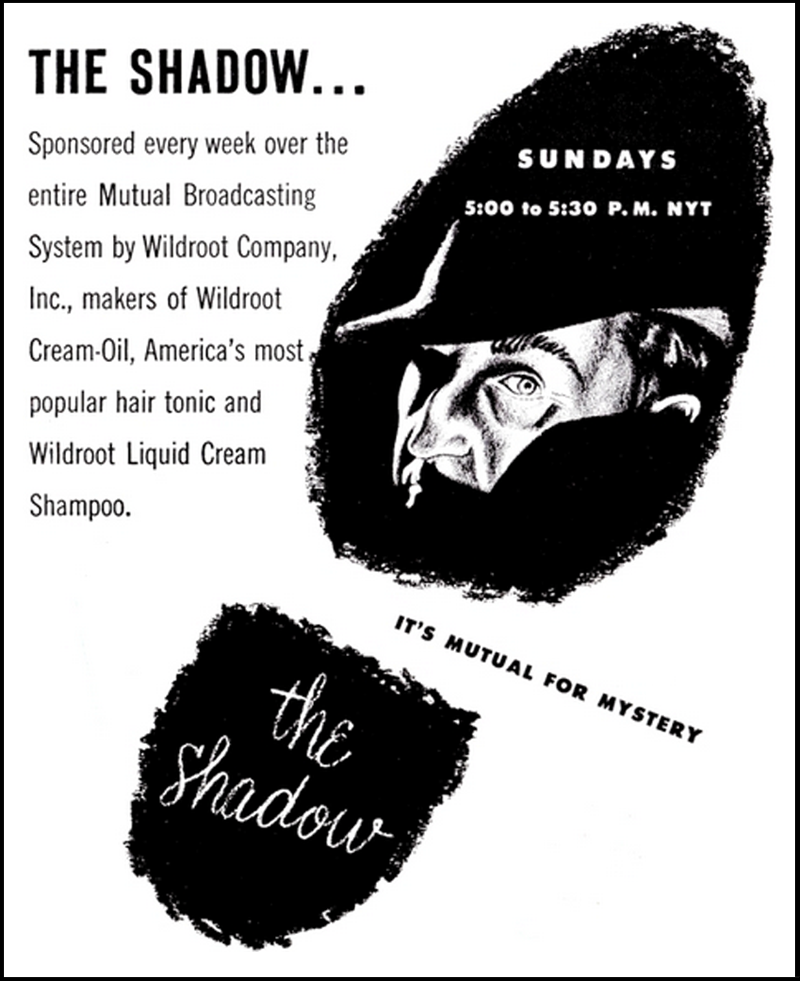
The Shadow
“Who knows what evil lurks in the hearts of men?” Mutual listeners did. The Shadow became a cultural phenomenon, cementing the network’s reputation for gripping drama.
Queen for a Day
A daytime sensation that blended human‑interest storytelling with audience participation, long before television adopted the format.
Gabriel Heatter
With his signature line — “There’s good news tonight!” — Heatter became one of the most trusted voices in wartime America.
Major League Baseball
Mutual became the home of the World Series and All‑Star Game broadcasts for years, giving the network a national sports identity unmatched by its rivals.
Mutual’s programming slate was eclectic, ambitious, and deeply American. It reflected the country’s diversity because it came from that diversity.
War, Expansion, and Influence (1940s–1960s)
During World War II, Mutual’s decentralized structure allowed it to deliver fast, flexible coverage. Stations could break in with local reports, while the network fed national bulletins and commentary.
After the war, Mutual expanded aggressively, adding affiliates in every major market. By the early 1950s, it boasted more than 500 stations, making it the largest network in sheer number of affiliates — even if not in revenue.
Mutual also became a training ground for future broadcasting giants. Countless local hosts, newsmen, and entertainers cut their teeth on Mutual stations before moving to television or larger networks.
But the seeds of future challenges were already visible. Mutual’s cooperative model, while innovative, made centralized decision‑making difficult. And as television rose, the network struggled to secure the capital needed to reinvent itself.
The Long Decline (1960s–1990s)
 By the 1960s, Mutual faced mounting pressures:
• Television dominance siphoned away advertisers and audiences.
• Affiliate autonomy made unified branding difficult.
• Ownership changes — including sales to General Tire and later to Westwood One — created instability.
• Regulatory shifts eroded the advantages of the cooperative model.
Yet Mutual persisted. It adapted. It survived.
In the 1970s and 1980s, the network found new life through:
• Mutual News, a respected national news service.
• Larry King’s overnight program, which became a phenomenon.
• Sports programming, including NFL coverage and college football.
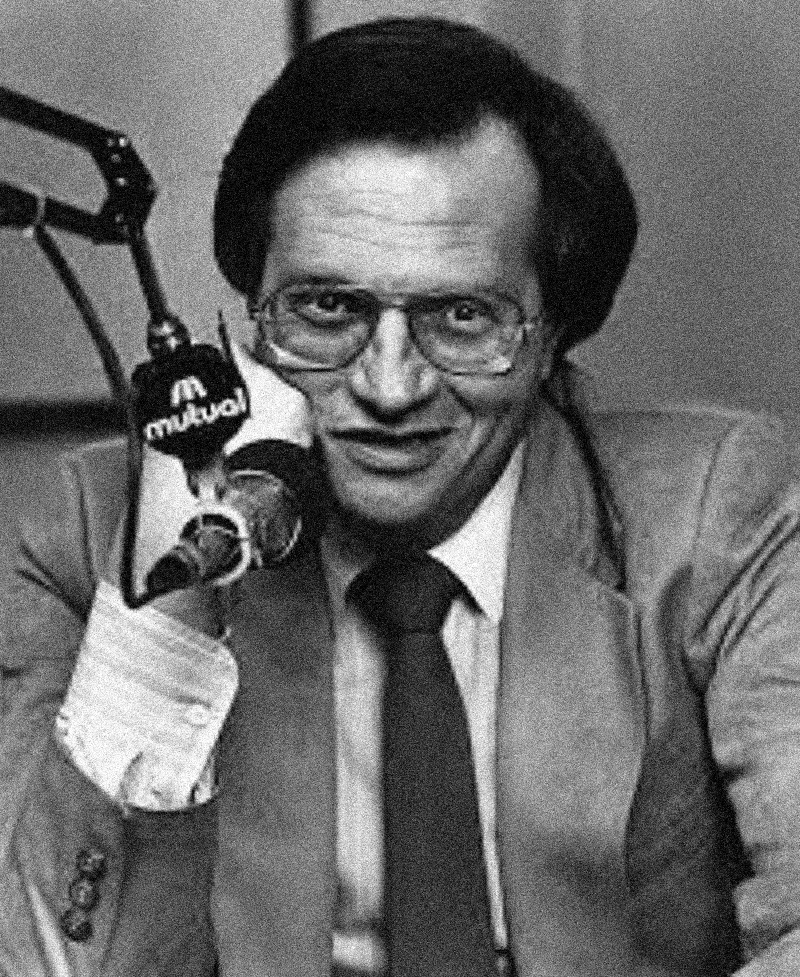
Larry King on Mutual Radio.
But by the mid‑1980s, the handwriting was unmistakable. Mutual’s final corporate owner, Amway, had grown weary of years of financial underperformance and chose to divest. In 1985, the network was sold to the rapidly expanding syndication giant Westwood One for $39 million — a sale that underscored both the value of Mutual’s brand and the fragility of its future.
Under Westwood One, Mutual gradually shifted from a full‑service radio network into a label applied to a shrinking portfolio of news and sports programming. The cooperative identity that had once defined the network faded as consolidation reshaped the industry. Over the next decade, the Mutual name became more symbolic than structural — a vestige of a once‑mighty system now absorbed into a new corporate era.
The end came quietly. On March 7, 1999, following that evening’s broadcast, Westwood One discontinued the use of the Mutual name entirely. There was no on‑air tribute, no retrospective, no final salute to a network that had once stood alongside NBC, CBS, and ABC as one of America’s four great national voices. Mutual simply slipped off the air — its legacy left to the historians, archivists, and listeners who remembered what it had meant.
Legacy: Why Mutual Still Matters
Mutual’s story is not one of failure — it is one of innovation. It proved that:
• Independent stations could build a national network.
• Regional voices deserved national platforms.
• Cooperation could compete with corporate power.
• Some of the greatest programs in American history could emerge from outside the major media centers.
Mutual democratized national broadcasting. It gave America a network that sounded like America.
And on December 29, 1936, it announced that mission to the entire country.
Conclusion
 Today, as we revisit that first coast‑to‑coast hour from 1936, we honor a network that refused to be defined by its limitations and instead reshaped American broadcasting through sheer will, imagination, and collaboration. Mutual’s signal may have faded from the dial, but its imprint endures — in every independent station that still fights for a voice, in every syndicated program that reaches across the map, and in every broadcaster who believes that great radio begins with community.
At the USA Radio Museum, we preserve Mutual not as a relic, but as a living reminder of what American radio can be when the nation speaks — and listens — together.
_____________________
Sources & Credits
Historical details for this feature were informed by contemporary Mutual Broadcasting System press releases (1934–1936), AT&T Long Lines technical bulletins, FCC network filings, Broadcasting Magazine archives (1934–1950), Variety radio industry reports, and secondary scholarship including “The Mutual Broadcasting System: The Rise and Fall of America’s Cooperative Network” by Jim Cox, the Library of Congress Recorded Sound Research Center, and the Museum’s own archival reference materials documenting Mutual’s programming, affiliates, and network operations. Special acknowledgment to surviving recordings of the December 29, 1936 inaugural broadcast, which provide the foundation and inspiration for this commemorative article. Context on Mutual’s final years and the 1999 retirement of the network name was informed in part by historical commentary from Flapper Press, “The Forgotten Radio Network: The Mutual Broadcasting System.”
_____________________
Contact: jimf.usaradiomuseum@gmail.com
_____________________
A USARM Viewing Tip: On your PC? Mouse/double-click over the images for expanded views. On your mobile or tablet device? Finger-tap all the above images inside the post and stretch image across your device’s screen for LARGEST digitized view. Then click your browser’s back arrow to return to the featured post.
© 2026 USA Radio Museum. All Rights Reserved.
