
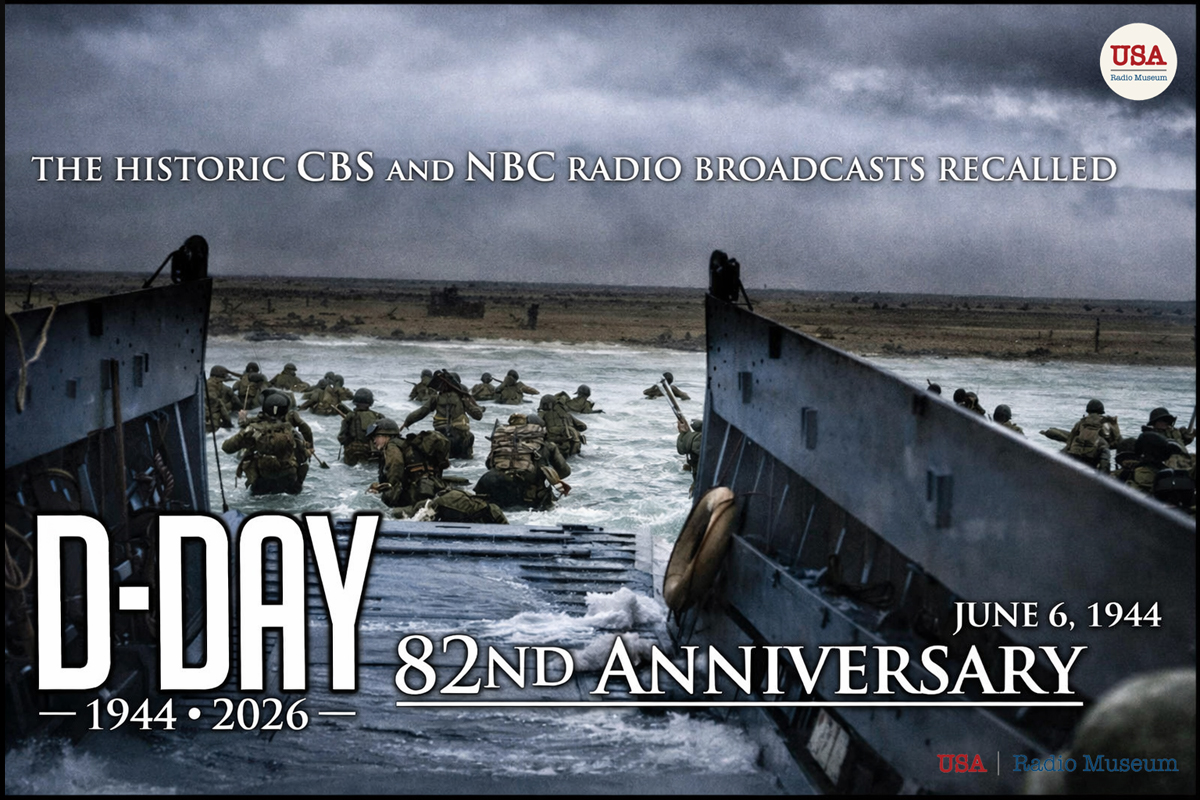
Introduction — The Day Wartime Radio and the World Held Its Collective Breath This Saturday marks 82 years when the U.S. allied invasion of norther
Introduction — The Day Wartime Radio and the World Held Its Collective Breath
 This Saturday marks 82 years when the U.S. allied invasion of northern France and the liberation of Western Europe began.
In the earliest hours of June 6, 1944, before dawn broke over the English Channel and before the world understood that history had entered one of its defining chapters, American radio was already awake. In dim studios and humming control rooms, engineers and correspondents sensed that something immense was approaching. In New York, the headquarters of CBS and NBC—the two great national networks that had guided the nation through Depression and war—were staffed with men and women who had been living in a state of heightened readiness for weeks. They did not yet know the hour. They did not yet know the beaches. But they knew the world was holding its breath.
When the first bulletins arrived—brief, cautious, electrifying—radio became the instrument through which the American people would experience the most consequential military operation of the twentieth century. D‑Day, the Allied invasion of Nazi‑occupied France, was not merely a military event. It was a major wartime broadcast event. It unfolded not on screens, but in sound. It was carried not by images, but by voices—steady, grave, and unmistakably reactive to reports incoming—changing by the minute per CBS and NBC’s respective feeds. — USA RADIO MUSEUM
Radio Becomes the Front Line

The Detroit Free Press (morning edition), Wednesday, June 7, 1944.
For twenty‑four continuous hours, CBS and NBC abandoned their regular programming and transformed themselves into wartime command posts. Newsrooms became battle maps. Microphones became lifelines. Across the United States—from Detroit to Dallas, from Boston to Bakersfield—millions gathered around their radios, listening for updates that came in fragments, flashes, and carefully verified reports.
The USA Radio Museum is privileged to hold the complete 24‑hour broadcast days of both networks from June 6, 1944. These recordings—fragile, magnetic, and miraculous—preserve not only the news of the invasion but the emotional temperature of a nation experiencing history in real time. This year, on the eighty‑second anniversary of D‑Day, the Museum presents curated selections from those broadcasts, honoring the journalists, engineers, correspondents, and announcers who carried the weight of the world through a microphone.
The Hours Before the Announcement
The hours leading up to the invasion were filled with tension and anticipation. For months, rumors had circulated. There had been false alarms, premature reports, and coded hints from Europe. But on this night, something felt different. In London, correspondents for both networks had been living under strict censorship, unable to reveal troop movements or strategic preparations. Yet their tone in the days prior had shifted. Their dispatches carried a subtle gravity, a sense that the long‑awaited moment was near.
When the first confirmed bulletins reached New York, the networks moved with precision. Engineers opened emergency lines. Editors verified every word. Announcers prepared to speak to a nation that would remember their voices for the rest of their lives.
CBS: The Voice of Steady Authority
 At CBS, the announcement came with the measured cadence of a network that understood the gravity of every syllable. Under the leadership of Edward R. Murrow and the correspondents known as the Murrow Boys, CBS had already established itself as the network that brought Europe into American living rooms. Their broadcasts from London during the Blitz had shaped the nation’s understanding of the war.
On D‑Day, CBS’s coverage was anchored by voices that carried both authority and empathy. Announcers read bulletins with a solemn clarity that conveyed the magnitude of the moment without stirring panic. Correspondents in London filed reports as soon as censorship allowed. Analysts explained the geography of Normandy, the strategic importance of the beaches, and the scale of the Allied operation.
Throughout the day, CBS interwove news with prayer services, presidential statements, military briefings, and eyewitness accounts. The network’s tone was reverent, disciplined, and deeply human. It understood that millions of families had sons, brothers, and husbands in harm’s way. Every word mattered.
_____________________
Columbia Broadcasting System | D-Day Coverage | 1944 06 June | First 3 Hours of CBS Broadcasting
 Audio Digitally Enhanced by USA Radio Museum
_____________________
NBC: Urgency, Immediacy, and the Pulse of a Nation
 NBC approached the day with a different but equally powerful broadcast style. The network excelled at immediacy—rapid bulletins, frequent updates, and a sense of momentum that matched the unfolding events. Its correspondents in London, many of whom had lived through the Blitz, brought a seasoned perspective to the invasion.
NBC’s newsroom in New York operated like a wartime command center. Editors verified reports with relentless discipline. Engineers patched in overseas lines. Announcers delivered updates with a crisp, urgent cadence that conveyed the scale of the operation as it unfolded. NBC excelled at stitching together reports from Washington, London, the Pentagon, and the War Department. It captured the pulse of a nation that was anxious, hopeful, and united in purpose.
_____________________
National Broadcasting Company | D-Day Coverage | 1944 06 June | First 3 Hours of NBC Broadcasting
 Audio Digitally Enhanced by USA Radio Museum
_____________________
Detroit’s Wartime Radio: WWJ and WXYZ on the Longest Day
For listeners in Detroit—then one of the most important industrial cities in the world—the D‑Day broadcasts carried a special resonance. The city’s factories had been transformed into the Arsenal of Democracy, producing tanks, aircraft engines, and munitions that powered the Allied war effort. Nearly every family had someone serving overseas.
On June 6, 1944, WWJ 950, the CBS affiliate, carried the full weight of the network’s coverage, while WXYZ 1270, the NBC Blue Network affiliate, delivered NBC’s urgent, rapid‑fire bulletins. Detroiters heard the same voices that millions of Americans heard nationwide, but they heard them through the prism of a city that understood sacrifice, production, and patriotism in a uniquely profound way.
[Note: As an historical reference the above Detroit radio information— shared here—is from the CBS and NBC D-Day tribute published on the former Motor City Radio Flashbacks website, June 5, 2024.]
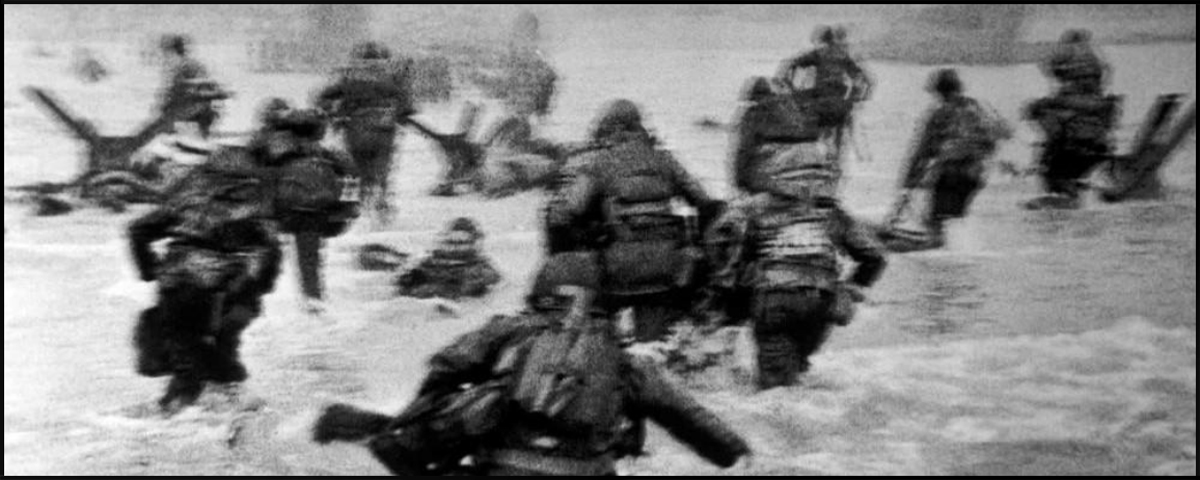
Omaha Beach, Normandy, France. June 6, 1944.
The Sound of the Broadcast Day
The broadcasts themselves were a tapestry of sound—bulletins, correspondents, analysis, hymns, presidential addresses, and long stretches of silence that conveyed as much as the words. There were moments when the networks paused, waiting for confirmation, unwilling to speculate. There were moments when correspondents spoke with a tremor in their voices, aware that they were witnessing the turning of the tide. There were moments when the networks carried church services, allowing the nation to pray together. And there were moments when the broadcasts returned to the basics: the weather over the Channel, the tides, the geography of Normandy, the names of the beaches—Utah, Omaha, Gold, Juno, Sword.
The USA Radio Museum’s archival recordings capture all of this. They capture the cadence of wartime journalism, the discipline of network verification, the tension of early bulletins, the relief of confirmed Allied progress, the prayers, hymns, and presidential addresses, the pauses, silences, and breaths between sentences. They capture the sound of a nation listening.
The Legacy Eighty‑Two Years Later
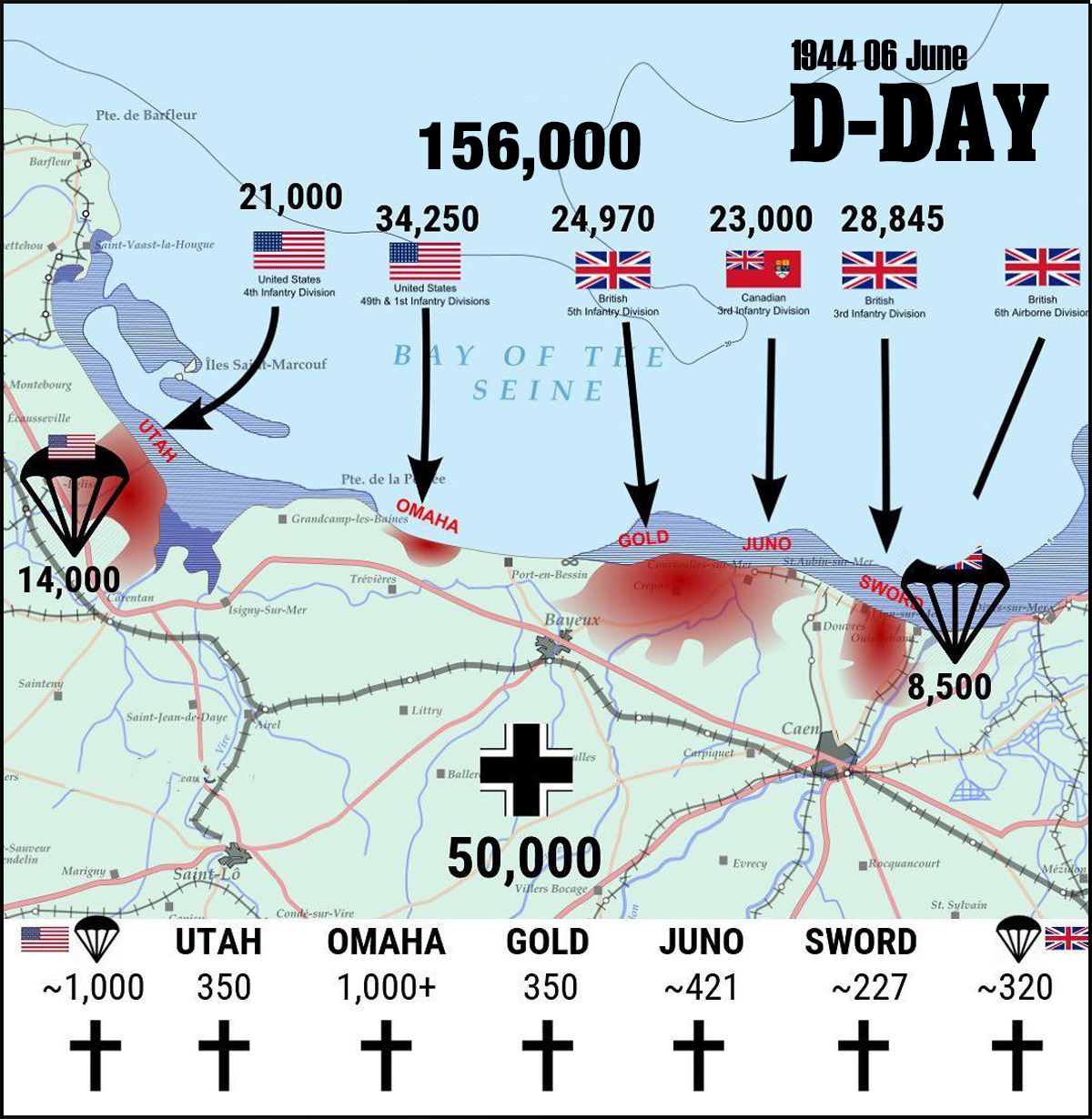
D-Day, June 6, 1944. Normandy, France.
Eighty‑two years later, the voices of CBS and NBC still echo with clarity and purpose. They remind us that journalism is a public trust. They remind us that truth, delivered with care, can steady a nation. And they remind us that the greatest moments in American broadcasting were not scripted—they were lived.
As the USA Radio Museum presents these recordings once more, we honor the correspondents who risked their lives to report from the front, the engineers who kept the lines open, the announcers who carried the weight of the world in their voices, the families who listened, prayed, and waited, and the soldiers who crossed the Channel to liberate a continent.
This is their story. This is radio’s story. This is D‑Day.
_____________________
Sources & Credits
This commemorative post draws upon historical radio documentation and archival research detailing the CBS and NBC network broadcasts of June 6, 1944. Background context reflects publicly available accounts of wartime news coverage, network correspondents, and the role of American radio during the Normandy invasion.
USARM acknowledges the pioneering journalists, engineers, and announcers whose real‑time reporting shaped the nation’s understanding of D‑Day and remains preserved through surviving recordings and historical summaries.
Historical reference points include:
- Contemporary broadcast summaries and public‑domain descriptions of CBS and NBC wartime coverage
- Archival timelines of June 6, 1944 radio bulletins and network reporting practices
- General historical accounts of the Normandy landings and U.S. home‑front media
Curated and written for the USA Radio Museum in honor of the 82nd anniversary of D‑Day.
_____________________
Contact: jimf.usaradiomuseum@gmail.com
_____________________
A USARM Viewing Tip: On your PC? Mouse/double-click over the images for expanded views. On your mobile or tablet device? Finger-tap all the above images inside the post and stretch image across your device’s screen for LARGEST digitized view. Then click your browser’s back arrow to return to the featured post.
© 2026 USA Radio Museum. All Rights Reserved.
