
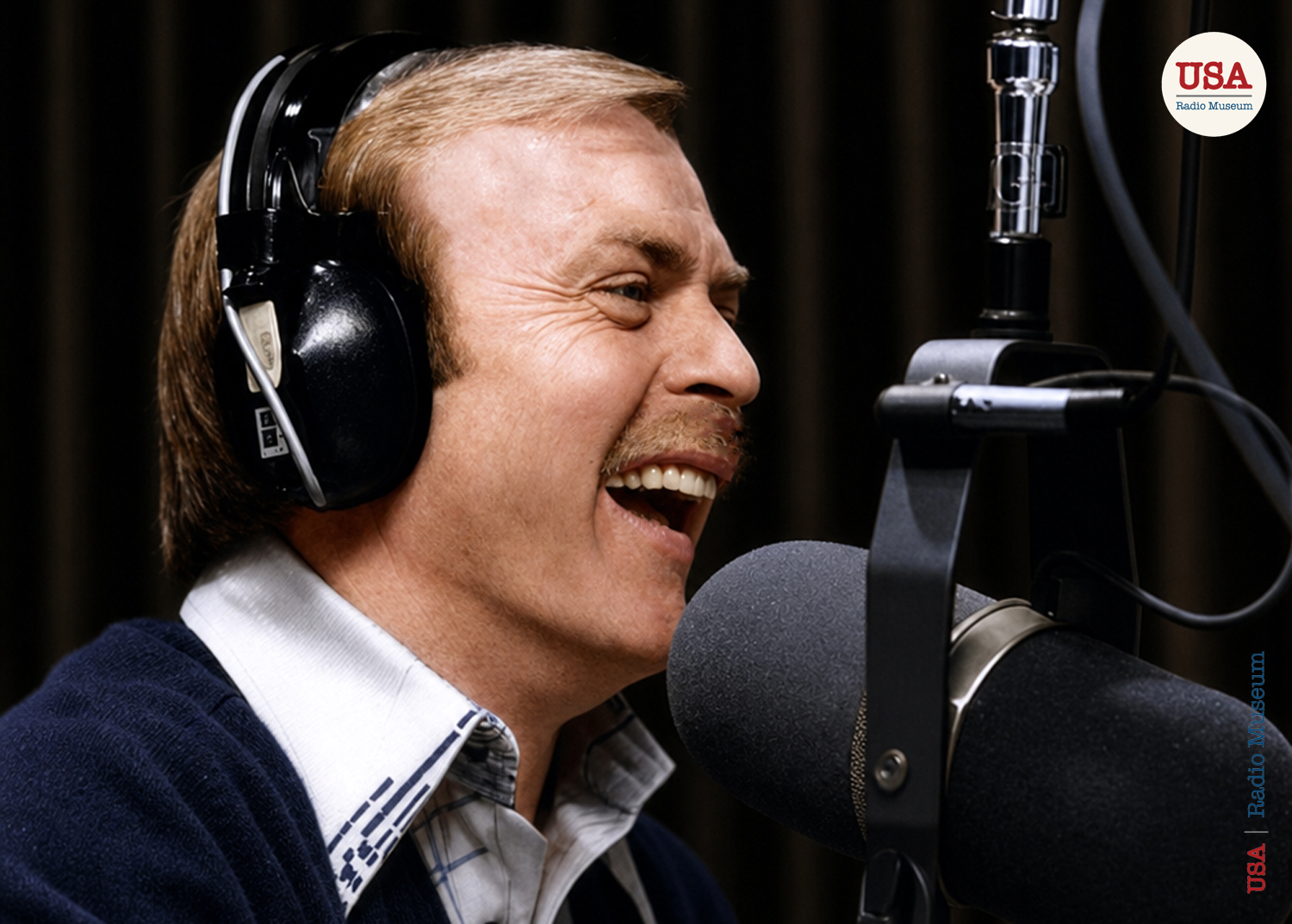
A Tribute to a Buffalo–Detroit Based Broadcasting Legend There are radio personalities who become familiar voices. And then there are the rare
A Tribute to a Buffalo–Detroit Based Broadcasting Legend
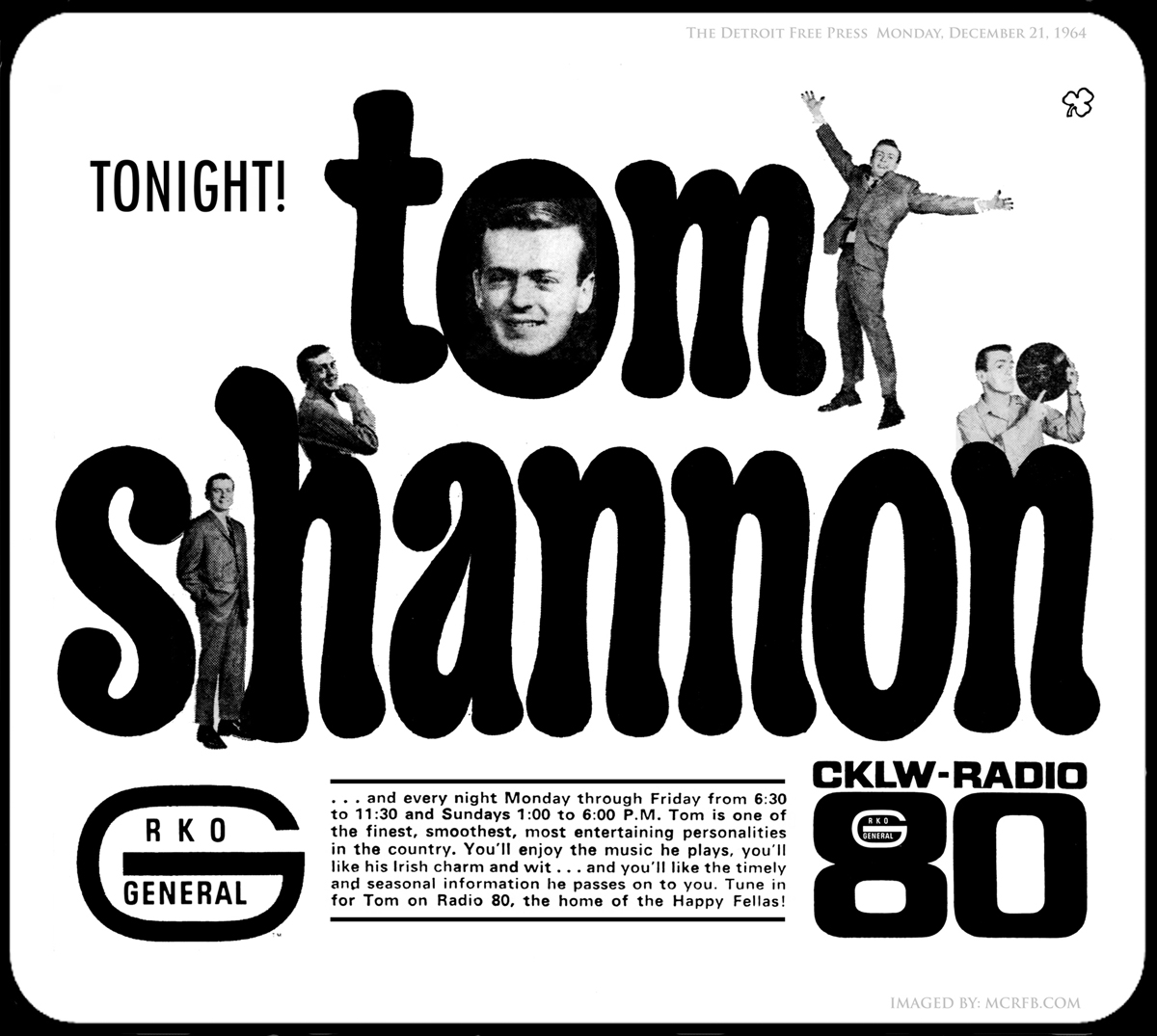
Detroit Free Press, December 21, 1964.
There are radio personalities who become familiar voices. And then there are the rare few — the ones who become part of the cultural bloodstream of entire cities.
Tom Shannon was one of those rare few.
For more than five decades, across Buffalo and Detroit, on radio and television, on AM and FM, behind microphones and in front of cameras, Tom Shannon shaped the sound, the style, and the spirit of modern broadcasting. His voice carried the warmth of a friend, the energy of a showman, and the instinctive timing of a natural entertainer. He was a Top 40 craftsman, a songwriter, a television host, a teacher, and above all, a beloved companion to millions of listeners. This is his story. – USA RADIO MUSEUM
_____________________
Early Beginnings: Buffalo’s Young Prodigy (1955–1964)
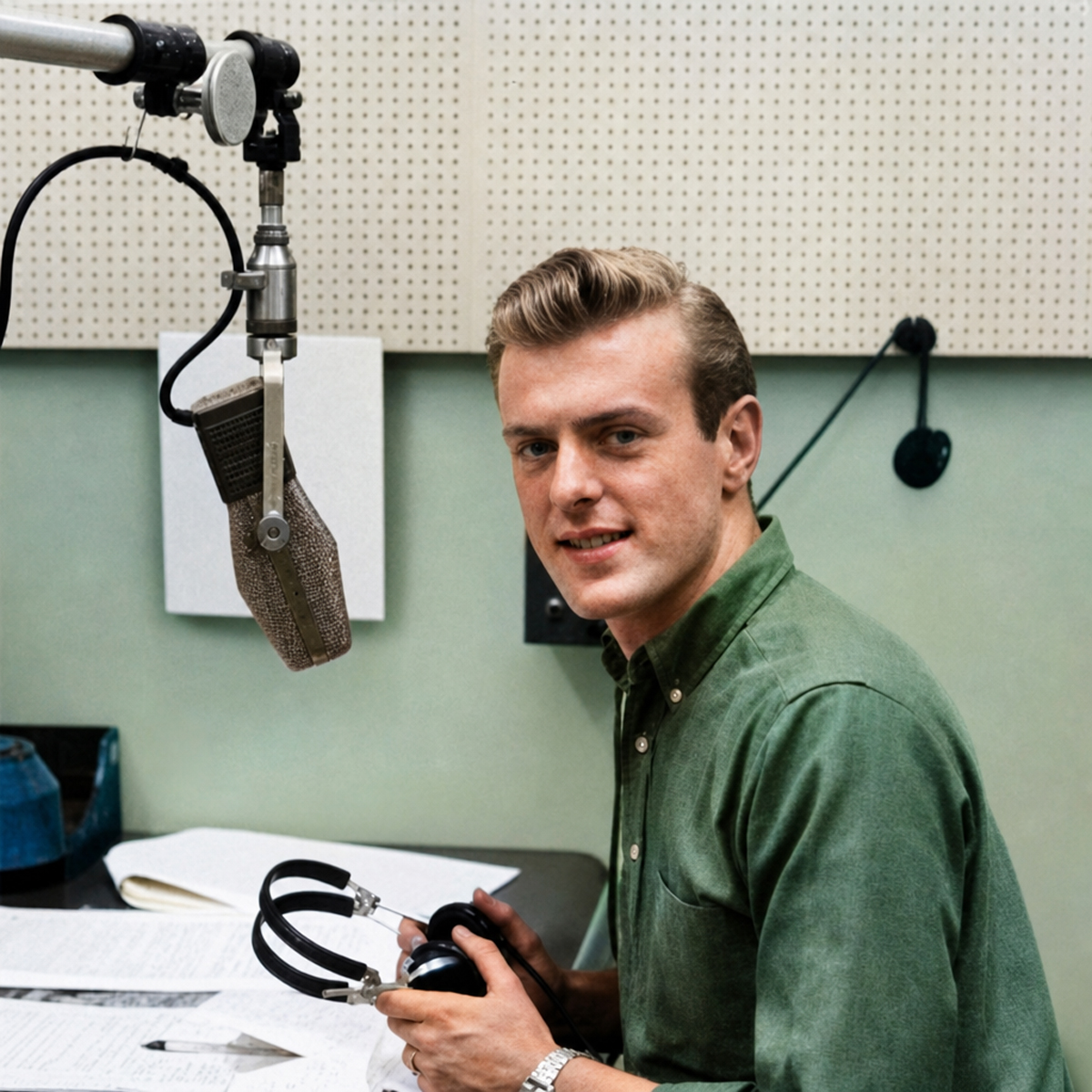
Tom Shannon, WKBW, 1959.
Tom Shannon’s broadcasting journey began astonishingly early. In 1955, at just 17 years old, he stepped behind a microphone at WXRA in Kenmore, New York as a teenage newsman. Buffalo radio quickly recognized his talent. He moved to WKBW, where he followed none other than Dick Biondi into the evening shift — a remarkable vote of confidence in a young broadcaster still finding his voice.
But Shannon didn’t just play the hits. He created them.
In 1960, he signed with Corsican Records and co‑wrote several songs. One of them — an instrumental version of his own radio theme — became the national hit “Wild Weekend” by the Rockin’ Rebels. It remains one of the most recognizable instrumental rock records of the early ’60s.
By the early 1960s, Shannon was a rising star in Buffalo: a teacher by day, a DJ by night, a songwriter, a National Guardsman, and a personality whose warmth and humor made him a listener favorite.
But a bigger stage was calling.
_____________________
WKBW (Buffalo) | Tom Shannon | July 24, 1961
Audio Digitally Remastered by USA Radio Museum
_____________________
CKLW Windsor/Detroit: The First Tour (1964–1969)

Tom Shannon, CKLW, 1965.
In December 1964, Tom Shannon left Buffalo’s WKBW and arrived at CKLW 800, replacing Terry Knight. It was the beginning of a relationship with CKLW — and with Detroit — that would define much of his career.
Listeners across the Midwest and Northeast discovered a voice that was upbeat, informed, and unmistakably human. A 1965 letter to Music Business magazine from a listener in Long Island captured the sentiment perfectly, as was amplified by a reader, in May 1965:
“Thank God there is a Tom Shannon and CKLW”
‘A RAVE FOR SHANNON’
To the Editor,
Now that WINS in New York is no longer a music station, we in New York have lost another fine disc jockey in Joel Sebastian. Just recently, Murray the K left New York radio. Because of this lack of good disc jockeys and radio stations in New York, I, and many of my friends have been listening to some fine stations out of town.

I’d like to call to the attention of those who read your fine magazine that there is one very fine disc jockey who is on CKLW in Detroit-Windsor. He is Tom Shannon, formerly of WKBW in Buffalo, and he is on every evening from 6:30-11:30.
He plays a good amount of new records, and he is very well informed about the pop music situation in the world. CKLW is at 800 on the radio dial, and it is a fine station.
I hope many people take note of Tom Shannon, the best DJ in the business. It is too bad that in New York, one station plays only 28 different songs a week, and the other is totally mediocre. Thank God there is a Tom Shannon and CKLW.
Sincerely,
Jon Stroll
127 Circle Drive
Roslyn Heights, L. I., N.Y. 11577
Shannon’s evening show (6:30–11:30 p.m.) became appointment listening. He played new music, championed emerging artists, and brought a sense of fun and discovery to every shift.
And then came television.
“The Lively Spot” and “The Tom Shannon Show” (1968–1969)
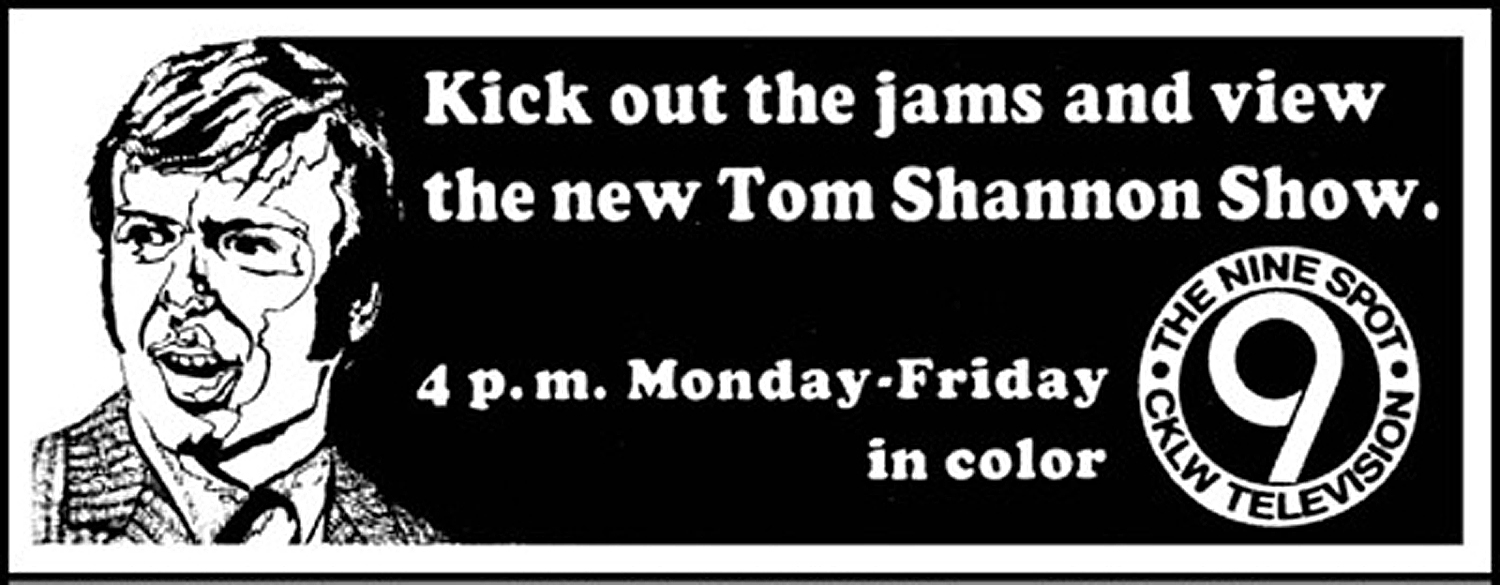 In 1968, CKLW-TV (Channel 9) launched a new weekday program: “The Lively Spot,” hosted by Tom Shannon.
It replaced Robin Seymour’s “Swingin’ Time” and quickly became a favorite among Detroit and Windsor teens. Shannon’s natural ease on camera — the same warmth that made him a radio star — translated beautifully to television.
- Weekdays: 3:30–4:30 p.m.
- Saturdays: 6–7 p.m., rebranded as “The Tom Shannon Show”
He continued his CKLW radio shift while hosting daily television — a testament to his energy and versatility. Elmer Jaspan, CKLW-TV’s programming director, predicted Shannon would become a major favorite among Detroit youth. He was right.
Detroit Radio: A Career Woven Through a City
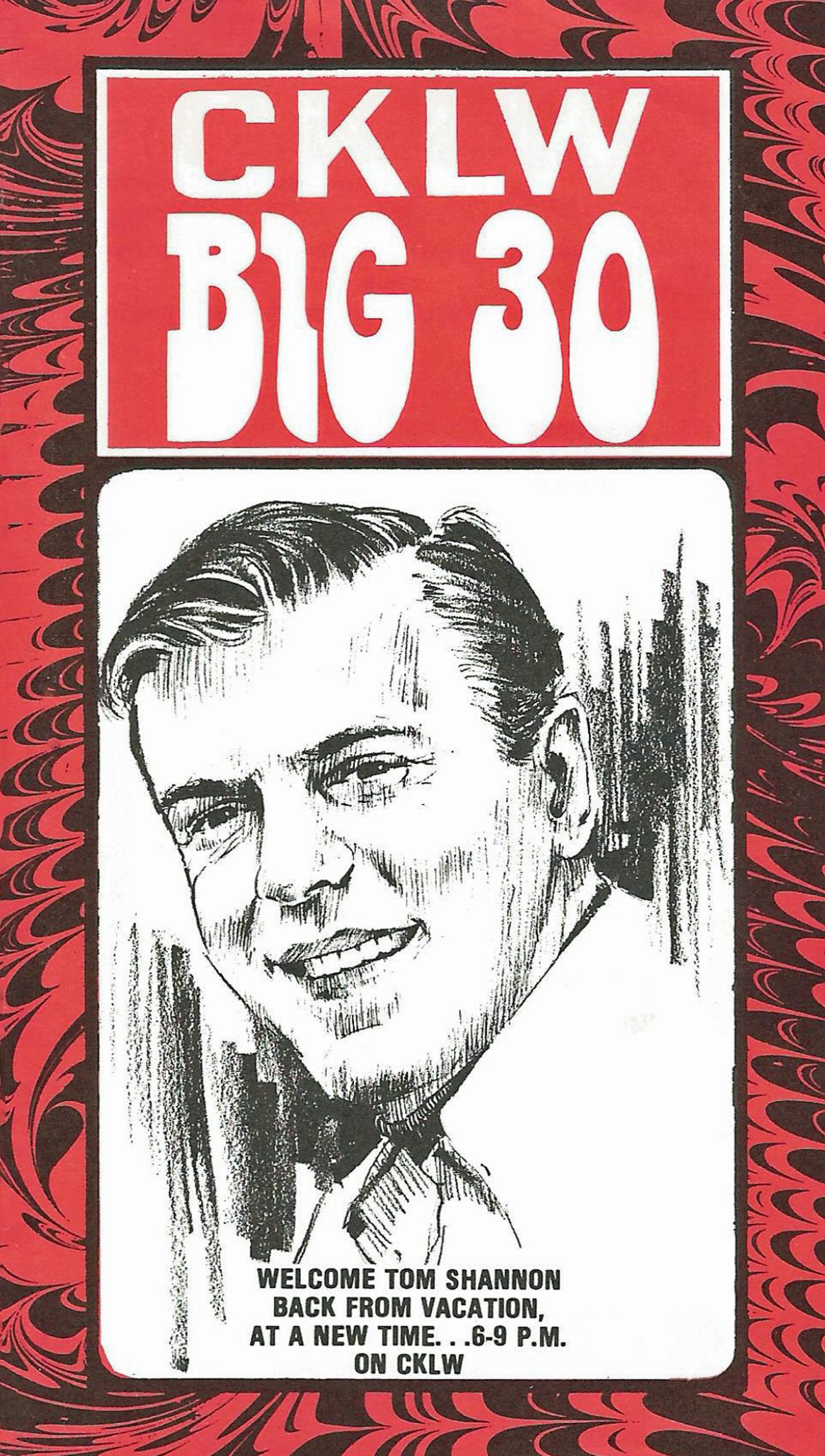
CKLW Big 30 Survey, August 15, 1967.
Tom Shannon’s Detroit broadcasting life extended far beyond CKLW. He became one of the city’s most enduring and recognizable voices, working at:
- WXYZ-AM (1969)
- WTWR (1980)
- WCXI (1981)
- WCAR (1981)
- WMJC-FM (1986)
- CKMR-FM (1991)
And of course, his legendary three “tours of duty” at CKLW (as Shannon referenced of his years there) — in the ’60s, ’70s, and ’80s — a rare distinction that speaks to both his talent and his lasting connection to the station.
Shannon’s Detroit years showcased his adaptability. Whether on AM Top 40, FM adult contemporary, or television hosting, he brought the same bright, upbeat presence that listeners had loved since Buffalo.
Denver, Nashville, and the Later Years
In 1972, Shannon moved west to Denver, hosting “Afternoon at the Movies with Tom Shannon” on KWGN-TV Channel 2. He also worked at KHOW and later at KLZ, bringing his trademark warmth to new audiences.
He spent time in Nashville hosting cable television before returning to the two cities that defined him: Buffalo and Detroit.
His final radio home was WHTT-FM Buffalo, where he retired in 2005 at age 67 — fifty years after his first teenage newscast.
Honors, Legacy, and Influence
Tom Shannon’s contributions were recognized with inductions into:
- The Buffalo Broadcasters Hall of Fame
- The Buffalo Music Hall of Fame
He was also voted Top Radio Personality in the United States and Canada in 1969 — a remarkable achievement during the most competitive era in Top 40 history.
But his true legacy lives in the memories of listeners who grew up with him — in Buffalo, in Detroit, across the Midwest, and across the nighttime skywave reach of CKLW.
He was a teacher, a songwriter, a broadcaster, a television host, and a friend to millions.
Return to Buffalo: The City That First Heard His Spark
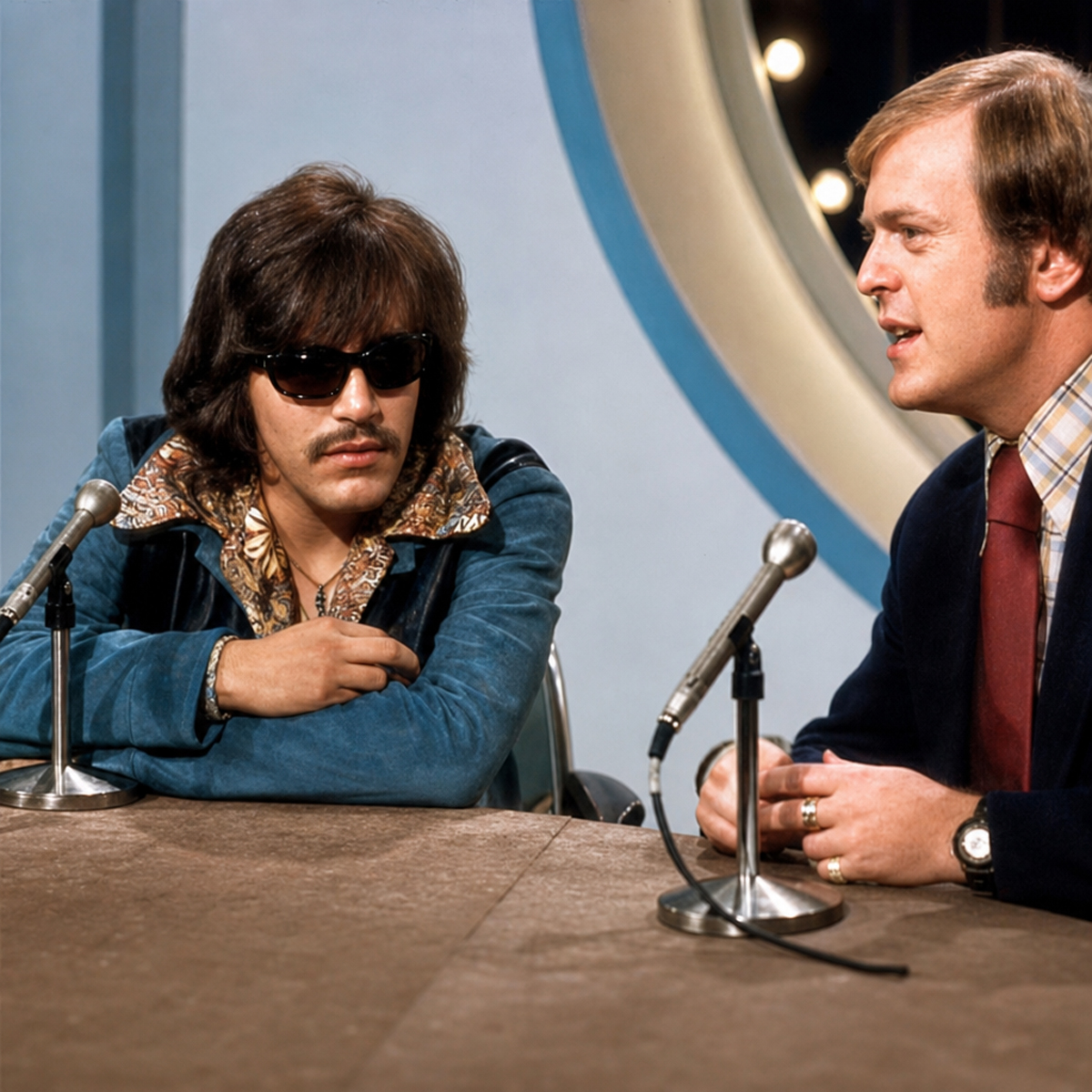
WXYZ-TV host Tom Shannon interviews Jose Feliciano, 1972, Detroit. (Photo courtesy of Tom Shannon; sent to the author in 2017).
When Tom Shannon returned to Buffalo later in his career, it was more than a homecoming. It was a circle closing — a voice returning to the city that had first recognized its promise. Buffalo had been the place where a teenage newsman stepped into a studio in 1955 and discovered that the microphone felt like home. It was where he followed Dick Biondi into the evening shift at WKBW, where he first learned the rhythm of Top 40 radio, and where he wrote the melody that would become “Wild Weekend,” a song that would outlive its era and echo across generations.
By the time Shannon came back, he was no longer the young man with a notebook full of ideas and a theme song waiting to be born. He was a seasoned broadcaster — Detroit‑tested, CKLW‑sharpened, a veteran of television, radio, and the shifting tides of American pop culture. Yet Buffalo welcomed him not as a returning journeyman, but as one of its own. The city remembered the spark he carried in the late 1950s, the warmth in his voice, the easy humor, the sense that he was speaking to you and not merely at you.
His return to Buffalo radio felt like a familiar song coming back on the air — one you didn’t realize you missed until you heard it again. At WHTT‑FM, where he would eventually retire in 2005, Shannon brought with him the full measure of his experience: the polish of Detroit, the storytelling of CKLW, the television ease of Denver, the musical instincts of his early songwriting days. But beneath all of it was the same gentle presence Buffalo had known from the beginning.
Listeners who had grown up with him in the late ’50s now heard him again as adults, and the connection was instant. His voice carried the same warmth, the same steady cadence, the same sense of companionship that had once filled bedrooms, car radios, and transistor speakers along Lake Erie. Buffalo had changed, radio had changed, the world had changed — but Tom Shannon’s gift had not.
He returned not as a legend seeking recognition, but as a broadcaster returning to the place that had shaped him. And Buffalo, in turn, embraced him as one of its enduring sons — a voice that had left, grown, traveled, and ultimately come home.
In the late 1950s, Buffalo had witnessed the beginning of a career. In his later years, it witnessed the fullness of a life.
And in both eras, Tom Shannon gave the city the same thing he always gave his listeners: a warm voice, a kind heart, and the feeling that someone on the other side of the speaker truly cared.
Final Days and Farewell
Tom Shannon passed away on May 26, 2021, in Salinas, California, surrounded by family, after a battle with pancreatic cancer. He was 82.
His passing marked the end of a remarkable life — but not the end of his influence. His voice, his music, his shows, and his spirit remain woven into the fabric of two great radio cities.
Tom Shannon. A Voice that Carried More Than Music

Detroit Free Press, Sunday, January 20, 1980.
In the long history of American broadcasting, there are voices that entertained us, voices that informed us, and voices that kept us company through the ordinary hours of our lives. But every so often, there is a voice that does something more — a voice that touches people.
Tom Shannon had that gift.
He brought joy to the airwaves, yes. He brought talent, timing, and a deep instinct for the rhythm of Top 40 radio. But what set him apart — what made him unforgettable — was the way he carried humanity into every studio he ever walked into.
People who worked beside him say Tom was one of the warmest souls they ever met. He was the kind of man who paused, who listened, who made room for you — even if he didn’t know your name. His first CKLW board operator, Len Robinson, remembered that “Tom always took a moment to ask how you were doing, to hear your story, to make you feel like you mattered. That was his quiet magic. Not just with me. With everyone.”
He didn’t just speak to an audience. He spoke with them.
He didn’t just play records. He played memories, moments, and the soundtrack of people’s lives.
He didn’t just host shows. He hosted communities.
_____________________
CKLW (Windsor/Detroit) | Tom Shannon | August 31, 1977
Audio Digitally Remastered by USA Radio Museum
_____________________
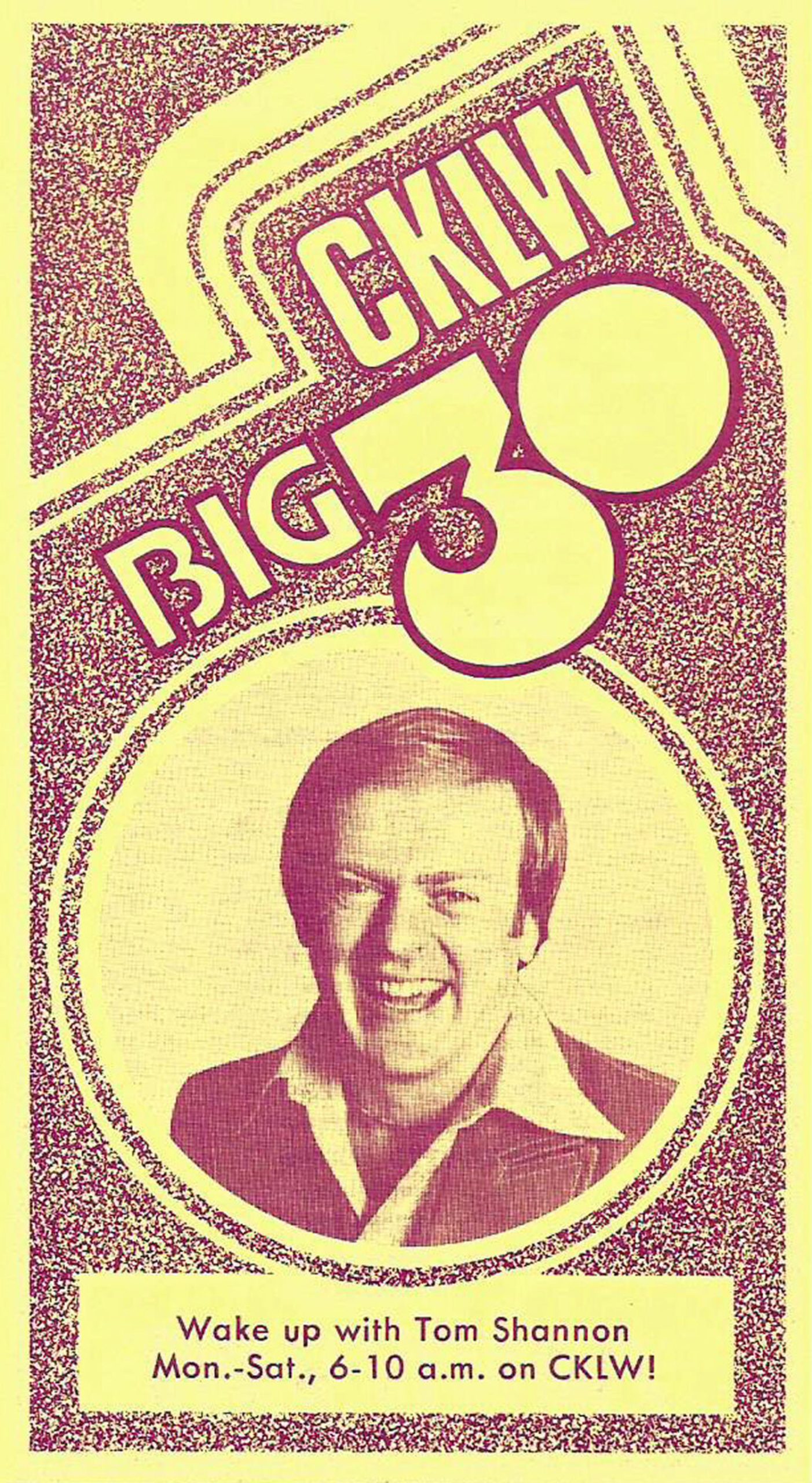
CKLW Big 30 Survey, August 30, 1977.
Across Buffalo and Detroit, across decades and dial positions, Tom Shannon carried a warmth that could not be taught and a kindness that could not be faked. His voice was bright, but his heart was brighter. And that is why listeners followed him from station to station, from city to city, from one era of broadcasting into the next.
When he stepped away from the microphone in 2005, he left behind more than a career. He left behind a legacy of generosity, joy, and genuine connection — the kind of legacy that cannot be measured in ratings or surveys, but in the quiet gratitude of the people he touched.
And when he left this world in 2021, surrounded by family, the airwaves dimmed just a little. But the echo of his kindness — the echo of that unmistakable voice — still lingers.
It lingers in the memories of those who worked with him. It lingers in the hearts of those who grew up with him. It lingers in the history of two great radio cities that will never forget him.
For the USA Radio Museum, honoring Tom Shannon is not just a tribute. It is a thank‑you. A final bow to a man who gave his life to the air with grace, with joy, and with heart.
Some broadcasters leave behind passing memories. Tom Shannon left behind love.
_____________________
Sources & Credits
This tribute draws upon a range of historical materials, archival accounts, and firsthand recollections documenting the life and career of broadcaster Tom Shannon.
Biographical details regarding his early years in Buffalo, his tenure at WKBW, and his songwriting contributions — including the origins of “Wild Weekend” — are sourced from Buffalo broadcasting histories and regional music archives, including the Buffalo Broadcasters Association Hall of Fame: https://www.buffalobroadcasters.com/hall-of-fame/ (buffalobroadcasters.com in Bing)
Information about Shannon’s arrival at CKLW in December 1964, his evening shift, and his influence on the station’s evolving Top 40 sound is supported by contemporary trade publications such as Music Business magazine (1965), as well as listener correspondence published at the time. Additional CKLW historical context is drawn from the (former) Motor City Radio Flashbacks archive, and: https://dev.usaradiomuseum.com/
Details surrounding his television work on “The Lively Spot” and “The Tom Shannon Show” originate from CKLW-TV programming notes, Detroit/Windsor newspaper listings, and period promotional materials preserved in the Detroit media archives and the Windsor Public Library digital collections: https://www.windsorpubliclibrary.com
Accounts of Shannon’s Detroit radio career — including his roles at WXYZ-AM, WTWR, WCXI, WCAR, WMJC-FM, and CKMR-FM — are drawn from Detroit broadcasting histories from the Motor City Radio Flashbacks (now defunct) website, and derived from station retrospectives, including the Detroit Radio Timeline Project: https://www.detroitradiohistory.com
His Denver and Nashville periods are documented through regional media retrospectives and station records from KWGN-TV, KHOW, and KLZ, as well as the Broadcast Pioneers of Colorado: https://www.broadcastpioneersofcolorado.com
Personal reflections on Shannon’s character, including the recollection from his 1965 CKLW board operator Len Robinson, are based on firsthand testimony shared by colleagues who worked alongside him during his early years at the Big 8.
Information regarding Shannon’s retirement, later life, and passing in 2021 is sourced from family statements, broadcaster memorials, and regional obituaries, including coverage from The Buffalo News: https://buffalonews.com
The USA Radio Museum acknowledges the contributions of the Buffalo Broadcasters Association, the Buffalo Music Hall of Fame, Motor City Radio Flashbacks, and the many radio professionals whose memories help preserve the legacy of Tom Shannon.
_____________________
Contact: jimf.usaradiomuseum@gmail.com
_____________________
A USARM Viewing Tip: On your PC? Mouse/double-click over the images for expanded views. On your mobile or tablet device? Finger-tap all the above images inside the post and stretch image across your device’s screen for LARGEST digitized view. Then click your browser’s back arrow to return to the featured post.
© 2026 USA Radio Museum. All Rights Reserved.

Excellent article and a super air check tape. Perfectly represented Tom Shannon, CKLW The Big 8, and the era of the seventies.
I remember listening to him his second time around. Gary Burbank – another radio legend – recently left CK so they were seeking a morning nan replacement. They found it with Tom. He/CKLW even had a hit song “Shannon” by Henry Gross rerecorded to celebrate his return to the Motor City airwaves that mentioned CK in the lyrics.
AM Top 40 was in decline beginning in the late seventies. By late 1978, CK hired Dick Purtan – still another Motor City radio legend – for morning drive to boost falling ratings. Shannon moved into middays after that for a few more years at CKLW.
Tom left a unique footprint on the Detroit radio/TV scene especially at CKLW.