
When Buffalo Ruled the Nighttime Skywave INTRODUCTION There are radio stations that played the hits — and then there are radio stations that bec
When Buffalo Ruled the Nighttime Skywave
INTRODUCTION
There are radio stations that played the hits — and then there are radio stations that became the hits. In the late 1950s and throughout the 1960s, WKBW 1520 Buffalo (originally 1590 on the dial) didn’t just broadcast music; it detonated across the Northeast and Canada like a cultural supernova. Its signal, its personalities, its production, and its swagger made it one of the most influential Top 40 stations in American broadcasting history.
This is the story of how a Buffalo station became a continental powerhouse — a station whose nighttime signal reached from the Great Lakes to the Gulf of Mexico, and whose sound shaped generations of listeners, broadcasters, and dreamers. — USA Radio Museum
_____________________
THE BIRTH OF A GIANT: WKBW BEFORE THE BOOM
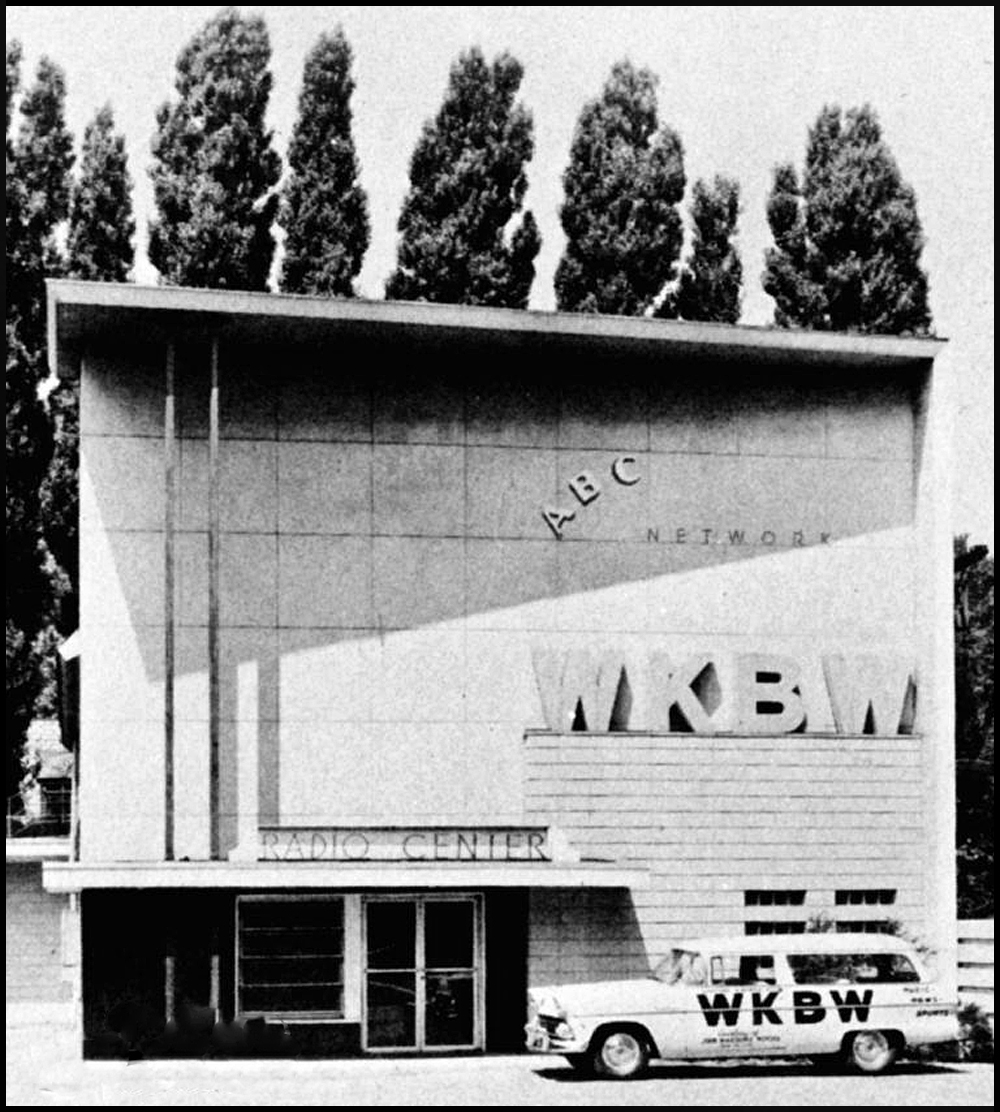
WKBW Radio Center, Buffalo, New York (1960)
WKBW’s roots stretch back to 1926, founded by Buffalo evangelist Clinton Churchill as a companion to his “Well‑Known Bible Witness” ministry. For decades, the station carried religious programming, local features, and community service broadcasts. But by the mid‑1950s, the winds of change were sweeping across American radio.
Television had stolen the dramas, the comedies, the variety shows — but it couldn’t steal the music. A new generation of teenagers was tuning in, hungry for rhythm, rebellion, and identity. Radio needed a new voice, a new format, a new energy.
Buffalo was ready.
THE TOP 40 REVOLUTION ARRIVES
In 1958, WKBW made the bold leap into the Top 40 format, joining a wave of stations across the country that were reinventing radio for the rock ’n’ roll era. But WKBW didn’t simply adopt the format — it supercharged it.
The station’s early Top 40 years were defined by:
- High‑energy personalities
- Aggressive promotions
- Tight playlists
- Slick production and imaging
- A booming signal that blanketed half the continent
WKBW quickly became a nighttime powerhouse. Teenagers in Ohio, Pennsylvania, Michigan, Ontario, and even as far south as Tennessee and the Carolinas would lie in bed with transistor radios pressed to their ears, listening to the voices of Buffalo as if they were broadcasting from another world.
_____________________
WKBW 1520 (Buffalo) | ‘Radio Comes Alive’ | PAMS Series 15 | 1960
Audio Digitally Remastered by USA Radio Museum
_____________________
THE JOCKS WHO BECAME LEGENDS
WKBW’s Top 40 era produced one of the most iconic air staffs in American radio history. These weren’t just disc jockeys — they were characters, celebrities, and cultural forces.
Tom Shannon
Smooth, warm, and instantly recognizable, Shannon became one of the station’s signature voices. His “Hello, Buffalo!” greeting and his effortless command of the format made him a listener favorite.
Joey Reynolds
The prankster, the innovator, the rule‑breaker. Reynolds brought a wild, unpredictable energy to the station, creating moments listeners still talk about decades later.
Dan Neaverth
The consummate professional — witty, polished, and beloved. Neaverth’s connection with Buffalo was deep and enduring.
Jeff Kaye
A master of production and storytelling, Kaye elevated WKBW’s sound to cinematic levels. His later work on the station’s legendary Halloween broadcasts would become part of radio folklore.
Other giants of the era
Casey Piotrowski, Jack Armstrong, Don Berns, Hank Nevins, Bob McRae — each brought a unique style, but all shared the same mission: make WKBW impossible to ignore.
A SIGNAL THAT RULED THE NIGHT
WKBW’s 50,000‑watt clear‑channel signal was a marvel of engineering and geography. At night, when AM signals travel farther, WKBW became a skywave monster.
Listeners from:
- New York
- Pennsylvania
- Ohio
- Michigan
- Ontario
- Quebec
- West Virginia
- Kentucky
- Virginia
- The Carolinas
- Even parts of the Deep South
. . . . could tune in and hear Buffalo as if it were broadcasting from their own backyard.
For many, WKBW was their first exposure to rock ’n’ roll, Motown, British Invasion bands, and the emerging soul and pop sounds of the 1960s. The station didn’t just play music — it shaped musical taste across an entire region.
THE SOUND OF WKBW: PRODUCTION THAT SET THE STANDARD
What truly set WKBW apart was its sound design.
 The station’s imaging — the jingles, the sweepers, the promos — was bold, dramatic, and unmistakably modern. The PAMS and later JAM jingles gave WKBW a sonic identity that felt larger than life.
Jeff Kaye’s production work, in particular, became legendary. His ability to blend music, sound effects, and narrative created an audio environment that felt like a movie for the ears.
WKBW didn’t just play records. It created an experience.
THE HALLOWEEN BROADCASTS: A RADIO LEGEND IS BORN
No tribute to WKBW is complete without mentioning the station’s iconic Halloween night broadcasts — especially the 1968 “War of the Worlds” recreation produced by Jeff Kaye.
This wasn’t a simple remake. It was a modernized, terrifying, brilliantly executed piece of radio theater that caused genuine panic among listeners who believed Buffalo was under attack.
The broadcast became so famous that it was later studied in communications courses and preserved as one of the finest examples of radio drama ever produced.
_____________________
WKBW 1480 | Halloween Archives | ‘Paul McCartney Is Alive And Well (Maybe)’ | 1969
Audio Digitally Remastered by USA Radio Museum
_____________________
COMMUNITY, CULTURE, AND THE BUFFALO IDENTITY
WKBW wasn’t just a radio station — it was a Buffalo institution.
It sponsored dances, concerts, charity drives, school events, and promotions that brought the community together. The station’s personalities were local celebrities, appearing at shopping centers, parades, and high‑school gyms.
Buffalo loved WKBW, and WKBW loved Buffalo back.
THE END OF AN ERA — BUT NOT THE END OF THE LEGACY
By the late 1970s and early 1980s, FM radio began to dominate music listening. WKBW eventually shifted formats, and the Top 40 era faded into memory.
But the legacy never disappeared.
Collectors still trade airchecks. Fans still share stories. Broadcasters still cite WKBW as the station that inspired them to enter radio.
And thanks to archives like the USA Radio Museum, the voices, jingles, and images of WKBW’s golden years continue to live on.
CONCLUSION: THE STATION THAT MADE THE NIGHT COME ALIVE
WKBW 1590 — later 1520 — was more than a Top 40 station. It was a cultural force, a nighttime companion, a teacher, a friend, and a dream factory.
For countless listeners across the Northeast and beyond, WKBW was the soundtrack of youth, the pulse of the city, and the spark that ignited a lifelong love of radio.
Its legacy endures not just in recordings and photographs, but in the hearts of those who remember lying in bed, transistor radio in hand, waiting for the next jock to crack the mic and say:
“This is WKBW — Buffalo!”
_____________________
Sources & Credits
Historical Reference & Research
- Broadcasting Yearbooks (1958–1975) — station listings, personnel rosters, and format documentation.
- FCC AM Broadcast Records — technical data regarding WKBW’s 50,000‑watt clear‑channel authorization.
- Buffalo Evening News Archives — contemporary reporting on WKBW promotions, personalities, and community involvement.
- Billboard Magazine (1959–1972) — national coverage of WKBW’s Top 40 impact, ratings, and industry recognition.
- Oral Histories & Interviews — recollections from former WKBW staff including Dan Neaverth, Joey Reynolds, Jeff Kaye, and others, sourced from published interviews and archival recordings.
Audio & Production Materials
- WKBW Halloween Broadcasts (1958–1973) — preserved recordings and production notes attributed to Jeff Kaye and the WKBW production department.
- PAMS and JAM Creative Productions — jingle packages used by WKBW during its Top 40 era.
Writing & Restoration Credits
- Article written and curated for the USA Radio Museum, with historical synthesis and narrative support by available online resources.
Special Acknowledgment
- With gratitude to the listeners, collectors, broadcasters, and preservationists who continue to keep the WKBW legacy alive.
_____________________
Contact: jimf.usaradiomuseum@gmail.com
_____________________
A USARM Viewing Tip: On your PC? Mouse/double-click over the images for expanded views. On your mobile or tablet device? Finger-tap all the above images inside the post and stretch image across your device’s screen for LARGEST digitized view. Then click your browser’s back arrow to return to the featured post.
© 2026 USA Radio Museum. All Rights Reserved.

I Hope you’ll do WBLK someday.