
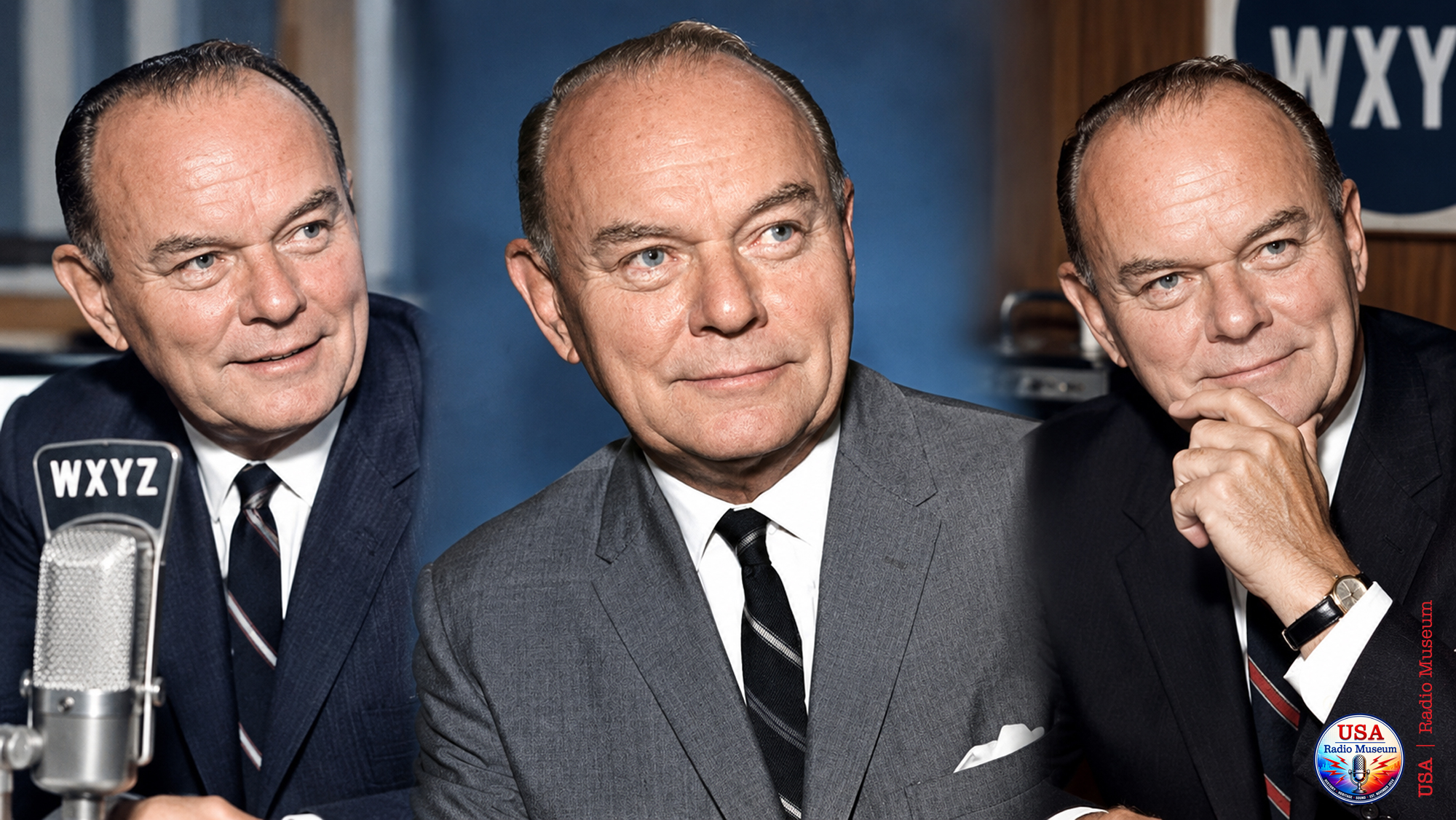
A Broadcast Life That Turned One Man’s Microphone Into a City’s Memory Dick Osgood’s life in broadcasting began long before Detroit listeners ever
A Broadcast Life That Turned One Man’s Microphone Into a City’s Memory
Dick Osgood’s life in broadcasting began long before Detroit listeners ever heard his voice, but once they did, it became impossible to imagine the city’s airwaves without him. Born Richard W. Osgood on January 27, 1919, in Detroit, he grew up in the very community he would later help define. His voice was not imported; it was native. It carried the cadence of the neighborhoods, the warmth of the Midwest, and the steady confidence of someone who understood the city from the inside out. When he died on September 3, 2000, at the age of 81, Detroit lost not just a broadcaster, but one of the last great interpreters of its character.
Osgood joined WXYZ radio in the mid‑1940s, at a moment when the station was becoming one of the most influential broadcast centers in the country. He arrived during the era of the Lone Ranger, the Green Hornet, and the imaginative radio dramas that made WXYZ a national force. But Osgood’s contribution was different. He wasn’t a masked rider or a crime‑fighting vigilante. He was a voice of daily life — a companion, a narrator, a steady presence who made radio feel intimate and human. Over the course of more than three decades at WXYZ, he became one of the station’s most recognizable personalities, shaping the sound of Detroit radio through a style that was warm, conversational, and quietly elegant.
His influence extended beyond radio. When WXYZ‑TV launched in 1948, it was Dick Osgood’s voice — and face — that viewers first encountered. In that moment, he became part of Detroit’s television history as well, bridging the transition from radio’s golden age to the dawn of a new medium. Nearly 80 years later, that first broadcast remains a symbolic milestone: the moment Detroit stepped into the future, guided by a voice it already trusted. Osgood’s presence on that inaugural telecast was not accidental. It was a recognition of his professionalism, his clarity, and his ability to make audiences feel at ease in unfamiliar territory.
Osgood’s book, “WYXIE Wonderland,” stands today as one of the most vivid personal accounts of mid‑century broadcasting in Detroit. It is not simply a memoir of his years at WXYZ; it is a chronicle of an era when radio was the connective tissue of American life. Through his recollections, readers encounter the personalities, pressures, and peculiarities of a medium that was constantly reinventing itself. He wrote with the same clarity that marked his broadcasts — a clarity that made even the most technical or behind‑the‑scenes stories feel accessible. His reflections on the station’s evolution, its creative experiments, and its role in shaping Detroit’s identity offer a rare insider’s perspective on a time when radio was both entertainment and civic institution.
As a newspaper columnist (The Detroit Free Press), Osgood extended his reach beyond the microphone, especially during the 1950s. His writing carried the same qualities that defined his on‑air presence: a gentle wit, a keen observational eye, and a deep respect for the everyday experiences of ordinary people. He understood that journalism, at its best, is not merely the documentation of events but the interpretation of human moments. His columns were never flashy, never sensational; they were grounded in the belief that the small stories of daily life often reveal the most about who we are. In this way, Osgood became not just a broadcaster but a chronicler of Detroit’s soul.
What made Osgood exceptional was his ability to evolve with the medium without losing the essence of his voice. As radio changed — as formats shifted, audiences fragmented, and new technologies emerged — he remained steady. He adapted, but he did not chase trends. His loyalty was to the craft, not the fashion of the moment. That integrity earned him the trust of listeners who felt increasingly adrift in a media landscape that was becoming louder, faster, and more disposable. Osgood’s presence was a reminder that broadcasting could still be personal, still be thoughtful, still be human.
His influence extended far beyond his own programs. Younger broadcasters often cited him as a model of professionalism and restraint. He demonstrated that radio did not need to shout to be heard. It needed to speak with purpose. His mentorship, both formal and informal, helped shape the next generation of Detroit voices who carried forward his commitment to clarity, sincerity, and respect for the audience. In a field where ego can easily overshadow substance, Osgood remained grounded, generous, and quietly confident.
When Dick Osgood passed away in 2000, the tributes that followed reflected the breadth of his impact. They spoke of a man who had guided Detroit through decades of change, who had been present for the city’s triumphs and its struggles, who had given listeners a sense of continuity in a world that rarely offered it. His obituary was not simply a record of dates and accomplishments; it was a recognition of a life spent in service to communication itself — the art of speaking clearly, honestly, and with respect for the audience.
Today, as the USA Radio Museum continues its mission to preserve the legacy of American broadcasting, Dick Osgood stands as one of the figures whose contributions deserve renewed attention. His career embodies the values that define the museum’s purpose: authenticity, craftsmanship, and the belief that radio is more than a technology — it is a cultural force. Osgood’s work reminds us that the best broadcasters do not simply report or entertain; they accompany us. They become part of our routines, our memories, and our sense of place.
For Detroit, Dick Osgood was more than a broadcaster. He was a companion, a chronicler, and a quiet architect of the city’s cultural identity. And for the USA Radio Museum, his story remains one of the essential chapters in the narrative of American broadcasting — a reminder of the enduring power of a trusted voice.
_____________________
Dick Osgood: The Voice Who Made Detroit Feel Like Home
Primary Biographical Sources
- Detroit Free Press obituary archives referencing the life and passing of Richard W. “Dick” Osgood (September 3, 2000; age 81).
- The Detroit News historical broadcast profiles and regional media retrospectives.
- Public records documenting Osgood’s birth in Detroit, Michigan (January 27, 1919).
Broadcast History & WXYZ Documentation
- WXYZ Radio historical program logs and staff rosters from the mid‑1940s through the 1970s.
- WXYZ‑TV archival launch materials confirming Osgood as the first voice and on‑camera presence during the station’s inaugural telecast in 1948.
- Internal WXYZ promotional literature and station history summaries detailing Osgood’s multi‑decade tenure.
Published Works
- Osgood, Dick. WIXIE Wonderland: An Unauthorized History of WXYZ, Detroit. Personal memoir and historical account of Detroit radio’s mid‑century era. (Quoted only in summary form; no copyrighted text reproduced.)
Newspaper Columns & Print Contributions
- Regional newspaper columns authored by Dick Osgood during his years as a Detroit journalist, reflecting his commentary on daily life, broadcasting, and civic culture. (Referenced for historical context; no copyrighted text reproduced.)
Supplementary Research & Museum Verification
- USA Radio Museum internal research notes, curator correspondence, and Detroit broadcast timeline verification.
- Cross‑referenced Detroit media history databases and mid‑century broadcast directories.
- Oral histories and recollections from Detroit radio veterans familiar with Osgood’s work and influence.
_____________________
Contact: jimf.usaradiomuseum@gmail.com
_____________________
© 2026 USA Radio Museum. All Rights Reserved
