
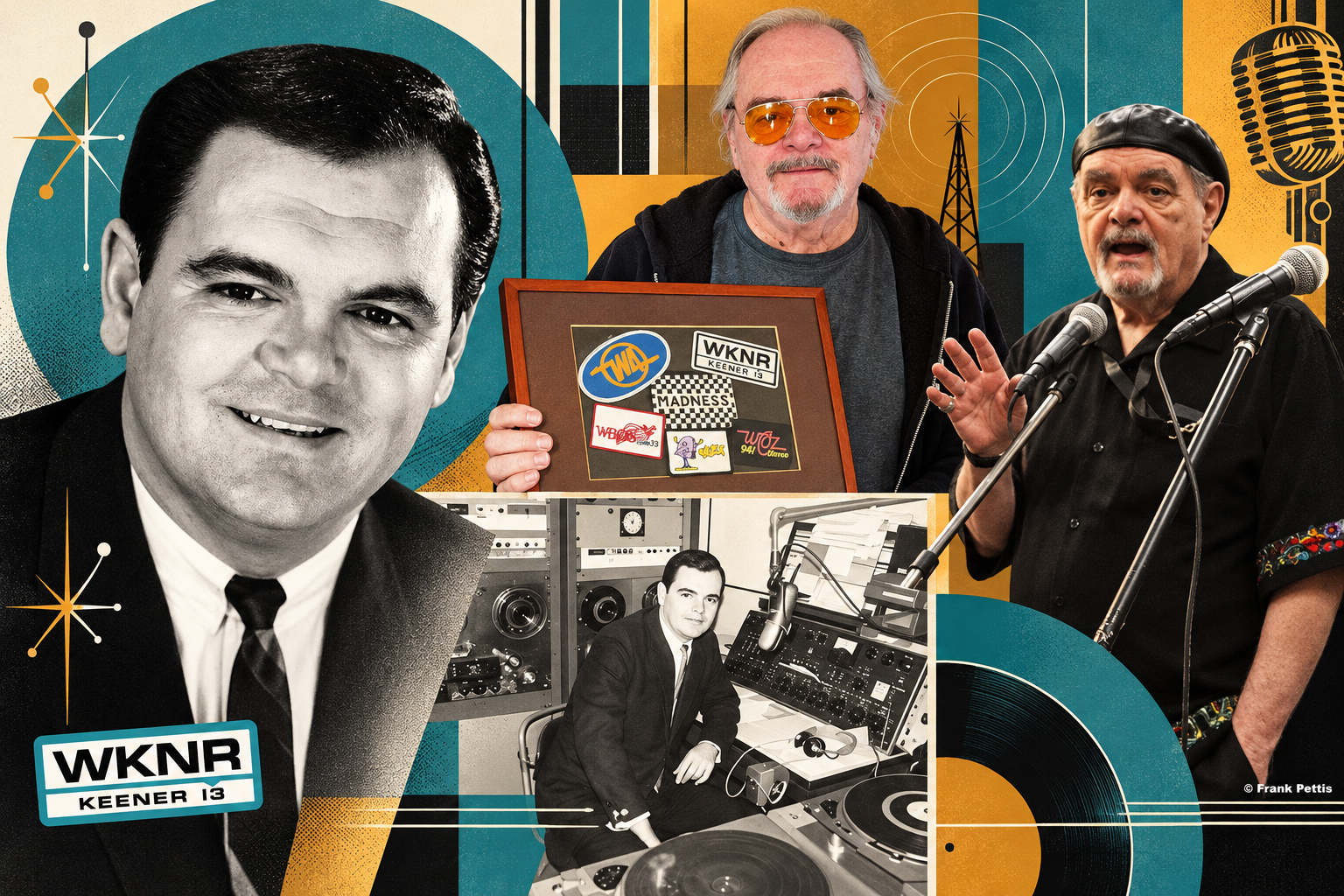
Before he became Detroit’s Jerry Goodwin or Boston’s “Duke of Madness,” he was a young Air Force musician staring into a radio control room and recogn
Before he became Detroit’s Jerry Goodwin or Boston’s “Duke of Madness,” he was a young Air Force musician staring into a radio control room and recognizing something he had wanted since childhood.
“I looked in that control room, Jim, and I was smitten once again,” Goodwin recalls in our USA Radio Museum video interview.
That moment helped launch a career spanning Top 40, progressive FM, acting, voice-over work and two decades of teaching. In our conversation, Goodwin revisits the stations and friendships that shaped his life, including Detroit’s WKNR and WABX and Boston’s WBCN. For those who remember those voices coming through the speaker, his stories bring us back inside the studios.
A musician finds the microphone
Goodwin’s interest in broadcasting began long before his first professional radio job. As a boy, he practiced reading news copy brought home by a brother-in-law who was an announcer. He even acquired a set of NBC-style chimes.
Music became another early passion. After high school, he joined the Air Force and served as a percussionist. While stationed at Keesler Air Force Base in Biloxi, Mississippi, he took a small musical group to a radio station for a program featuring the base’s band.
The visit led to a practical arrangement with an announcer who also served in the Air Force: Goodwin would read the news, and the announcer would teach him to operate the board. When his mentor was transferred to Greenland about six months later, Goodwin inherited an all-night jazz show.
By the time his service took him to Amarillo, Texas, he was doing Sunday jazz programs. Radio had become a serious possibility.
Sam Hill and Danny Preston
Goodwin’s early radio career came with several identities. A brief stop at KSYD in Wichita Falls brought the name “Bermuda Schwartz”—an experience he jokingly says lasted “maybe 20 minutes.” At KFDA in Amarillo, he became Sam Hill, complete with a cowbell as part of his on-air routine.
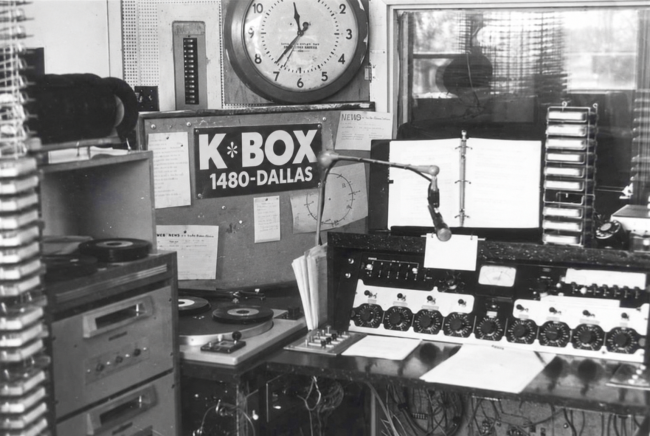
At KBOX in Dallas, the station already had a Jerry and a Bill, ruling out both his first name and a variation of his middle name. Management settled on Danny Preston: Danny sounded all-American, and Preston came from a Dallas shopping center.
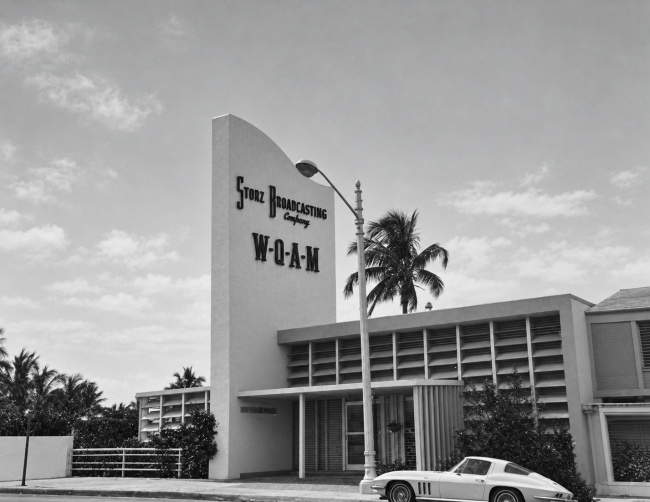
Only after moving to WQAM in Miami did he get to use Jerry Goodwin. There he formed a friendship with Bob Green that would become one of the most important relationships of his life.
Goodwin also remembers a surprising chapter at WQAM: an automated format before the station returned to live broadcasting. He recalls the staff taking particular pride in beating rival WFUN in one ratings period while operating with automation.
The Keener years
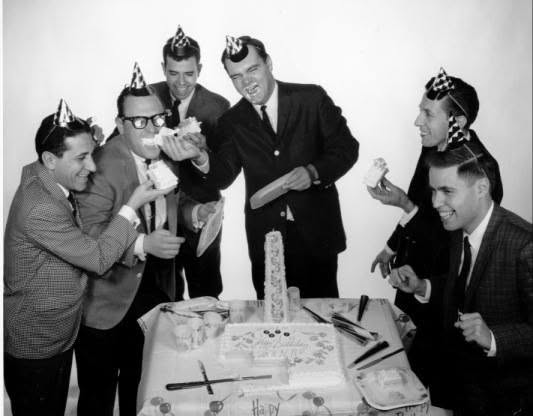
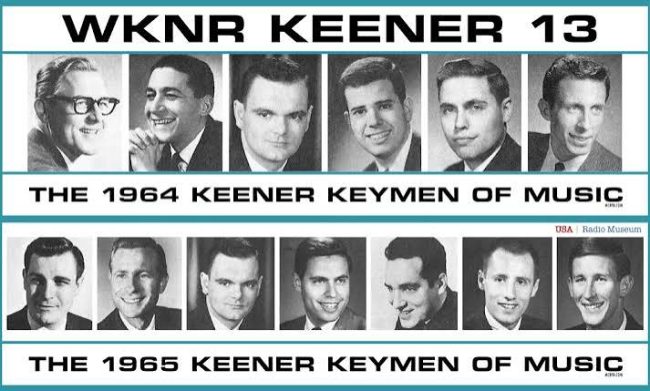
Green helped bring Goodwin to Detroit, where WKMH had become WKNR, “Keener 13.” Goodwin remembers arriving in January 1964, shortly after the station’s transformation.
Initially expected to handle mornings, he instead landed the noon-to-three shift after Frank “Swingin’” Sweeney arrived first and took the morning assignment. Goodwin calls middays “the sweetest spot in radio.”
He remembers a station filled with capable personalities and a program director, Frank Maruca, who gave them “a wonderful freedom within a format.” Detroit’s music scene added to the excitement. Working in the city of Motown put Goodwin close to the music that was changing American radio.
His affection for Green remained especially strong. They became close friends, Goodwin stood in Green’s wedding, and Green later visited him in Boston. Remembering his friend during the interview, Goodwin speaks with both admiration and sadness.
Keener’s success also offers a lesson in radio competition. In Goodwin’s view, a heavy commercial load eventually made it difficult to compete with CKLW’s steady flow of music and powerful signal. He remembers how frustrating it became to interrupt the records with repeated commercial breaks while a competitor kept the music moving.
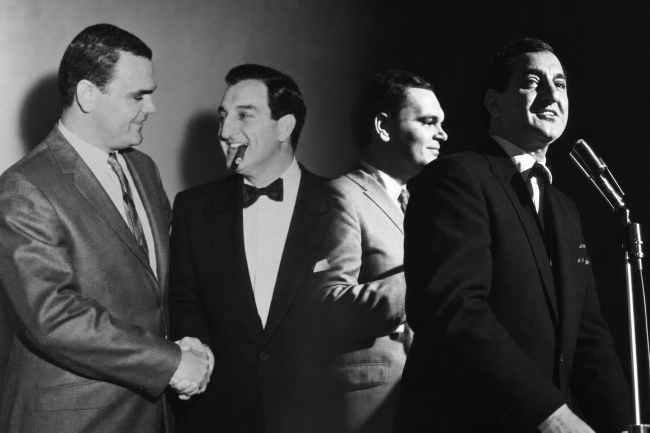
Jerry Goodwin, Danny Thomas
A lasting commitment to St Jude
One of Goodwin’s most cherished Detroit memories has little to do with ratings. Maruca introduced him to Danny Thomas, who made him an honorary teen chairman for St. Jude Children’s Research Hospital.
“What a sweetheart of a man,” Goodwin says of Thomas. “So gentle, so nice.”
Goodwin recalls extraordinary community support for St. Jude fundraising marches. During a Detroit newspaper strike, he remembers WKNR carrying the recruitment effort and helping generate nearly three-quarters of a million dollars in a Sunday afternoon campaign.
The experience stayed with him. In the interview, he explains that he still uses Facebook to talk about St. Jude and encourage support.
Finding freedom on FM
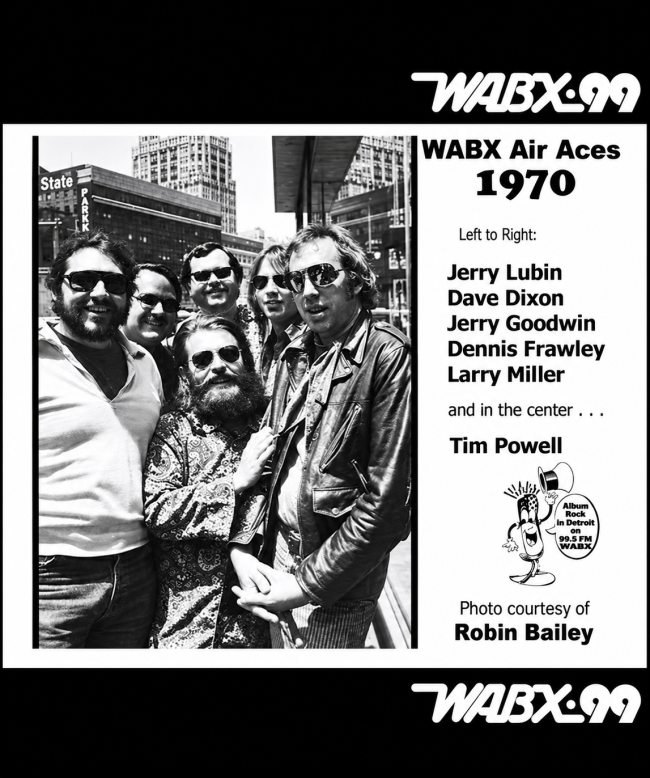
As album music opened new possibilities for radio, Goodwin found himself drawn to records that did not fit comfortably into the Top 40 playlist. Working in record promotion, he was hearing albums by artists such as Jefferson Airplane and Creedence Clearwater Revival and wanted a place to play them.
That opportunity came at WKNR-FM and later at WABX, where choosing the music became a central pleasure of the job.
“It was my show!” he says, remembering the change. At WABX, being given access to the record library and the freedom to build a program felt like the best possible assignment.
The station’s creativity extended beyond music. Goodwin recalls producing radio versions of the Detroit Free Press Sunday comics, with staff members taking responsibility for different strips. The production room was so small that, when I mentioned its size, he readily agreed that calling it a studio was generous: it was a closet.
Goodwin also remembers an arrow on the wall pointing toward the window, labeled “weather.” In a station high above Detroit, the forecast could begin with a look outside.
Boston and the Duke of Madness
Education eventually drew Goodwin away from WABX. With his GI Bill benefits running out, he enrolled at Siena Heights College, then earned a master’s degree at the University of Detroit.
He returned to his hometown of Boston with his family to pursue doctoral work in social ethics. But a fire destroyed his handwritten thesis materials. Around that time, an opportunity at WCOZ brought him back to radio. WBCN followed.
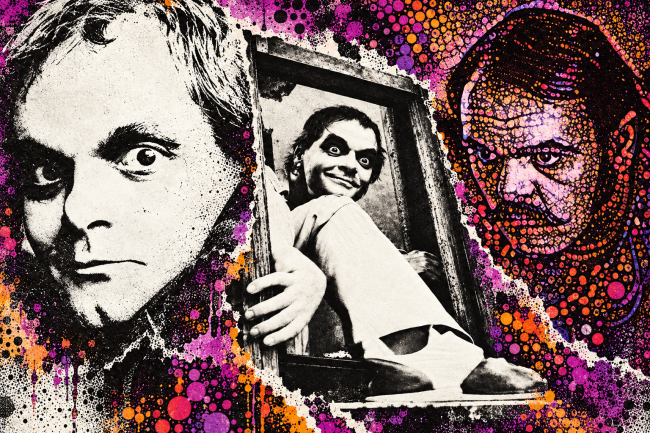
His “Duke of Madness” name had its roots in a Firesign Theatre comedy bit he had enjoyed in Detroit. In Boston, the character became part of an overnight show that mixed rock music with produced pieces and imaginary personalities.
Working with producer Bill Cates, Goodwin developed what he describes as “a theater of the mind show.” The Duke gave him room to act, write and experiment. Years later, he reunited with Cates at XM and performed what he remembers as his final Duke of Madness show.
From the studio to the stage and classroom
Playing characters on radio helped Goodwin make the move into acting. A friend’s advice was straightforward: go to an audition. If they liked him, they would cast him.
He went on to theater, films and commercial voice work. He recalls working with Boston’s Commonwealth Shakespeare Company and performing in plays including A View from the Bridge and Orphans. His film work included Distant Justice with David Carradine and George Kennedy.
During our interview, he breaks into a Shakespeare recital, giving viewers a glimpse of the performer behind the microphone. He also describes continuing to take occasional projects, including documentary voice work.
For 20 years, Goodwin taught radio and television performance at the New England Institute of Art. He remembers a period when the school could help graduates find radio jobs, and he takes pleasure in knowing that former students remain on the air in New England.
Some Jerry Goodwin air checks here.
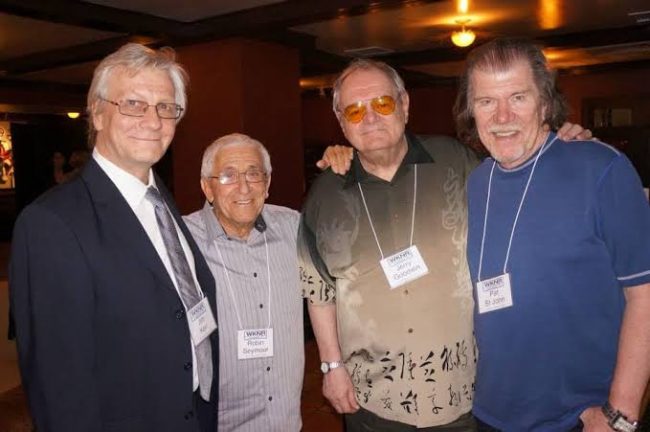
Jim Kerr, Robin Seymour, Jerry Goodwin, Pat St. John
Would he choose radio again?
Goodwin is candid about his disappointment with broadcasting that has lost the local personalities he once loved hearing. His concern is the weakening connection between a station, its announcers and the community they serve.
But when I ask whether a young Jerry Goodwin would still choose radio, his answer comes without hesitation.
“Oh, no, I would do radio. I would do radio.”
It brought together his love of music, his instinct for performance and the childhood fascination that never quite left him. From Sam Hill’s cowbell to Keener’s middays and the Duke’s overnight adventures, Goodwin found room on the air to keep developing his voice—and gave listeners plenty to remember.
###
