
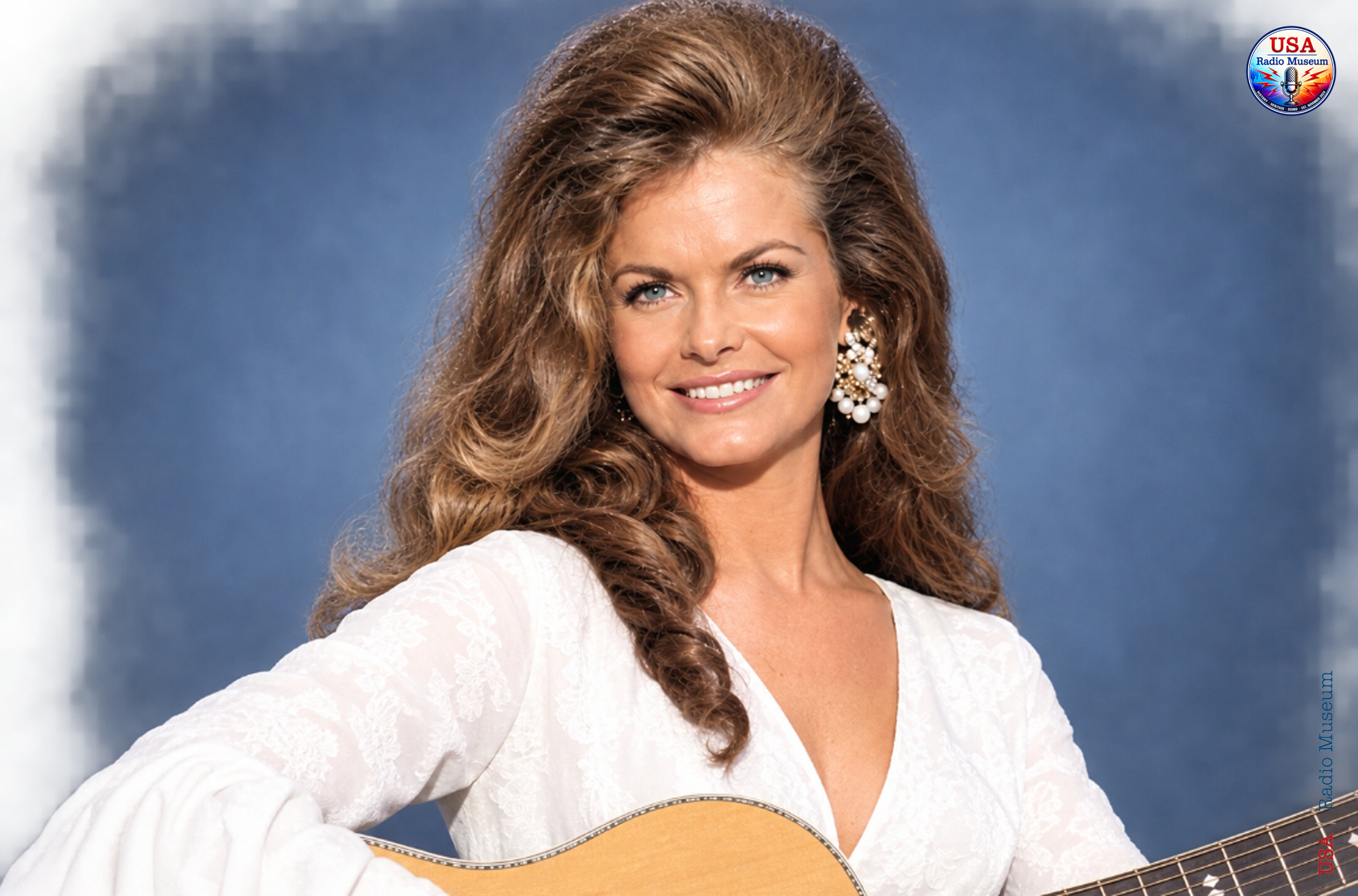
On this day in 1968, a young Texas singer delivered a sharp, witty takedown of small‑town hypocrisy—and in the process became the first woman to conqu
On this day in 1968, a young Texas singer delivered a sharp, witty takedown of small‑town hypocrisy—and in the process became the first woman to conquer both the country and pop charts with a single, era‑defining hit.
_____________________
In the late summer of 1968, as America found itself in the throes of cultural upheaval, a sharp, witty, defiantly female voice cut through the noise and landed at the very top of the nation’s airwaves. Jeannie C. Riley, a 22‑year‑old secretary‑turned‑singer from Texas, stepped into the studio with a Tom T. Hall composition that sounded, at first blush, like a novelty tune. What emerged instead was a cultural lightning bolt. Harper Valley PTA didn’t just climb the charts—it detonated them, becoming the first single by a woman to top both Billboard’s Hot Country Singles chart and the Hot 100. In a year defined by protest, generational friction, and the questioning of long‑standing authority, Riley delivered a three‑minute story that felt like a referendum on small‑town hypocrisy, wrapped in the irresistible twang of country-pop storytelling.
The song’s premise was deceptively simple: a widowed mother marches into a PTA meeting to confront the judgmental townspeople who have been whispering about her hemlines and social life. But Riley’s performance elevated the narrative into something closer to a national moment. Her voice—bright, cutting, and edged with a kind of youthful indignation—gave the character of Mrs. Johnson a vivid, almost cinematic presence. Listeners didn’t just hear the confrontation; they felt it. In an era when women were pushing against the boundaries of expectation, Riley’s delivery carried the thrill of someone finally saying what needed to be said.
The public responded with astonishing force. The single sold more than six million copies, a staggering figure for any artist, let alone a newcomer. Radio programmers across formats—country, pop, adult contemporary—found themselves unable to ignore the phenomenon. Riley’s record didn’t merely cross over; it bulldozed the usual divisions between genres. For a brief moment, Harper Valley PTA was everywhere, a rare instance of a country song becoming a pop sensation without sacrificing its roots. It was a feat so unusual that it would not be repeated by another woman until Dolly Parton’s 9 to 5 in 1981, thirteen years later.
Riley’s sudden ascent was emblematic of a broader shift happening in American music. Country artists were beginning to find mainstream audiences, and pop listeners were increasingly open to narratives that felt grounded in everyday life. But Riley’s success also reflected something more personal: the hunger for stories told from a woman’s point of view, stories that didn’t apologize for their anger or their humor. In a decade dominated by male voices—whether in rock, soul, or country—Harper Valley PTA felt like a corrective, a reminder that women’s experiences could be just as compelling, just as commercially potent, as any other.
The industry took notice. Riley won the Grammy Award for Best Female Country Vocal Performance of 1968, a recognition that underscored both her technical skill and her cultural impact. The award placed her alongside the most respected voices in country music, even as she remained something of an outsider—young, stylish, and propelled to fame by a song that some traditionalists dismissed as too modern, too pointed, too willing to poke fun at the moral guardians of small-town America. But Riley’s triumph was undeniable. She had captured the national mood with uncanny precision, and she had done so with a song that refused to play by the usual rules.
_____________________
_____________________
The story of Harper Valley PTA also speaks to the power of narrative in American music. Tom T. Hall’s songwriting provided the skeleton—a sharp, cleverly structured tale of confrontation and revelation—but Riley’s interpretation supplied the muscle and the heartbeat. Her phrasing, her timing, the slight lift of sarcasm in her voice as she enumerated the sins of the PTA members, all contributed to the song’s enduring appeal. It wasn’t just a hit; it was a performance. And performances, when they resonate deeply enough, become part of the cultural fabric.
In the decades since its release, Harper Valley PTA has maintained a curious kind of immortality. It inspired a film, a television series, countless covers, and an entire lineage of songs that center on women pushing back against judgment. Riley herself became a symbol of a particular moment in country music—a moment when the genre opened its doors to new voices and new attitudes, when the boundaries between country and pop began to blur in ways that would shape the industry for generations.
Yet perhaps the most striking aspect of Riley’s breakthrough is how contemporary it still feels. The themes of the song—public scrutiny, double standards, the policing of women’s behavior—remain stubbornly present in American life. Riley’s performance, with its blend of humor and righteous anger, continues to resonate because it captures something universal: the satisfaction of calling out hypocrisy, of refusing to be shamed into silence. In 1968, that message felt electric. Today, it feels timeless.
Jeannie C. Riley’s rise was brief, brilliant, and unforgettable. She arrived with a single that seemed, at first, like a curiosity, and left an imprint on American music that still glows more than half a century later. Harper Valley PTA was more than a chart-topper. It was a cultural event, a moment when a young woman from Texas stepped up to the microphone and, with one song, told the country exactly what it needed to hear. In doing so, she made history—twice over—and carved out a place in the American story that remains secure, vibrant, and wholly her own.
_____________________
Sources & Credits
Historical research and chart documentation sourced from Billboard archives, Grammy Awards records, and verified music‑industry reference materials. Contextual narrative informed by contemporary reporting from 1968 radio trade publications and recognized country‑music historiography. Cultural framing and editorial synthesis by the USA Radio Museum.
_____________________
Contact: jimf.usaradiomuseum@gmail.com
_____________________
© 2026 USA Radio Museum. All Rights Reserved
