
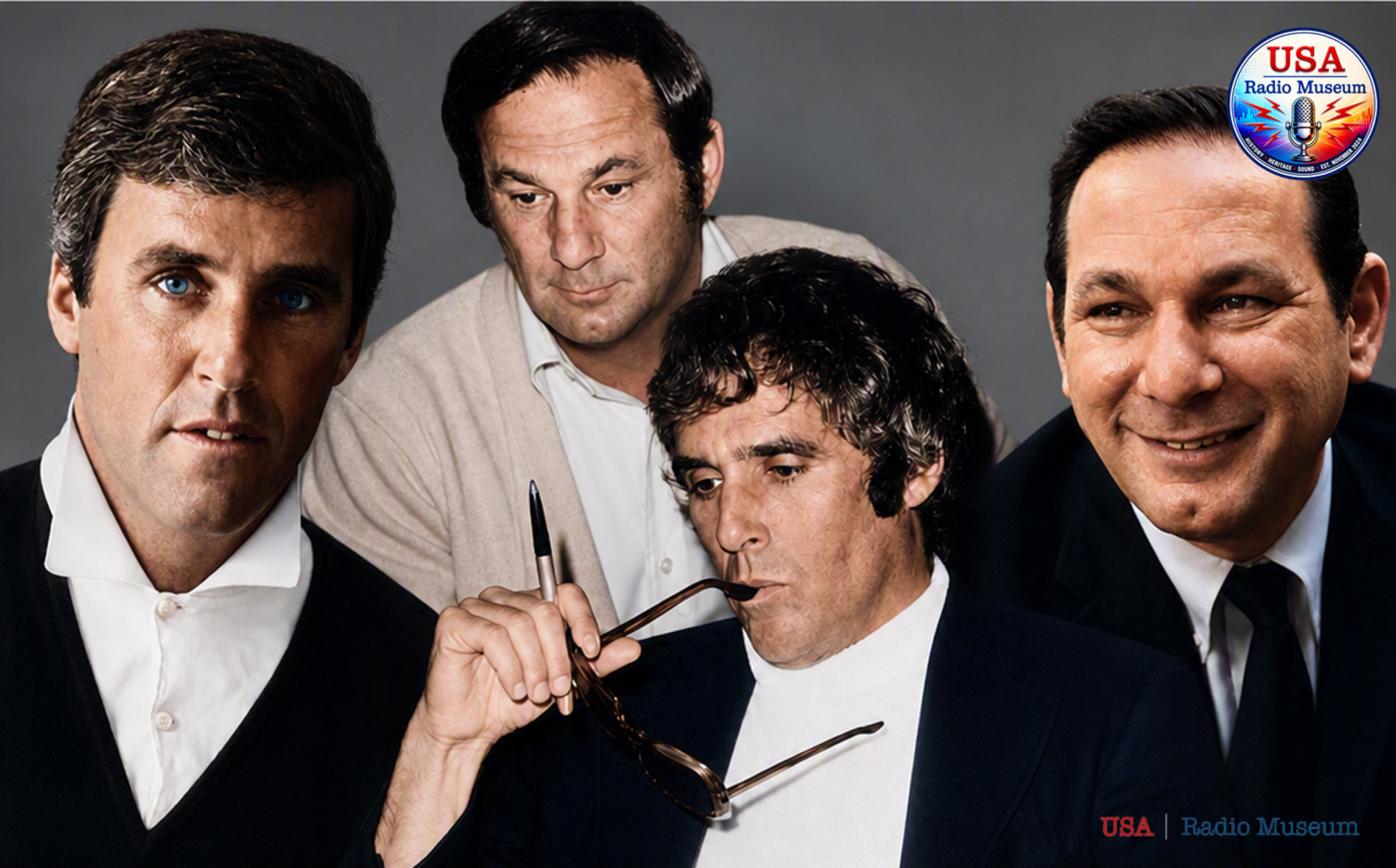
Burt Bacharach and Hal David wrote the soundtrack of American longing. Across the 1960s and early 1970s, their partnership shaped a body of work that
Burt Bacharach and Hal David wrote the soundtrack of American longing. Across the 1960s and early 1970s, their partnership shaped a body of work that felt both intimate and universal, a canon of songs that could be whispered by lovers, belted from Broadway stages, or hummed by schoolchildren who had never heard their names. Bacharach, who died on February 8, 2023, at his home in Los Angeles at the age of 94, and David, who passed on September 1, 2012, at 91, were a study in contrasts—one a restless melodist with a taste for harmonic adventure, the other a lyricist who understood that emotional truth often arrives in plainspoken lines. Together, they created a language of pop sophistication that defined an era and still echoes across generations.
Bacharach’s path to songwriting stardom began long before the hits. Born in Kansas City in 1928, he studied music formally, served in the U.S. Army, and found himself arranging for Marlene Dietrich in the mid‑1950s. Touring with the legendary chanteuse sharpened his instincts for drama, timing, and the subtle architecture of a melody. But it was in New York, in the famed Brill Building, where fate placed him in the same room as Hal David—a quiet New Yorker born in 1921, already seasoned from years writing big‑band material and early pop tunes. David had the sensibility of Tin Pan Alley in his bones, a lyricist who believed that clarity was not simplicity but elegance. When they began writing together in 1957, something clicked: Bacharach’s angular, syncopated, often unexpected musical lines found their perfect counterweight in David’s emotional directness.
Their first successes came quickly. “The Story of My Life,” recorded by Marty Robbins, became a No. 1 country hit. “Magic Moments,” sung by Perry Como, followed with equal force. In the U.K., they made history as the first songwriters to score back‑to‑back No. 1 singles. But these early triumphs were only the prelude to a decade in which Bacharach and David would become synonymous with the sound of sophisticated American pop. Their songs were not built for teenagers screaming at sock hops; they were crafted for adults navigating the complexities of love, longing, and the quiet ache of everyday life.
And then came Dionne Warwick. Bacharach discovered her during a Drifters session, struck by the unmistakable clarity and emotional intelligence in her voice. When she stormed out of a recording session, frustrated and declaring, “Don’t make me over, man!” the duo turned her words into a plea of romantic vulnerability. “Don’t Make Me Over” became her debut hit, the first of 38 Bacharach‑David songs she would take onto the charts. Warwick became their muse, their flagship, the artist who could translate Bacharach’s daring chord changes and David’s lyrical restraint into something transcendent. “Anyone Who Had a Heart,” “Walk On By,” “I Say a Little Prayer,” “Do You Know the Way to San Jose”—these were not merely hits; they were emotional documents, each one a small masterpiece of phrasing, orchestration, and human truth.
David’s lyrical genius lay in his ability to say profound things without ornament. He wrote about heartbreak with a kind of conversational honesty that made listeners feel as though they were overhearing a private confession. Songs like “Alfie,” “Twenty Four Hours From Tulsa,” and “This Guy’s in Love With You” carried the emotional complexity of Broadway but were delivered with the immediacy of AM radio. Bacharach, meanwhile, pushed pop music into new territory—odd time signatures, jazz‑inflected harmonies, and arrangements that felt lush without ever losing their sense of intimacy. Together, they created songs that were unmistakably theirs: you could hear three bars and know you were in Bacharach‑David country.
Their reach extended far beyond Warwick. Jackie DeShannon turned “What the World Needs Now Is Love” into a national balm during the turbulence of the 1960s—a song David labored over for years, searching for verses that could carry the weight of its chorus. Tom Jones swaggered through “What’s New Pussycat?” The Carpenters transformed “(They Long to Be) Close to You” into a four‑week No. 1. B.J. Thomas made “Raindrops Keep Falling on My Head” an Oscar‑winning anthem. Their film work, especially the score for “Butch Cassidy and the Sundance Kid,” cemented their place in Hollywood history. On Broadway, “Promises, Promises” brought their sensibility to the stage, producing yet another standard, “I’ll Never Fall in Love Again.”
But partnerships, even legendary ones, are fragile. The 1973 film adaptation of “Lost Horizon” proved disastrous, straining their relationship beyond repair. Warwick sued them for failing to provide new material. Bacharach later admitted the blame was his. For nearly twenty years, the two men did not speak except through lawyers. It was a painful end to one of the most fruitful collaborations in American music. They reunited briefly in 1992 for “Sunny Weather Lover,” a quiet coda to a partnership that had already reshaped the cultural landscape.
_____________________
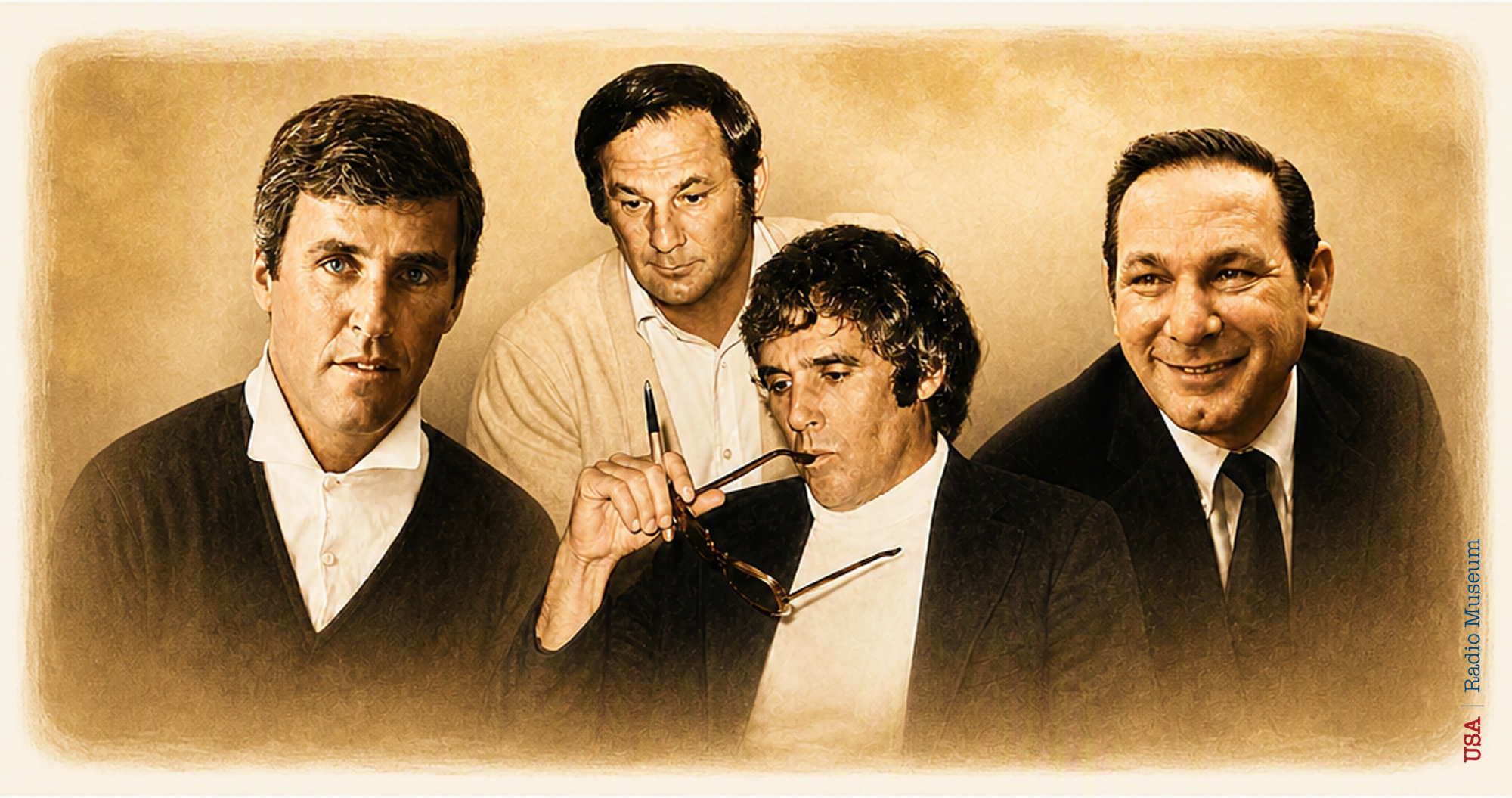
In an era defined by rapid shifts in musical taste, Burt Bacharach and Hal David shaped a gentler revolution — one built not on volume or spectacle, but on emotional intelligence, melodic architecture, and lyrical clarity. Their songs drifted across AM radio with a softness that belied their sophistication, becoming fixtures of Top 40 programming and touchstones for millions of listeners.
From the Brill Building to Hollywood soundstages, their partnership produced a body of work that blended pop accessibility with orchestral nuance, reshaping what radio hits could sound like. Across decades, their music remained a constant presence: comforting, elegant, unmistakably theirs.
This exhibit honors Bacharach and David as the quiet titans of American pop — creators whose influence continues to echo through broadcast history, long after the last note fades.
_____________________
Individually, they continued to work—Bacharach with Carole Bayer Sager on hits like “Arthur’s Theme” and “Heartlight,” David with Albert Hammond on “To All the Girls I’ve Loved Before.” Both were showered with honors: Grammys, Oscars, inductions into the Songwriters Hall of Fame, and in 2011, the Gershwin Prize for Popular Song, awarded jointly by the Library of Congress. Bacharach called it the pinnacle of his career, a recognition not just of individual achievement but of the extraordinary body of work they created together. David, in his later years, devoted himself to charitable work, art collecting, and leadership at ASCAP, shaping programs that would support future generations of composers.
Across decades of broadcast evolution, Bacharach and David remained steady beacons of craft — songwriters whose quiet sophistication shaped the emotional vocabulary of Top 40 radio. Their melodies drifted through living rooms, car dashboards, and transistor speakers with a gentleness that belied their structural brilliance. And as the awards accumulated — Grammys, Oscars, Hall of Fame honors, and the Library of Congress Gershwin Prize — their legacy only deepened, affirming what radio listeners had known all along: that their work was built to last.
In celebrating them here, we honor not only two extraordinary creators, but the enduring imprint they left on American popular culture — an imprint still felt every time one of their songs returns to the airwaves, reminding us of the soft giants who shaped the sound of an era.
Yet their true legacy lives not in awards but in the enduring emotional resonance of their songs. Bacharach and David wrote music that made people feel seen—songs that understood the quiet desperation of longing, the fragile hope of new love, the ache of heartbreak, and the universal desire for connection. Their work bridged generations, embraced by parents and children alike, sung in living rooms, churches, nightclubs, and concert halls. They were craftsmen of feeling, architects of melody and word who believed that popular music could be both accessible and artful.
In the end, Bacharach and David gave America something rare: songs that felt like companions. Their music didn’t simply chart; it stayed. It lingered. It became part of the emotional vocabulary of millions. And as long as people fall in love, fall apart, hope for better days, or simply hum a tune that makes the world feel a little softer, the legacy of Burt Bacharach and Hal David will remain—quietly, elegantly, indelibly—alive.
Here is a complete catalog of their songs as compiled by USA Radio Museum with the assist of AI.
__________________
Sources & Credits
Archival Reference Biographical and historical context sourced from our former Motor City Radio Flashbacks website and USA Radio Museum’s Bacharach & David holdings.
_____________________
Contact: jimf.usaradiomuseum@gmail.com
_____________________
© 2026 USA Radio Museum. All Rights Reserved
