
On September 2, 1945, the world stood on the threshold of peace, but the formal end of World War II had not yet been signed aboard the USS Missouri. T
On September 2, 1945, the world stood on the threshold of peace, but the formal end of World War II had not yet been signed aboard the USS Missouri. That moment would come later in the day. In the hours before the ceremony in Tokyo Bay, Americans turned to the medium that had carried them through every phase of the war: radio. And on CBS, Robert Trout—calm, steady, and unmistakably authoritative—delivered a broadcast that captured the world’s reaction to Japan’s surrender and the fragile dawn of a new era.
Trout’s World News Today report on that Sunday did not describe the surrender ceremony itself. Instead, it reflected the global mood in the hours leading up to it: relief, exhaustion, and a cautious hope. His broadcast stitched together dispatches from Allied capitals, updates from military commands, and the first glimpses of what peace might look like after six years of devastation. It was a portrait of a world in transition, still absorbing the enormity of what had happened and what was about to happen.
In London, the mood was subdued but grateful. The British public, having endured the Blitz, rationing, and years of sacrifice, listened as Trout relayed reactions from Whitehall and Downing Street. Winston Churchill, no longer prime minister but still a towering figure in world affairs, had taken a ten‑day respite in Northern Italy. Trout reported that Churchill was resting at an Allied‑controlled military base, playing golf and returning to painting—his lifelong refuge. It was a striking image: the man who had rallied Britain through its darkest hours now standing before an easel, brush in hand, as the world prepared to close the book on the war.
From Moscow, Trout reported on the Soviet Union’s official statements regarding Japan’s surrender and the shifting dynamics of the postwar world. The Soviets, who had entered the Pacific conflict only weeks earlier, were already positioning themselves for the geopolitical landscape that would follow. Trout’s tone remained neutral, but listeners could sense the undercurrents of a new era forming—one that would soon be defined by tension rather than alliance.
Across the United States, the atmosphere was one of anticipation. Trout described scenes from American cities where families gathered around radios, waiting for updates. Servicemen in barracks and aboard ships listened closely, knowing that the war’s end would soon bring them home. Factories that had churned out armaments for years were preparing to shift back to civilian production. The nation was poised between wartime mobilization and peacetime prosperity, and Trout’s broadcast captured that delicate balance.
_____________________
Columbia Broadcasting System | CBS World News Today | Robert Trout | September 2, 1945
Audio Digitally Enhanced by USA Radio Museum
_____________________
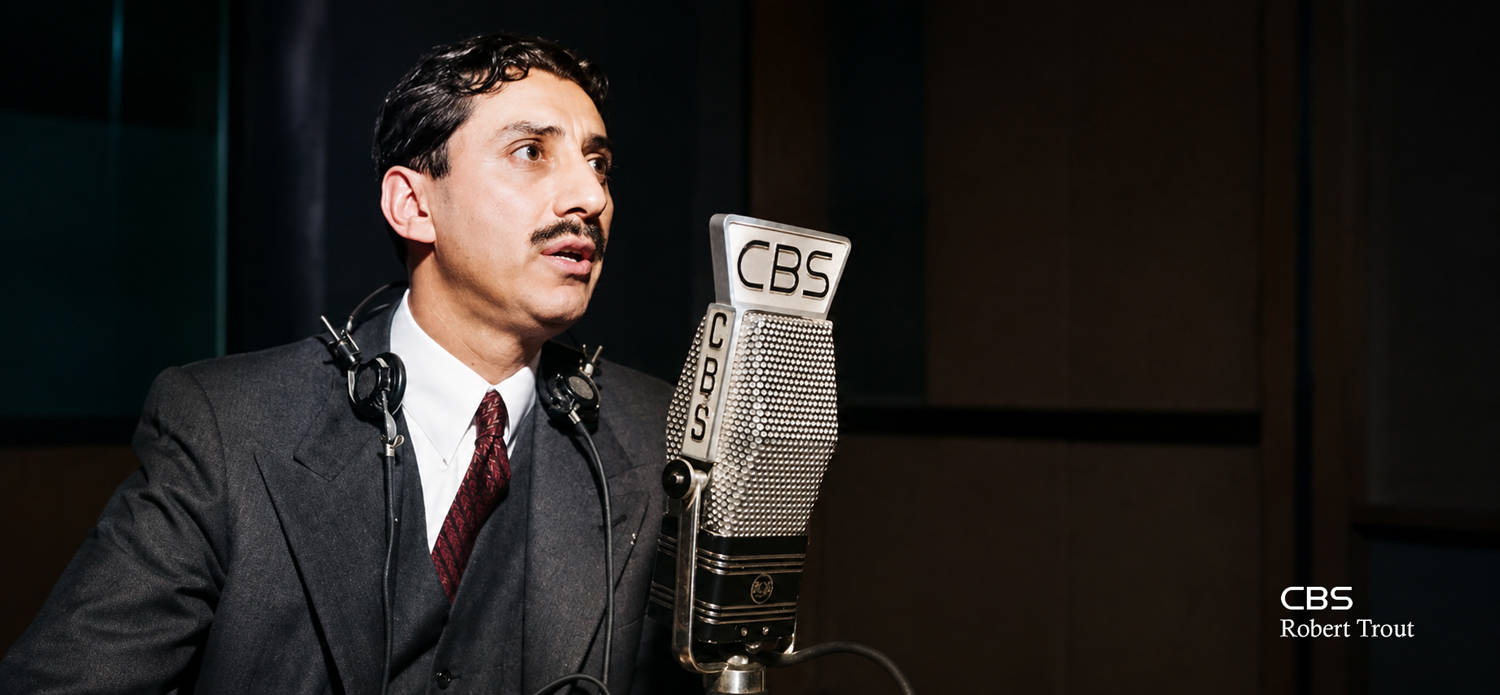
What made Trout’s reporting so powerful was not just the information he conveyed, but the way he conveyed it. His voice had become a fixture of wartime radio, guiding listeners through the fall of France, the Battle of Britain, the invasion of Normandy, and countless other turning points. On September 2, he spoke with the same clarity and restraint that had defined his wartime broadcasts. There was no dramatization, no flourish—only the steady delivery of facts and the quiet acknowledgment of history unfolding.
Trout’s report also reflected the uncertainty of the moment. Japan had announced its intention to surrender weeks earlier, and the Emperor’s voice had been broadcast to the Japanese people for the first time. But the formal signing had not yet occurred. Trout’s broadcast existed in that liminal space between announcement and ceremony, between war and peace. It was a reminder that history does not always unfold in clean, cinematic moments; sometimes it arrives in fragments, dispatches, and voices carried across the airwaves.
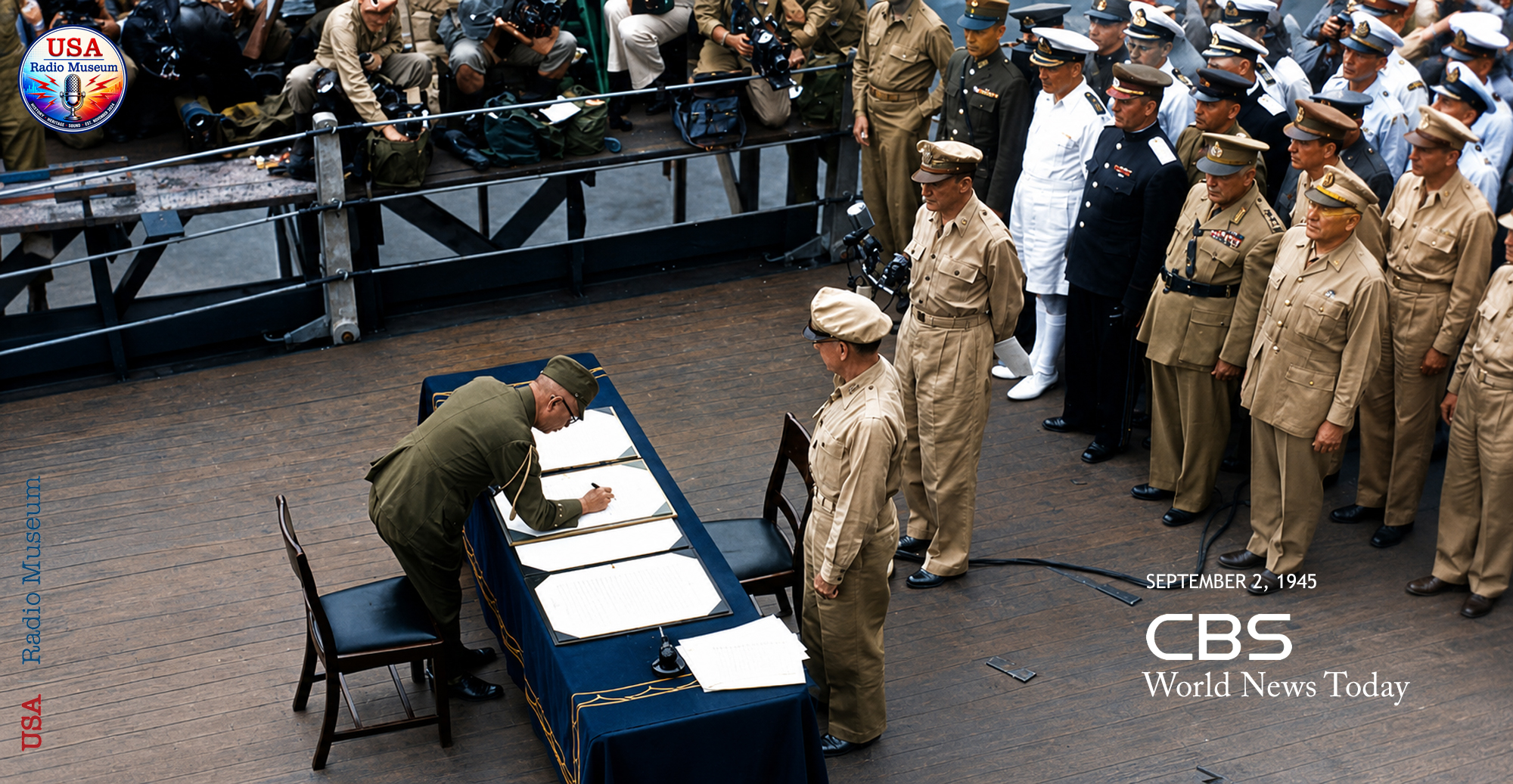
Later that day, aboard the USS Missouri, the formal surrender would be signed. Photographs of the ceremony would become iconic: General Douglas MacArthur presiding, Japanese representatives stepping forward, Allied officers standing in solemn witness. But Trout’s broadcast captured something equally important—the world’s emotional and political landscape in the hours before that moment. It documented how nations reacted, how leaders moved, and how ordinary people listened.
Eighty‑one years later, Trout’s September 2 broadcast remains a vital historical artifact. It reminds us that the end of World War II was not just a ceremony in Tokyo Bay, but a global experience felt in real time through radio. It was heard in kitchens, on factory floors, in military outposts, and in the quiet corners where people dared to hope that the future could begin again.
For the USA Radio Museum, presenting Trout’s broadcast today is an act of preservation and reflection. It honors the journalists who chronicled the war with integrity and courage. It honors the millions who lived through it. And it honors the moment when the world, battered and grieving, prepared to step into peace.
September 2, 1945. The day the world listened. The day the world waited. The day the world began to heal.
_____________________
_____________________
Sources & Credits
This feature draws upon publicly available historical documentation of Japan’s announced surrender in late August and early September 1945, including U.S. government communiqués, Allied statements, and widely accessible summaries of global reactions preceding the formal signing aboard the USS Missouri. Context regarding international political developments—such as British, Soviet, and American responses—is based on open‑access historical accounts of the immediate postwar period.
Broadcast references are informed by CBS Radio’s publicly documented World News Today coverage from September 2, 1945, as delivered by Robert Trout. The report featured global reaction to Japan’s surrender, updates from Allied capitals, and commentary on political movements including Winston Churchill’s ten‑day respite in Northern Italy. Descriptions of Trout’s broadcast style and content are derived from publicly available historical summaries and do not reproduce copyrighted audio or transcripts.
General wartime context—including the timeline between Japan’s announced surrender and the later formal ceremony in Tokyo Bay—is based on established historical consensus presented in open‑access government publications, museum holdings, and academic summaries of World War II’s concluding weeks.
All interpretive narrative, editorial framing, and commemorative language in this feature are original USARM content created for the 81st anniversary of the end of World War II.
_____________________
Contact: jimf.usaradiomuseum@gmail.com
_____________________
© 2026 USA Radio Museum. All Rights Reserved

If only that happens for today’s generation Jim.