From Farm Reports to Breaking News from Dallas: When WCCO and CBS Radio Carried America Through the First Hours of the Kennedy Assassination
When Americans remember November 22, 1963, they often recall the unforgettable television images that have become part of the nation’s collective memory. Walter Cronkite removing his glasses. Crowds gathering around store windows. A nation stunned into silence before its television screens. Yet for millions of Americans, the day’s tragic events first arrived not through a television picture, but through a radio speaker.
_____________________

The Presidential Motorcade on Houston Street heading towards Elm Street and the Texas School Book Depository. Friday, November 22, 1963 [James Altgens; AP Photo]
_____________________
In Minneapolis-St. Paul, listeners tuning to WCCO Radio that Friday afternoon expected nothing more extraordinary than the familiar rhythm of daily life. Farm reports, local news, weather updates, market information, and routine programming filled the station’s schedule, serving the Upper Midwest much as they had for decades. Nothing suggested that within minutes the nation would be thrust into one of the darkest chapters of its history.
_____________________
WCCO Minneapolis/St. Paul, MN. | CBS Radio News (w/Allan Jackson) | November 22, 1963 [A]
_____________________
The surviving WCCO recordings from November 22, 1963 preserve something increasingly rare: the sound of America before it knew. More than five hours of continuous broadcasts capture not merely the reporting of a national tragedy, but the moment-by-moment realization that history had suddenly changed course.
Shortly after 12:40 p.m. Central Standard Time, the first urgent bulletins began arriving in the WCCO newsroom. Initial reports from Dallas indicated that President John F. Kennedy and Texas Governor John Connally had been shot during a motorcade through downtown streets. As wire services and network sources struggled to verify rapidly developing information, WCCO interrupted regular programming and began relaying updates to a stunned Minnesota audience.
_____________________
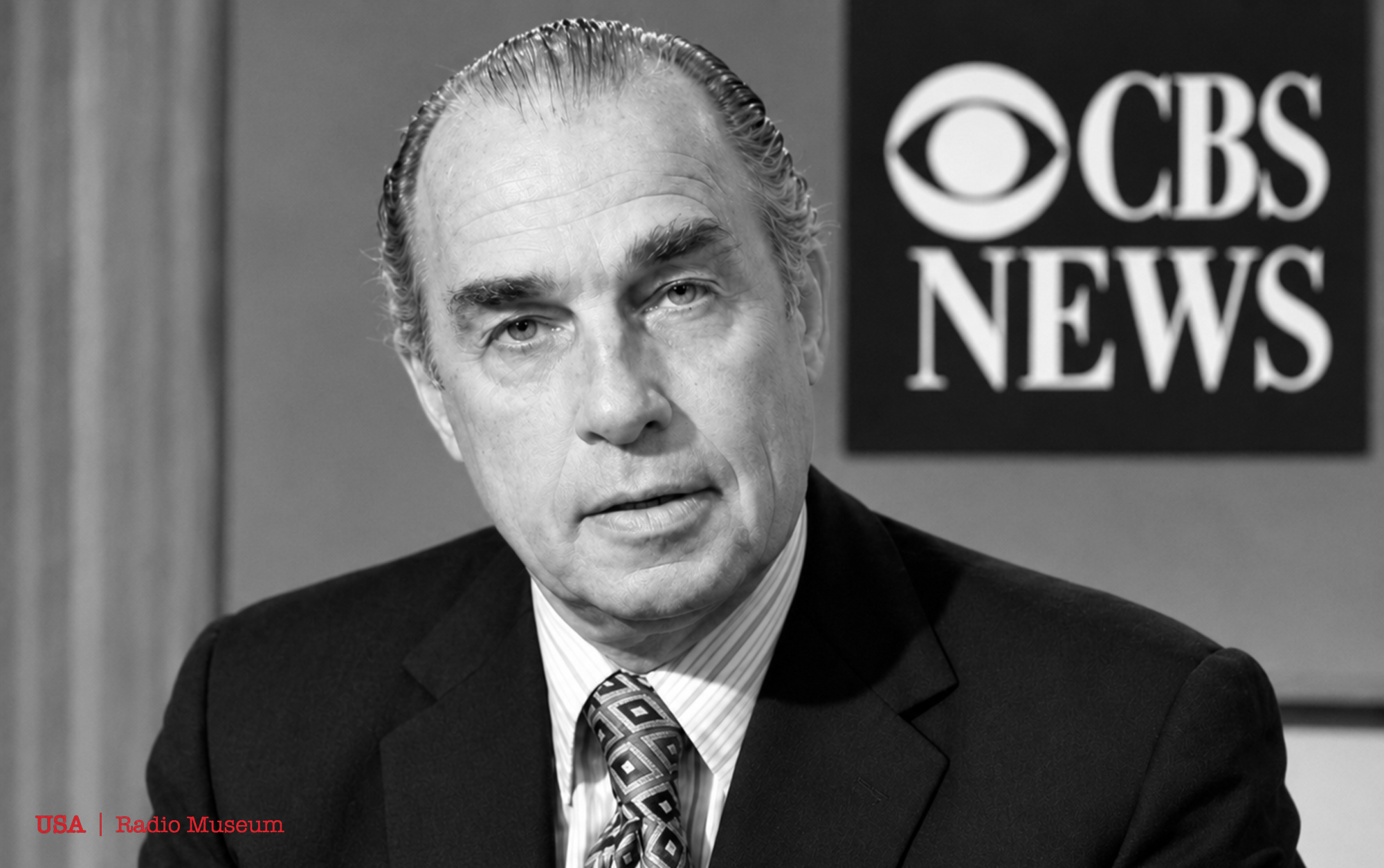
CBS News anchor Allan Jackson circa 1970.
_____________________
Listening today, more than six decades later, one can still hear uncertainty hanging in the air. Reporters and anchors understood the significance of the event, but they did not yet understand its outcome. Information arrived in fragments. Details changed from minute to minute. Rumors competed with confirmed reports. It was an extraordinary challenge in an era long before satellite news channels, social media, smartphones, or instant internet updates.
The recordings also offer an illuminating glimpse into the standards of network journalism during a moment of immense pressure. As CBS News expanded its coverage from New York, correspondent Allan Jackson became one of the principal voices guiding listeners through the developing crisis. Modern audiences accustomed to instantaneous reporting may find his approach remarkable. While other network and local reports circulating around the country began suggesting that the President had already died, Jackson refrained from making such declarations without official confirmation.
Again and again, he carefully distinguished between reports, rumors, and verified facts. His language reflected caution rather than speculation. It was a demonstration of old-school broadcast discipline during perhaps the most consequential breaking news story of the twentieth century. Only when official confirmation was finally received did Jackson solemnly report what the nation feared most: President John Fitzgerald Kennedy was dead.
_____________________
_____________________
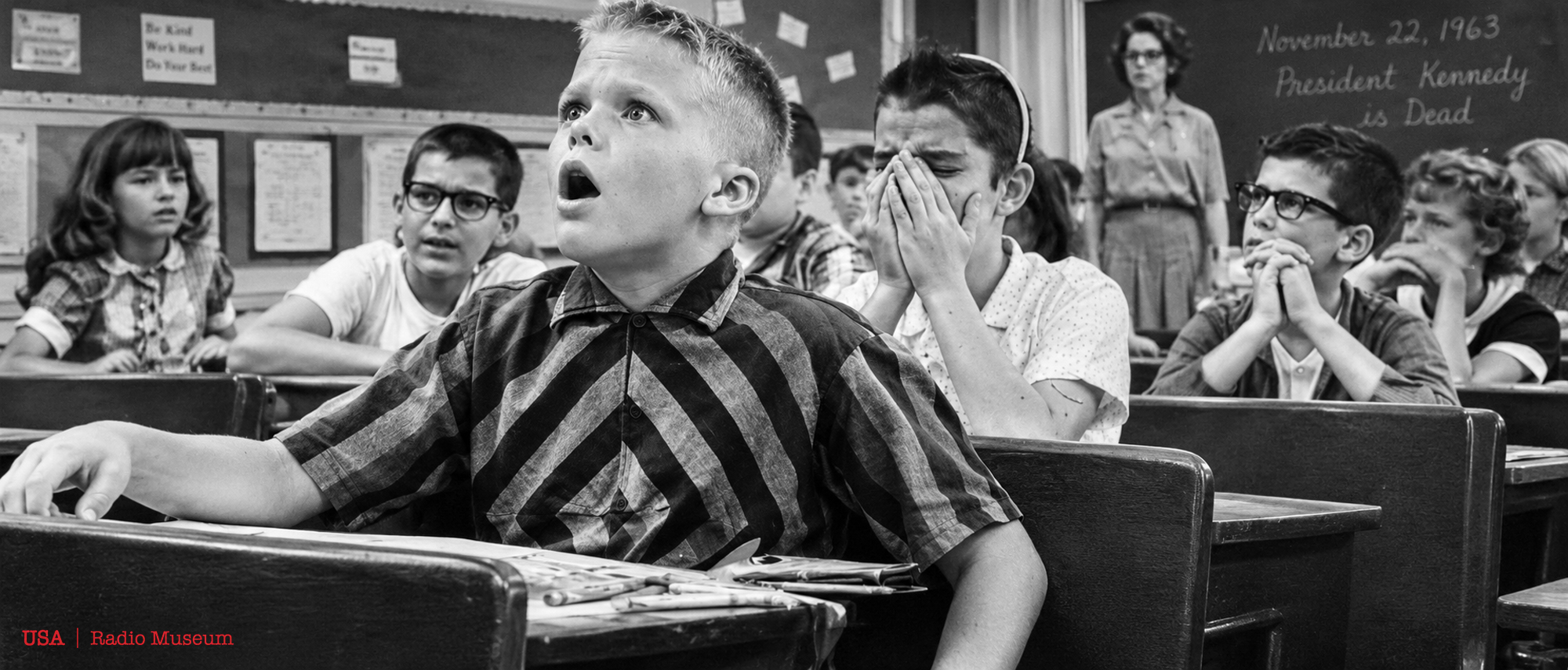
A Classroom Falls Silent — November 22, 1963 | Houston, Texas
A moment of disbelief, shock, and heartbreak forever captured in a fifth-grade classroom at Montrose Elementary School in Houston, Texas.
On November 22, 1963, school principal and teacher Marianne Ivens delivered the devastating news to her students that President John F. Kennedy had been assassinated. The children’s reactions—shock, tears, disbelief, and sorrow—reflect the emotions felt across an entire nation on that tragic afternoon.
For these young students, the news was a moment they would never forget. For America, it was a day that changed history.
November 22, 1963 — A generation remembers where they were when they heard the news.
_____________________
That moment remains among the most powerful passages preserved within the WCCO recordings. The announcement did not arrive dramatically. There was no theatrical flourish. Instead, listeners heard the simple, measured delivery of a journalist entrusted with conveying a fact that would instantly alter the lives of millions. The restraint made the news more devastating, not less. The words carried the weight of certainty.
By 2:00 p.m. Central Time, CBS News had assumed complete control of its nationwide radio network, including WCCO. What had begun as a local station serving Minnesota listeners became part of a vast national communications system connecting Americans from coast to coast. The familiar sounds of local programming disappeared as network coverage expanded hour by hour.
Yet even while carrying CBS reports from Dallas, Washington, and New York, WCCO continued to preserve the perspective of Minnesota itself. Local announcers and reporters documented how shock spread throughout the Twin Cities and beyond. Churches organized memorial services. Businesses considered closing their doors. Schools, civic organizations, and public institutions reassessed scheduled events. Throughout the region, normal routines gave way to mourning.
_____________________
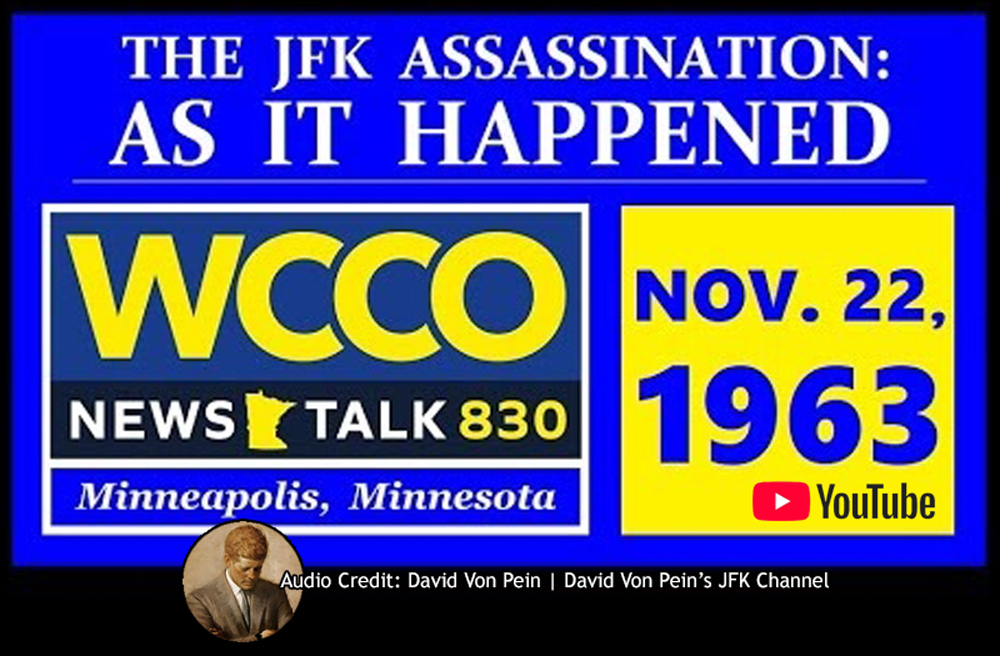
WCCO Minneapolis/St. Paul, MN. | CBS Radio News (w/Allan Jackson) | November 22, 1963 [B]
Audio courtesy of David Von Pein | David Von Pein’s JFK Channel (YouTube)
_____________________
The broadcasts reveal how communities processed tragedy before the era of digital communication. Citizens turned to radio not simply for information, but for reassurance. People gathered around kitchen radios, dashboard receivers, and office speakers, seeking updates and companionship during uncertain hours. Radio, often overlooked in modern retellings of the assassination, remained the fastest and most trusted medium available to millions of Americans.
As evening approached, the tone of broadcasting grew increasingly solemn. News updates alternated with official statements, reactions from government leaders, and messages from around the world. Condolences arrived from foreign governments and prominent figures. The assassination was no longer merely an American story. It had become a global event.
For Minnesota listeners, WCCO served as both witness and companion. The station translated a distant tragedy occurring hundreds of miles away into a deeply personal experience felt throughout homes and communities across the Upper Midwest. Through its microphones, listeners experienced not just events, but emotions: confusion, disbelief, sorrow, and ultimately grief.
The significance of these recordings extends far beyond their historical content. They remind us how news was gathered and delivered in an era when accuracy still competed successfully with speed. Journalists frequently waited for confirmation. Editors exercised caution. Broadcasters understood that once a statement reached the public airwaves, it carried responsibility as well as urgency.
In retrospect, the recordings also document the beginning of a transformation in American broadcasting. The assassination coverage demonstrated radio’s enduring value even as television increasingly dominated the media landscape. For days that followed, networks suspended normal operations and dedicated themselves almost entirely to public service. Americans followed reports of investigations, memorial observances, the funeral ceremonies in Washington, and subsequent developments through a combination of radio and television coverage unlike anything previously attempted.
Today, more than sixty years later, the surviving WCCO broadcasts remain a remarkable historical artifact. They preserve voices that spoke without knowing how history would judge them. They capture the uncertainty that later documentaries, books, and retrospectives cannot fully reproduce. Most importantly, they remind us that behind every famous moment in history were ordinary people hearing the news for the first time.
The WCCO recordings begin with a farm report and the routine sounds of an ordinary Friday afternoon. They end in a nation forever changed. Between those two points lies one of the most extraordinary broadcasts in American radio history: a real-time chronicle of shock, professionalism, mourning, and endurance. For listeners in Minnesota and across the CBS Radio Network, November 22, 1963 was not experienced as history. It was experienced as radio. And in these surviving recordings, that history can still be heard.
_____________________
Sources and Credits
The primary source for this article was the surviving WCCO Radio aircheck of November 22, 1963, preserving more than five hours of continuous coverage from Minneapolis-St. Paul following the assassination of President John F. Kennedy.
 Special appreciation is extended to David Von Pein for generously making this historic WCCO recording available for research and preservation purposes. Through his remarkable archival efforts, countless hours of historically significant audio and video recordings relating to President John F. Kennedy, the Kennedy administration, and the events surrounding November 22, 1963, have been preserved and made accessible to students, historians, researchers, and the general public.
David Von Pein‘s YouTube archive, “David Von Pein’s JFK Channel,” is widely recognized by researchers and enthusiasts as one of the most comprehensive collections of Kennedy-era broadcast recordings and related historical material available online. His extensive preservation work continues to serve as an invaluable resource for those seeking to understand and study one of the most significant events in American history.
_____________________
Additional Notes
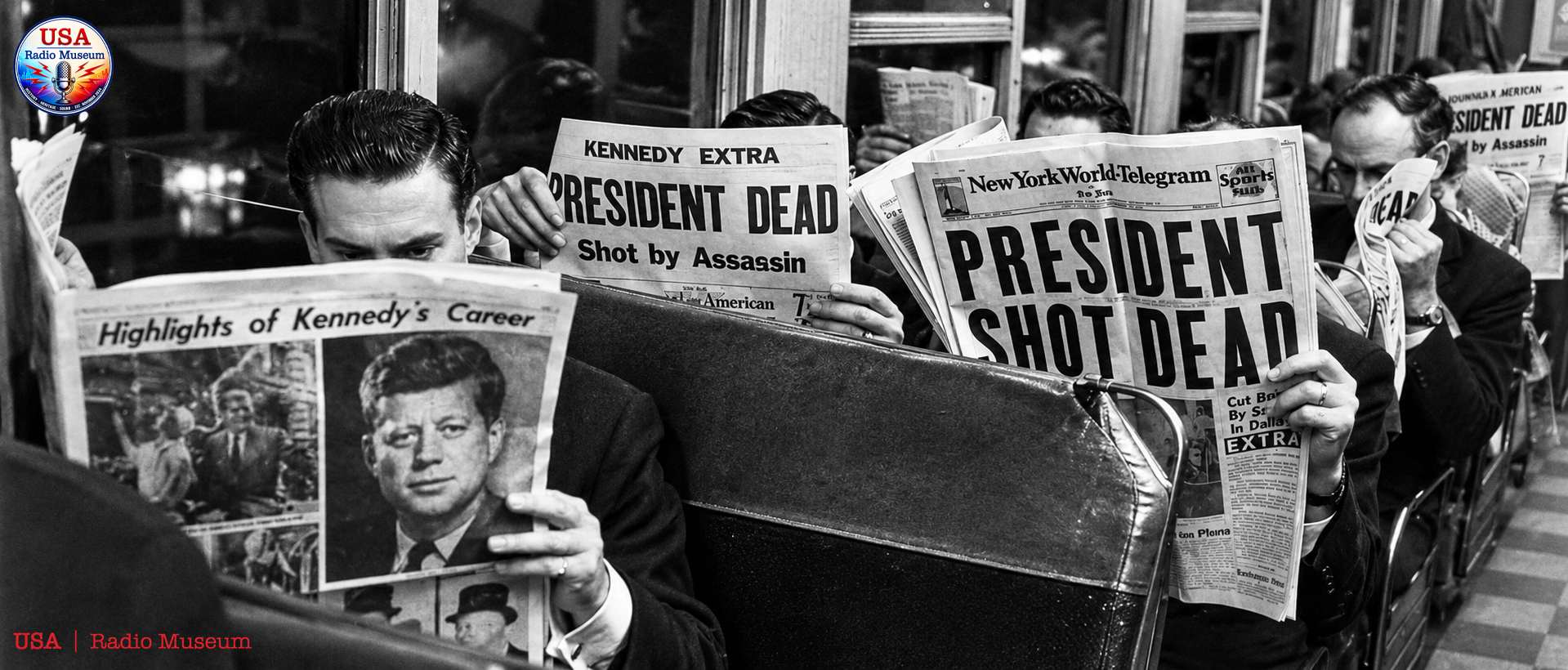
A Nation in Shock: New Yorkers Read the Headlines of a President’s Assassination
Captured by renowned LIFE photographer Carl Mydans, this remarkable photograph was part of a series taken aboard a New York City subway train on Friday evening, November 22, 1963.
As the devastating news of President John F. Kennedy’s assassination spread across the nation, subway passengers confronted the tragedy through the evening newspaper editions. Some sat quietly, others held their newspapers before them, reading the shocking headlines announcing the President’s death.
Among the newspapers visible in Mydans’ photographs were the New York Journal-American, carrying the headline “PRESIDENT DEAD — SHOT BY ASSASSIN,” and the New York World-Telegram, proclaiming “PRESIDENT SHOT DEAD.” It is our main featured image for our post today.
There were no television screens in this subway car bringing the news into these passengers’ homes. Instead, the printed headlines told the story of a national tragedy that had unfolded just hours earlier in Dallas, Texas.
Through the lens of Carl Mydans, we are given a deeply personal glimpse of how ordinary Americans encountered one of the most devastating events in modern American history.
November 22, 1963 — The day America stopped, and a nation struggled to comprehend the loss of its President.
Photograph: Carl Mydans; LIFE | Friday evening, November 22, 1963
Additional historical reference materials were consulted to provide context regarding CBS News, WCCO Radio, and contemporary broadcasting coverage of November 22, 1963.
© USA Radio Museum
For our previous 2025 post/audio presentation of President Kennedy’s assassination as was broadcast on KABC in Los Angeles, please go HERE
_____________________
A USARM Viewing Tip: On your PC? Mouse/double-click over the images for expanded views. On your mobile or tablet device? Finger-tap all the above images inside the post and stretch image across your device’s screen for LARGEST digitized view. Then click your browser’s back arrow to return to the featured post.

 Special appreciation is extended to David Von Pein for generously making this historic WCCO recording available for research and preservation purposes. Through his remarkable archival efforts, countless hours of historically significant audio and video recordings relating to President John F. Kennedy, the Kennedy administration, and the events surrounding November 22, 1963, have been preserved and made accessible to students, historians, researchers, and the general public.
