
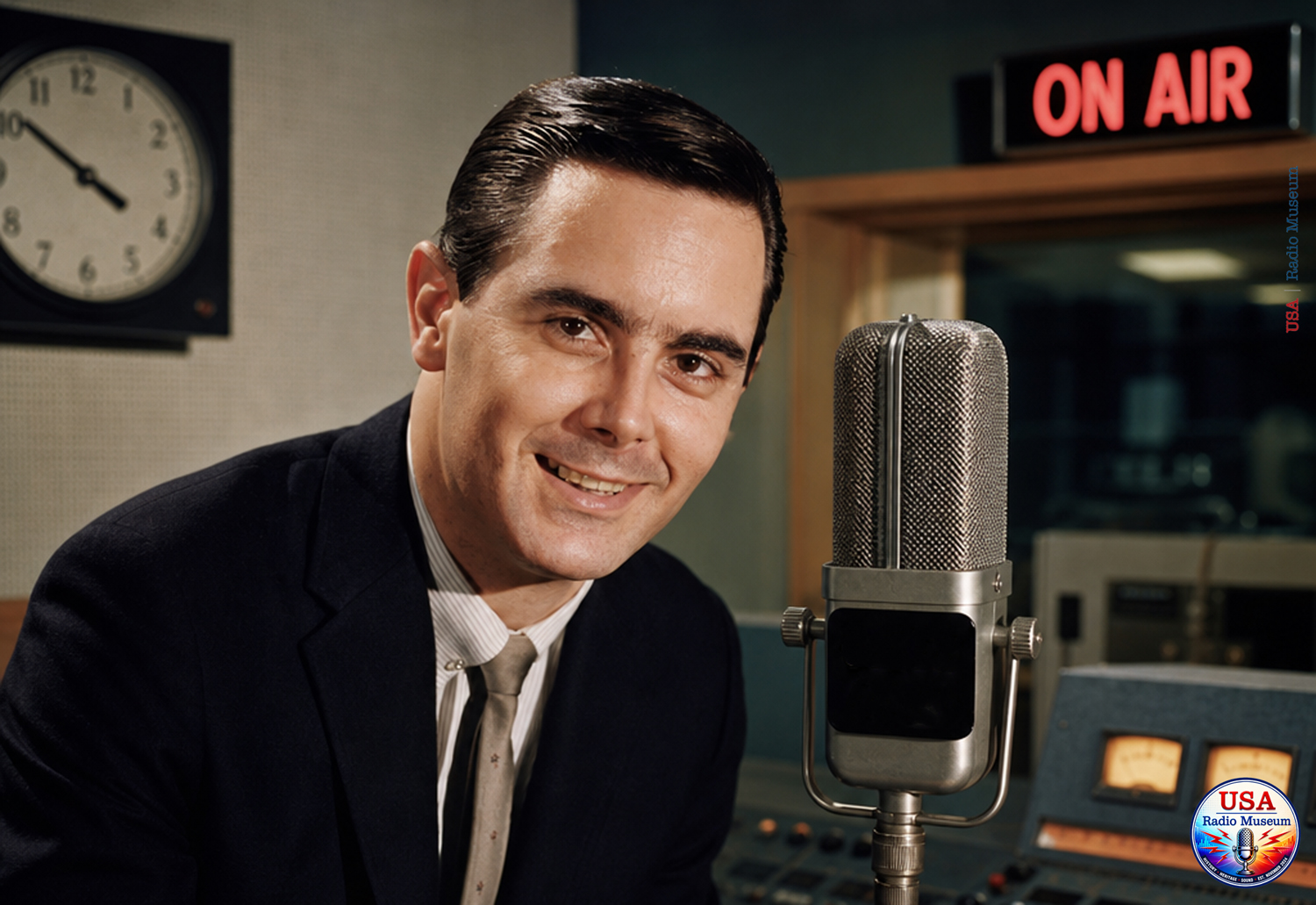
Introduction — He Was the Programmer’s Programmer John Rook stands among the most influential architects of American radio. His programming shaped
Introduction — He Was the Programmer’s Programmer
John Rook stands among the most influential architects of American radio. His programming shaped stations, defined eras, and tuned the ears of millions across the country. From his early days learning the rhythm of live broadcasting to his rise as one of the most respected Top‑40 programmers in the nation, Rook’s work left an imprint on the cultural soundtrack of a generation.
Today, the USA Radio Museum honors his legacy with a curated set of restored portraits spanning four eras of his life — each one a window into the evolution of a man whose vision helped shape modern broadcasting. These images, revived with museum‑grade restoration, reveal the humanity, innovation, and enduring spirit of a programmer who changed radio forever. — USA Radio Museum
Early Years — The Young Broadcaster
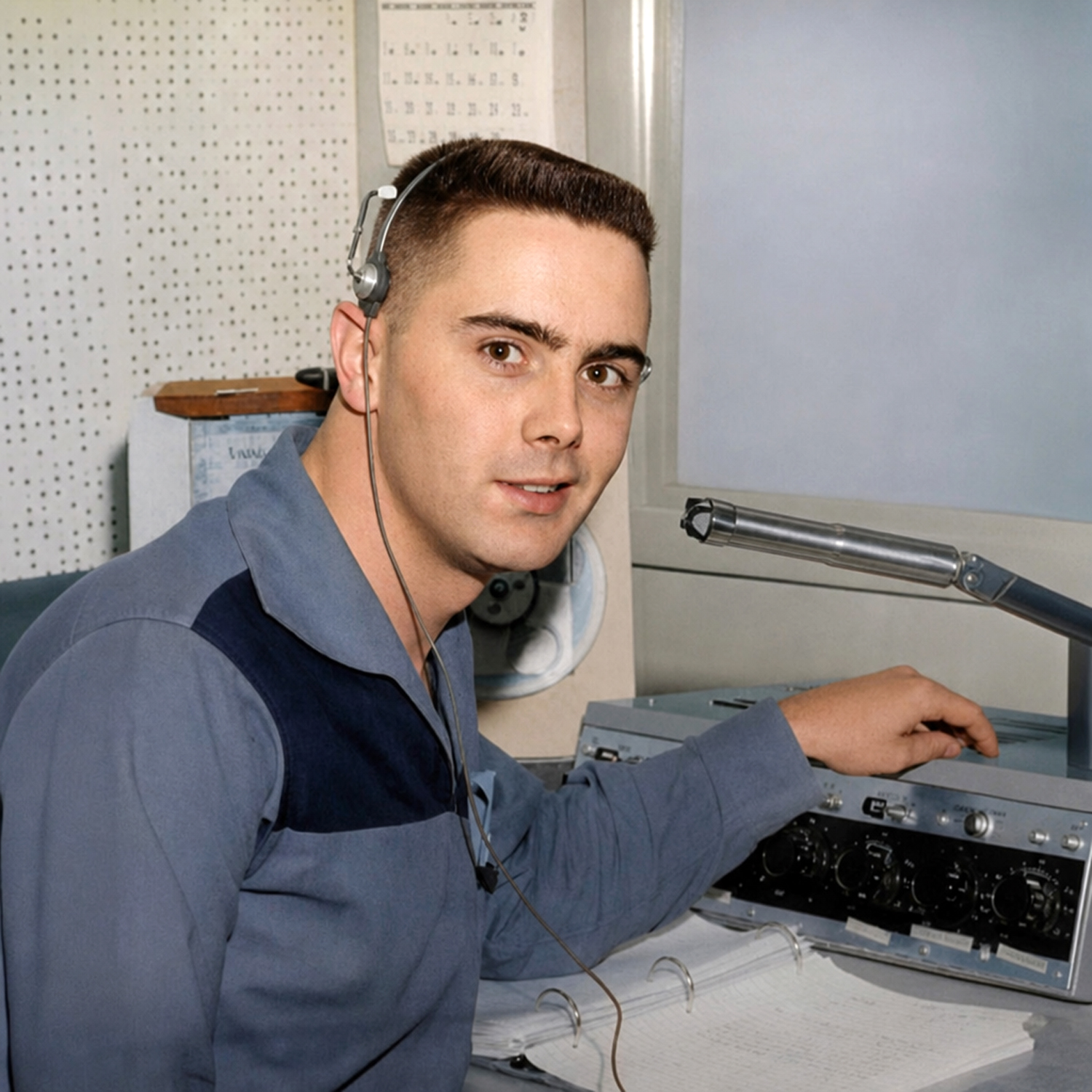
The young broadcaster mastering the board — where instinct became craft.
In the 1950s and early 1960s, John Rook was a young man discovering the power of radio — a medium that would soon become both his canvas and his calling. His early studio days were marked by long nights at the console, the hum of vacuum tubes, and the steady rhythm of spinning turntables. He was learning not only how to operate the machinery of broadcasting but how to listen — to the music, to the silence between songs, and to the pulse of an audience he could not see but could always feel.
Rook’s apprenticeship in those formative years was pure immersion. He studied microphone technique, timing, and the subtle art of pacing a show so that every transition felt effortless. He learned how to build atmosphere — how a single record, played at just the right moment, could change the energy of an entire broadcast. Those lessons became the foundation of his programming philosophy: that radio was not just about sound, but about emotion, connection, and storytelling.
The restored portrait from this era captures that intensity perfectly. Rook, crew‑cut and focused, leans toward the microphone with the quiet confidence of a man discovering his purpose. Around him, analog equipment glows softly — dials, meters, and switches forming the mechanical heartbeat of mid‑century broadcasting. It’s a moment frozen in time, revealing the determination of a young broadcaster who understood that mastery came not from fame, but from feel — from knowing how to make the air itself come alive.
These early years shaped everything that followed. They taught Rook the discipline of precision, the joy of discovery, and the thrill of creating something ephemeral yet unforgettable. In those quiet studios, he wasn’t just learning radio — he was learning how to orchestrate culture, one record at a time.
The Rise — Shaping Top‑40 Radio
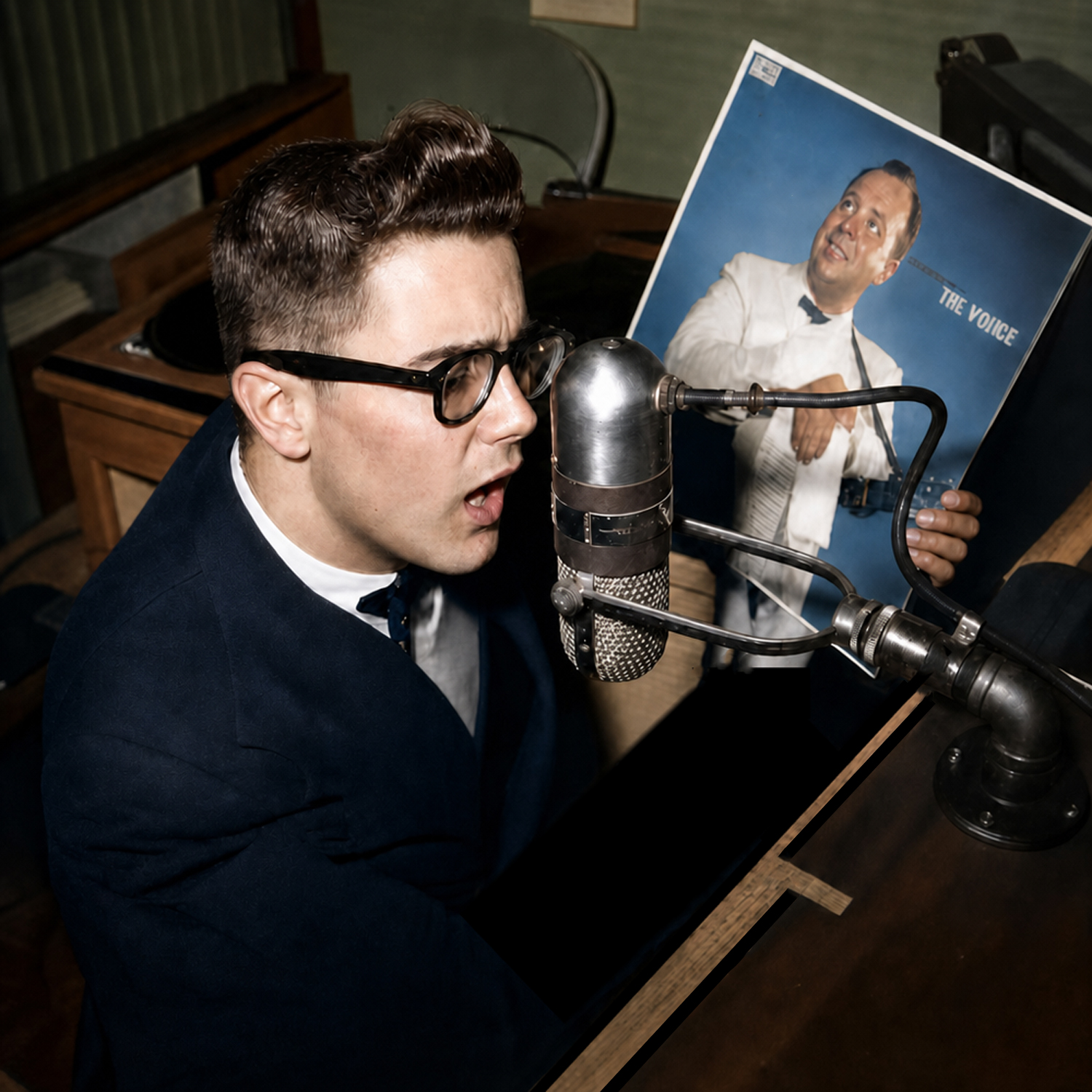
The programmer who shaped the soundtrack of a generation.
By the mid‑1960s, John Rook had become one of the most dynamic forces in American broadcasting. His ascent was not accidental — it was the result of relentless curiosity, technical mastery, and an uncanny ability to read the cultural pulse of the nation. When Rook stepped into the programming chair at KQV in Pittsburgh, he brought with him a new philosophy: radio should move like music itself — alive, rhythmic, and emotionally charged.
Rook’s programming style was revolutionary. He understood that Top‑40 radio wasn’t just a playlist — it was a performance. Every segue, every jingle, every on‑air moment had to sustain momentum. He tightened rotations, refined transitions, and introduced pacing that mirrored the excitement of live performance. His stations didn’t just play hits; they created them. Artists who received airplay under Rook’s direction often found their careers transformed overnight.
At WLS in Chicago, Rook’s influence reached its zenith. He turned the station into a cultural powerhouse, blending precision with personality. His programming balanced the science of audience analytics with the art of intuition — knowing when to break a rule, when to take a chance, and when to let a record breathe. Under his leadership, WLS became a national model for how radio could both reflect and shape the American experience.
The restored portrait from this era captures Rook at the height of his creative power — poised at the microphone, confident, and fully in command of the broadcast environment. The studio hums with energy, the air thick with anticipation. You can almost hear the crackle of vinyl, the echo of jingles, and the pulse of a nation tuning in. It is the image of a man who understood that radio was not merely a medium — it was a movement.
Rook’s rise marked a turning point in broadcasting history. He bridged the gap between artistry and analytics, between instinct and innovation. His work defined the sound of Top‑40 radio and set the standard for generations of programmers who followed. In every sense, John Rook didn’t just ride the wave of popular culture — he helped create it.
The Innovator — The Mid‑Century Craftsman
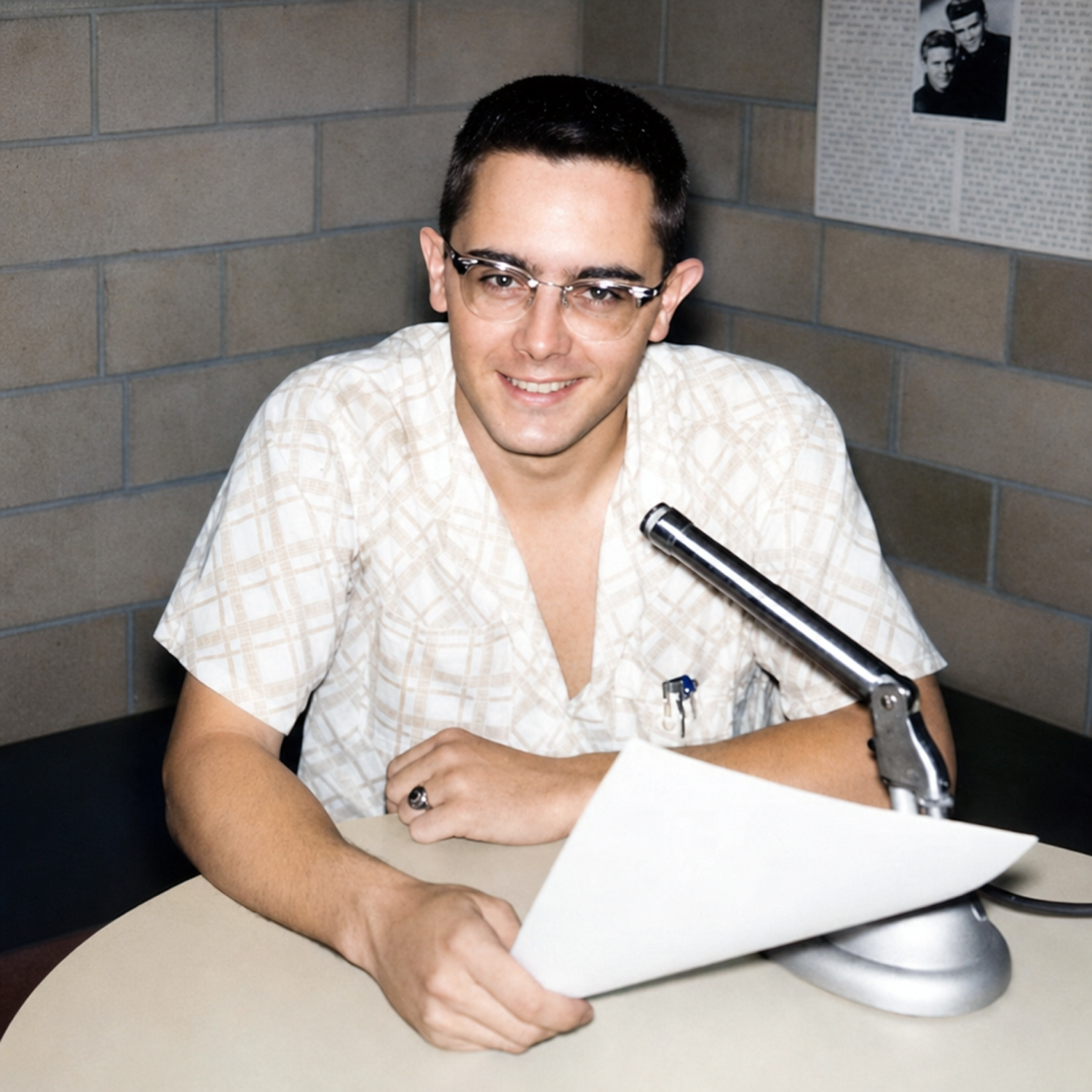
The curator of radio’s golden age — where taste met innovation.
By the late 1960s and into the 1970s, John Rook had evolved from a rising programmer into a true mid‑century craftsman — a curator of sound whose influence stretched far beyond the walls of any single station. This was the era when Rook refined the artistry of programming, blending instinct with innovation in ways that permanently altered the broadcast landscape. He approached radio not as a mechanical process, but as a living medium — one that required taste, timing, and an almost painterly sense of composition.
In this period, Rook became known for his meticulous attention to detail. He studied the emotional arc of a broadcast hour the way a composer studies the movement of a symphony. He understood how a single record could shift the mood of a city, how a well‑timed segue could elevate a listener’s entire day, and how a station’s identity could be shaped through careful curation rather than sheer volume. His programming philosophy was rooted in craftsmanship — the belief that radio, at its best, was a form of storytelling.
The restored portrait from this era captures Rook in the heart of his creative prime. He stands in a mid‑century studio surrounded by brick walls, warm wood tones, and the glow of vintage broadcast equipment. A vinyl sleeve rests in his hand, not as a prop, but as a symbol of his role as a tastemaker — someone who understood the cultural weight of every track he selected. His expression is focused, thoughtful, and quietly confident. It is the look of a man who knows he is shaping something larger than a playlist; he is shaping the soundscape of American life.
This era also reflects the depth of Rook’s humanity — the warmth, generosity, and mentorship that defined his relationships within the industry. He guided young broadcasters, shared his knowledge freely, and championed artists who might otherwise have been overlooked. His influence radiated outward, touching careers, shaping stations, and inspiring a generation of programmers who saw in him the perfect blend of discipline and creativity.
As we honor this chapter of his life, we also honor his memory.
John Rook was born on October 9, 1937, a child of the Midwest whose fascination with radio began long before he ever stepped into a studio. His life’s journey carried him through the golden age of broadcasting, through the rise of Top‑40 radio, and into the era of modern programming strategy. After a lifetime of innovation, mentorship, and cultural impact, John Rook passed away on March 1, 2016, at the age of 78.
His obituary described him as a visionary, a gentleman, and a programmer whose influence would be felt for decades. It spoke of his passion for radio, his devotion to the craft, and the countless lives he touched — both on and off the air. Those words now form part of the historical record, but his legacy lives most vividly in the sound of the stations he shaped and the memories of the listeners he reached.
This segment — this portrait — stands as a tribute not only to the innovator he was, but to the man he remained throughout his life: curious, dedicated, and forever in love with the medium that defined him.
Later Years — The Reflective Legend

A lifetime of sound, vision, and legacy. John Rook in 2013.
The final restored portrait, taken in 2013, shows John Rook outdoors, calm and reflective. His expression carries the warmth of a man who spent a lifetime shaping an art form he deeply loved. Even in his later years, Rook remained connected to radio — mentoring, preserving history, and championing the medium’s cultural importance.
This portrait completes the arc — a visual tribute to a life lived at the heart of American broadcasting.
Closing Tribute — A Legacy That Endures
John Rook didn’t simply program radio — he programmed culture. His instincts shaped stations, influenced careers, and helped define the sound of American youth during one of the most transformative eras in music history.
The USA Radio Museum proudly presents these restored portraits as a celebration of his life, his craft, and his enduring impact on broadcasting. Through these images, we honor not just the programmer — but the man behind the music, the mentor behind the microphone, and the visionary behind the sound.
His Impact on the Broadcast Industry — A Legacy That Still Shapes Radio
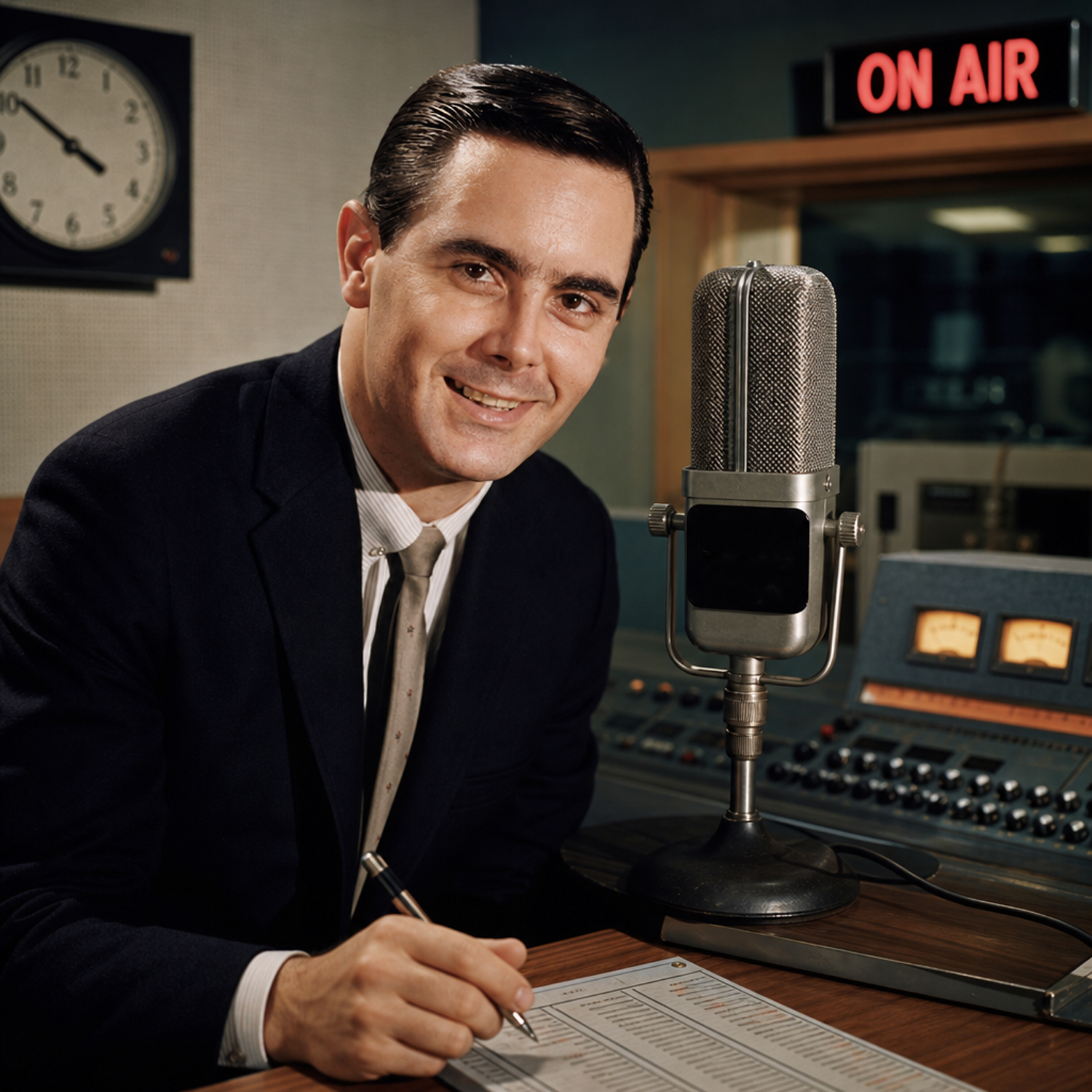 John Rook’s influence on the broadcast industry reaches far beyond the stations he programmed or the playlists he curated. He was part of a rare class of programmers whose instincts reshaped the very architecture of American radio. Rook understood that programming was not simply about selecting records — it was about understanding listeners, anticipating cultural shifts, and crafting a sonic identity that made a station feel alive.
His work at KQV and WLS helped define the golden era of Top‑40 radio, setting standards that programmers still study today. Rook championed tight rotations, forward momentum, and emotionally resonant pacing — concepts that became foundational to modern radio strategy. His ability to identify breakout hits before they charted, and his willingness to take risks on emerging artists, made him a trusted voice in the music industry and a respected figure among broadcasters nationwide.
Colleagues often described him as “the programmer’s programmer” — a mentor whose guidance shaped careers, a strategist whose ideas influenced formats coast‑to‑coast, and a curator whose taste helped define the sound of American youth during one of the most transformative periods in popular music. Even after stepping away from full‑time programming, Rook continued to advise stations, mentor young talent, and advocate for the preservation of radio history.
His legacy is not just in the music he championed or the stations he elevated — it is in the enduring principles of programming he helped establish. The broadcast industry still echoes with his influence: in the way stations build their clocks, in the way programmers think about flow, and in the way radio continues to serve as a cultural companion to millions.
John Rook shaped radio. And radio, in turn, shaped America.
_____________________
Sources & Credits
Biographical and Historical Context Information regarding John Rook’s broadcasting career, programming influence, and industry contributions is drawn from publicly available historical records, radio‑industry retrospectives, and documented accounts of his work at KQV (Pittsburgh) and WLS (Chicago). His obituary details — including his birth on October 9, 1937, and his passing on March 1, 2016, at age 78 — are sourced from published memorial notices and verified public obituaries.
Archival Imagery & Restoration All restored portraits featured in this article were enhanced and color‑balanced by the USA Radio Museum’s digital restoration team. Original photographs are credited to their respective photographers, studios, or estates when known. Restoration work includes colorization, tonal correction, artifact removal, and museum‑grade preservation for educational and historical display.
Broadcast History & Cultural Context Descriptions of mid‑century radio environments, Top‑40 programming practices, and broadcast‑industry evolution are based on established historical research, radio trade publications, and widely documented programming methodologies from the 1950s through the 1970s.
_____________________
Contact: jimf.usaradiomuseum@gmail.com
_____________________
A USARM Viewing Tip: On your PC? Mouse/double-click over the images for expanded views. On your mobile or tablet device? Finger-tap all the above images inside the post and stretch image across your device’s screen for LARGEST digitized view. Then click your browser’s back arrow to return to the featured post.
© 2026 USA Radio Museum. All Rights Reserved.
