
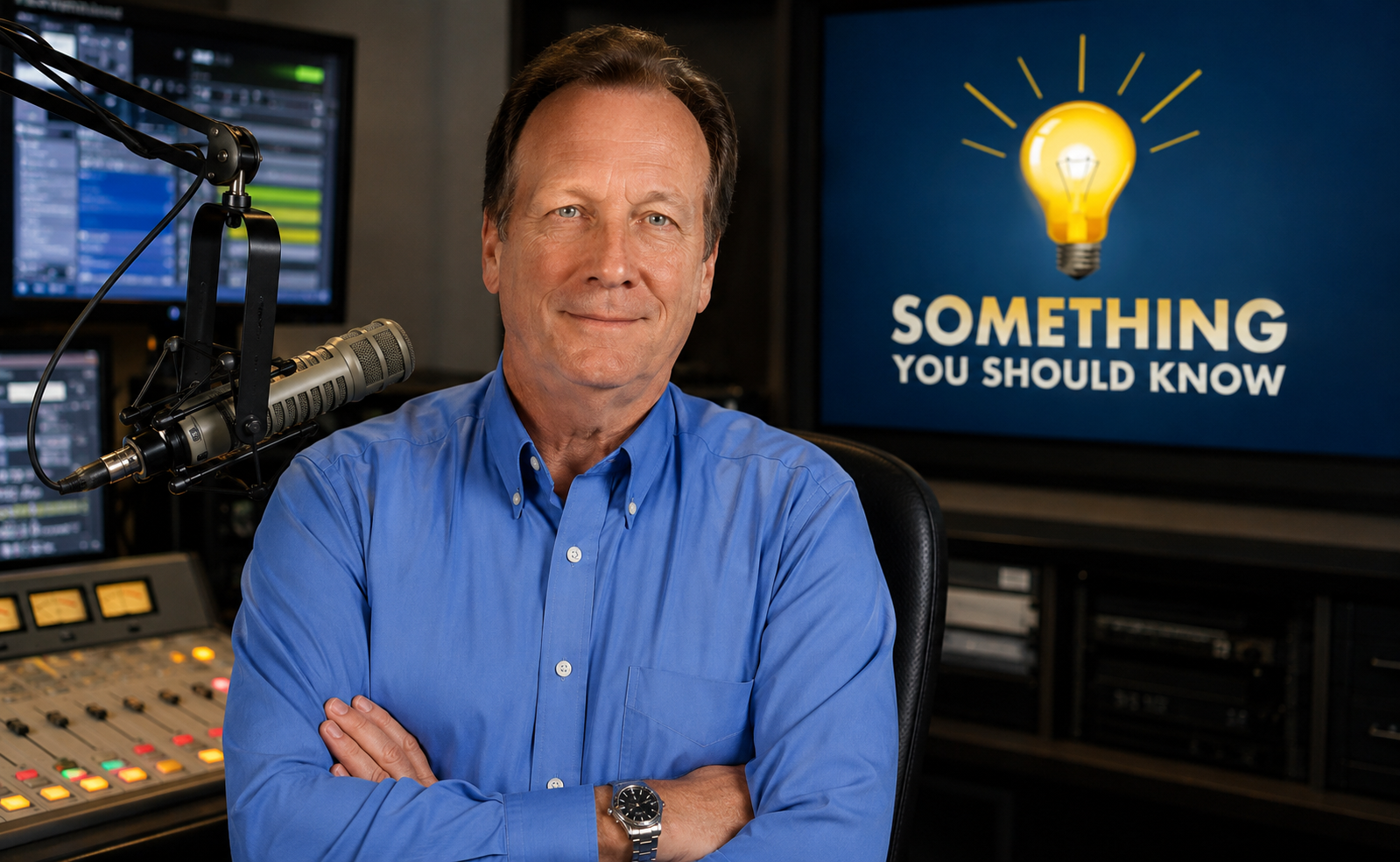
Few broadcasters have successfully navigated every major evolution in radio—from Top 40 disc jockey to syndicated network personality to podcast pione
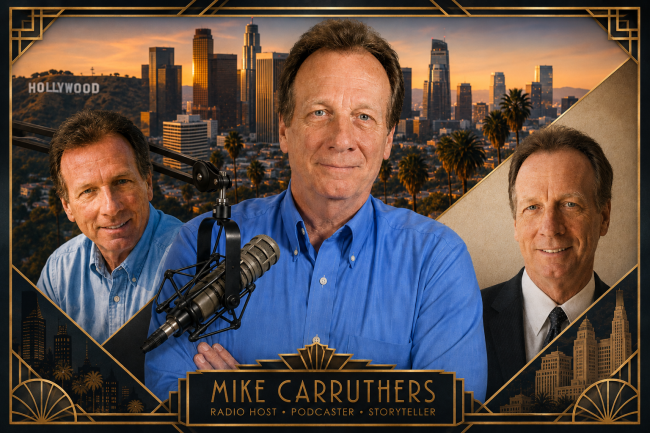
Few broadcasters have successfully navigated every major evolution in radio—from Top 40 disc jockey to syndicated network personality to podcast pioneer—as seamlessly as Mike Carruthers.
For more than five decades, Carruthers has entertained, informed, and educated audiences through radio, television, voice-over work, and podcasting. Today, his Something You Should Know podcast reaches millions of listeners each month, but its roots stretch back to a teenage fascination with a local radio station in Connecticut.
An Early Radio Dream
Carruthers traces his love of broadcasting to junior high school while growing up near Bridgeport, Connecticut. As a member of what he laughingly describes as “a really bad band,” he appeared on local station WICC, where area bands competed in weekly contests.
Watching the evening disc jockey changed everything.
“He was playing records on this incredible sound system, talking to girls on the phone, eating donuts—and getting paid for it,” Carruthers recalled. “I said, ‘I’ve got to do this.'”
At just sixteen, he landed his first radio job running tapes Sunday mornings at WJZZ in Bridgeport, beginning a broadcasting career that has never really stopped.
California and Syndication
After enrolling at the University of Southern California, Carruthers moved west and joined the staff of KPSA in Southern California. It was there that our professional paths first crossed in 1974 while working with The Programme Shoppe, where we developed syndicated radio formats including Something to Love and Big Country.
Carruthers became deeply involved in those early syndicated formats, helping produce voice-tracked programming years before computers automated the process. The technology was primitive by today’s standards, and occasionally the announcer would introduce the wrong song or deliver an outro before the record had even begun.
“When it worked, it was great,” Carruthers recalled with a laugh. “When it didn’t—it was terrible.”
Those years proved invaluable. Carruthers discovered that while he enjoyed being on the air, his real strength lay behind the scenes—writing, producing, editing, and creating polished programming.
“I realized I wasn’t going to be Rick Dees or Don Imus,” he said. “But producing shows where you could take your time and make them sound better—that’s where I fit.”
Creating Something You Should Know
Inspired by the success of short-form features such as Record Report with Robert W. Morgan and his wife’s work on television’s Hour Magazine with Gary Collins, Carruthers developed an idea for a daily ninety-second feature offering practical information listeners could actually use.
The first episodes of Something You Should Know were recorded in Jim Hampton’s studios in Hollywood.
Initially distributed to only a handful of stations, the feature steadily grew. Eventually, media executive Ron Hartenbaum helped package it with other syndicated features, allowing Carruthers to expand nationally through barter syndication.
At its peak, the feature aired on approximately 150 stations simultaneously, and over its lifetime was carried by more than 1,000 stations across the United States and Canada.
Over three decades, Carruthers produced more than 8,000 short-form episodes interviewing experts in science, medicine, psychology, business, economics, and everyday life.
Beyond Radio
Carruthers’ voice became familiar well beyond radio.
He served as announcer for The Best of the Midnight Special, narrating syndicated television programs built from the legendary NBC music series after Wolfman Jack declined to participate in the new production.
His voice also appeared in numerous “making-of” documentaries for major motion pictures, including productions associated with Steven Spielberg’s Amblin Entertainment, as well as the Back to the Future attraction at Universal Studios, where visitors heard Carruthers while waiting in line for the ride.
Throughout his career he also worked as a network talk-show host, producer, talent director, writer, and voice-over artist, creating programming for every major U.S. radio network.
Reinvention Through Podcasting
Like many independent syndicated producers, Carruthers watched as radio ownership consolidated and opportunities for outside programming diminished.
Rather than watching his life’s work slowly disappear, he reinvented it.
In 2016, he transformed Something You Should Know into a long-form podcast. At first, growth was slow.
Then one day the show appeared on Apple’s podcast charts.
“It has never left,” Carruthers said.
Today, the podcast has been downloaded more than 80 million times and consistently ranks among America’s most popular educational podcasts. Each episode features in-depth conversations with leading experts covering science, health, psychology, technology, business, communication, relationships, and countless other topics that help listeners better understand the world around them.
Thoughts on Radio’s Future
Carruthers remains optimistic about audio while realistic about traditional broadcasting.
He believes radio’s historic role as people’s connection to news, weather, sports, and community has largely been replaced by smartphones and streaming platforms.
“I think radio has so much to offer,” he says. “It’s just a different era.”
Podcasting, he believes, has restored much of the creative freedom that once made radio exciting.
A Lasting Legacy
One aspect of Carruthers’ success is his humility. Unlike personality-driven programs built around a single celebrity, he intentionally created Something You Should Know as a format that could someday continue with another host.
“I’m not the show,” he explained. “I’m a big piece of the show…but it could survive with somebody else.”
That philosophy reflects the producer’s mindset Carruthers developed decades ago—creating programming that serves the audience first.
From a sixteen-year-old tape operator in Connecticut to one of America’s most respected interviewers and educational podcasters, Mike Carruthers has demonstrated that great broadcasting isn’t about following technology. It’s about adapting to it.
Radio gave him his start.
Podcasting gave him a second act.
And through it all, Mike Carruthers has continued doing what he has always done best: helping people learn something they should know.
###
