
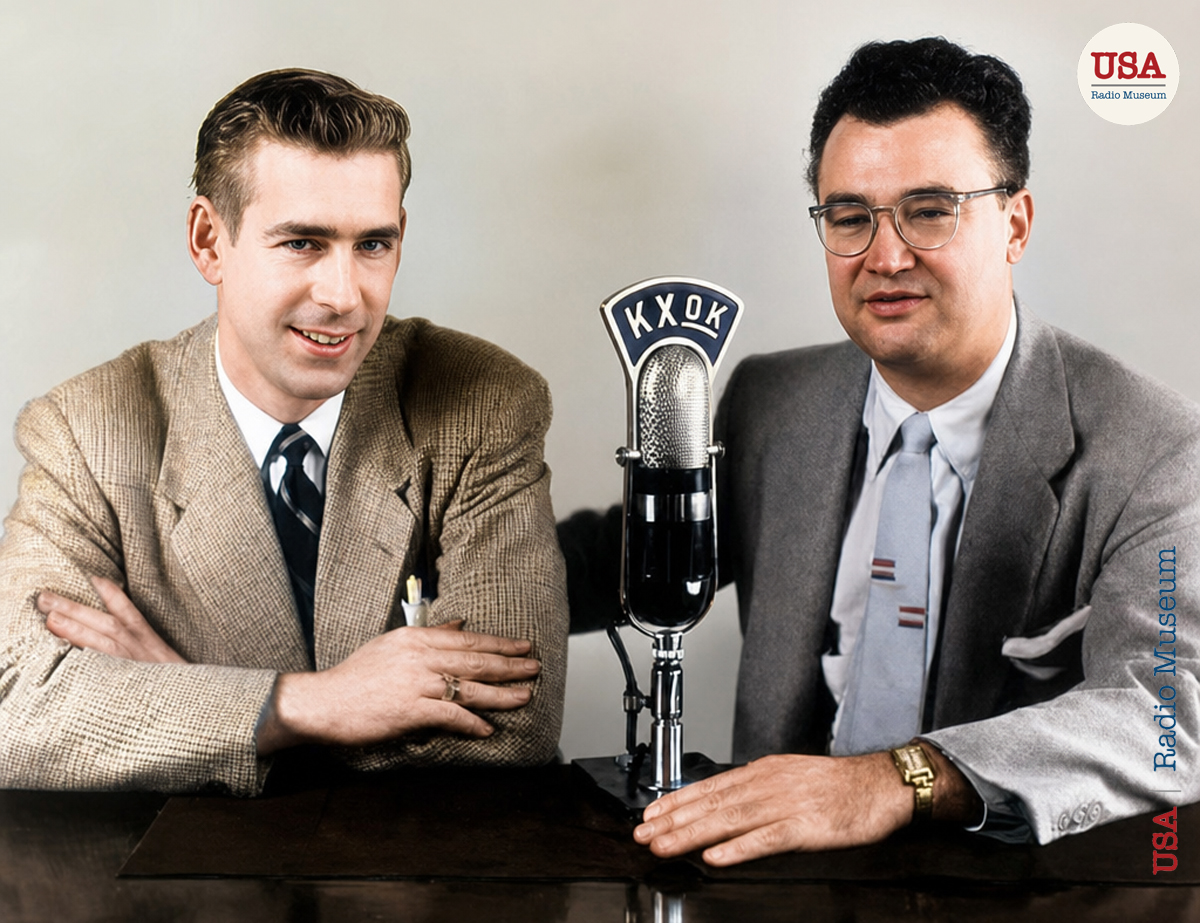
Introduction: When Baseball Found Its Echo in Two Unforgettable Voices Baseball has always been more than a sport — it is a ritual of sound. The cr
Introduction: When Baseball Found Its Echo in Two Unforgettable Voices
 Baseball has always been more than a sport — it is a ritual of sound. The crack of the bat, the murmur of the crowd, the organ’s warm pulse, and above all, the voices that carried the game into kitchens, garages, back porches, and long summer drives. In the golden age of radio, when the national pastime was truly national because it lived in the airwaves, two broadcasters rose above the rest: Harry Caray and Jack Buck.
They were different in tone, temperament, and style, yet united by a shared devotion to storytelling and a belief that baseball was best understood not through statistics, but through feeling. Caray brought fire, Buck brought poetry. Caray was the showman, Buck the steady hand. Together — though not always side by side — they shaped the emotional vocabulary of baseball for millions of listeners.
This tribute honors their parallel legacies, their unmistakable voices, and the enduring warmth they brought to the game. For the USA Radio Museum, their stories stand as essential chapters in the history of American broadcasting. — USA Radio Museum
Harry Caray: The People’s Broadcaster
A Voice Born for Ballparks
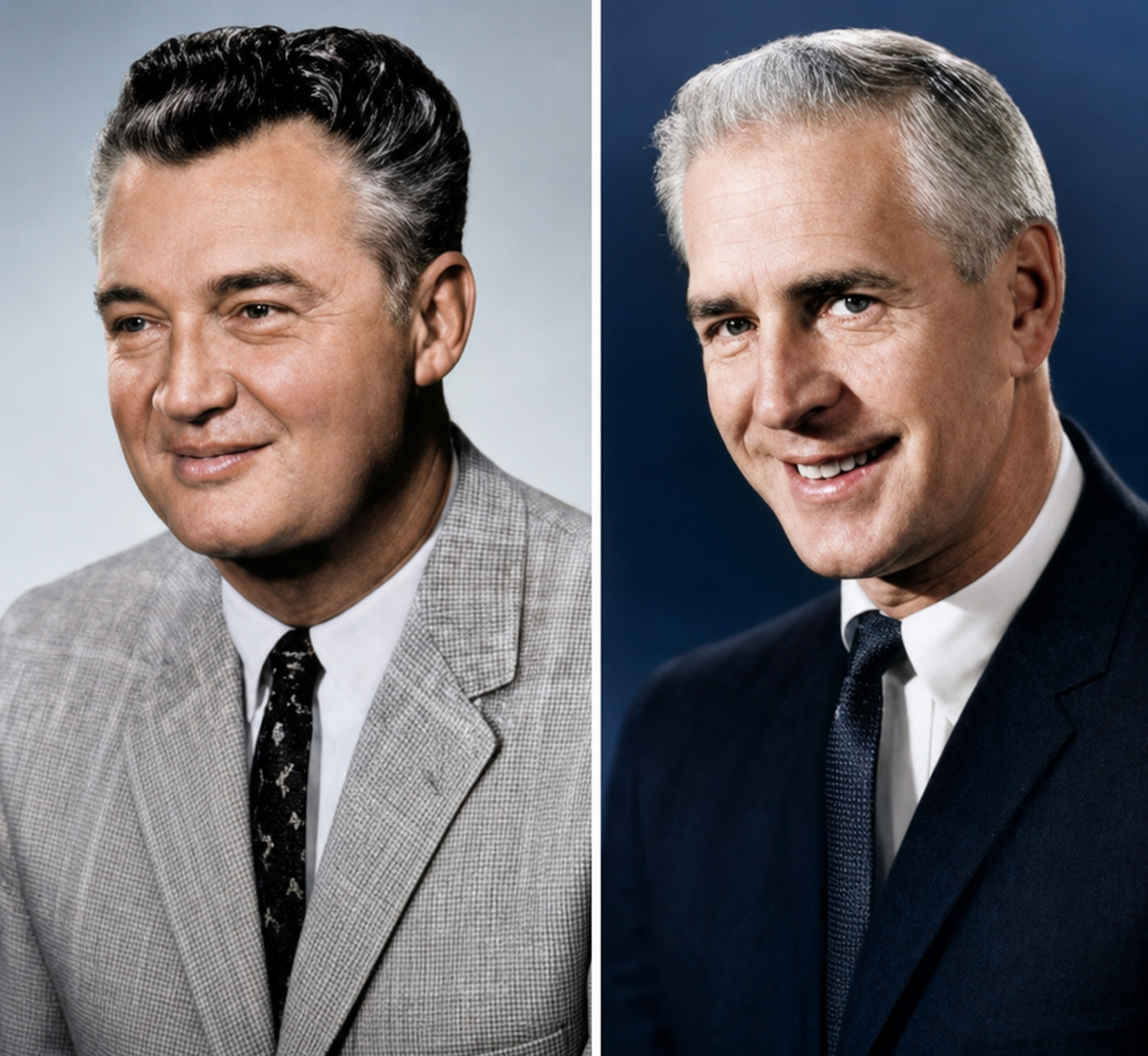
Harry Caray & Jack Buck — Voices of the Game
(Restored and colorized: Archival portraits of two broadcasting legends whose voices defined generations of baseball fans.)
Harry Caray’s voice was unmistakable — gravelly, booming, and alive with the kind of enthusiasm that made even a routine fly ball feel like a moment of destiny. Born Harry Christopher Carabina in St. Louis in 1914, Caray’s rise from a tough childhood to one of the most recognizable voices in sports is a quintessentially American story. He began his broadcasting career in the 1940s, but it was his long tenure with the St. Louis Cardinals that cemented his legend.
Caray didn’t just call games; he inhabited them. His broadcasts were a blend of raw emotion, unfiltered reactions, and a genuine sense of camaraderie with the fans. He was the rare broadcaster who sounded like he was sitting right next to you — beer in hand, scorecard smudged, heart on his sleeve.
The Cardinals Years: A City’s Soundtrack
From the 1940s through the 1960s, Caray’s voice became synonymous with Cardinals baseball. St. Louis was a baseball town, and Caray was its unofficial mayor. His calls were energetic, unpredictable, and deeply human. He celebrated the highs with gusto and lamented the lows with the same passion fans felt in their living rooms.
Caray’s signature exclamation — “Holy Cow!” — became part of the American lexicon. It wasn’t a catchphrase crafted for branding; it was simply Harry being Harry, reacting with the same astonishment as the fans he served.
Chicago and the National Spotlight
After his time in St. Louis, Caray’s career took him to Oakland, then to the Chicago White Sox, and finally to the Chicago Cubs, where he became a national icon. His Wrigley Field broadcasts, especially the beloved tradition of leading the crowd in “Take Me Out to the Ball Game,” transformed him from a regional legend into a cultural figure.
Caray’s style was imperfect, unpolished, and utterly authentic. He mispronounced names, lost track of plays, and occasionally wandered off into tangents — and fans adored him for it. He represented the soul of baseball: unpredictable, joyful, and deeply communal.
Jack Buck: The Poet Laureate of the Ballgame
A Calm, Commanding Presence
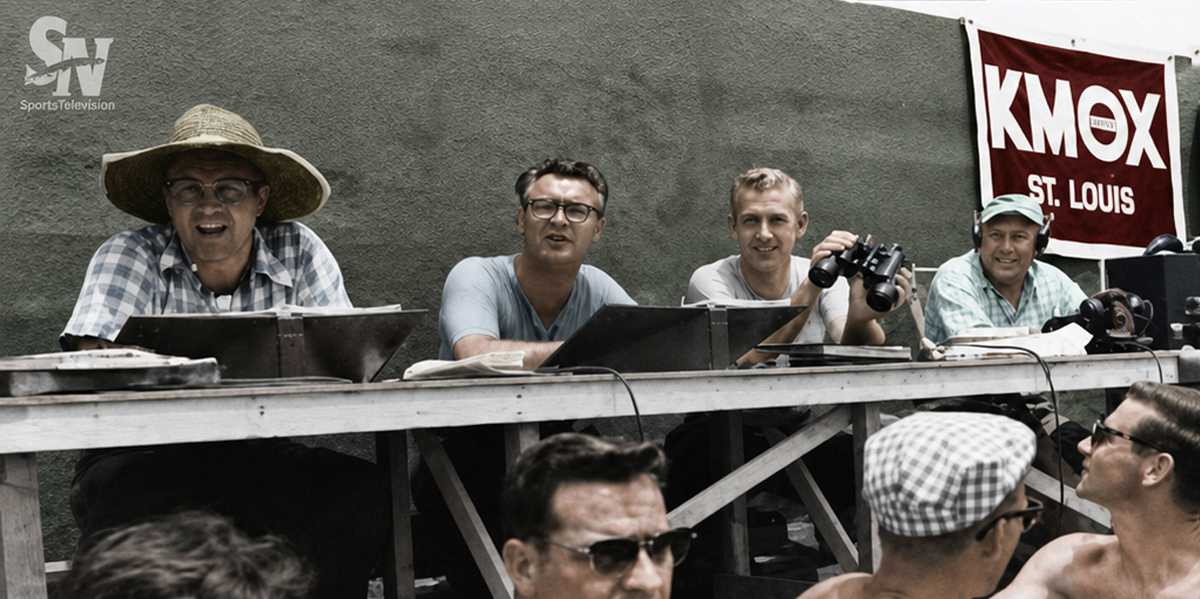
Harry Caray and Jack Buck, KMOX, 1954.
If Harry Caray was the fire, Jack Buck was the flame’s steady glow. Born in 1924 in Holyoke, Massachusetts, Buck’s path to broadcasting was shaped by service in World War II and a postwar education that led him into radio. His voice — smooth, measured, and resonant — carried a quiet authority that made listeners lean in.
Buck joined the St. Louis Cardinals broadcast team in 1954, and over the next five decades, he became one of the most respected voices in sports. Where Caray was exuberant, Buck was elegant. Where Caray shouted, Buck painted. His calls were crafted with a writer’s ear and a storyteller’s instinct.
The Cardinals’ Steady Voice
Buck’s long association with the Cardinals made him a fixture in the Midwest, but his influence extended far beyond St. Louis. His national work with CBS Radio and NBC brought him into living rooms across America, especially during postseason broadcasts.
He had a gift for economy — the ability to say just enough, never too much. His most famous calls are remembered not for their volume, but for their clarity and emotional precision. When Ozzie Smith hit his legendary 1985 NLCS home run, Buck delivered a line that still echoes through baseball history: “Go crazy, folks! Go crazy!” It was spontaneous, joyous, and perfectly Buck.
A Master of Moments
Buck’s genius lay in his timing. He understood that silence could be as powerful as speech. During Kirk Gibson’s iconic 1988 World Series home run, Buck allowed the roar of the crowd to carry the moment before offering his understated, unforgettable line: “I don’t believe what I just saw.”
He didn’t need theatrics. He needed only truth — and he delivered it with grace.
Two Legends, One Legacy
Parallel Paths Through America’s Pastime
Though Harry Caray and Jack Buck had distinct styles, their careers intersected in meaningful ways. Both spent formative years with the St. Louis Cardinals, shaping the sound of baseball in the Midwest. Both became national voices. Both transcended the role of broadcaster to become cultural touchstones.
Caray represented the fan’s heart — loud, passionate, imperfect, and endlessly enthusiastic. Buck represented the fan’s mind — thoughtful, observant, and poetic. Together, they embodied the full emotional spectrum of baseball.
_____________________
KMOX-AM (St. Louis) | Harry Caray and Jack Buck | Cardinals vs Giants | June 8, 1962
Audio Digitally Remastered by USA Radio Museum
_____________________
Influence Across Generations
Their legacies extend far beyond their own broadcasts. Caray’s grandson, Chip Caray, and Buck’s son, Joe Buck, carried their family names — and their broadcasting DNA — into the modern era. Through them, the Caray and Buck traditions continue to shape how America hears the game.
But even without their descendants, the two men would remain giants. Their voices are preserved in recordings, their calls replayed in documentaries, their influence felt in every broadcaster who steps into a booth with the hope of capturing the magic they once conjured.
_____________________
USARM Note: Did Harry Caray and Jack Buck Continued Working Together?
Although Harry Caray and Jack Buck are forever linked in the history of baseball broadcasting, they were not always the traditional two‑man team in the radio booth.
Their only professional overlap occurred in St. Louis, where both served as part of the Cardinals broadcast team on KXOK and KMOX-AM (CBS) radio as both were the club’s flagship stations (Cardinals’ ballgames was broadcast on KMOX radio in the latter years). From 1954 to 1969 (KMOX), they worked alongside one another in a rotating broadcast format common to the era, alternating innings rather than calling games side‑by‑side.
After St. Louis, their careers diverged:
- Caray moved on to Chicago, eventually becoming the national face of Cubs baseball on WGN.
- Buck remained the steady voice of the Cardinals and rose to national prominence through CBS Radio and NBC.
Their voices once echoed through the same St. Louis summer nights, but their later legacies unfolded on different stages — Caray in Chicago, Buck across the national airwaves.
_____________________
In Memoriam: The Final Innings
The story of Harry Caray and Jack Buck is inseparable from the joy they brought to generations of baseball fans, yet their departures from this world also form part of their legacy — moments that invited the nation to pause, remember, and reflect on the voices that had become part of our lives.
Harry Caray passed away on February 18, 1998, at the age of 83. His death came just before what would have been his 54th season behind the microphone. America mourned not only a broadcaster, but a companion — a man whose exuberance, humor, and unmistakable “Holy Cow!” had become the soundtrack of countless summers. In Chicago, fans left flowers, beer cans, and handwritten notes outside Wrigley Field, a testament to how deeply he had woven himself into the city’s heart.
Jack Buck passed on June 18, 2002, at the age of 77. His final years were marked by illness, yet he continued to broadcast with the same grace and clarity that defined his career. When news of his passing broke, tributes poured in from across the baseball world. Players, broadcasters, and fans alike remembered him not only for his iconic calls, but for his humility, his eloquence, and the quiet strength he brought to every booth he entered.
Warm Remembrance: The Echo That Never Fades
Harry Caray and Jack Buck are no longer with us, but their voices remain woven into the fabric of American memory. They remind us of summer nights with radios glowing on porches, of long car rides with the windows down, of fathers and mothers passing the love of the game to their children through sound alone.
Caray taught us that baseball is joy — messy, loud, and full of wonder. Buck taught us that baseball is poetry — quiet, dramatic, and deeply human. Together, they gave us a soundtrack that still resonates.
As the USA Radio Museum honors these two legends, we celebrate not just their careers, but the way they made us feel. They turned games into stories, innings into memories, and broadcasts into shared experiences that stretched across states, generations, and lifetimes.
Their microphones may be silent now, but their echoes endure — in every ballpark, every broadcast, and every fan who ever fell in love with baseball through the radio.
_____________________
Sources & Credits
Research for this tribute draws upon a range of historical, archival, and biographical materials documenting the lives and careers of Harry Caray and Jack Buck, including:
- St. Louis Cardinals Archives – historical broadcast records, KMOX radio documentation, and mid‑century inning‑rotation practices. https://www.mlb.com/cardinals/history
- Chicago Cubs / WGN Broadcast Archives – materials relating to Harry Caray’s tenure in Chicago and his national visibility through WGN’s superstation era. https://www.mlb.com/cubs/history
https://wgntv.com/news/wgn-archive/(wgntv.com in Bing) - CBS Radio Sports – national broadcast history, postseason coverage, and archival audio featuring Jack Buck. https://www.audacy.com/sports
- NBC Sports Archives – documentation of Buck’s national play‑by‑play work and World Series coverage. https://www.nbcsports.com/mlb
- National Baseball Hall of Fame & Museum – biographical entries, career summaries, and curated audio excerpts. Harry Caray:
https://baseballhall.org/hall-of-famers/caray-harry(baseballhall.org in Bing) Jack Buck:https://baseballhall.org/hall-of-famers/buck-jack(baseballhall.org in Bing) - Obituary Records – reporting on the passings of Harry Caray (1998) and Jack Buck (2002). The New York Times – Harry Caray:
https://www.nytimes.com/1998/02/19/sports/harry-caray-broadcaster-dies-at-83.html(nytimes.com in Bing) The New York Times – Jack Buck:https://www.nytimes.com/2002/06/19/sports/jack-buck-cardinals-broadcaster-dies-at-77.html(nytimes.com in Bing) Chicago Tribune – Harry Caray:https://www.chicagotribune.com/news/ct-xpm-1998-02-19-9802190173-story.html(chicagotribune.com in Bing) St. Louis Post‑Dispatch – Jack Buck:https://www.stltoday.com/sports/columns/ben-frederickson/remembering-jack-buck/article_8a4e3b4a-4f9e-11e2-8f3d-0019bb30f31a.html(stltoday.com in Bing) - Published Biographies & Interviews – retrospective interviews with family members, colleagues, and contemporaries in baseball broadcasting. Harry Caray biography (Goodreads):
https://www.goodreads.com/book/show/103662.Holy_Cow(goodreads.com in Bing) Jack Buck biography (Goodreads):https://www.goodreads.com/book/show/113040.Jack_Buck(goodreads.com in Bing) - USA Radio Museum Research Notes – internal documentation on mid‑century baseball radio, regional broadcast practices, and the evolution of sports announcing styles.
Special thanks to the archivists, collectors, and historians whose work preserves the voices that shaped America’s summer soundtrack.
_____________________
Contact: jimf.usaradiomuseum@gmail.com
_________________________
A USARM Viewing Tip: On your PC? Mouse/double-click over the images for expanded views. On your mobile or tablet device? Finger-tap all the above images inside the post and stretch image across your device’s screen for LARGEST digitized view. Then click your browser’s back arrow to return to the featured post.
© 2026 USA Radio Museum. All Rights Reserved.
