
He Became TV's First Black Variety Show Host But the Racial Barriers Ultimately Brought His Landmark NBC Program to an End _____________________
He Became TV’s First Black Variety Show Host But the Racial Barriers Ultimately Brought His Landmark NBC Program to an End
_____________________
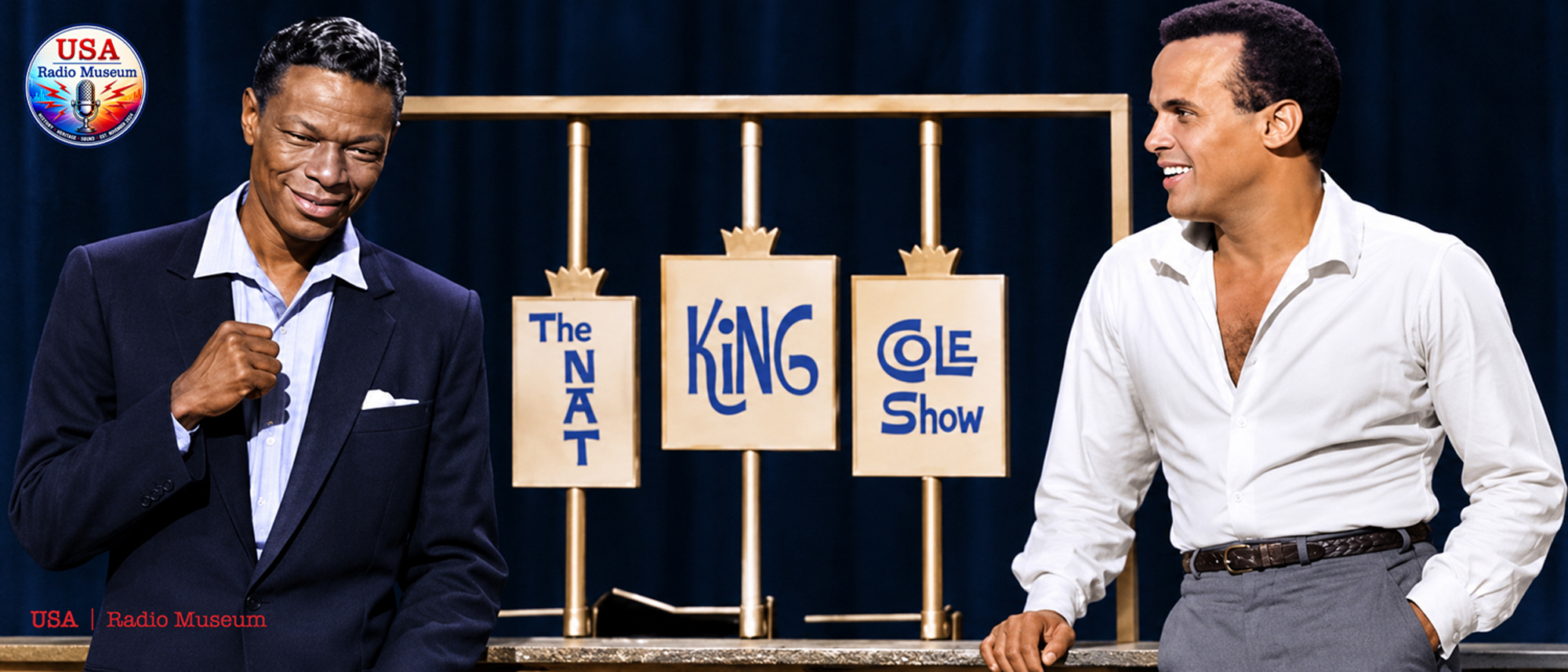
In the autumn of 1956, American television witnessed a moment that was both groundbreaking and bittersically revealing. When The Nat King Cole Show premiered on NBC, on this day, November 5, 1956, it did far more than introduce another variety program to the nation’s growing television audience. It placed one of America’s most celebrated entertainers at the center of a medium that had, until then, offered few opportunities for Black performers to serve as hosts of nationally broadcast programs. For Nat King Cole, whose smooth voice, elegant presence, and immense popularity had earned him international acclaim, the milestone represented another achievement in a career already filled with firsts. Yet the story of his television venture would become a sobering reflection of the racial realities that continued to shape American life during the 1950s.
By the time NBC offered Cole his own television program, radio had long before became his launching pad. He became one of the most recognizable entertainers in the world. His recordings regularly topped charts, his concerts drew enthusiastic audiences, and his appeal extended across racial and geographic boundaries. With his effortless charm and sophisticated demeanor, Cole seemed ideally suited for television’s golden age. Variety programs were flourishing, and networks were eager to capitalize on performers who could attract broad audiences. On paper, The Nat King Cole Show appeared destined for success.
The format was familiar to viewers of the era. Each week, Cole welcomed a parade of talented guests, blending music, conversation, and entertainment into an hour of polished programming. The show featured some of the most respected performers in the industry, reflecting the high regard Cole enjoyed among his peers. Artists such as Ella Fitzgerald, Tony Bennett, Mel Tormé, Harry Belafonte, and many others appeared alongside him, lending their talents to a production that consistently delivered quality entertainment. Critics praised the program, and NBC remained committed to supporting its star.
Yet behind the scenes, a different story was unfolding. Despite the program’s artistic success and the stature of its host, securing national sponsorship became an almost impossible challenge. During an era when segregation remained deeply entrenched throughout much of the United States, many major advertisers feared associating their brands with a television show hosted by a Black man. Executives worried about alienating customers, particularly in the South, where racial prejudice continued to influence business decisions and public life. The concerns had little to do with ratings or production quality. Instead, they revealed the extent to which racism shaped corporate calculations during the period.
Television in the 1950s was heavily dependent on sponsorship revenue. Advertisers often wielded tremendous influence over network programming, and without their financial backing, even critically acclaimed productions struggled to survive. The Nat King Cole Show found itself trapped by this reality. NBC continued to provide support, but sustaining a weekly network program without committed sponsors proved increasingly difficult. Cole’s celebrity and professional reputation could not overcome the reluctance of Madison Avenue to fully embrace the historic significance of what his show represented.
The irony was impossible to ignore. Millions of Americans purchased Cole’s records, attended his concerts, and admired his talents. His music transcended barriers and brought listeners together across cultural divides. Yet many of the same institutions eager to profit from popular entertainment hesitated when presented with the opportunity to support a program led by a Black performer. The contradiction exposed a nation wrestling with profound social changes while remaining constrained by longstanding racial prejudices.
Throughout the show’s run, Cole maintained the grace and dignity that had become his trademark. He rarely allowed frustration to overshadow his professionalism. Those who appeared on the program understood both its entertainment value and its larger significance. Fellow performers continued to lend their support, recognizing that the success of the series could open doors for future generations of artists who sought equal opportunities in television and broadcasting.
_____________________
_____________________
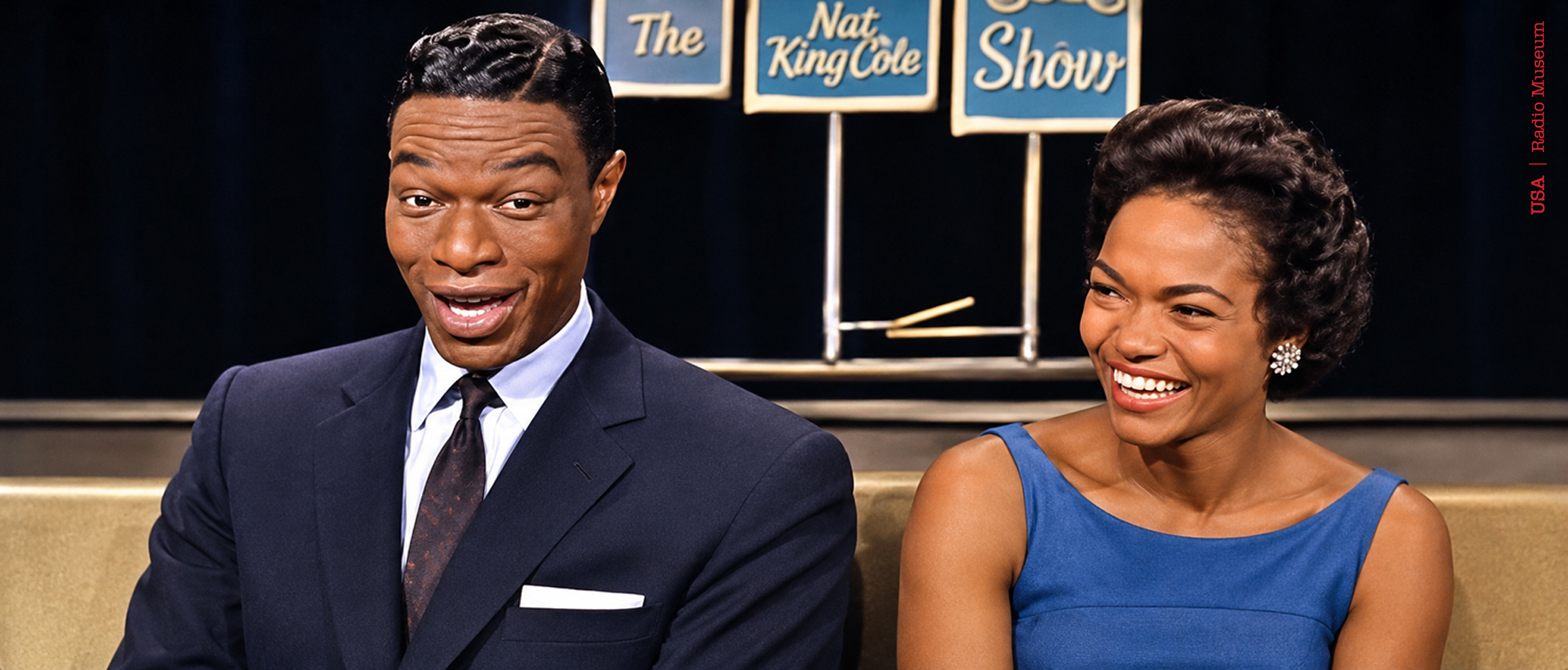
Ultimately, however, goodwill alone could not compensate for the absence of sustained sponsorship. After little more than a year on the air, Cole made the difficult decision to bring the experiment to an end. Reflecting upon the experience, he delivered a statement that remains one of the most memorable observations in broadcasting history: “Madison Avenue is afraid of the dark.” The remark was elegant, pointed, and impossible to misunderstand. In a single sentence, Cole captured the uncomfortable truth behind the show’s struggles.
Although The Nat King Cole Show was short-lived (1956-1957), its legacy has endured far beyond its original broadcast run. It demonstrated both the possibilities and limitations facing Black entertainers during television’s formative years. The program proved that audiences would embrace a talented Black host on national television, even as advertisers hesitated to support that reality. More importantly, it helped pave the way for future generations of performers who would challenge barriers and reshape the television landscape.
Today, the significance of The Nat King Cole Show extends well beyond its place in entertainment history. It stands as a reminder that progress is often accompanied by resistance, and that pioneers frequently bear burdens unseen by those who follow. Beyond radio, Nat King Cole entered television history not only as a gifted singer and entertainer, but as a figure whose courage exposed the contradictions of his era. His brief but influential venture into network television remains a testament to both his extraordinary talent and his unwavering dignity in the face of obstacles that had little to do with entertainment and everything to do with the America of his time.
_____________________
Sources and Credits
Historical information for this feature was primarily sourced from This Day In Music’s November 5 historical archive, which documents the debut of The Nat King Cole Show on NBC-TV on November 5, 1956, and examines the social and commercial challenges faced by the pioneering television program.
Additional historical context regarding the show’s significance as one of the first nationally televised variety programs hosted by a Black entertainer, as well as the sponsorship challenges that contributed to its cancellation, was corroborated through contemporary historical references and archival broadcast history sources.
Primary source reference: This Day In Music. “What Happened on November 5th in Music.” Accessed November 2026. https://www.thisdayinmusic.com/on-this-day-in-music-november-5/
Article prepared for publication by the USA Radio Museum in recognition of an important milestone in American broadcasting history.
_____________________
Contact: jimf.usaradiomuseum@gmail.com
_________________
© 2026 USA Radio Museum. All Rights Reserved
