
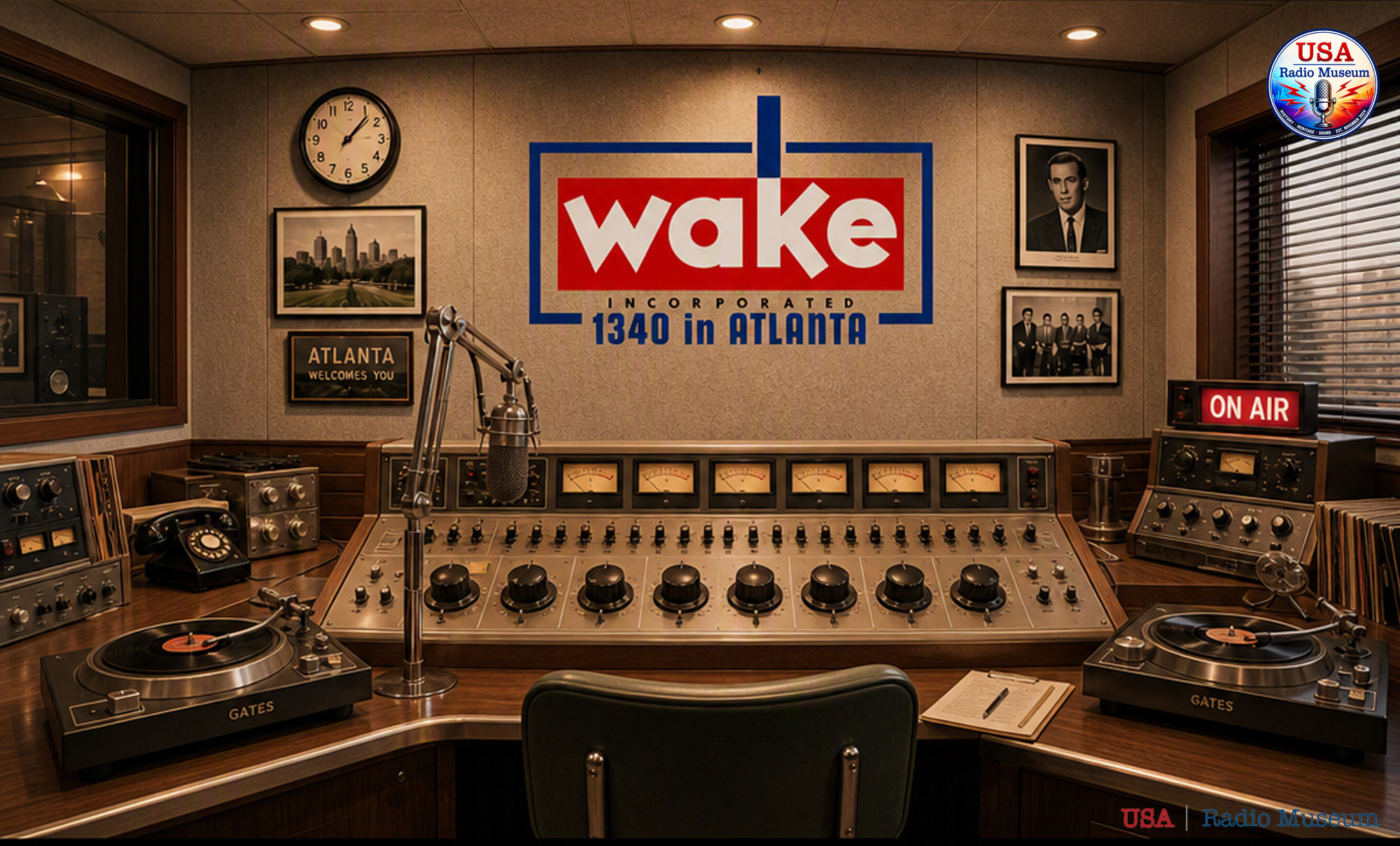
How a Small Atlanta Station Sparked a Southern Radio Revolution WAKE 1340 didn’t simply broadcast music — it ignited a cultural awakening across At
How a Small Atlanta Station Sparked a Southern Radio Revolution
 WAKE 1340 didn’t simply broadcast music — it ignited a cultural awakening across Atlanta. In the early 1960s, before the rise of powerhouse Top 40 giants and before the Drake‑Chenault revolution swept the nation, WAKE stood as one of the first Southern stations to experiment with high‑energy hit radio. Its modest studios, glowing tubes, and spinning 45s became the crucible where two young programming minds — Bill Drake and Paul Drew — began shaping ideas that would later transform American radio forever.
Inside WAKE’s control room, the air crackled with possibility. The oversized rotary pots, the warm tungsten glow, the Gates turntables, and the hum of analog circuitry formed the backdrop for a new kind of broadcast rhythm — tighter, faster, more focused, and unmistakably modern. Teenagers across Atlanta felt the shift immediately. WAKE sounded alive, urgent, and tuned to the pulse of youth culture.
This is the story of that awakening — the station, the sound, and the two architects whose earliest innovations began right here on 1340 AM. — USA Radio Museum
The Rise of Drake & Drew: Two Architects, One Blueprint

A young Bill Drake, WAKE in Atlanta, circa 1960.
Bill Drake and Paul Drew did not arrive at WAKE as legends. They arrived as students of the craft — young programmers fascinated by pacing, flow, and the psychology of listening. WAKE became their laboratory.
Drake, with his instinct for structure, began tightening playlists and reducing clutter. He believed radio should move with purpose — every second counted, every transition mattered. Drew, equally ambitious, studied audience behavior and refined the station’s personality‑driven presentation. Together, though not yet formally partnered, they were shaping the earliest outlines of what would later become the Boss Radio philosophy.
Their time at WAKE was brief, but it was foundational. The ideas born here — cleaner formatics, faster momentum, sharper identity — would later explode across America when Drake and Drew reunited at RKO General. But the spark began in Atlanta, inside a modest studio with four VU meters glowing in the dark.
The WAKE Programming Style: Fast, Focused, and Fearless
WAKE’s sound in the early 1960s was unlike anything Atlanta had ever heard. The station moved with a kind of momentum that felt electric — songs arrived quickly, transitions snapped cleanly, and the pacing mirrored the restless excitement of youth culture. Instead of long, meandering playlists, WAKE kept its hits in constant motion, creating a sense of urgency that made listeners feel as though they were part of something unfolding in real time.
The jocks were central to this energy. They spoke with rhythm, confidence, and a forward‑leaning intensity that matched the music they introduced. Their delivery felt modern — crisp, upbeat, and unmistakably aimed at teenagers who wanted radio to sound alive. WAKE’s production style reinforced this feeling: tighter segues, fewer slow fades, and a cleaner, more polished sound that made the station seem far larger than its modest signal suggested.
This was not yet the fully engineered Drake‑Chenault system that would later sweep the nation, but it was the prototype. WAKE proved that a station didn’t need massive power or towering resources to feel big. It needed momentum — a sense of movement, a pulse, a heartbeat. Teenagers across Atlanta responded instantly. WAKE became the soundtrack of drive‑ins, soda shops, school dances, and the tinny speakers of transistor radios tucked into back pockets.
The station didn’t just play records. It created an atmosphere — a feeling that something exciting was happening right now, and if you weren’t listening, you were missing it.
The Transition Toward WQXI: A New Giant Awakens
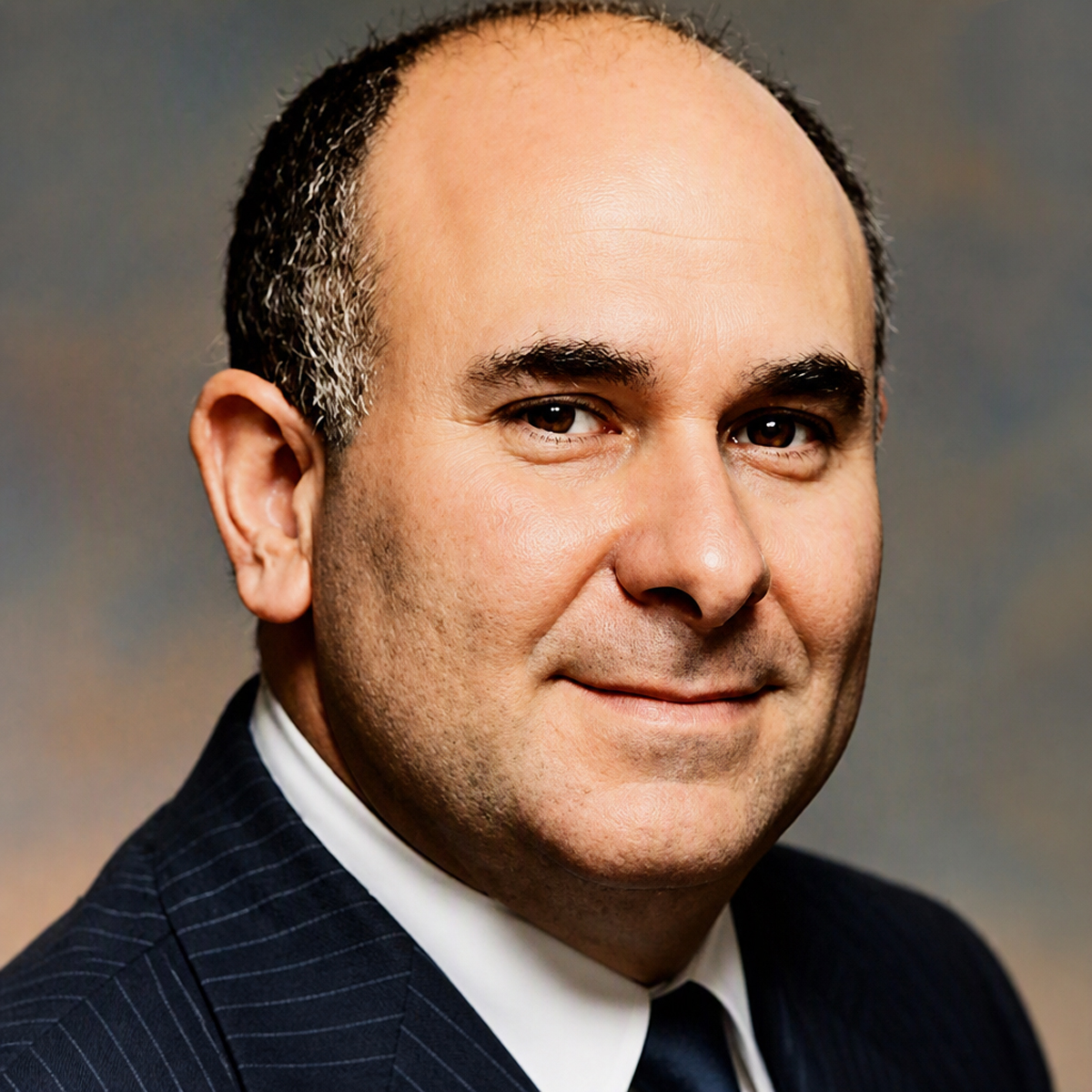
Paul Drew circa 1970.
By the mid‑1960s, Atlanta’s radio landscape was shifting beneath everyone’s feet. WAKE had been the spark — the first station in the city to experiment with a modern, fast‑paced hit format — but a larger force was beginning to rise. WQXI, known affectionately as “Quixie in Dixie,” possessed a stronger signal, deeper resources, and an ambition that matched the growing appetite for contemporary Top 40 radio. It was poised to become the next great Southern powerhouse.
When Paul Drew moved from WAKE to WQXI, he carried with him every lesson learned inside that modest 1340 studio. At Quixie, he refined those ideas with sharper precision and greater authority. The pacing tightened. The personalities sharpened. The station’s identity became unmistakably bold. WQXI didn’t just adopt modern Top 40 — it embraced it with a confidence that made the station sound unstoppable.
Meanwhile, Bill Drake had already begun his westward journey, eventually landing at KHJ Los Angeles in 1965. There, he unveiled the fully engineered Boss Radio format — a system so clean, so fast, and so revolutionary that it changed the sound of American radio overnight. When Drake and Drew later reunited under RKO General, their combined philosophies reshaped the industry from coast to coast.
But the roots of that revolution — the earliest experiments, the first sparks of innovation — were born at WAKE. The transition to WQXI was not a departure from WAKE’s legacy, but an evolution of it. What began in a small Atlanta studio became the foundation for one of the most influential programming partnerships in broadcasting history.
The Legacy That Still Echoes Today
WAKE’s signal may have been modest, but its influence radiates far beyond the reach of its 1340 kilocycles. What happened inside that small Atlanta studio — the tightening of playlists, the sharpening of pacing, the early experiments in momentum and modernity — became the foundation for a programming revolution that would soon sweep across America. WAKE was the first spark, the quiet beginning of a seismic shift in how radio spoke, moved, and connected with its audience.
For Bill Drake and Paul Drew, WAKE was not just a stop along the way. It was the crucible where their earliest instincts were tested, refined, and proven. The lessons they carried from that studio — the importance of flow, the power of clarity, the magic of momentum — would later define KHJ Los Angeles, CKLW Windsor‑Detroit, KFRC San Francisco, WRKO Boston, and dozens of other stations that adopted the Boss Radio philosophy. The sound that would dominate American radio for more than a decade began with two young programmers listening closely to the heartbeat of Atlanta’s youth.
Even today, the echoes of WAKE’s innovation can be heard in every tightly produced format, every clean segue, every station that understands the value of pacing and personality. WAKE demonstrated that greatness doesn’t require a massive signal or towering resources — it requires vision, discipline, and a willingness to rethink what radio can be.
Thanks to current means of applicational restorations — the studio, the portraits, the logo, the narrative — WAKE’s story now stands preserved with the dignity it deserves. It lives again not as a footnote, but as a vital chapter in the evolution of American broadcasting. The hum of those tubes, the glow of those VU meters, and the spark of those early ideas continue to resonate, reminding us that sometimes the smallest stations leave the largest legacy.
EPILOGUE — Why WAKE Faded into the Ether in 1970
By the end of the 1960s, the radio world WAKE once helped energize had transformed beyond recognition. The very innovations that WAKE pioneered — tighter pacing, modern production, youth‑driven momentum — had been adopted, refined, and amplified by larger stations with stronger signals and deeper resources. Atlanta’s airwaves were no longer a battleground of small AM contenders; they were dominated by emerging giants whose reach extended far beyond the city limits.
FM radio was rising fast. Its superior fidelity made music shimmer in ways AM simply couldn’t match. Younger listeners migrated to FM almost overnight, drawn to the clarity, the stereo sound, and the new album‑oriented formats that defined the early 1970s. WAKE, with its modest 1340 AM signal, could not compete in a world where fidelity had become part of the experience.
At the same time, ownership changes and market realignments swept through Atlanta broadcasting. Stations consolidated, frequencies shifted, and smaller signals were absorbed or repurposed. WAKE’s identity — once vibrant, youthful, and unmistakably modern — became harder to sustain as the station moved through format changes aimed at older audiences. The energy that had once defined WAKE gradually softened, then faded, until the station’s presence on the dial became little more than a whisper.
By 1970, WAKE slipped quietly into the ether. There was no dramatic sign‑off, no final on‑air farewell. It simply drifted out of the landscape it once helped shape, overtaken by the very evolution it had inspired.
Yet its disappearance does not diminish its importance. If anything, it sharpens it. WAKE’s legacy lives not in longevity, but in influence. It was the station where Bill Drake and Paul Drew first tested the ideas that would later revolutionize American radio. It was the spark that awakened Atlanta’s airwaves and set the stage for WQXI, KHJ, CKLW, and every Boss Radio giant that followed.
WAKE faded from the dial — but its impact never faded from history.
_________________________
Sources & Credits
A USA Radio Museum Archival Acknowledgment
This tribute to WAKE 1340 Atlanta, and to the early programming innovations of Bill Drake and Paul Drew, is informed by a blend of historical broadcast records, industry documentation, museum archives, and widely recognized radio‑history sources. The narrative reflects established knowledge about WAKE’s operations, the rise of WQXI, and the foundational programming philosophies that later shaped Boss Radio.
Primary Historical Context
- USA Radio Museum internal research notes and curator‑verified historical summaries
- Publicly available biographical information on Bill Drake and Paul Drew
- Documented histories of WAKE, WQXI, and Atlanta‑area broadcasting (1958–1970)
- Industry accounts of the development of modern Top 40 radio
- Archival interviews and recollections from radio personnel of the era
- General historical timelines of AM‑to‑FM audience migration in the late 1960s
Broadcast Heritage & Format Evolution
- Widely cited analyses of the Drake‑Chenault programming system
- KHJ Los Angeles and RKO General format histories
- CKLW Windsor‑Detroit programming documentation and retrospective commentary
- Publicly accessible radio‑trade publications and historical summaries
_________________________
Contact: jimf.usaradiomuseum@gmail.com
_________________________
A USARM Viewing Tip: On your PC? Mouse/double-click over the images for expanded views. On your mobile or tablet device? Finger-tap all the above images inside the post and stretch image across your device’s screen for LARGEST digitized view. Then click your browser’s back arrow to return to the featured post.
© 2026 USA Radio Museum. All Rights Reserved.

But WAKE was also beatened by 3 pioneering FM stations that is making Atlanta radio what it is today; WKLS A.K.A. 96 Rock, WZGC A.K.A. Z93, and the legendary Urban Contemporary station that is still going strong to this day WVEE A.K.A. V1O3 FM!
I started listening to WAKE on the day they signed on. I was eleven years old at that time. I woke up for school with the words “It’s seven AM! WAKE up Atlanta!” It was my go to station until 1963 when they changed their format to easy listening. I remember Bob McKee, Lucky Lane, Stan Richards etc. I used to go to the studios in the Georgian Terrace Hotel and watch through the window. In 1960, Bob McKee staged a marathon at Jim Knapp TV on Peachtree near 10th St. He stayed on air for nearly 5 days straight. Great memories.