
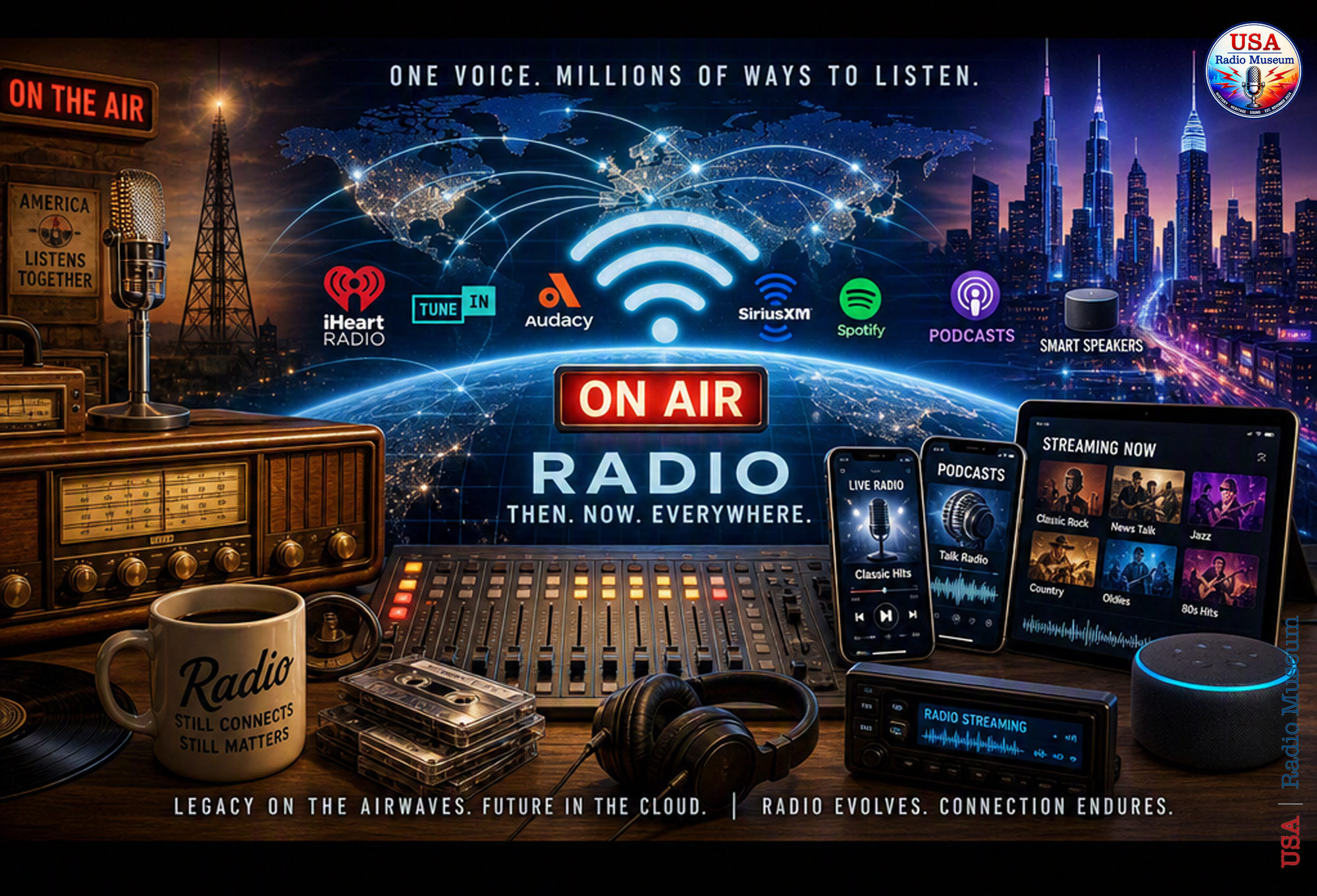
How Streaming Platforms Are Expanding the Reach, Relevance, and Resonance of America’s Most Enduring Medium For more than a century, radio has been
How Streaming Platforms Are Expanding the Reach, Relevance, and Resonance of America’s Most Enduring Medium
For more than a century, radio has been the quiet heartbeat of American culture — a companion in kitchens, cars, corner stores, and late‑night bedrooms. It has survived wars, recessions, the rise of television, the explosion of the internet, and the fragmentation of modern media. Yet here we stand in 2026, witnessing something remarkable: radio is not only still here, it is evolving, expanding, and rediscovering itself through the digital corridors of streaming platforms.
This is not a story of survival. It is a story of reinvention.
Today’s radio exists in two worlds at once — the familiar analog realm of AM/FM broadcasting and the boundless digital ecosystem of apps, smart speakers, podcasts, and on‑demand streams. The medium that once relied on towers and transmitters now thrives on servers and cloud distribution. And in this hybrid era, radio’s identity is being reshaped in ways that echo its earliest promise: to connect, to inform, to entertain, and to accompany listeners wherever life takes them. —USA Radio Museum
_____________________
From Airwaves to Algorithms — A New Kind of Reach
The most profound shift in present‑day radio is not simply that stations stream online. It is that streaming has fundamentally changed how radio reaches its audience.
In the mid‑20th century, a station’s footprint was defined by geography — the strength of its signal, the height of its tower, the contour of its coverage map. Today, a station’s reach is defined by interest. A listener in Detroit can follow a jazz station in Paris. A fan of 1960s Top 40 can stream a Color Radio tribute channel from Cleveland. A talk‑radio devotee can tune into a morning show from Los Angeles while sitting in a café in Stockholm.
Streaming dissolved the borders.
This has created a new competitive landscape, but also a new opportunity: stations no longer fight for dominance within a market. They compete for relevance within a genre, a mood, a moment. And for many broadcasters, this shift has been liberating. Niche formats — once impossible to sustain on traditional terrestrial signals — now thrive online, supported by global audiences who seek exactly what those stations offer.
The Rise of Hybrid Radio — Where Broadcast Meets Digital
The modern listener doesn’t choose between radio and streaming. They expect both.
This expectation has given birth to “hybrid radio,” a model where traditional broadcast is seamlessly integrated with digital features. A listener driving down I‑75 may hear an FM signal, but the moment that signal weakens, their car’s infotainment system automatically switches to the station’s online stream. Metadata displays album art, artist information, and real‑time updates. Some systems allow instant rewinding of live radio — a concept unimaginable in the analog era.
Hybrid radio preserves the spontaneity and personality of live broadcasting while offering the convenience and control of digital media. It is radio’s most compelling evolution yet.
Streaming Platforms as the New Radio Dial
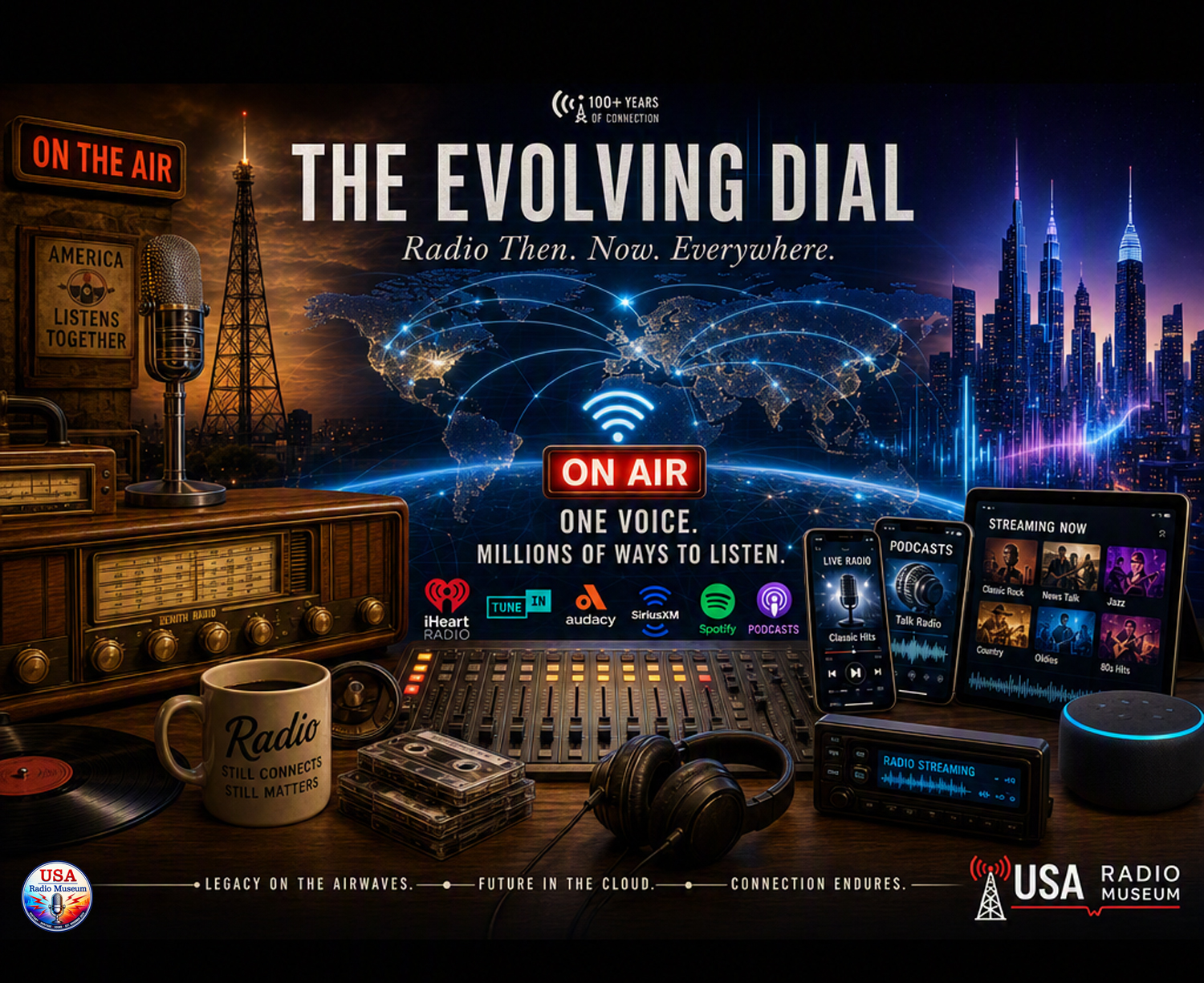 The modern radio dial is no longer a row of numbered frequencies. It is a grid of apps.
Platforms such as iHeartRadio, TuneIn, Audacy, SiriusXM Streaming, Spotify Live, and countless independent station apps have become the new gateways to radio content. These platforms do more than host streams — they categorize stations by genre, mood, decade, and theme. They recommend stations based on listening habits. They allow users to save favorites, create playlists, and discover new voices.
In this environment, radio stations are not just broadcasters. They are content creators competing for attention in a digital marketplace.
This shift has also encouraged stations to rethink their programming. Many now produce exclusive online‑only shows, extended interviews, behind‑the‑scenes segments, and podcast versions of their most popular programs. The line between “radio show” and “digital audio content” grows thinner each year.
Podcasts: Radio’s Unexpected Ally
When podcasts first emerged, many predicted they would replace radio. Instead, they became one of radio’s greatest allies.
Radio broadcasters quickly realized that podcasting offered something they had never fully possessed: permanence. A live show aired once and disappeared. A podcast episode lives forever, accessible at any time, discoverable by new audiences years later.
Today, nearly every major radio personality hosts a companion podcast. Many stations repurpose their best segments into podcast form, extending the life and reach of their content. Some broadcasters have even launched podcast networks, transforming their brand from a single station into a multi‑platform audio ecosystem.
Podcasts have not replaced radio — they have expanded it.
The Listener Has Changed — And Radio Followed
The modern listener is no longer anchored to a single device, a single room, or even a single moment in time. They move through their day with audio as a constant companion — from the morning news briefing on a smart speaker, to a favorite midday talk show streaming through a laptop, to a drive‑time playlist that blends live radio with algorithmic recommendations. Today’s listener is mobile, multitasking, and accustomed to choice. They expect audio to follow them seamlessly across devices: phone, tablet, smart speaker, car dashboard, connected television, and laptop. They expect content to be available live, on demand, and in replay. They expect personalization without losing the human touch.
This shift has fundamentally reshaped the expectations placed on radio. The listener who once tuned in at a fixed time now expects the station to meet them where they are — whether that means catching up on a missed segment during lunch, rewinding a live broadcast to hear a moment again, or streaming a favorite host from halfway across the world. Convenience is no longer a luxury; it is the baseline.
And yet, amid all this technological evolution, radio’s greatest strength — its companionship — remains unchanged. The human voice still matters. The warmth of a familiar host, the spontaneity of live conversation, the shared experience of hearing something unfold in real time — these qualities cannot be replicated by algorithms or playlists. They are the soul of radio, and they remain as vital today as they were in the era of vacuum tubes and tower lights.
But the way listeners access that companionship has transformed. Stations that understand this new reality — and embrace it — are thriving. They are building hybrid experiences that blend broadcast with digital, offering live streams, podcasts, replay features, metadata, and cross‑platform continuity. They are meeting listeners in the spaces where audio now lives: apps, smart speakers, connected cars, and streaming platforms.
Stations that resist this evolution, clinging solely to the traditional dial without expanding into digital ecosystems, are fading. Not because their content lacks value, but because the modern listener has moved on — and expects radio to move with them.
In 2026, the listener is everywhere. And radio, at its best, follows them everywhere.
The Human Voice Still Matters
Amid all this technological evolution, one truth remains: radio’s soul is still the human voice.
Streaming platforms may deliver the content, but it is the personality — the DJ, the host, the storyteller — who keeps listeners coming back. Algorithms can recommend songs, but they cannot replicate the warmth of a familiar voice, the spontaneity of live conversation, or the shared experience of hearing something unfold in real time.
Radio’s future will be shaped by technology, but its heart will always be human.
Conclusion — A Medium Reborn
Present‑day radio is not the radio of our childhood. It is broader, more accessible, more flexible, and more global than ever before. Streaming platforms have not replaced radio; they have revitalized it, giving it new life, new reach, and new relevance.
The dial has evolved — but the magic remains.
Radio continues to be the soundtrack of everyday life, now carried not just by towers and transmitters, but by servers, apps, and digital streams that ensure its voice is heard everywhere. In this new era, radio is not fading. It is flourishing.
And for those who cherish its legacy — including the USA Radio Museum — this evolution is not just a technological milestone. It is a celebration of a medium that has always found a way to endure, adapt, and inspire.
_________________________
Contact: jimf.usaradiomuseum@gmail.com
_________________________
A USARM Viewing Tip: On your PC? Mouse/double-click over the images for expanded views. On your mobile or tablet device? Finger-tap all the above images inside the post and stretch image across your device’s screen for LARGEST digitized view. Then click your browser’s back arrow to return to the featured post.
© 2026 USA Radio Museum. All Rights Reserved.

But for how long Jim, how long?