
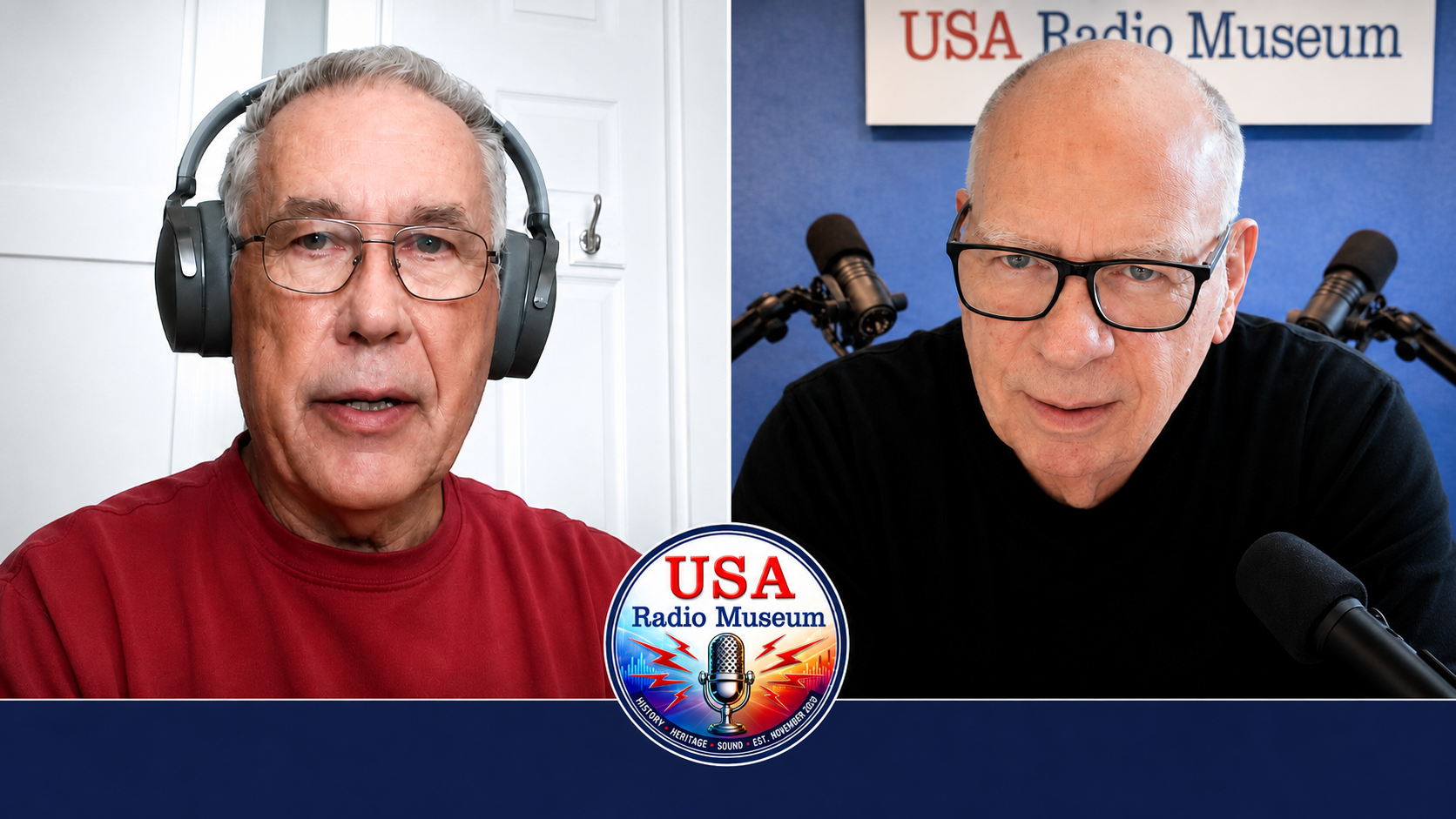
From a college dare to CKLW, Charlie O’Brien became part of one of radio’s legendary stations — and decades later found a new way to make sure its sou
From a college dare to CKLW, Charlie O’Brien became part of one of radio’s legendary stations — and decades later found a new way to make sure its sound would never disappear.
There was a time when simply turning the dial to 800 AM could tell you that you had found something different.
The music seemed louder. The jingles jumped out of the speaker. The personalities moved at a relentless pace. Records that might not have been heard anywhere else suddenly became hits.
It was CKLW — The Big 8, broadcasting 50,000 watts from Windsor, Ontario, directly into Detroit and across an enormous portion of North America.
For Charlie O’Brien, becoming one of those voices was almost an accident.
And more than half a century later, he remains one of the people helping make sure the sound of the Big 8 survives.
Here is an exclusive interview with Charlie O’Brien as interviewed by Jim Hampton, USA Radio Museum
A DARE THAT BECAME A CAREER
O’Brien says his radio career began because of a college roommate.
While attending the University of Western Ontario in London, his roommate kept urging him to try out for the campus radio station. O’Brien finally accepted the dare.
The campus station normally could only be heard internally, but a local AM-FM operation donated some of its overnight FM hours to the students as a community service.
Suddenly the college kid who loved records found himself taking a stack of them to a professional radio station and broadcasting from midnight until 3 a.m. on weeknights — and sometimes until 6 in the morning on weekends.
It was his first taste of real radio.
One of London’s established personalities, Dick Williams, heard something in O’Brien and helped him put together an audition tape. That tape eventually helped land O’Brien his first full-time radio job in Sudbury, Ontario, doing afternoon drive.
Sudbury also provided another important part of his radio education.
The station was at 790 on the AM dial.
Just ten kilohertz away was CKLW at 800.
At night, the Big 8 came roaring into town.
O’Brien listened.
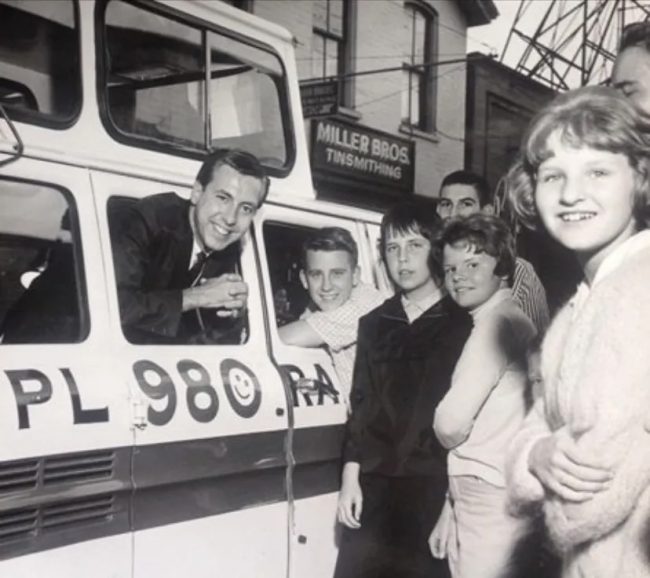
Dick Williams DJ Personality
“WHAT IS THIS?”
He had actually encountered CKLW a little earlier.
Born in Windsor but raised elsewhere, O’Brien remembered visiting relatives in Detroit around 1968 or 1969. He was riding down Woodward Avenue with his cousin when she turned up the car radio.
Out came the pounding sound of CKLW.
O’Brien remembered his reaction simply:
“Whoa, what is this?”
He had listened to the great nighttime stations — WABC in New York, WLS in Chicago and WBZ in Boston. Dick Summer and Cousin Brucie were among the voices he remembered. WLS personality John Records Landecker became such an influence that a young O’Brien admits he would write down some of Landecker’s bits and try them himself the following day.
Like many young disc jockeys, he was learning by listening.
But CKLW was something different.
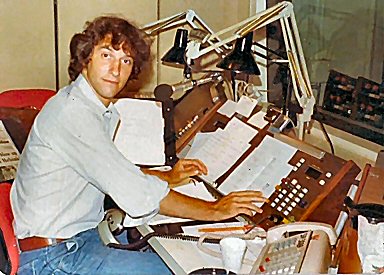
John Records Landecker, WLS Chicago
THE ROAD TO THE BIG 8
O’Brien’s path to CKLW came through a series of those “right place, right time” moments that seem to populate great radio careers.
Former CKLW personality Jim Jackson had become involved with CFGO in Ottawa, a station owned by the same company. O’Brien eventually landed in Ottawa, where another unexpected event changed his career.
CKLW evening personality Ted Richards injured his throat during karate training and temporarily lost his voice.
The station needed someone.
O’Brien was flown to Windsor to fill in.
Another opportunity came when much of the CKLW staff was attending Pat Holiday’s wedding, and O’Brien was again brought in to cover.
He would fly back to Ottawa and resume his regular job.
Then came the phone call that changed everything.
Acting program director Bill Gable told him there was finally a full-time opening.
In February 1976, Charlie O’Brien officially joined CKLW.
Walking into the station was, in his words, “overwhelming.”
These were voices he already knew from listening: Johnny Williams, Pat Holiday, Bill Gable and the other personalities who populated the Big 8.
Now they were his co-workers.
O’Brien initially worked all nights before moving into middays. Over the following years he would be heard in several dayparts on CKLW. His tenure placed him alongside a remarkable collection of radio personalities, including Pat Holiday, Bill Gable, Ted Richards, Tom Shannon, Johnny Williams, Mike Kelly and others.
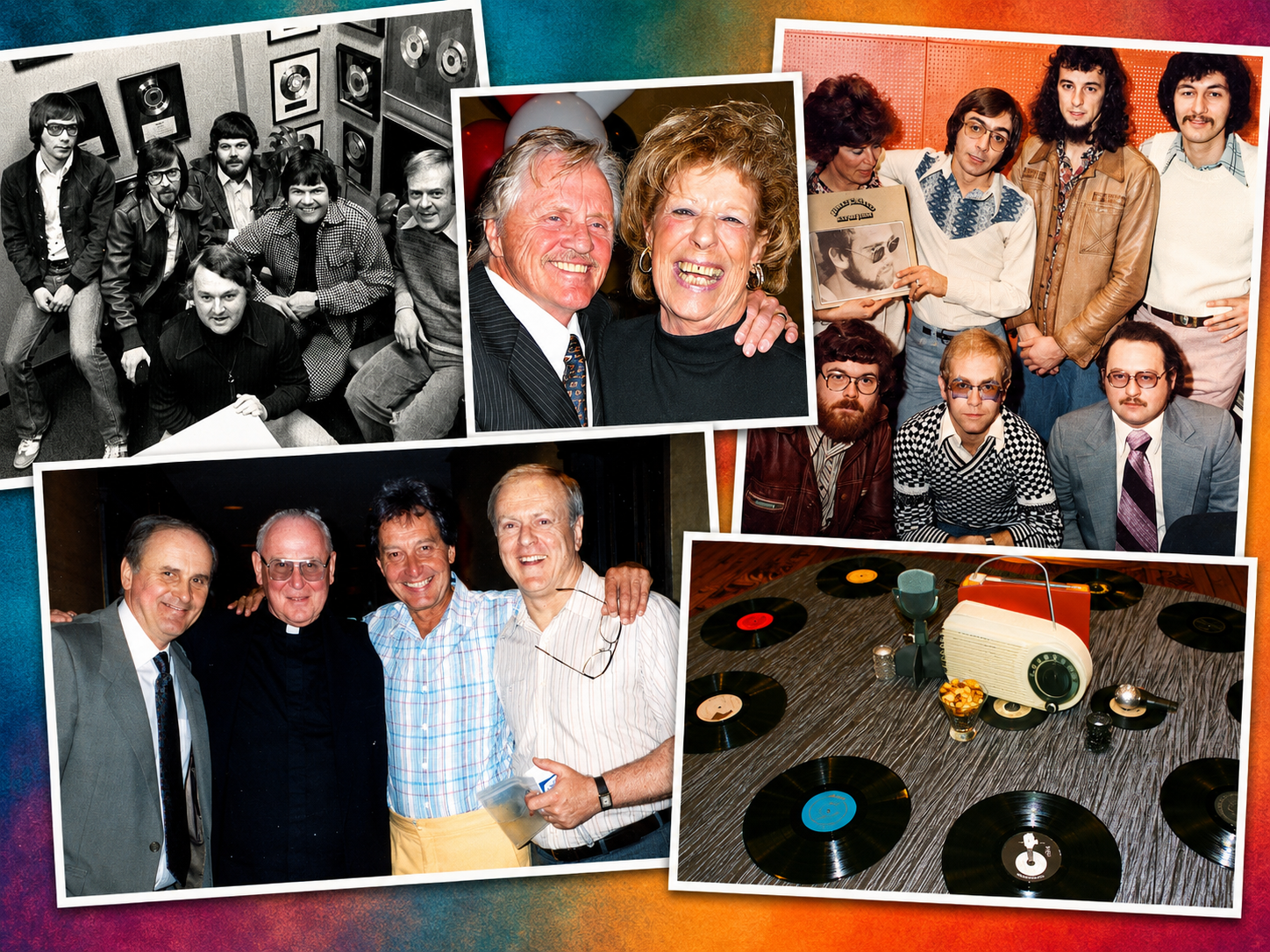
CKLW staff
WHY DID CKLW SOUND SO BIG?
It wasn’t imagination.
CKLW really did sound different.
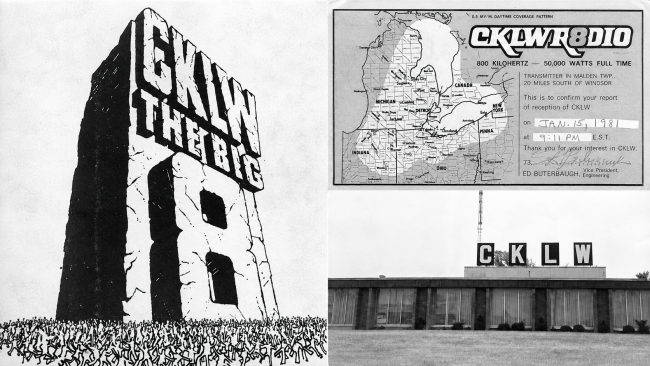
Part of it was the massive 50,000-watt facility. But O’Brien credits engineering wizard Ed Buderbaugh with taking that raw power and turning it into something extraordinary.
Buderbaugh meticulously tuned the station’s audio chain. Records were equalized specifically for airplay, and equipment was modified to maximize the station’s impact.
The objective was simple:
When a listener moved up and down the dial, CKLW had to explode out of the radio.
And it did.
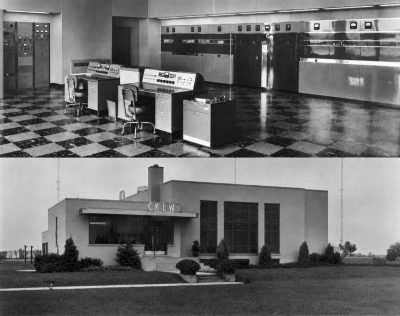
CKLW transmitter building plus inside
But audio processing was only part of the secret.
The format itself was extraordinarily disciplined.
The programming clocks dictated exactly where things happened. The music was carefully positioned. The remnants of the Bill Drake approach to Top 40 remained in CKLW’s DNA, even as the station developed its own personality.
Then there was Rosalie Trombley.
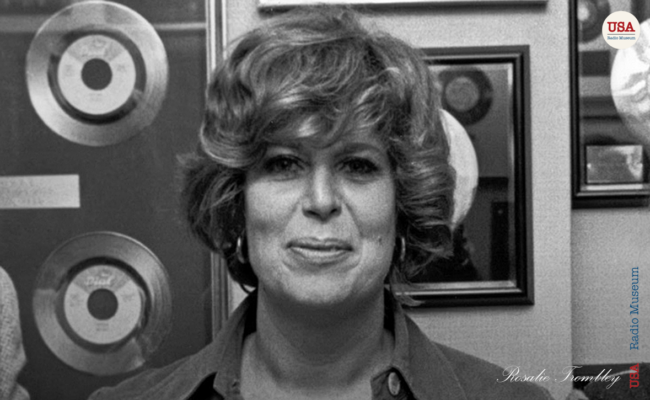
Rosalie Trombley, CKLW music director
Trombley became CKLW’s legendary music director in 1968 and developed an extraordinary ear for records. CKLW could help turn regional records into national hits, and artists and record-company representatives knew that getting Rosalie’s attention mattered.
O’Brien also worked under programmers including Les Garland, who would later become one of the people behind MTV.
Garland had an interesting way of describing the relationship between the two:
MTV, he said, was essentially the Big 8 format with pictures.
THREE HOURS AT FULL SPEED
Working at CKLW was not casual radio.
O’Brien remembers three-hour air shifts that could pass almost without the announcer realizing what had happened.
There was pressure.
There was precision.
There was very little room for error.
You entered the studio, worked at full speed, and several hours later walked out almost wondering where the time had gone.
But there were rewards that couldn’t be duplicated.
Artists constantly came through the station.
O’Brien remembers spending an hour in the studio with members of Chicago. He encountered Bob Seger walking through the station. KC of KC and the Sunshine Band appeared. He interviewed Meat Loaf. The Captain & Tennille and other stars crossed his path.
And then there was Paul Anka.
“GET READY FOR O’BRIEN!”
Anka was appearing on Tom Shannon’s show.
O’Brien was scheduled to follow Shannon and was waiting for his program to begin.
As Shannon wrapped up the show, he played Anka’s “Diana.”
With the microphone still open, Anka began improvising new lyrics over his own record.
Then, as O’Brien waited to take over the station, Paul Anka sang:
“Get ready for O’Brien!”
For a young radio personality, it was quite a moment.

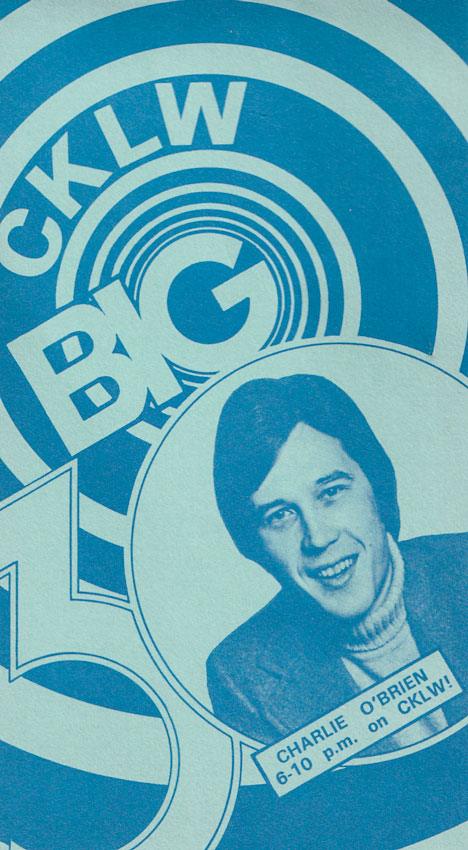
Charlie O’Brien
O’Brien’s reaction decades later still sounds like the kid who couldn’t quite believe it:
Paul Anka had just sung his name.
Those are the small moments from a great radio station that don’t necessarily show up in ratings books or industry histories.
But they’re what people remember.
THE PEOPLE BEHIND THE MICROPHONES
Ask O’Brien about CKLW and the conversation inevitably comes back to people.
One of them was Tom Shannon.
O’Brien worked with Shannon during three different stretches at CKLW and remembers him with enormous affection.
“He was just one of the nicest guys ever,” O’Brien recalled.
Shannon had an ability to make the person he was talking with feel that he had their complete attention.
O’Brien also remembers Dave Shafer, Bill Gable, Pat Holiday, Johnny Williams, Mike Kelly, Gary Burbank and the many others who passed through the station.
Sadly, many are now gone.
That loss is one reason preserving their work has become so important.
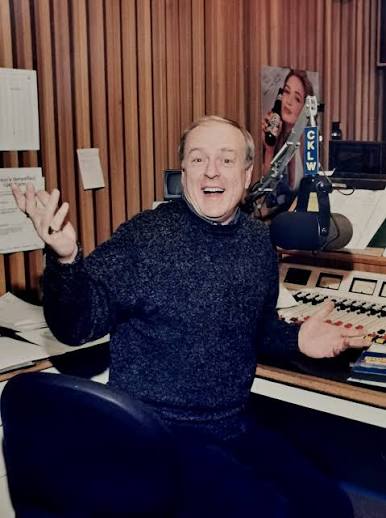
Tom Shannon
FROM CKLW TO CKWW
O’Brien’s career continued beyond his original Big 8 years.
He worked in London, Ottawa, Toronto and Windsor, including time at another legendary Canadian Top 40 station, 1050 CHUM in Toronto.
He eventually became program director and morning personality at CKWW AM 580, which became a sister station to CKLW.
By the end of his terrestrial radio career, CKWW was programming oldies, bringing O’Brien back once more to many of the records that had defined his earlier years.
He retired from CKWW in 2015.
And for three years, he says, he barely listened to radio.
Then another accidental moment occurred.
PUTTING THE BIG 8 BACK ON THE AIR
Someone posed a question online:
Why hadn’t anybody recreated the Big 8 sound on the internet?
O’Brien didn’t know much about streaming.
So he learned.
Within roughly 30 days he was figuring out encoders, streaming platforms, websites and everything necessary to create an internet radio station.
In 2018, Big8Radio.com was born.
LISTEN HERE
But O’Brien wasn’t interested in building another generic oldies channel.
It had to sound like CKLW.
That meant the correct records.
The right pacing.
The production.
The audio.
And, critically, the voices.
Big 8 Radio accumulated virtually every known CKLW aircheck it could find. The voices heard in its sweepers and production pieces include actual Big 8 personalities — Bill Gable, Pat Holiday, Kris Erik Stevens, Charlie Van Dyke, Gary Burbank, Chuck Hobart, Jim Jackson, Rick Allen, Jo-Jo Shutty-MacGregor and others.
And the historic, 20/20 news team: Dick Smyth, Byron MacGregor, Grant Hudson, Lee Marshall, Randall Carlisle, Don Patrick and Joe Donovan.
Historic airchecks allow some of those voices to return to the air as well.
Big 8 Radio also maintains the station’s historical charts and other archival material, transforming the project into something more than an internet oldies station.
It is part recreation, part archive and part living radio museum.
15,000 SONGS — AND NO ’80s
O’Brien has drawn a very definite line around the music.
The Big8Radio.com library begins in 1954 and ends in 1979.
That’s it.
No gradual expansion into the 1980s in search of a younger demographic.
The library contains approximately 15,000 tracks, and enormous attention is paid to their audio quality.
Audio specialist Greg Ogonowski, who has connections to legendary CKLW engineer Ed Buderbaugh, helps give the stream the impact O’Brien believes it should have.
The objective isn’t to modernize CKLW.
It is to preserve what made it special.
WHAT HAPPENED TO RADIO?
Ask Charlie O’Brien about the future of conventional radio and don’t expect a sentimental answer.
He admits that he rarely listens to terrestrial radio anymore.
His listening is more likely to be Big 8 Radio or personalities he enjoys on SiriusXM.
To O’Brien, the dashboard itself tells the story. What was once simply a radio has become an entertainment center where broadcast stations compete with satellite radio, streaming services, podcasts and virtually everything else.
Yet in an interesting way, that technological revolution has allowed O’Brien to accomplish something that would once have been impossible.
He has put CKLW back on the radio.
Not on 800 AM.
Not from that enormous Windsor transmitter.
But everywhere.
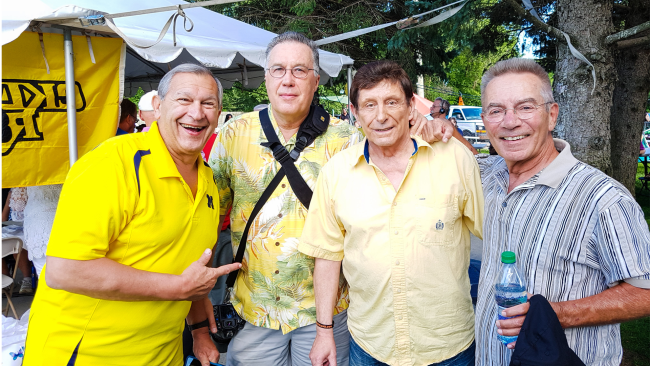
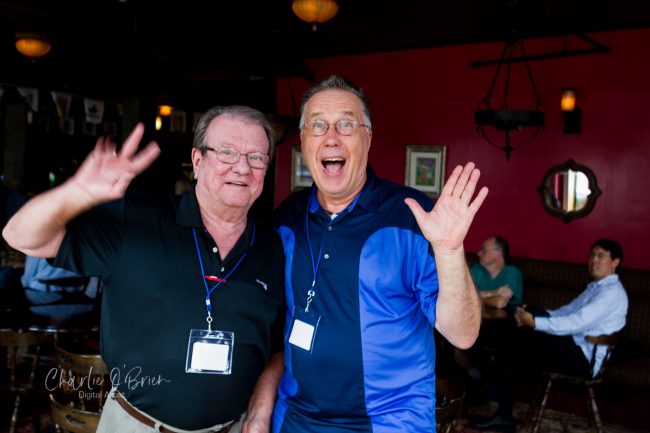
(L-R) Art Vuolo, Charlie O’Brien, Johnny Williams, Bill Gable
KEEPING THE VOICES ALIVE
That may ultimately be Charlie O’Brien’s most important contribution to radio history.
He didn’t merely work at CKLW.
He remembered how it sounded.
He remembered why it sounded that way.
He remembered the records, the clocks, the jingles, the engineering and — most importantly — the people.
Over the years, O’Brien has also compiled and updated a detailed honor roll of CKLW announcers, helping preserve the names of the men and women who contributed to one of North America’s great radio stations.
In our USA Radio Museum interview, the conversation occasionally becomes bittersweet as Charlie remembers colleagues who are no longer here.
That’s one of the reasons the USA Radio Museum exists.
Radio disappears the instant it comes out of the speaker.
Unless somebody saves it.
Airchecks, photographs, stories, interviews and memories allow another generation to discover what an extraordinary period it was — and why stations like CKLW mattered.
Charlie O’Brien was there.
Today, he’s making sure we can still hear it.
The Big 8 lives on.
###
