
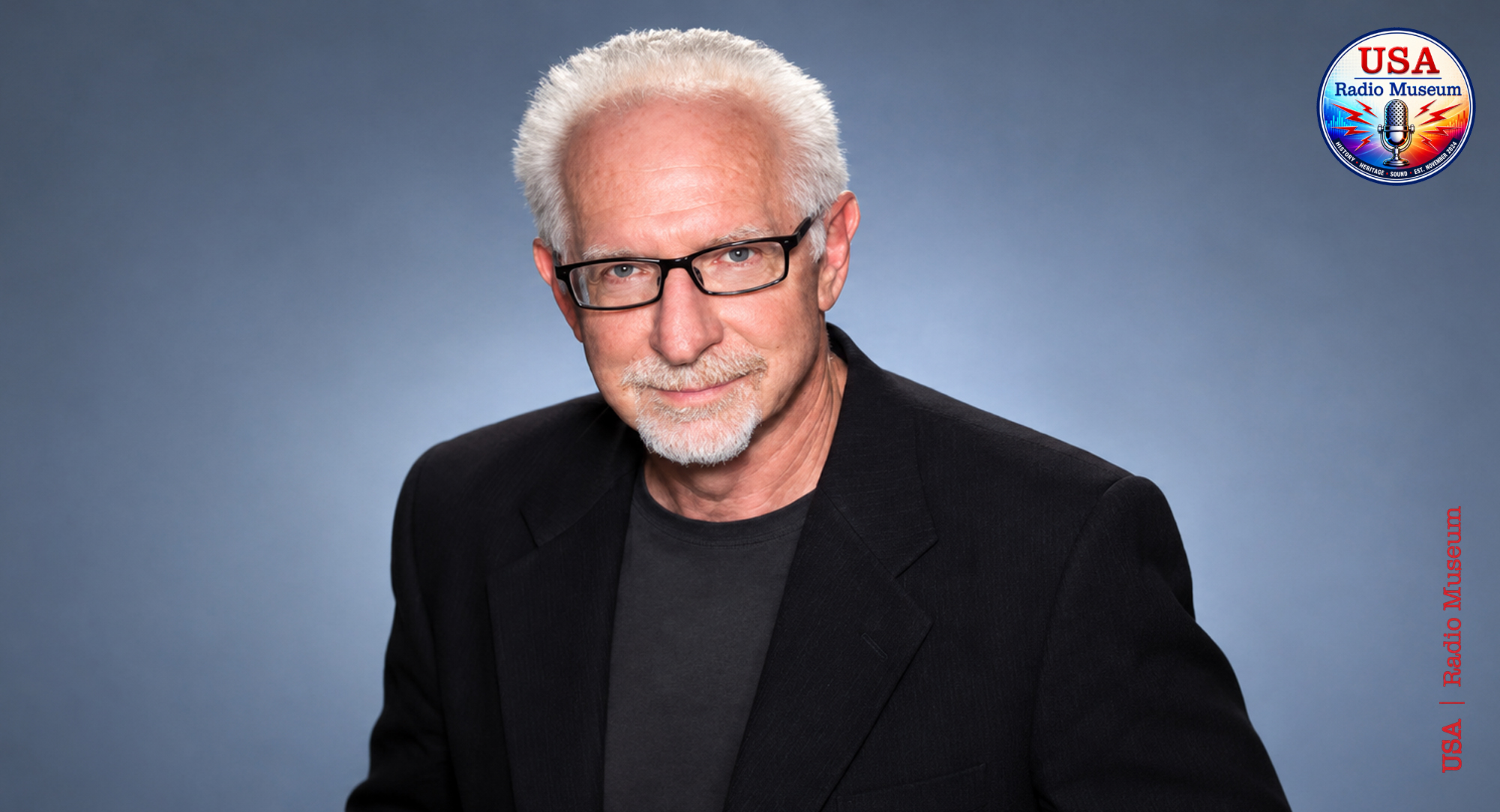
The Visionary Who Rewired American Radio: Fred Jacobs’ Enduring Influence from Detroit’s rock‑driven airwaves to the halls of national broadcasting po
The Visionary Who Rewired American Radio: Fred Jacobs’ Enduring Influence from Detroit’s rock‑driven airwaves to the halls of national broadcasting power, Fred Jacobs reshaped how America listens — building formats, guiding stations, and steering radio through its most turbulent technological eras with a strategist’s mind and a listener’s heart.
_____________________
Fred Jacobs has spent his career in the quiet spaces behind the microphone, shaping the sound of American radio with a precision and foresight that few inside the industry fully recognized until long after his ideas had taken root. In a medium defined by personalities, Jacobs became something rarer: a visionary whose influence was felt not through a single voice, but through the architecture of formats, the discipline of research, and the cultural instincts that helped radio survive every technological upheaval thrown at it. His story is not simply one of professional achievement; it is a story of Detroit, of rock music, of the American audience, and of the belief that radio — even in an era of infinite choice — still matters.
Jacobs grew up in Detroit at a time when the city’s radio dial was a living organism. Stations weren’t just entertainment; they were identity. They reflected the swagger of Woodward Avenue, the pulse of Motown, the grit of the auto plants, and the restless energy of a city that never stopped reinventing itself. Detroit radio was loud, proud, and fiercely local. For a young Jacobs, it was also a classroom. He listened not just for the music, but for the way stations talked to their audiences — how they built loyalty, how they created community, how they made listeners feel seen. Those early impressions would become the foundation of a career that fused academic rigor with street‑level intuition.
After earning a bachelor’s degree from the University of Michigan and a master’s in telecommunications from Michigan State University, Jacobs entered the professional world through Frank N. Magid Associates, one of the nation’s most influential research and consulting firms. Magid was where he learned the science behind the art — how to design studies, interpret data, and understand the psychology of audiences. He rose quickly, becoming Director of Research for the company’s radio division. But even then, Jacobs wasn’t content to simply measure behavior. He wanted to understand the emotional drivers behind it. Why did certain songs endure? Why did certain stations feel like home? Why did listeners stay loyal even when the world around them changed?
His next stop — ABC Radio — gave him a national stage. As Director of Radio Research for the company’s FM Owned and Operated stations, Jacobs worked with major‑market programmers and executives, helping them navigate the shifting tastes of the late 1970s and early 1980s. ABC was a crucible of ideas, a place where Jacobs could test theories against the realities of competitive broadcasting. But Detroit called him back, and when he became program director of WRIF, one of the city’s most iconic rock stations, he found the perfect laboratory for his instincts.
WRIF was more than a job; it was a proving ground. Detroit’s rock audience was passionate, discerning, and fiercely loyal. Jacobs understood that programming a station like WRIF required more than playlists and promotions. It required cultural fluency. He blended research discipline with rock authenticity, shaping WRIF into a powerhouse that reflected the city’s identity while staying ahead of its tastes. His work at WRIF didn’t just elevate the station — it clarified his own trajectory. Jacobs realized he wasn’t simply a programmer or a researcher. He was a strategist. And the industry needed what he had to offer.
In 1983, Jacobs founded Jacobs Media, a move that would alter the course of radio history. At the time, Album Rock was one of the dominant formats in American broadcasting. But Jacobs saw something others didn’t: fragmentation. The audience that had grown up with the music of the 1960s and 1970s was aging, but their emotional connection to that era wasn’t fading. They didn’t want nostalgia; they wanted recognition. They wanted a format that treated their music not as old, but as foundational. Jacobs responded with an idea that seemed radical at the time: Classic Rock.
Classic Rock was more than a format. It was a cultural reframing. It treated rock music as a canon — a body of work with lasting resonance, mythology, and emotional weight. Jacobs understood that listeners didn’t just want the songs; they wanted the stories, the memories, the sense of continuity. The format exploded. Stations across the country adopted it, audiences embraced it, and within a decade, Classic Rock had become one of the most successful and durable formats in radio history. Today, it is heard in hundreds of markets across the United States and around the world. It remains Jacobs’ most famous creation, but it was only the beginning of his influence.
As the 1990s unfolded and digital media began reshaping the landscape, Jacobs refused to cling to past victories. Instead, he pivoted — decisively and early. He launched nationwide Techsurveys, ambitious research projects that tracked emerging audience behaviors and helped stations understand how technology was altering listening habits. These surveys became essential reading for programmers, executives, and industry analysts. They revealed not just what audiences were doing, but why they were doing it — how smartphones, streaming platforms, social media, and connected cars were reshaping the relationship between listeners and radio.
Jacobs didn’t view digital as a threat. He viewed it as an extension of radio’s mission: to meet audiences wherever they were going. In 2008, he and his brother Paul founded jacapps, a mobile app development company that helped broadcasters enter the smartphone era. At a time when many in radio feared digital disruption, Jacobs embraced it. He understood that radio’s future would depend on its ability to coexist with — and adapt to — new platforms. Jacapps became one of the industry’s most important digital partners, helping stations build apps, connect with listeners, and remain relevant in a rapidly changing world.
His work didn’t stop there. Jacobs created the DASH conference, a groundbreaking effort to connect the automotive and radio industries at a moment when dashboard technology was evolving at breakneck speed. The car had long been radio’s most loyal environment, but the rise of digital dashboards threatened to fragment attention. Jacobs recognized that if radio wanted to remain essential, it needed a seat at the table. DASH gave it one, bringing together automakers, broadcasters, technologists, and researchers to discuss the future of in‑car audio. It was another example of Jacobs seeing around corners — anticipating challenges before they became crises.
_____________________

_____________________
Fred Jacobs’ voice continues to shape the conversation — from Detroit’s studios to the digital frontier. Explore his insights, research, and reflections at jacobsmedia.com
_____________________
Through all of this, Jacobs maintained a steady voice in the industry conversation. His JacoBLOG became one of radio’s most influential thought platforms, a daily reflection on trends, challenges, and opportunities. It was not a place for nostalgia, but for clarity — a space where Jacobs could help broadcasters navigate the future with honesty and optimism. His writing reinforced what colleagues already knew: Jacobs wasn’t just a consultant. He was a steward of the medium.
In 2018, the National Radio Hall of Fame inducted Fred Jacobs, making him the first radio consultant ever to receive the honor. The moment was more than symbolic. It acknowledged that radio’s evolution — its formats, its strategies, its survival — had been shaped not only by the voices behind the microphone but by the minds behind the curtain. Jacobs stood on that stage representing decades of innovation, research, and advocacy. He stood there representing Detroit. And he stood there representing the belief that radio, even in an era of endless media choice, still has the power to connect.
Today, Jacobs remains a guiding force, a thinker whose influence stretches far beyond any single station or format. His legacy is not just Classic Rock or digital strategy or industry conferences. It is the idea that radio can evolve without losing its soul — that it can honor its past while embracing its future. Fred Jacobs has spent his life listening. And because he listened, radio learned how to keep speaking.
_____________________
Sources & Credits
This article draws upon biographical and professional information provided by Jacobs Media, the National Radio Hall of Fame, and publicly available industry records documenting Fred Jacobs’ career in audience research, radio programming, and media innovation. Additional context reflects historical reporting on Detroit radio, Classic Rock format development, and Jacobs Media’s contributions to broadcast strategy and digital transformation.
Photograph: Fred Jacobs at the Radio Hall of Fame 2018 Induction Ceremony — Michael Kovac/Getty Images.
Editorial narrative crafted in partnership with the USA Radio Museum (USARM), honoring Fred Jacobs’ enduring influence on American broadcasting and Detroit’s radio heritage.
_____________________
Contact: jimf.usaradiomuseum@gmail.com
_____________________
© 2026 USA Radio Museum. All Rights Reserved

The radio world needs more think out of the box people like Freddy Jacobs Jim, i mean he truly changed the whole game!