
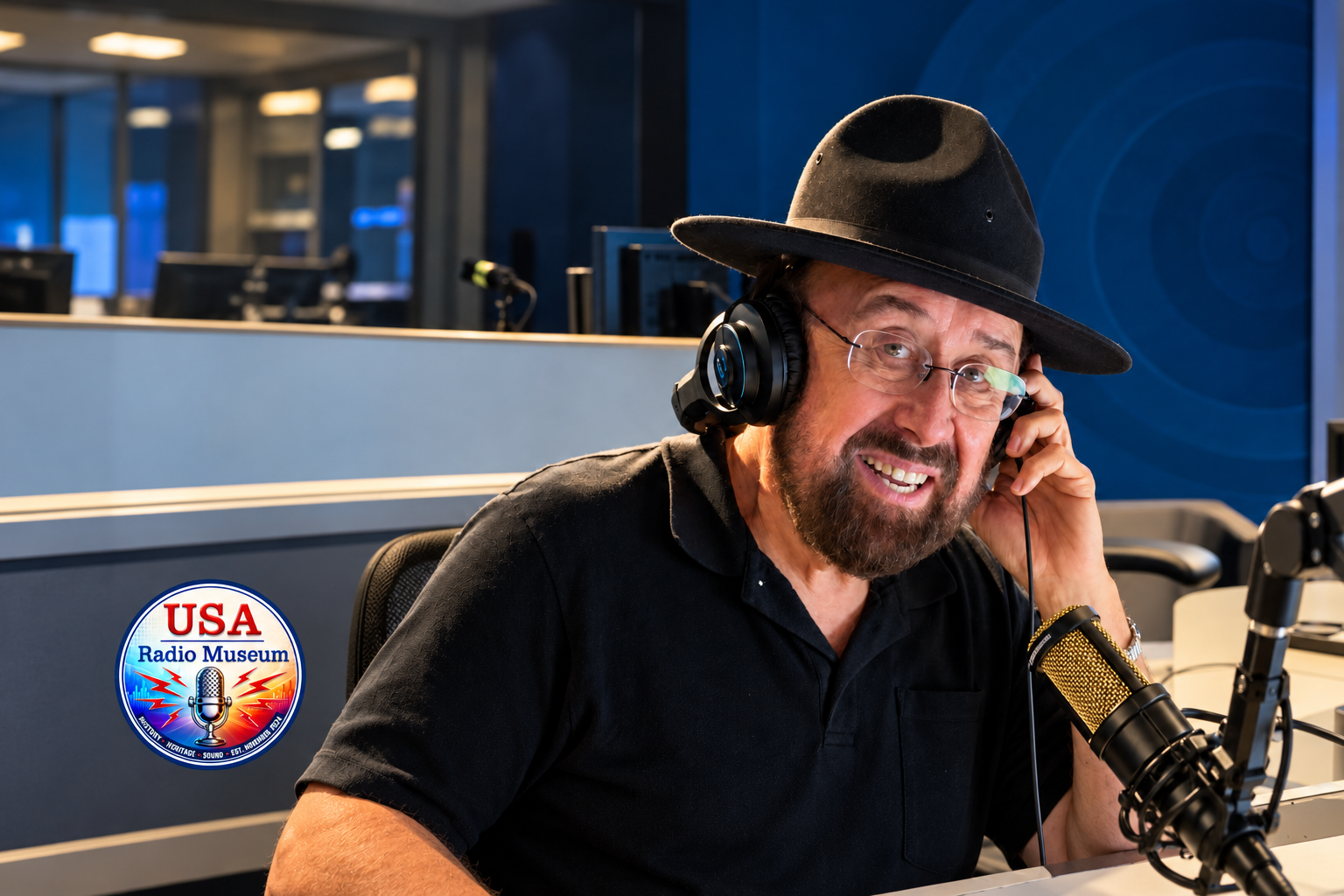
Before the ranger hat, the Emmy Awards, the Hollywood Walk of Fame star, and induction into the Radio Hall of Fame there was a boy on a bicycle, peeri
Before the ranger hat, the Emmy Awards, the Hollywood Walk of Fame star, and induction into the Radio Hall of Fame there was a boy on a bicycle, peering through the window of a mobile radio studio.
Inside, KOGO personality Frank Thompson was working two turntables and a microphone. Outside stood young Tom Irwin, fascinated by the man whose voice came out of the family radio.
Thompson invited him inside, put him on the air and handed him four tickets to see the Los Angeles Thunderbirds roller derby team.
“I thought he handed me a million dollars,” Kelly recalled.
That bicycle ride helped set the course for a broadcasting career spanning more than five decades. In an expansive USA Radio Museum interview, “Shotgun Tom” Kelly joined Jim Hampton to share the stories behind his unmistakable voice, his famous hat and his journey from San Diego radio to a national audience.
A Radio Station in the Bedroom
Kelly’s mother had suggested he visit Thompson’s broadcast near their home in Lemon Grove. When he returned, she greeted him with the words every aspiring young broadcaster wanted to hear: She had heard him on the radio.
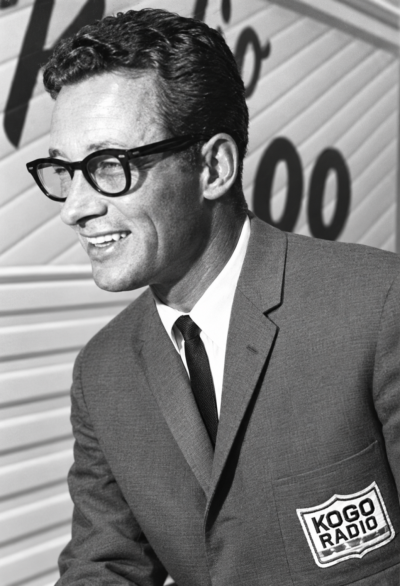
KOGO Frank Thompson
Soon, he built a little radio station in his bedroom.
His enthusiasm eventually outgrew a make-believe microphone. A friend constructed a small AM transmitter, and Kelly and his buddies began broadcasting recorded programs complete with music and jingles. They even used a telephone booth as their request line.
According to Kelly, the unauthorized operation ended after an FCC visit and a stern warning. The lesson came with useful advice: Get a license and do it legally.
He did.
Through Junior Achievement, Kelly also helped produce Teen Scene for KOGO. Program director Dick Roberts mentored the students, teaching them to work within a format and create a program that could actually air.
Looking back, Kelly understands why a busy professional would return after work to help a group of teenagers.
“He really was passionate about passing the radio bug on to us.”
Learning the Business—and Finding a Name
As a teenager at KPRI-FM, Kelly worked a Sunday morning shift that included The Uncle Tommy Show, playing children’s records. Other portions of the shift introduced him to Tony Bennett, Frank Sinatra and Sergio Mendes.
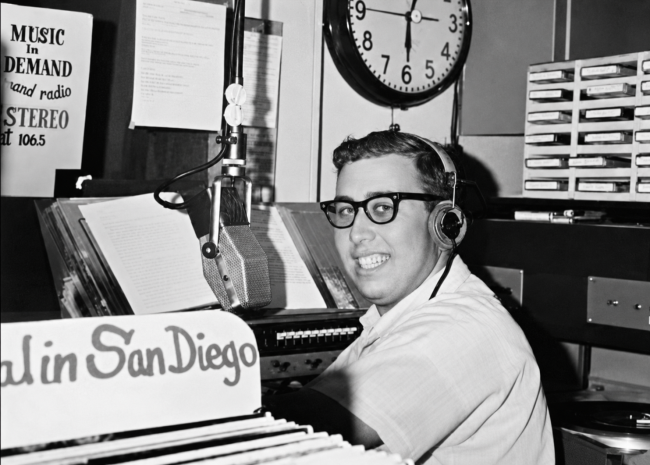
Little Tommy Show
He wanted to become a rock-and-roll “Boss Jock,” but those early assignments gave him a broader musical education.
To qualify for more opportunities on AM radio, he attended William B. Ogden’s radio school and earned his FCC First Class license. Jobs followed in Merced, the Oxnard–Ventura area and Bakersfield.
His familiar name developed along the way.
At KACY, he worked as Bobby McAllister—a name he never particularly liked. Fellow broadcaster Dave Conley added “Shotgun” during an on-air introduction, giving it a little more personality.
Later, at KAFY in Bakersfield, the name Tom Kelly emerged. Conley suggested keeping “Shotgun.”
A radio identity was born.
The Call That Brought Him Home
For Kelly, one ambition towered over the others: returning to San Diego to work at KGB.
He sent an audition tape to program director Charlie Van Dyke. Rather than relying solely on the recording, Van Dyke traveled to Bakersfield to hear him work.
Afterward, the two went to dinner.
Kelly remembers Van Dyke asking how badly he wanted to join San Diego’s Boss Radio station. His answer was immediate: more than anything in the world.
Van Dyke extended his hand and welcomed him to KGB.
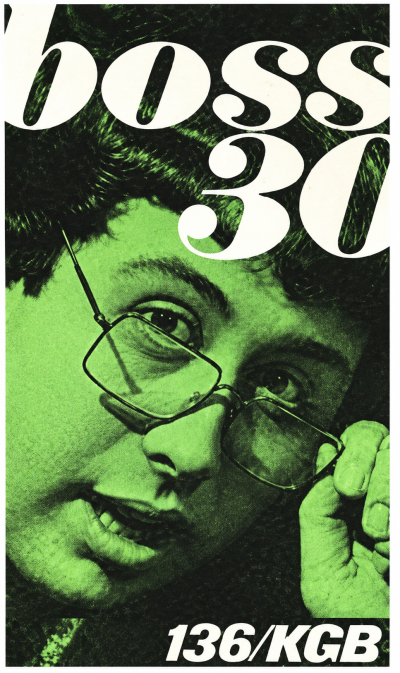
“Because of Charlie Van Dyke, I got into a major market and my hometown,” Kelly said.
The welcome included personalized stationery, business cards and a professional photograph for the station’s music survey. To a young broadcaster, those gestures meant he had arrived.
His gratitude has endured. During the interview, recorded ahead of the 2026 Radio Hall of Fame ceremony, Kelly delighted in the fact that he and Van Dyke had been selected for the same class.
The man who opened the door would share another milestone with him.
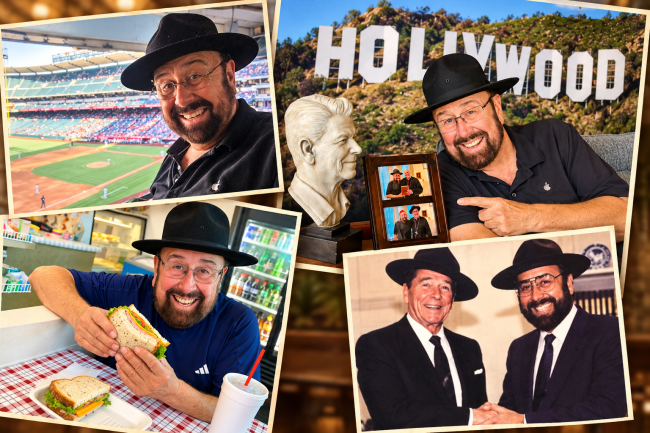
The Ranger Hat
The Hat, the Sound and the Showmanship
San Diego radio was fiercely competitive, and Kelly soon became part of the battle between KGB and KCBQ.
At KCBQ, under Buzz Bennett, the atmosphere encouraged distinctive personalities and ambitious promotions. Kelly’s future wife, Linda, who worked in the station’s traffic department, helped bring him to management’s attention.
It was also where his best-known visual trademark took hold.
As a child, Kelly had camped with his family in Yosemite and Sequoia, befriended park rangers and admired Smokey Bear. Wearing a ranger-style hat at personal appearances gave him a recognizable look.
“I started wearing this hat at KCBQ because I wanted to stick out,” he explained.
His sound was just as distinctive. Inspired in part by Billy Stewart’s exuberant performance of “Summertime,” Kelly developed his own vocal flourish, paired with the familiar declaration, “You better believe it, baby!”
Decades later, audiences still expect to hear it.
His influences included The Real Don Steele and Wolfman Jack. Steele supplied an example of precision and excitement; Wolfman demonstrated the power of a voice and personality that could make a listener feel personally invited into the show.
Kelly absorbed those lessons while building a presence listeners could recognize within seconds.
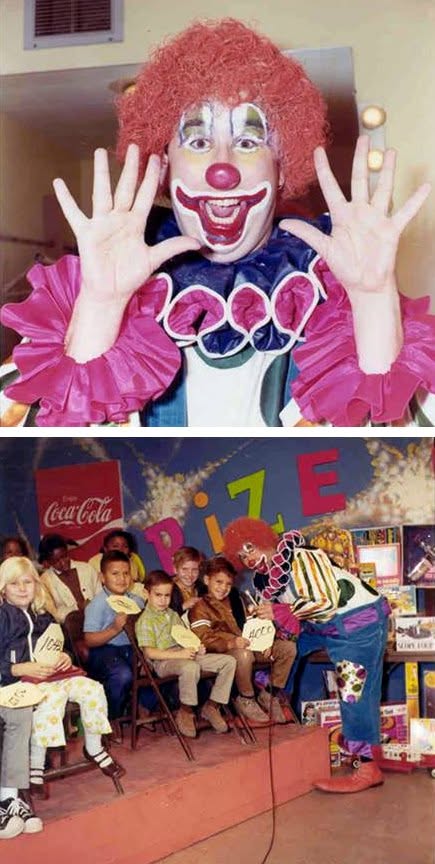
The Children’s Television Star
Radio fans may know the booming voice first, but generations of young viewers knew Shotgun Tom from television.
An early assignment in Bakersfield had him playing Nemo the Clown on a live children’s program. Later, in San Diego, he auditioned for the educational game show Words-a-Poppin’.
Waiting to audition, he encountered his childhood television hero, Johnny Downs.
Kelly was ready to concede the job and leave. Downs stopped him, poured him coffee and encouraged him to stay.
“You have just as much right to audition for this show as I do,” Kelly remembered him saying.
Kelly got the job.
The program challenged children with word games and reached audiences beyond San Diego through syndication. Kelly hosted it for five years and earned two Emmy Awards.
He later spent about 12 years hosting the KUSI Kids Club, combining television appearances with visits to schools and community attractions.
Together with his work at KCBQ and B-100, those programs made him a familiar face as well as a familiar voice.
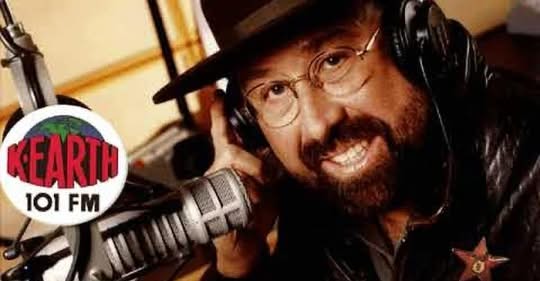
Following The Real Don Steele
In 1997, Kelly faced an opportunity that was both thrilling and intimidating: succeeding The Real Don Steele in afternoon drive at Los Angeles’ K-Earth 101.
Steele was one of his heroes. Sitting in his chair carried emotional weight.
“I went on the air scared to death,” Kelly recalled.
A board operator helped him navigate those first broadcasts while calls from fellow personalities—including Robert W. Morgan and Shadoe Stevens—welcomed him to Los Angeles.
Kelly also shared a story that K-Earth program director Mike Phillips later told him. After Steele’s memorial, Phillips had privately prayed for help finding the right successor.
The thought that came to him, Kelly said, was simple: Call Shotgun.
For Kelly, K-Earth offered the complete radio experience: memorable jingles, strong production, major promotions and colleagues who cared about presentation.
He still remembers hearing the Johnny Mann Singers record his name for a station jingle. For someone who had once assembled imaginary programs in a bedroom, hearing professionals sing “Shotgun Tom Kelly” was another extraordinary moment.
His Los Angeles years brought further recognition, including a Hollywood Walk of Fame star in 2013 near the star of the broadcaster he had so admired, The Real Don Steele.
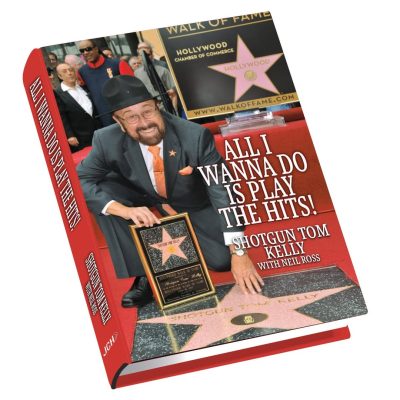
Available on Amazon, You Better Believe it Baby!
A Personal Achievement Beyond Broadcasting
Kelly’s conversation with Hampton also touched on a struggle that receives candid treatment in his memoir, All I Wanna Do Is Play the Hits.
Behind the energetic public personality, he had experienced problems with alcohol and drugs.
He described making the decision to seek help through recovery programs and, at the time of the interview, reported 41 years of sobriety.
That accomplishment belongs alongside the professional honors in understanding his life. His story includes the work of rebuilding and sustaining a life beyond the microphone, as well as the excitement of being on it.
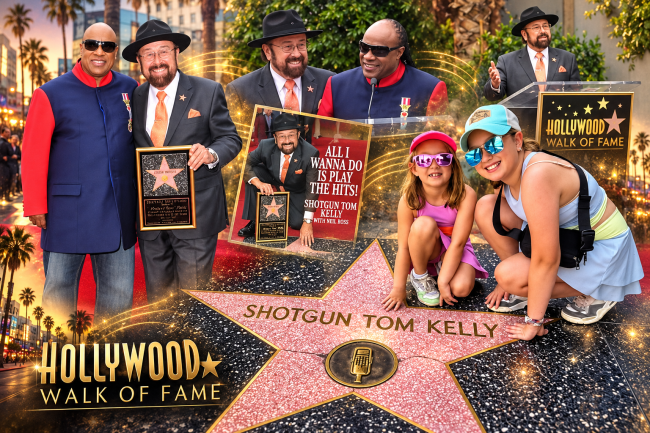
Hollywood Walk of Fame: A Star for “Shotgun Tom”
On April 30, 2013, “Shotgun Tom” Kelly earned a permanent place on Hollywood Boulevard when he received the 2,496th star on the Hollywood Walk of Fame, honoring his contributions to radio. Music legend Stevie Wonder and K-EARTH 101 program director Jhani Kaye joined the ceremony, celebrating a broadcaster whose booming voice, infectious enthusiasm and signature ranger hat had made him a Southern California favorite. The star recognized a career built on entertaining listeners and making every record feel like an event.
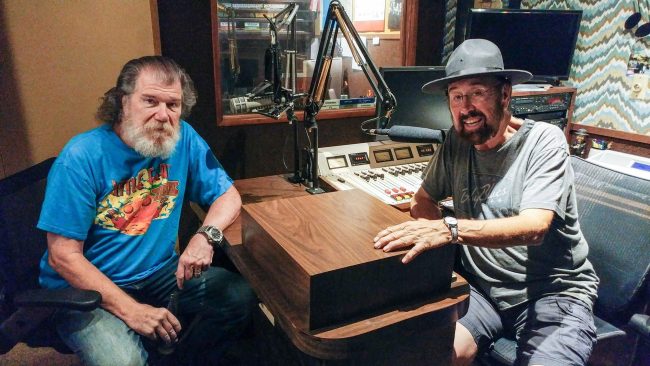
Shotgun & Pat St. John
A National Audience—and a Personal Connection
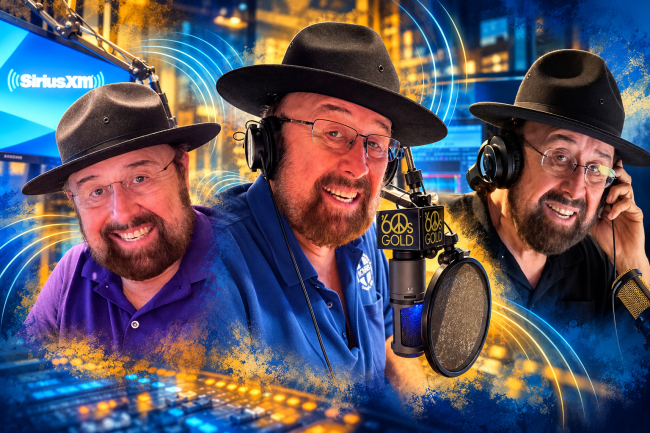
Joining SiriusXM in 2018 gave Kelly a new chapter and a much wider audience.
His delivery on ’60s Gold has become more conversational, allowing room for stories and information about the records. The familiar Shotgun energy remains.
He records from his own studio and enjoys hearing from listeners across the country. Requests provide a particularly satisfying connection: He answers listeners and lets them know when their songs will play, giving them a chance to tell family and friends.
For all the changes in broadcasting technology, that exchange remains wonderfully familiar—a listener asks for a record, and a favorite personality plays it.
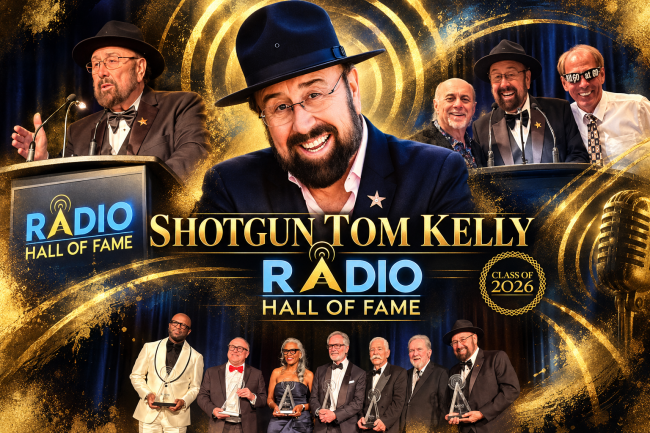
Radio Hall of Fame: A Lifetime Behind the Mic, Forever Honored
Another milestone arrived on October 8, 2026, when Kelly was inducted into the Radio Hall of Fame at the Fairmont Hotel in Chicago. He joined an eight-member class that included fellow broadcasting personalities Fred Winston and Charlie Van Dyke. For Kelly, the honor added national recognition to a lifetime behind the microphone, celebrating the energy, personality and connection with listeners that have made “Shotgun Tom” such a memorable presence on the air.
All Aboard! Shotgun Tom’s Passion for Model Trains
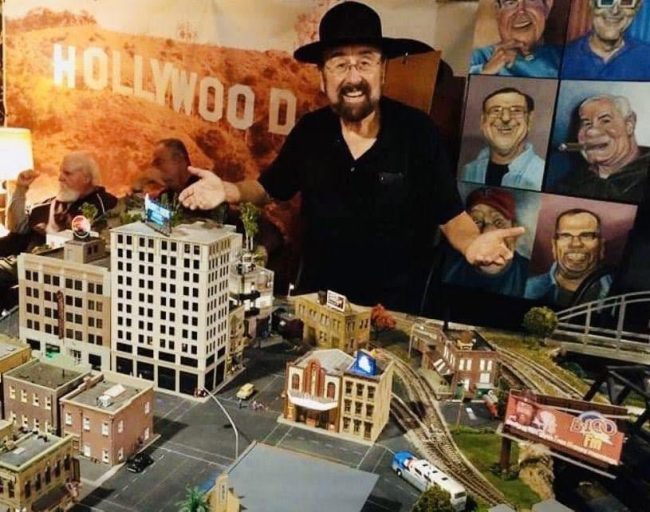
Away from the microphone, “Shotgun Tom” Kelly channels his enthusiasm into another passion: model trains. His custom-designed, 10-by-7-foot HO-scale railroad features a miniature downtown, residential neighborhoods, an industrial district and a full railroad yard—with radio and television stations naturally included. Built to his specifications by Lloyd’s Layouts, the elaborate display can be electrically lowered from the ceiling onto a pool table, allowing the space to serve both hobbies. It’s a miniature world filled with the same imagination and personality that listeners know from his broadcasts.
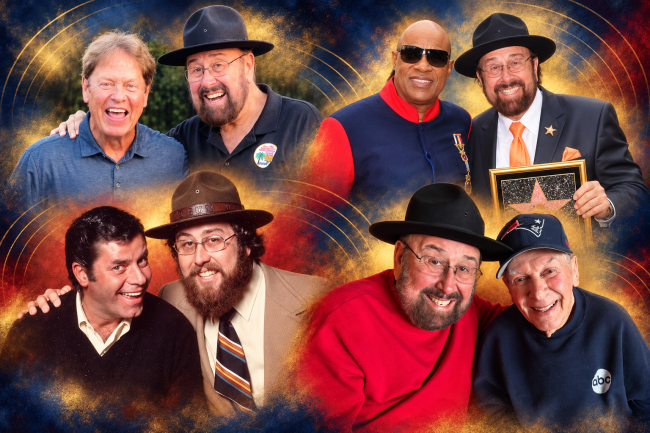
Rick Dees, Stevie Wonder, Jerry Lewis, Freddy Cannon
What a Career
Kelly’s career has encompassed major radio stations, children’s television, voice-over work, industry awards and national recognition. Yet the enthusiasm in his conversation suggests that the original attraction has never worn off.
There is still music to introduce, a story to tell and someone listening.
The boy outside the mobile studio got his turn at the microphone—and has spent a lifetime making the most of it.
Watch Jim Hampton’s USA Radio Museum interview with “Shotgun Tom” Kelly for more stories from his life in broadcasting.
