
Mike Love, Beach Boys Co-Founder and Enduring Voice of America's Soundtrack, Dies at 85 The voice that helped define the sound of summer, youth, and
Mike Love, Beach Boys Co-Founder and Enduring Voice of America’s Soundtrack, Dies at 85
The voice that helped define the sound of summer, youth, and American popular music for generations has fallen silent.
Mike Love, co-founder of the Beach Boys, lyricist, vocalist, and the group’s longtime frontman, died on November 28, 2026, at age 85. His passing closes a remarkable chapter in American music history, one that began in a family living room in Hawthorne, California, and expanded into a worldwide legacy heard on radio stations for more than six decades.
For listeners who grew up with transistor radios on beaches, in automobiles, and beside bedroom windows, the Beach Boys represented more than a musical group. They became a soundscape of American life. And at the center of that sound stood Mike Love.
Born Michael Edward Love on March 15, 1941, in Los Angeles, he joined his cousins Brian, Carl, and Dennis Wilson and friend Al Jardine in forming the Beach Boys in 1961. Their first recordings emerged during an era when radio was the dominant medium for discovering new music. Few could have imagined that the harmonies created by those Southern California teenagers would become some of the most recognizable recordings ever broadcast.
Love’s distinctive bass-baritone voice helped anchor the group’s celebrated vocal blend. Just as importantly, his lyrical contributions gave many Beach Boys songs their unmistakable personality. He co-wrote or contributed to classics including “Surfin’ U.S.A.,” “California Girls,” “I Get Around,” “Fun, Fun, Fun,” “Good Vibrations,” and numerous others that became staples of Top 40 radio.
_____________________
_____________________
Throughout the 1960s, Beach Boys records were among the defining sounds of American broadcasting. Their music captured an idealized vision of California that resonated far beyond the Pacific Coast. Whether listeners lived in Detroit, Minneapolis, Tampa, Nashville, or New York, radio brought them images of sunshine, surfboards, convertibles, and endless summer afternoons.
 The Beach Boys’ success was built upon extraordinary musical talents that complemented one another. Brian Wilson’s visionary songwriting and production genius often attracted much of the critical attention, while Mike Love’s commercial instincts, vocal presence, and lyrical accessibility helped connect those songs to millions of listeners. Together, they created an enduring catalog that became woven into the fabric of American popular culture.
Like many great musical partnerships, theirs was often complicated.
Over the decades, Love and Wilson frequently disagreed about the direction of the band. Their creative and personal conflicts became the subject of books, documentaries, and countless articles. Yet despite those differences, the music they created together continues to stand among the most celebrated achievements in popular music history.
For radio broadcasters, perhaps no other American group displayed such longevity.
The Beach Boys arrived during the golden age of AM Top 40 radio. They successfully transitioned into the FM era, survived dramatic changes in musical tastes, and remained fixtures on oldies, classic hits, adult contemporary, and classic rock stations for generations. Few artists can claim that their recordings were continuously heard on American radio for more than sixty years.
Love himself often noted that the music never seemed to grow old. Songs such as “Wouldn’t It Be Nice,” “Help Me, Rhonda,” “Sloop John B,” “California Girls,” and “Good Vibrations” became part of radio’s permanent soundtrack, treasured by audiences long after their original release.
As original members passed away or withdrew from active touring, Love increasingly became the public face of the Beach Boys. Following the deaths of Dennis Wilson in 1983 and Carl Wilson in 1998, and as Brian Wilson pursued his own path, Love assumed responsibility for carrying the Beach Boys banner before live audiences. For decades, he ensured that fans across North America could continue experiencing the group’s music in concert.
_____________________
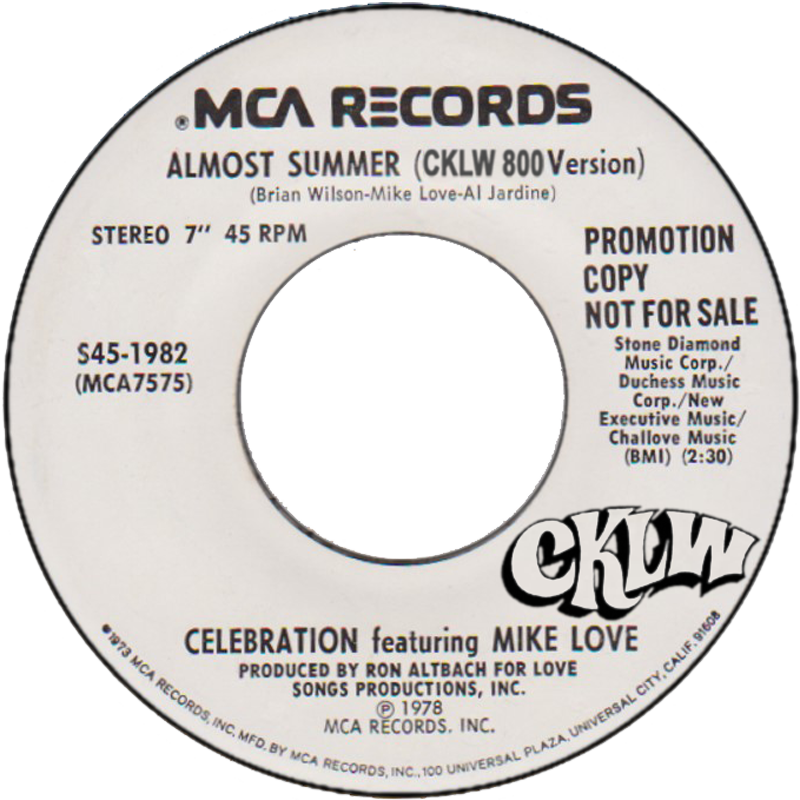
Celebration [feat. Mike Love] | Almost Summer (CKLW 800 Version) | MCA Records 1978
Audio Digitally Remastered by USA Radio Museum
_____________________
His critics often focused on legal disputes, public disagreements, and controversial moments. His supporters pointed to something equally undeniable: without Mike Love’s determination, the Beach Boys might have disappeared from the concert stage long ago.
That persistence was perhaps best demonstrated by “Kokomo,” the 1988 hit that returned the Beach Boys to the top of the charts more than two decades after “Good Vibrations.” The song introduced an entirely new generation to the group and proved that the Beach Boys’ appeal remained remarkably resilient.
In recent years, Love participated in milestone celebrations of the band’s history, including reunion appearances and documentaries that helped preserve the story of one of America’s most influential musical groups. Following Brian Wilson’s death in 2025, Love issued a moving tribute to his cousin, describing him as “the soul of our sound” and reflecting on their shared musical journey from childhood harmonies to international acclaim.
For radio historians, Mike Love’s significance extends beyond any individual song or performance. He was part of a generation of artists whose records helped define the sound of modern broadcasting. The Beach Boys’ recordings became essential programming for thousands of stations and remain among the most frequently played classics in radio history.
_____________________
_____________________
Their records accompanied summer vacations, first romances, family road trips, and countless personal memories. Through changing formats and changing technologies, the music endured because it spoke to something timeless.
Today, as radio stations across America revisit Beach Boys classics in tribute, listeners are once again hearing the voice that helped launch one of popular music’s most extraordinary journeys.
Mike Love was not simply a survivor of rock and roll’s early years. He was one of its architects.
His life encompassed the rise of Top 40 radio, the British Invasion, FM album rock, oldies radio, satellite broadcasting, streaming, and the digital age. Through it all, the harmonies he helped create continued to resonate.
At the USA Radio Museum, we remember Mike Love as a pivotal figure in American broadcasting history, a songwriter, vocalist, and performer whose work enriched the playlists of generations and whose music remains inseparable from the story of radio itself.
Mike Love’s voice may now be silent, but the sound he helped create will continue to echo from speakers, airwaves, and memories for generations to come.
_____________________
Sources and Credits
Primary Sources
Rolling Stone
- “Mike Love, Beach Boys Co-Founder Who Kept Band Alive for 65 Years, Dead at 85”
- By Will Hermes and Andy Greene
- November 28, 2026
Los Angeles Times
- “Mike Love, forever the face and voice of the Beach Boys, dies at 85”
- By Steve Chawkins
- November 28, 2026
Additional Reference Sources
- Mike Love, Good Vibrations: My Life as a Beach Boy (2016)
- Beach Boys historical discographies and recording histories
- Capitol Records archival releases
- Rock & Roll Hall of Fame historical materials
- Contemporary newspaper, radio, and music-industry coverage documenting the Beach Boys’ career and legacy
Image Credits
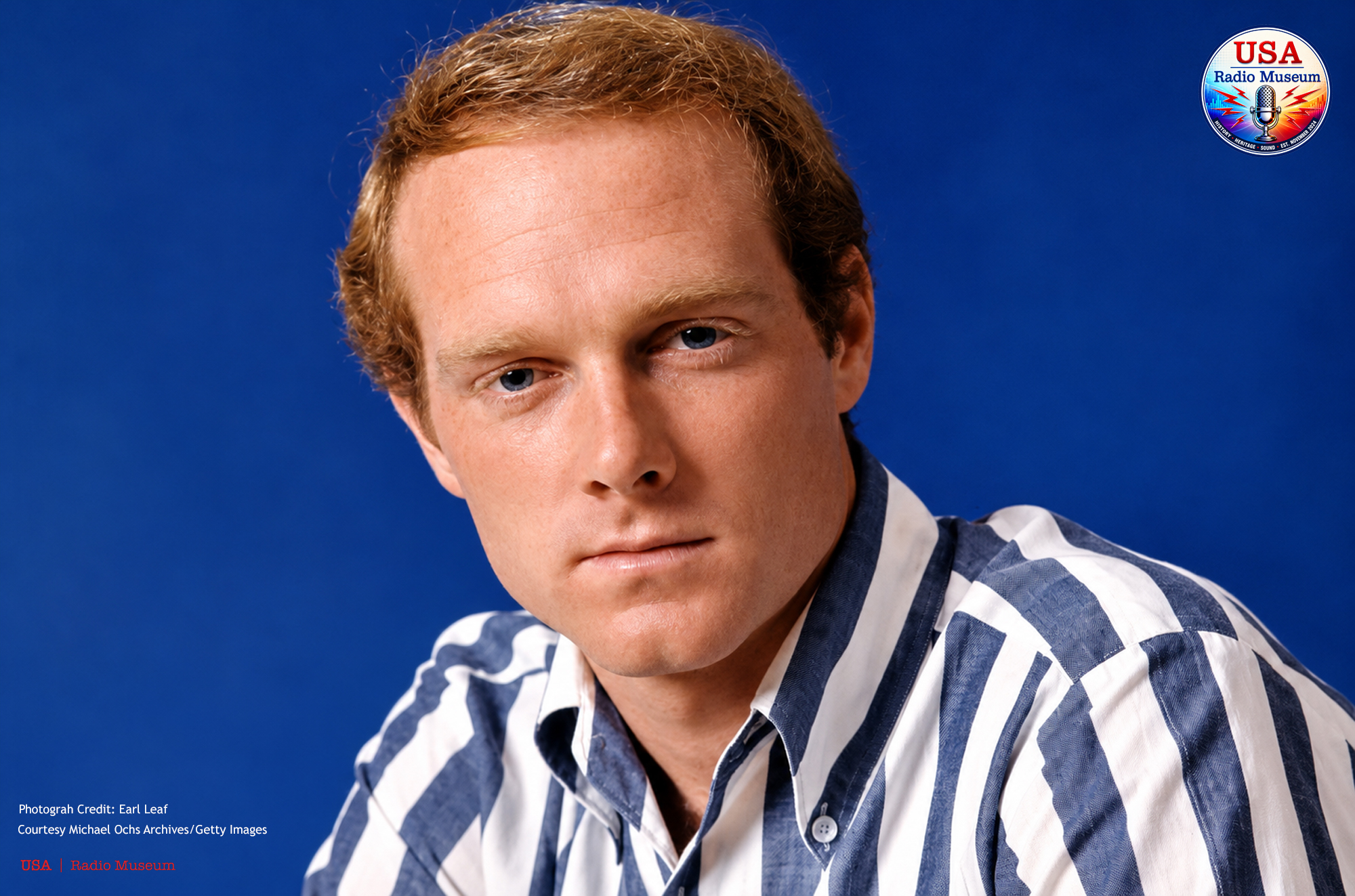
Lead Photograph Mike Love, Los Angeles, 1964. Photograph by Earl Leaf. Courtesy Michael Ochs Archives/Getty Images.
Acknowledgments
The USA Radio Museum gratefully acknowledges the work of music historians, journalists, photographers, broadcasters, and archivists whose efforts have preserved the history of the Beach Boys and their enduring impact on American popular music and radio broadcasting.
Editorial Note
This article was prepared by the USA Radio Museum as an original historical appreciation of Mike Love’s life and career. While drawing upon contemporary reporting and historical documentation, the narrative and editorial perspective presented here were independently written for the USA Radio Museum.
_____________________
Contact: jimf.usaradiomuseum@gmail.com
_____________________
A USARM Viewing Tip: On your PC? Mouse/click over each image for expanded views. On your mobile or tablet device? Finger-tap all the above images inside the post and stretch image across your device’s screen for LARGEST digitized view. Then click your brower’s back arrow to return to the featured post.
© 2025 USA Radio Museum. All Rights Reserved
