
In 1958, Americans Were Encouraged to Pause, Reflect, and Give Thanks Beyond the Holiday Table TODAY, FAR TOO MANY OF US think of Thanksgiving in t
In 1958, Americans Were Encouraged to Pause, Reflect, and Give Thanks Beyond the Holiday Table
TODAY, FAR TOO MANY OF US think of Thanksgiving in terms of food and football — overlooking the fact that there is so much more food offered than that which is placed on the family table. For there is much “food for thought” as well.
 Thanksgiving is a time to take stock of life’s blessings . . . to take a bright-eyed child on your knee and talk to him, or her, of things that really matter. . . of their great American heritage and the promise it holds for them. It’s a time to take your whole family to your church or synagogue for an hour of prayer and thanks that will make your holiday mean so much more.
True, our lives are far removed from those of the Pilgrim Fathers. We live in the uncertainty of the Atomic Age. But we also live in the abundance of 20th Century America. Has any one of us so much or so little that he cannot find room or time in his heart to say thanks?
This Thanksgiving, why not take your family to your church or synagogue? Wherever you are . . . whatever your beliefs may be . . . take time to offer your word of thanks.
FIND THE STRENGTH FOR YOUR LIFE . . .WORSHIP TOGETHER THIS WEEK!
Source: Billboard November 17, 1958
_____________________
Thanksgiving Day 1958: Giving Thanks Where We Worship
From the MCRFB News Archive
 In the autumn of 1958, Americans were preparing to celebrate Thanksgiving in a nation enjoying unprecedented prosperity. Television sets glowed in living rooms, highways stretched across the country, and families looked toward a future filled with promise. Yet amid the abundance and rapid pace of modern life, one message published that November carried a simple reminder that remains just as meaningful today: Thanksgiving should be about far more than food, festivities, and entertainment.
Indeed, while Thanksgiving has long been associated with family dinners and cherished traditions, it is also a time for reflection. It offers an opportunity to pause amid life’s daily demands and consider the blessings that often go unnoticed. The editors of 1958 understood that gratitude was not meant to be confined to a holiday table. Rather, it was something to be shared in our homes, our communities, and the places where we gather for worship.
The message encouraged parents and grandparents to spend time with the youngest members of their families. Thanksgiving, they suggested, was the perfect occasion to place a child on one’s knee and speak about the things that truly matter. Beyond stories of the Pilgrims and the first Thanksgiving, there was a chance to pass along something even more enduring: an appreciation for faith, family, freedom, and the responsibilities that come with citizenship.
For Americans raising children in the late 1950s, these lessons were especially important. The nation was living in what was often called the Atomic Age. Scientific advances were transforming everyday life, but the uncertainties of the Cold War also weighed heavily on many minds. Newspapers carried reports of international tensions, and families understood that the world could change quickly and unexpectedly.
Yet despite those concerns, Americans had much for which to be thankful. The country enjoyed economic growth, expanding educational opportunities, and a standard of living that many around the world admired. Families gathered around tables filled with abundance, often surrounded by relatives and friends. The blessings of peace, opportunity, and community were evident across much of the nation.
The 1958 article challenged readers to remember that gratitude should be expressed not only through words spoken around the dinner table but also through acts of faith. It encouraged families to attend their church or synagogue together on Thanksgiving Day, setting aside time for prayer and reflection. Such an hour, the article suggested, could add a deeper meaning to the holiday and help place life’s blessings in their proper perspective.
That appeal transcended any particular denomination or religious tradition. Its message was universal: wherever people worshiped, and whatever their beliefs, Thanksgiving offered an opportunity to pause and acknowledge the gifts they had received. It was an invitation to step away from distractions and devote a moment to humility, gratitude, and hope.
More than six decades later, the words published in 1958 remain remarkably relevant. Modern celebrations may include televised parades, professional football games, and countless culinary traditions, but the underlying purpose of the holiday has not changed. Thanksgiving continues to provide an opportunity to reflect upon our blessings, strengthen family bonds, and express gratitude for the people and opportunities that enrich our lives.
As we gather each November, we might consider the wisdom shared with readers in that earlier era. The most meaningful part of Thanksgiving is not measured by the size of a feast or the excitement of a sporting event. Rather, it is found in the moments spent with loved ones, in the values passed from one generation to the next, and in the sincere expression of thanks for the blessings we often take for granted.
The message from 1958 was simple, heartfelt, and enduring: wherever you are and whatever your beliefs may be, take time to give thanks. In doing so, Thanksgiving becomes more than a holiday. It becomes a reminder of what truly matters.
_____________________
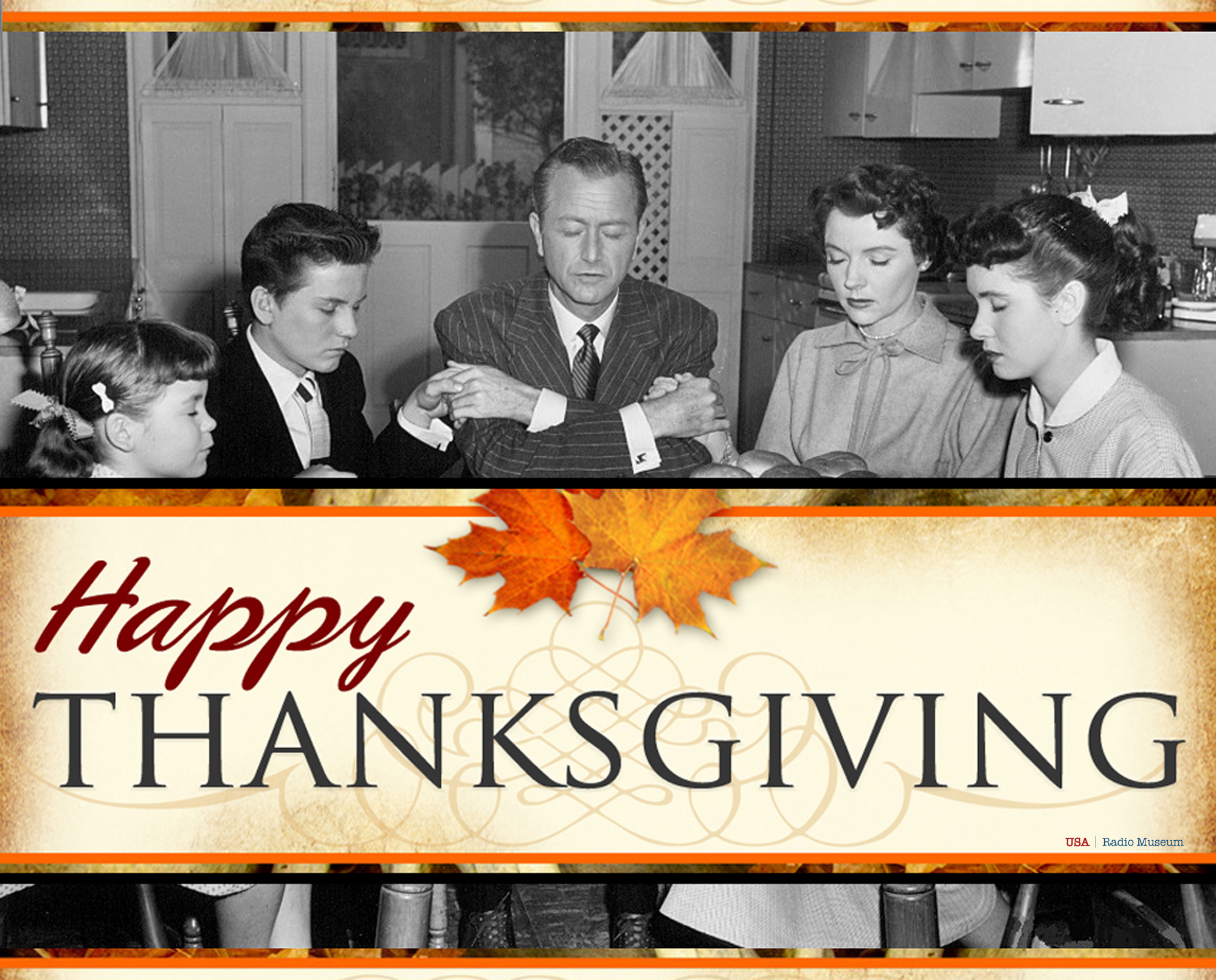
Robert Young (WBAP Ft. Worth/Dallas PSA) | A Moment for Thanksgiving | Thursday, November 28, 1963
Audio Digitally Remastered by USA Radio Museum

_____________________
Contact: jimf.usaradiomuseum@gmail.com
_____________________
© 2026 USA Radio Museum. All Rights Reserved
