
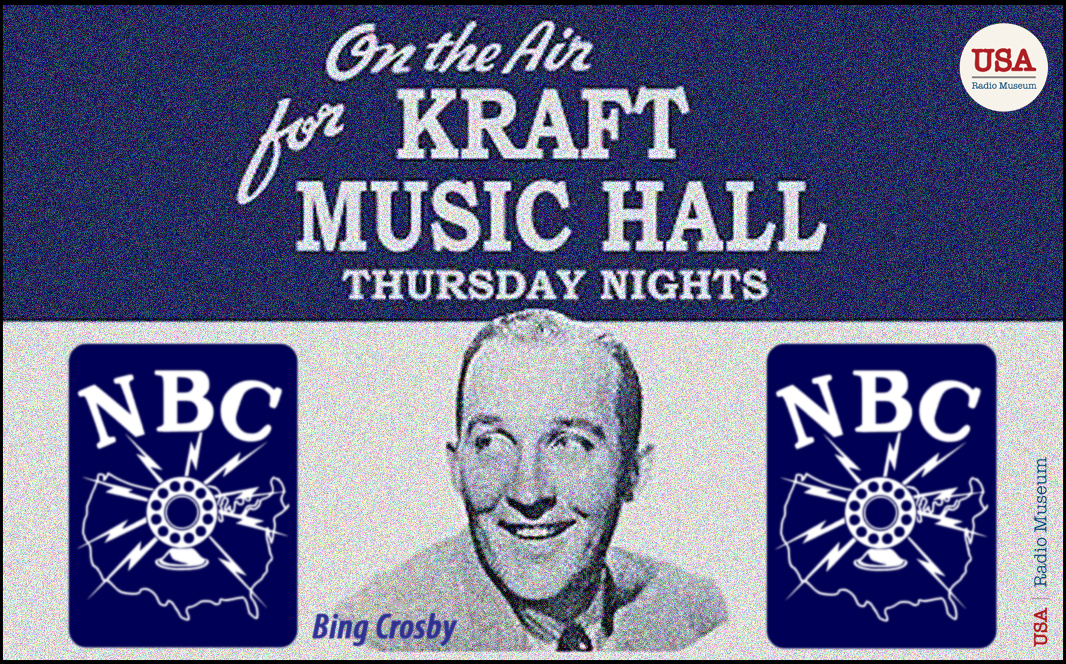
Kraft Music Hall: A Golden Age Beacon of Song, Comedy, and American Imagination Introduction — A Program That Helped Define 1930s American Radio and
Kraft Music Hall: A Golden Age Beacon of Song, Comedy, and American Imagination
Introduction — A Program That Helped Define 1930s American Radio and Beyond
There are radio programs that entertained, and then there are radio programs that helped define the very character of American broadcasting. Among the most enduring of these was Kraft Music Hall, the long‑running variety program that aired on the National Broadcasting Company (NBC Radio) from 1933 to 1949. For sixteen years, it stood as one of the network’s signature offerings, a weekly gathering place where music, laughter, celebrity, and the comforting familiarity of Kraft’s sponsorship blended into a cultural ritual. At a time when NBC was the dominant force in American broadcasting, Kraft Music Hall offered listeners a place where the world felt a little brighter, a little warmer, and a little more connected.
The USA Radio Museum proudly preserves more than 2.5 gigabytes of surviving Kraft Music Hall recordings — a remarkable archive that captures the show’s evolution across its many eras on NBC. These recordings, featuring hosts such as Paul Whiteman, Bing Crosby, Al Jolson, and Eddie Cantor, are more than historical artifacts. They are living echoes of a time when the NBC microphone was a national hearth and the airwaves carried not just sound, but spirit. — USA RADIO MUSEUM
The Paul Whiteman Years — Establishing a Musical Landmark on NBC (1933–1935)
The story of Kraft Music Hall begins in 1933, when NBC introduced the program with Paul Whiteman — already known as the “King of Jazz” — as its inaugural host. Whiteman’s orchestra was one of the most celebrated ensembles of the era, and his presence gave the new NBC series immediate prestige. Under his direction, the program established the format that would define it for years to come: a full orchestra performing popular standards, vocalists delivering heartfelt renditions, guest musicians adding variety and flair, and light comedic banter woven between musical numbers.
Even in these early years, the NBC broadcasts radiated a sense of polish and sophistication. Whiteman’s arrangements, lush and elegant, reflected the musical sensibilities of the 1930s, and his leadership helped position Kraft Music Hall as one of NBC’s premier destinations for listeners seeking both artistry and entertainment.
Bing Crosby’s Era — NBC’s Velvet Voice of the Nation (1935–1946)
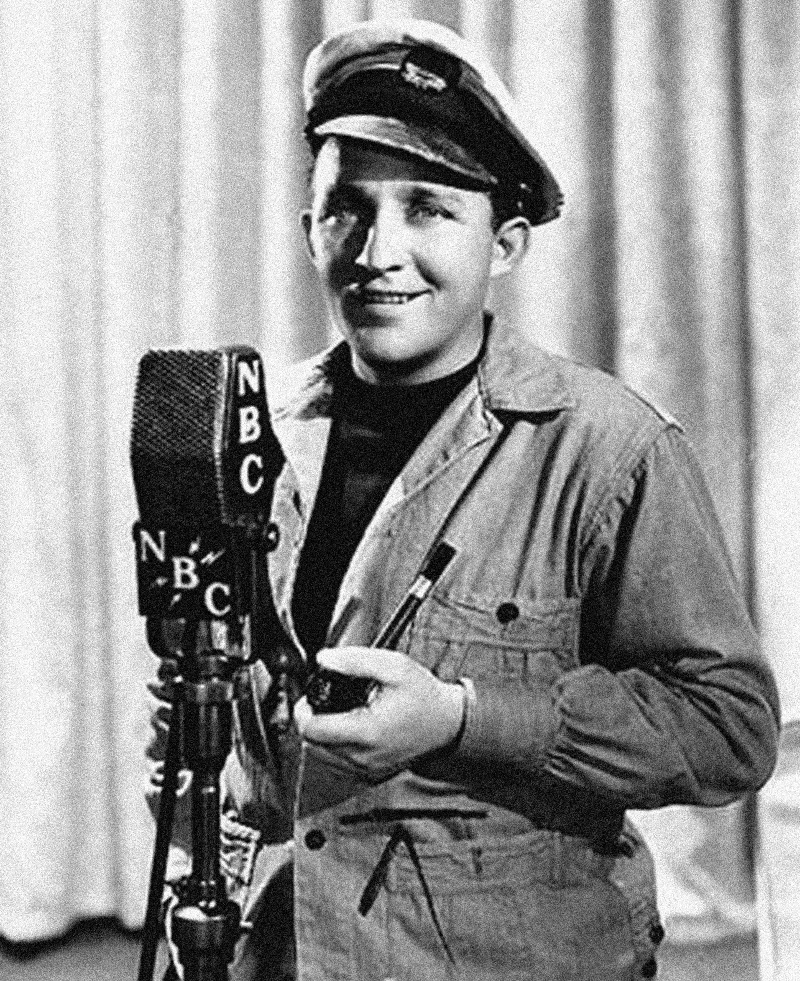
Bing Crosby, circa 1930s.
When Bing Crosby assumed hosting duties in 1935, Kraft Music Hall entered its most iconic era — and NBC Radio gained one of the most beloved voices ever to grace its network. Crosby’s warm baritone, relaxed charm, and effortless rapport with guests transformed the program into a national sensation. His style was intimate, conversational, and deeply human, a contrast to the more formal tone of earlier radio personalities. Under Crosby, the NBC broadcasts became a place where listeners felt as though they were being welcomed into a private gathering, one filled with music, laughter, and the easy grace of a host who seemed born for the medium.
During Crosby’s eleven-year tenure, the program became synonymous with the very best of NBC’s entertainment output. The show featured top-tier musical guests, from jazz legends to Hollywood stars, and its comedy sketches showcased Crosby’s dry wit and impeccable timing. His performances of standards and seasonal favorites became part of the nation’s emotional landscape, especially during the difficult years of World War II.
At a time when families were separated and uncertainty hung over the country, Crosby’s NBC broadcasts offered comfort and continuity. His messages to servicemen, his musical interludes, and his steady presence helped lift morale on the home front. For many listeners, Kraft Music Hall on NBC was not just entertainment; it was a companion.
Al Jolson’s Tenure — NBC’s Burst of Energy and Showmanship (1947–1949)
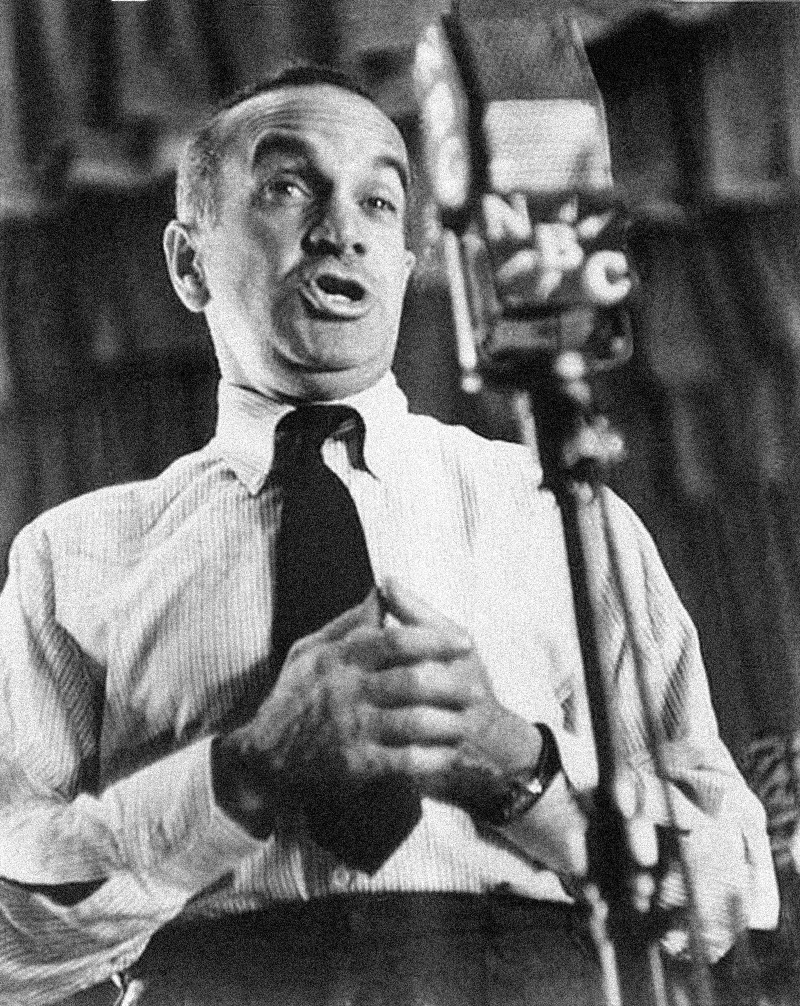
Al Jolson, circa 1940s.
When Crosby departed the program in 1946, NBC faced the challenge of transitioning one of its flagship shows into a new era. That transition arrived with a burst of energy in the form of Al Jolson, whose tenure from 1947 to 1949 brought a completely different sensibility to the NBC broadcasts. Where Crosby was smooth and understated, Jolson was electric — a performer who sang with his whole body, who delivered comedy with vaudevillian punch, and who commanded the stage with a force that was unmistakably his own.
Listening to the USA Radio Museum’s preserved NBC recordings of Jolson’s Kraft Music Hall reveals a show brimming with vitality. Jolson belts out songs with trademark gusto, the orchestra drives the program forward with spirited arrangements, and the comedic exchanges unfold with rapid-fire precision.
One recording from the Museum’s collection — selected at random from the extensive archive — features Jolson alongside George Burns and Gracie Allen. The chemistry between the three is immediate and irresistible. Burns’ dry humor, Allen’s whimsical logic, and Jolson’s larger-than-life presence create a dynamic that feels both spontaneous and expertly crafted. The laughter is genuine, the timing impeccable, and the musical interludes soar with the kind of energy that only live NBC radio could capture. It is Old Time Radio at its finest.
Jolson’s tenure also marked a transitional moment in American entertainment. Radio was still dominant, but television was beginning to emerge as a powerful new force. Yet Jolson’s NBC broadcasts stand as a testament to the enduring power of live performance, even as the media landscape shifted beneath them.
Eddie Cantor and Nelson Eddy — Voices of Variety on NBC in the Late 1940s
In the late 1940s, during the summer months only, the program also featured hosting stints by Eddie Cantor and Nelson Eddy, each bringing their own distinctive style to the NBC microphone. Cantor, with his comedic exuberance and vaudeville roots, infused the show with a playful energy. Nelson Eddy, known for his operatic voice and film work, contributed a sense of musical gravitas and refinement. Their appearances kept the NBC series fresh and dynamic, ensuring that Kraft Music Hall continued to evolve while maintaining its core identity as a showcase for music, comedy, and star-studded guest appearances.
Kraft’s Sponsorship — A Brand Interwoven with NBC’s Golden Age
Throughout its run on NBC, one of the most memorable aspects of Kraft Music Hall was its sponsorship. Kraft Cheese and Kraft Miracle Whip was not merely a commercial presence; it was an integral part of the show’s personality. The commercials were cheerful, memorable, and seamlessly woven into the program’s fabric. They reflected the brand’s association with wholesome family life and American domesticity, reinforcing the sense of comfort and familiarity that listeners associated with the show.
In many ways, Kraft’s sponsorship helped shape the program’s identity, making it not just a variety show but a weekly ritual that blended entertainment with the rhythms of everyday life — all carried coast‑to‑coast by the National Broadcasting Company.
Legacy — A Cultural Touchstone Preserved Through NBC’s Soundwaves
The cultural impact of Kraft Music Hall is difficult to overstate. It launched and sustained major careers, shaped the variety‑show format, and bridged pre‑war, wartime, and post‑war America. It showcased some of the finest orchestras and vocalists of the era, preserved a cross-section of American humor and celebrity culture, and offered listeners a sense of continuity during times of profound change.
For historians and enthusiasts, the surviving NBC recordings — including those preserved by the USA Radio Museum — are invaluable. They capture not only performances, but the texture of American life: the optimism, the anxieties, the humor, and the artistry of a nation finding its voice through the airwaves.
Conclusion — A Hall of Music, Memory, and Shared Imagination
Today, as the USA Radio Museum preserves and shares these NBC broadcasts, the spirit of Kraft Music Hall continues to resonate. Each surviving episode is a window into a world where radio was more than a medium; it was a national hearth. It was a place where music soared, laughter flowed, stars gathered, and America listened together.
From Paul Whiteman’s orchestral elegance to Bing Crosby’s velvet crooning, from Al Jolson’s explosive showmanship to Eddie Cantor’s comedic flair, and with the refined presence of Nelson Eddy, Kraft Music Hall remains one of the great achievements of NBC’s Golden Age — a testament to the enduring power of sound, imagination, and the shared experience of listening.
_____________________
Sources & Credits
Research and historical context for this feature were drawn from the USA Radio Museum’s preserved audio holdings of Kraft Music Hall (NBC Radio, 1933–1949), including more than 2.5 GB of surviving broadcasts featuring Paul Whiteman, Bing Crosby, Al Jolson, and Nelson Eddy. Additional background references include period documentation from the National Broadcasting Company, contemporary radio trade publications such as Broadcasting Magazine (worldradiohistory.com in Bing), and publicly available historical summaries from World Radio History. Curated and prepared for publication by the USA Radio Museum.
_____________________
Contact: jimf.usaradiomuseum@gmail.com
_____________________
A USARM Viewing Tip: On your PC? Mouse/double-click over the images for expanded views. On your mobile or tablet device? Finger-tap all the above images inside the post and stretch image across your device’s screen for LARGEST digitized view. Then click your browser’s back arrow to return to the featured post.
© 2026 USA Radio Museum. All Rights Reserved.
